

For everyone, but particularly for teachers. A desire for a "different" school
http://www.youtube.com/watch?v=6IwnKbLCoYg&sns=fb
Teaching
Started by
Member
Member
For everyone, but particularly for teachers. A desire for a "different" school
http://www.youtube.com/watch?v=6IwnKbLCoYg&sns=fb

Administrator
I completely agree!
Everyone biologically has their own inclination written in their DNA. The narrow school corridor imposes common goals to be reached. With this approach, it also explains why people who failed several times in middle and high school graduate brilliantly and in a short time when they arrive at university. What makes the difference between one subject and another is indeed a matter related to aptitudes in my opinion, but we are used to judging those with low grades as donkeys and the typical nerd as a genius. Often it is quite the opposite. It is necessary to follow the flow of one's own inclinations when talking about education, and it is the teacher's job to discover which sector an adolescent is more predisposed toward. From this point of view, the school system should resemble the English one more, where once you reach college you do a lot of practice (even too much at the expense of theory). Perhaps we should try to resemble the English more and the English more like us, finding a middle ground between the two teaching methods. I remember that until just before the crisis, Italian graduates were in high demand in the United Kingdom, precisely because the theoretical figure was lacking within corporate environments, while here we have always complained of the opposite, since new graduates arriving finally in the working world were unable to do anything and time and money had to be spent on on-the-job training courses. This approach proposed in this video follows nature more and says... Regardless of economic reasons, young people must be able to interact, discover themselves, and work on their own inclinations. It made me reflect when the video mentions that in school one should not read the solutions because otherwise one is cheating. I am of the opinion, just to give an example, that rote learning is useless, and often in today's school it is so. I believe it is rather necessary to understand what one is doing, to understand the reasoning behind a mathematical formula and to understand the context in which it must be used or can be useful. What harm is there in consulting a book to remember it? Books exist for that very purpose! I challenge any of you to remember all the math and physics formulas we have dealt with throughout our lives. I am sure that even university professors who recite the same material year after year do not remember them all by heart.
Thus, one must use intelligence and know how to set priorities which, in this specific case, are those destined to one's DNA that determines one's inclinations toward a certain specific sector. Only in this way can one grow and be useful to humanity. Also because it is unthinkable to be better than everyone at everything.
Member
I haven't seen the video... but I would like to reflect on Simone's intervention.
it's all true... I fully agree... the Italian school system is more than obsolete.
I can say this with firsthand knowledge because I am inside it, I am part of this
school system. Often (but not always, fortunately) I see some of my colleagues
operating out of inertia, without any enthusiasm, totally passive and completely not caring
about the effectiveness of their teaching and the consequent implications.
but then I also happen to see colleagues with "balls" (read "d*cks") who love
their work so much and who truly try to be teachers in 23 different ways
simultaneously....one for each student.
unfortunately, the physical, mental, and manual work required is enormous and not adequately
remunerated by the state. I am not greedy, but realistic.
there are few teachers who invest all their energy and their resources (including economic ones)
while paying out of their own pocket (unfairly), sacrificing much (if not all) of their private life.
it doesn't seem right to me... even if it is for a just cause (instructing and educating future generations).
work is one thing.....life to be lived is another.
you work to live....not the other way around!
and those who do, most likely don't have a life to live.
I know I am being brutal saying this, but I assure you sometimes it is so.
and since the Italian state no longer intends to value the teacher's work,
no longer intends to invest in education, no longer intends to defend the image
of the teacher from public opinion, no longer even intends to value
seniority of service (having frozen increments on that miserable salary)...
then I think all those "inert and powerless" teachers are right to be that way.
every people gets the education it deserves!
and I regret when teachers are singled out under the accusation of "only 18 hours a week".
let's debunk this "myth": the 18 hours are the time spent in class, the teaching activity.
then there is everything else: planning and so much, so much, too much bureaucracy.
on the other hand, school principals are forced to act like bureaucrats to save their own "ass" and consequently
are forced to force teachers to be such as well.
the entire Italian education system seems to have been modified to NO LONGER INSTRUCT.
when I happen to work as you hope, Simone (I'm not being sarcastic, eh?! it's what
I also hope for), far from 18 hours....and who knows why, when, out of love for the students,
many teachers work for FREE, nobody talks about it, nobody gives them credit.
in my opinion, school often becomes the scapegoat for families at the moment when
these fail with their children. It is easier to blame the school and call a teacher incompetent
rather than to take on one's own responsibilities as a parent.
there would be so much to discuss...
and then perhaps, abroad, teachers enjoy more consideration, their image
is defended by the system and the state and, above all, they enjoy greater economic
gratification.
Member
Thank you for the rich contributions, posts that I cannot help but share!!!
Administrator
But in fact, I absolutely did not mean to say that the teachers are to blame, but in light of what I am about to say, you will understand why I attribute much of the blame to them anyway. Obviously, when I make a reasoning, I don't do it to 'lump everyone together.' However, I realize that everyone, in their own small way, should develop a certain sense of responsibility. Politicians should have the responsibility to recognize the fundamental role of the teacher in the intellectual and cultural development of young people; teachers should have the responsibility to be passionate about their work by doing what you say, namely teaching in 23 different ways, one for each student, precisely because every person is a case unto themselves. Everyone has their own sensitivity, their own learning times and methods. Parents must have the responsibility to give their child a slap when they get a 4 on a math assignment instead of going to school to take it out on the professor because, according to them, their child is 'a good boy who studies'; and lastly, students should also have the responsibility and moral sense to understand that studying is something that will serve their future. All this is the ideal case. Unfortunately, it is not like that and, since this video was talking about the education system, I stopped to talk about that, but we can analyze it case by case.
Politicians...
There is little to say here. We all know the problems, and my idea is that they deliberately made absurd cuts to culture and research because a people of goats is easier to administer. The national political system should completely change, and it will never change unless there are very profound signs capable of modifying the state of affairs, but this is not the place to discuss it and I don't want to spend a Saturday poisoning my blood, so let's move on.
Teachers...
There are categories of teachers who, as I was saying, only go into the classroom to make it to the end of the month. In this case, I do not feel like judging these people heavily, as they might have started on the right foot but found themselves facing a class of vandals. Therefore, some have reached this extreme decision (the 'fancazzismo' or lack of effort) because they were driven by the rudeness of a class of 20 people; others because they simply do not believe in what they do—in both cases, however, I see no justification. Then there is the third class, the one you remembered, which regardless of all the problems continues to do its job and tries to do it in the best possible way. I also taught for two years at the University of Tor Vergata as an Associate Instructor for a Professor. I will certainly be the last wheel on the wagon because 2 years of teaching cannot put me in a position to judge the work of professors who have been practicing the profession for years. What can I say? It will be the university environment, which is certainly different from compulsory school, but I believe that the approach the professor establishes with the students is a very important thing. Especially during the adolescent years, students feel more inclined to study if they like the professor, but above all, if they like the teaching method used. Speaking again of my small experience—I speak with great humility—I had established a good relationship with all the students who were very willing to come to my lessons (the class was always full, while few followed the permanent professor); the lesson was very soft despite a ton of topics being covered every time (tight timing and a very vast program); the students had fun because I hadn't set up 'professor vs. student' barriers, while still trying to maintain a certain distance that must exist, and everyone, for two consecutive years, passed the exam brilliantly. I practically felt nothing [financially] for these lessons, but the greatest satisfaction for me was when at the end of the exam everyone thanked me for the work I had done and expressed regret that it was the only subject I taught. I don't want to play the superman, but perhaps to make the soundbox resonate well, one just needs to touch the right strings, beyond the fact that even for teaching, one must have a natural talent, and I, without false modesty, recognize some skills in myself for this role. Personally, as a student, I learned much more from 'human' professors who were open to dialogue, whom I felt were humanly closer to us students, compared to those who came into class with the classic air of a standoffish professor who arrives, gives their lesson, examines, and treats all students with great detachment.
There is obviously also a limit to the professor's intervention. In my opinion, being in compulsory school means nothing; if a student repeatedly disturbs and interrupts the lesson, I believe first it is a case of...
One should always and only proceed with a human approach; war is always wrong. I would wait for the end of the lessons and ask him to wait so we could have a nice chat, but not to scold him: to make him understand that in the figure of the professor, there isn't the figure of a nuisance, but that of a friend who wants to transmit his knowledge to others. Often bullying and vandalism stem from deep inner distress or great insecurity; that is why presenting oneself as a friend and instilling confidence in a student suffering from these behaviors could make a difference. The problem is that sometimes many professors lack this sensitivity to understand a student's needs and adopt the wrong attitude (that of the iron fist), which in these cases is useless: responding to "violence" with more "violence" only serves to create more "violence." Many others resort to meetings with parents, which I believe are fundamentally wrong or at least the last resort that must be used with great awareness and a sense of responsibility. Personally, I would never dream of calling a parent to tell them: "your child is a lazy vandal," or otherwise throwing tons of manure on them, precisely because sometimes certain behavioral components stem from family problems. Normally, parents scold their children even further, so that when they return to class, they feel hurt and betrayed by their professor, and at that point the situation becomes almost irrecoverable. I believe meetings with parents should occur by talking about the best of this boy and his strengths rather than his shortcomings: "Your son is an intelligent person; he could truly achieve a lot but unfortunately has problems with the class/the subject/himself; let's try to solve them together! His integrity as a person and his future, which I believe in, are at stake." I would speak about it with the boy present because he must understand that no one has it out for him, no one is betraying him, and he must perceive that the image of the professor is not that of a ruthless killer but of a friend who exerts every effort to help him because he cares. The fact is that many times this does not happen, and we find ourselves once again facing two lines. The first is that of attentive parents who try to solve their child's problems without the figure of the professor who, once the problems are told, leaves the hot potato to them but loses esteem and credibility regarding the student; the second is that of parents who, due to commitments or negligence, completely disregard the professor's advice and leave things as they are. This is why I consider this second approach to meetings completely wrong. We must instill confidence in students towards the professor; this is a topic of vital importance to me!
Parents....
The primary people responsible for a student's performance at school are indeed the parents... This sentence is partly incorrect. Many parents have lives so frantic, dictated also by the times and the society in which we live, that: either through negligence or impossibility, they are deeply convinced they know their child when in reality they don't even know what they are made of. Very recently, I happened to see an episode of Lucignolo on television (if I'm not mistaken) where a mother was perfectly convinced she knew her son and described him with words full of esteem and respect, painting him as an "icon." Meanwhile, thanks to the great work of the editors, every positive comment from the mother was met with the exact opposite shown in the video of the son during a typical evening... E.g., My son doesn't smoke -> Video of the son smoking weed. My son doesn't drink -> Video of the son at his 5th cocktail; My son has a beautiful girlfriend whom he treats with great respect -> Video of the son telling his girlfriend to go to hell; My son is an extremely serious person -> Video of the son completely drunk in the middle of a disco dance floor, thrashing around like a madman screaming. At the end of the interview, the journalist asks the mother: "On a scale of 1 to 10, how well do you think you know your son?", response: "Definitely 10."
This is proof that despite a parent's attention, a child's private sphere is difficult to know precisely because children often skillfully camouflage their behaviors. We must not forget that adolescence is the age in which most individuals feel "strong and indestructible," when this shell or appearance—call it what you will—serves only to defend against a deep state of distress and a sense of inferiority, precisely because they do not yet have the maturity and capacity to choose their own path: an adolescent has not yet chosen how to take hold of their life and who
being.
However, I believe that this behavioral duality is difficult to identify as a parent, but it is not as much as a professor who lives the daily life of students in their social context and can therefore easily identify the attitudes of the student with their peers.
I will not address the topic of the student, as it has been the central subject of the discussion so far.
At the end of my reasoning, therefore, I believe that the professor plays a role of fundamental and primary importance in the mental growth, above all, as well as the cultural growth of a young person, and it is largely their responsibility to be attentive and carry out their work with great professionalism and passion.
Member
I think that the Italian school system is just a small gear in a larger mechanism... which is completely rusted.
we could spend hours upon hours questioning the Italian school....and perhaps we would be able to devise a series of solutions relating...to the school....but not to the total mechanism (so they wouldn't be absolute). the fact is that even if we managed to make
the "school" gear work, there are then the other gears that jam the system. and the other gears are called "family", "work", "crisis", "politics", "psychology", "sociology", "overpopulation", "unemployment"....and so on.
having only one working gear with all the others rusted does not change the situation....the mechanism will still result in being non-functional.
the famous dog chasing its own tail...there is little to be done or discussed.
and when a mechanism is already decrepit, it is useless to stand there wasting time patching it up, just to scrape by as much as possible
it's faster to change it...and to have a new mechanism....we all know very well what should (unfortunately) be done.
but we all know well that the Italian people are composed of many good people, industrious, imaginative....at an individual level....
but at a collective level, the Italian people are a ridiculous, passive, indifferent, perhaps masochistic entity, incapable of keeping up with the times. I see it this way, it's possible that I am wrong...in fact....I hope I am wrong.
Administrator
What you are saying is right, but I only agree with you as long as you are talking about an analysis of the situation and not a personal resignation of your own. If we resign ourselves here, things will never change; instead, in our own small way, each of us must make a contribution by believing in what we do and doing it with as much passion as possible. The fact that the school is part of one of many rusty gears does not seem like a justification to me at all. It may seem absurd, but it is also the individual who changes things, because an individual can be a source of inspiration for other individuals, and that is how groups of people with a common belief are created.
I am making this speech because more and more often, even on Facebook, I read posts from people indignant about the political situation, the crisis, immigration, and all the other things you rightly listed, but when it comes to taking to the streets, these people are always sitting comfortably on their sofas. In that case, they should shut up and stop being a pain in the ass! (Forgive the slang). It has been a while since I have been out in the squares due to my hectic life and my commitments; the last time dates back to the Gelmini decree, when we were blown up like bagpipes because of a group of certified idiots who shook a Carabinieri van. I do not want to justify the act of those kids, whom I have indeed classified as idiots, but the police reaction does not seem at all proportionate to the action, considering that it was nonetheless a peaceful student demonstration.
We must get to work if we want the situation to change and be positive; one must believe in an objective to be able to achieve it, and human capabilities are unimaginable if one truly commits with sacrifice and self-denial to a cause we believe in...
So let's not lose heart, as Brandon Lee said in "The Crow": - It cannot rain forever! - .
Member
@TheSimon
However, I don't feel like blaming those who have now given way to resignation; in the end, fighting windmills is tiring... probably a mass reaction would be needed... also to share the workload.
I would kick all the slackers out and make way for the young people!!!!
Member
@ TheSimon and ScalaQuaranta
how many bitter 'likes' I have given to your reflections!...
it is a problem that is very close to my heart. i try to cling to (so as not to get discouraged) Simone's discussion on the commitment of the individual.
For me, the joy would be having already sparked a passion for music even in just one person... whoever they may be.
Administrator
@Crazypiano
I, on the other hand, blame them because by making a discourse of resignation, favorable events are always a low percentage and a sufficiently high peak will never be reached. This argument could easily be brought into a statistical context with a simple example. Let's imagine that the Italian population is 10,000 people for mere cognitive convenience. Let's say that every individual can be represented by an LED positioned on a 100 x 100 matrix. Every LED can be turned on or off; if an LED that is on is turned off, it can no longer be turned back on (this event represents resignation, while the lit LED corresponds to the desire to change things). Obviously, not all LEDs turn on at the same time and, as a rule, they stay off longer than they stay on. Why do I say that the individual is extremely important? Because if one LED turns on and holds steady, and another LED turns on and holds steady, in the end, most of the LEDs will be on and things are destined to change. If we continue at this rate, we will always observe LEDs turning on and then off randomly, and the matrix will be destined to remain dark.
@LucaCavaliere
I also always say... I have often given FREE concerts at my old scientific high school about the Romantic period, explaining the history and playing some pieces by Chopin and Schumann, always for one reason... To make a breach in someone [to make an impression on someone].
Member
...the final blow: "Don't make your children study music
"
Member
Emblematic this one
Notice this: every time an album is presented to the press, the journalist in turn always asks: "what is this song about?" But (as Schoenberg used to say) music expresses what cannot be said in words. From this, it can be inferred that in Italy a song is made up of sixty percent words, twenty percent from the artist's look (only if they are already established can they dress however they please), and fifteen percent from marketing. To the arrangements and the notes played, maybe five percent is left to share with the sound engineer.
Administrator
Nowadays it seems to me that 4 chords put in a row are enough to make a song, then the media and record labels take care of making it the best-selling album of the century. This is the perfect image and demonstration of how today people don't understand a damn thing about music!
Member
...and we are adding fuel to the fire; for example, in Finland it is normal for a small town of 8,000 inhabitants to have a concert hall enriched by a Steinway grand piano.
It must be said that in Finland it is normal, but here it would be "a waste"... perhaps it is normal that an Italian musician often wonders if they were born in the wrong country...
Member
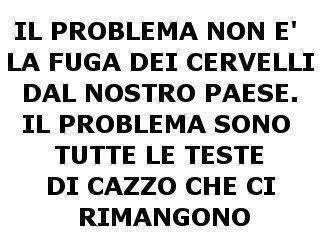
Xenakis, many say that the great minds have now gone to the countries where they deserved to be born...but
Member
Listen carefully to what happens in Chinese elementary schools !!!
Minister Carrozza, open your ears wide !!!!!

Moderator
We are at the end of our rope, not to mention completely exhausted
School, the government is asking teachers for their money back. "Give back 150 euros per month"
Moderator
While I was thinking about our teachers... my eye caught this article
http://www.corrierediroma.it/2013/09/professione-pugnettista-boom-di-assunzioni-in-cina/
Even someone who jerks off earns money... come on...
Administrator
Better if I don't comment.... I might risk becoming brutal!

Moderator
It's a shame!!!!!!!!!!!!!!!!!!!!!


