I am a conservatory student and I have a doubt regarding the work done on my piano... no technician in person has answered me in a way that is understandable to me...
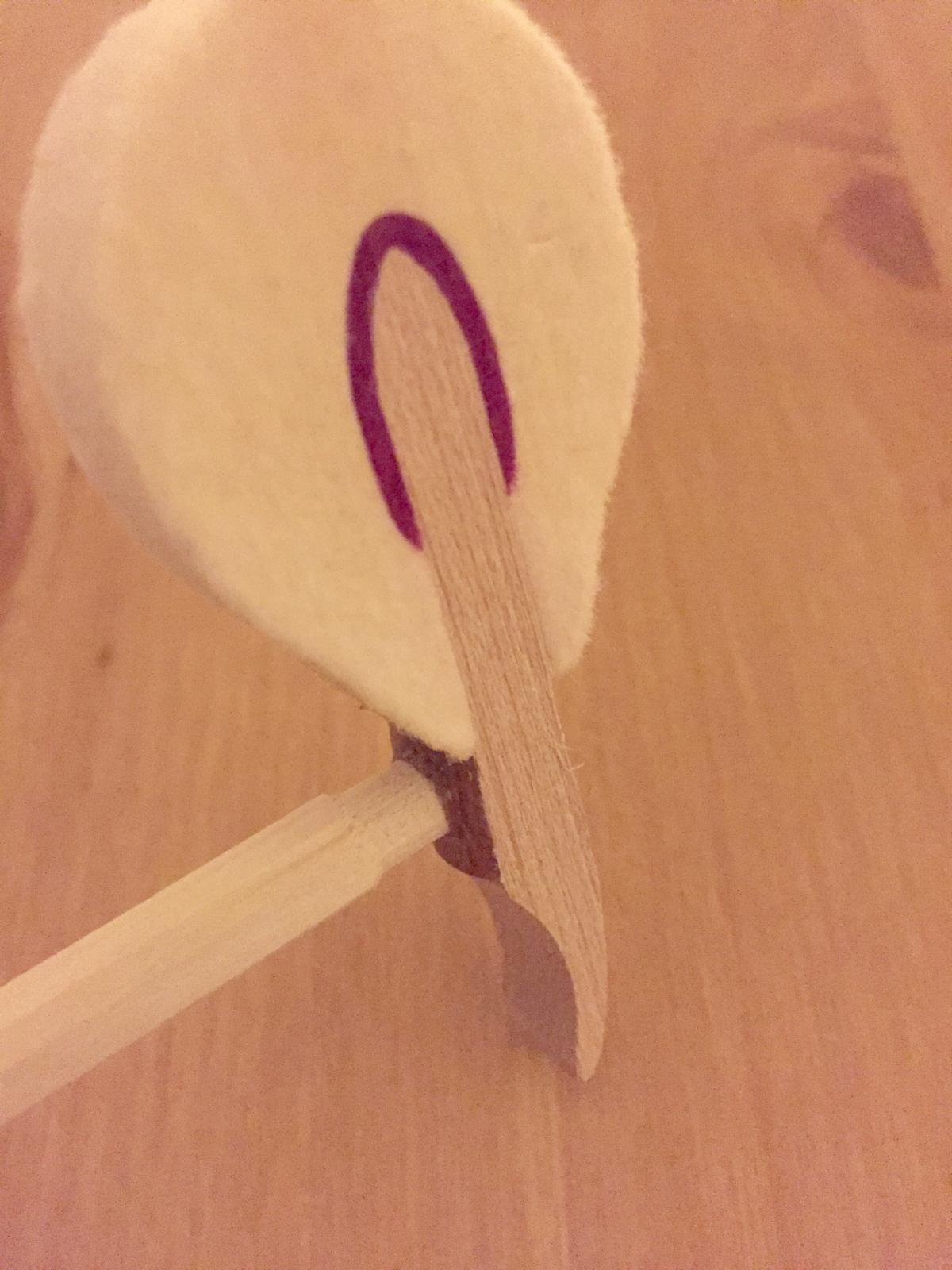
A couple of years ago, I had the hammers replaced on my Steinway 211, old but well-maintained. Original components. I am very happy with how it sounds, but during the last tuning and regulation, I noticed that the G hammer on the 5th octave was shaved about 1 mm more than the neighboring hammers. Even the two adjacent to the G (i.e., F# and G#) are slightly more shaved than all the others, which are then identical to each other. I noticed it because of the more prominent position of the clip at the base of the hammer, in order to be on par with all the others, but with the action inserted it couldn't be seen. In short, it can only be noticed by measuring with calipers...
The technician told me that it is normal... that these three notes are also a "weak point" because there is a change in string gauge and other things that I wasn't able to understand.
Do you think everything is normal?
Thank you in advance for any information/guidance.
I don't know what the technician did. In any case, one intervenes on the tuning and not on the leveling!!!!
C
Codino
Member
Reply 3 by Codino
Posts
11
Mr. maestro, I thank you. I turned to a technician recommended by my piano dealer thinking he would use a standard approach, given also the certification. Unfortunately, I don't know how to handle it... I feel uneasy just touching the keyblock pins for fear that something might change later.. I asked for explanations.... I was told that one tunes with the needle to round out the timbre and shaves to make it bright, and at that point, it was shaved to uniform the note with the others. Then he spoke of impregnation, which is something that isn't done anymore, and so much "bla bla bla" that I didn't know what to say.....
C
Codino
Member
Reply 4 by Codino
Posts
11
I was told that one should see how much felt is on the hammer.. I don't know if I did it right, but I see that from C5 to F#5 there are 7mm of wool, and then from G5 it goes to 6, and so on until the last one of the group where there is the empty space and then the high notes begin..
The hammers seem very good to me. They absolutely should not be shaved... they are barely marked!!!!!!!! if anything, they should be voiced, beaten, or smoothed. That mm is insignificant. In any case, one must not continuously shave them!!!!! No Steinway is perfect and uniform. This is a virtue. The merit also lies in the "sound progressivity" which modifies the timbre from piano to fortissimo. It seems to me there is no need to worry, other than relying on a good technician who knows how to "preserve" the good voicing of the hammers for longer
C
Codino
Member
Reply 7 by Codino
Posts
11
Thank you. Look, in the meantime, the technician took one from a set to glue it and replaced it. He says that at that point it would have been better to skip a number to have more uniformity and to shave less, but it wasn't possible because the series was already glued to make me spend a little less..
i have a doubt.... is there a measurement of the Steinway hammer to keep in mind to help someone who doesn't know the subject like me understand if the hammers are new or if they have been shaved too much? For example, on mine I see that they are all 81/82 mm long on the basses and about 70mm on the rest.
Steinway hammers are 82/72, the first shaping is generally done with the hammers in a vise in groups so that they are all equal and no more than one millimeter of felt is lost. On the highest treble notes, the residual apex felt should be 4 mm.
Ciao
C
Codino
Member
Reply 9 by Codino
Posts
11
No more than 1 mm..... that's fine... so did he make a mistake? I mean.... on a new one, for example, they never shave off more than 1 mm?
He must have had his good reasons; if the result is satisfactory, I don't feel like saying he was wrong... even at Steinway they sometimes conducted their experiments, and hammers like felt cones coming off the shelves are not always identical.
The photo nonetheless demonstrates work done cleanly; ordering a set of hammers already glued by the factory is a sensible choice when this service is available, as in the case of Steinway, for an expense of only 1500 euros.... Consider that Steinway, if desired, provides hammers not only glued, but also pre-voiced and "shaped", meaning already shaved to the correct form and almost ready to play except for some small fine-tuning adjustments to the voicing, but the cost exceeds 3000 euros.
However, there is always a however... with older instruments, some small discrepancies might occur in the treble, regarding the strike point for example, due to a different placement of the action (even if the block plate is adjustable forwards and backwards)... This is why, in these cases, some technicians prefer to order a set of hammers that is neither drilled nor prepared, which is as similar as possible to the original in terms of characteristics, at the expense of the instrument's originality understood as the "presence of original spare parts".
The reasons that may force a technician to shave a bit more are therefore various and also related to the geometries obtained after their replacement, especially when the position is constrained by the factory gluing, which is visually impeccable but risky to apply; they are minimal differences that must somehow be compensated for, if you know what I mean...
Ten technicians might have 10 different opinions, but yours does not objectively seem to me to be a job poorly done. If the piano plays and plays well, if the weights are respected (with original hammers they certainly are), the result proves the technician right. A "wrong" hammer can always be replaced if knowing it is different from the others is bothersome!
C
Codino
Member
Reply 12 by Codino
Posts
11
the hammer changed it for me.. it's not this....
it's the second time I'm having the work done and I don't trust much.... 3 years ago I went to my trusted technician who was someone else and after having Abel x Steinway installed by him, which were highly praised, my piano sounded like a small upright for studio use
now with these I like it very much, but I see scams everywhere..
I don't think I said that the shape is wrong, and besides, photos are deceiving! They are certainly hammers that have already been played for some time; they weren't mounted yesterday.
Abel hammers for Steinway have a smaller head compared to these; they are structurally different. The fact that they sound less, in addition to the mass and density, is due to the way they are prepared, because depending on the felt, more decompression may be necessary to obtain the correct sound... certainly any rejected hammer that has been glued without doing anything sounds "strained".
These are choices; if the piano sounds good, it means something good has been done...
C
Codino
Member
Reply 14 by Codino
Posts
11
I've been playing on it for 2 years, I mean they are 2 years old but from the way you talk to me about them, basically.... they don't seem to be the best....
the story with Abel lasted a year. the technician came several times because it wasn't working well for me, until when he told me to go to hell. I paid him obviously.... never again.
with these originals I like it very much but having also paid for this work, I would have liked it to be in good shape....
From the marks, it also seems well placed under the strings... the gluing was done by Steinway so it is clean (today they do even better, a spectacle). It could have happened that some felt was removed later, reducing the life of the hammer action from 10 years, from 40 to 30 years
C
Codino
Member
Reply 17 by Codino
Posts
11
I understand, the piano is kept too well.. if you tell me "today they do even better", it means that deep down it's mediocre work
No, they do better as a glue job, because the last ones I ordered have spectacular gluing without that little crown, but forget it, it's stuff for sick people like me.