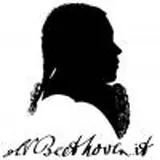
From my point of view, the figure of Beethoven fits into a historical context characterized by the French Revolution (1789-1815, with which the feudal system ends) and by political/social and civil upheavals of significant scope, with the consequent transformation of the cultural and artistic reality of the era.
Enlightenment ideas, faith in the ideals of reason, liberty, and heroism, and the exaltation of patriotic and moral virtues are inherited from the French Revolution; also Napoleon Bonaparte (1769-1821), for some time, receives the sympathy and admiration of many intellectuals from different nations thanks to the reform of the civil, penal, and commercial codes.
In that period, however, music does not undergo major transformations, although the French Revolution favors a change in musical customs, in enjoyment, and in the relationship between composer, performer, and audience. During the revolutionary period, music serves a celebratory function and is an important element for public functions and demonstrations involving the masses, with the aim of obtaining the population's consensus by transmitting political messages through music: military marches, patriotic songs, hymns, odes to liberty, nature, etc.
Great importance is given to hymns, marches, and funeral cantatas performed in public celebrations in honor of fallen heroes. Musicians adapt to the requests of revolutionary leaders by composing simple motifs performed by large instrumental masses, with choirs singing in unison with highly impactful performances; all this was often performed in large outdoor spaces using fanfares and percussion instruments. The most famous song of the revolutionary period is known as “Le chant de guerre pour l’armee du Rhin” (known as the Marseillaise, with words and music by Claude Joseph de Lisle composed in 1792, and from 1879, the French national anthem).
Notable composers include F. J. Gossec (1734-1829), L. Cherubini (1760-1842), and J. F. Le Sueur (1760-1837). The musical production of this repertoire becomes widespread thanks to the publication of the monthly magazine titled “Le magasine de musique,” a journal founded in 1794 where an Association of 51 musicians, including Gossec and Cherubini, with government support, obtained economic benefits, thus becoming artist/publishers. Great momentum was given to musical education with the founding of the “Ecole de musique de la garde nationale” and the “Ecole royale de chant,” which later became the “Institut National de Musique”; in 1795, the “Conservatoire National de Musique” was established, and based on this model, other Conservatories were founded (Milan, Bologna, Naples).
The grandeur and solemnity of the compositions of this era constitute the premise for the production of symphonic music of the Romantic era (a significant example is given by the grandeur in Berlioz's orchestra). Beethoven was also influenced by these new musical currents, even though he did not manifest sympathy toward the French Revolution; throughout his life, he would place great importance on the ideals of brotherhood, liberty, and respect for human rights. The monumental style of French derivation is present in symphonies No. 3 and 5 and in the Egmont Overture, as well as in the piano sonata in A-flat major Op. 26 with the second movement titled “Funeral March for a Hero” (this new style is defined as “Heroic”).
Some will make the necessary clarifications.