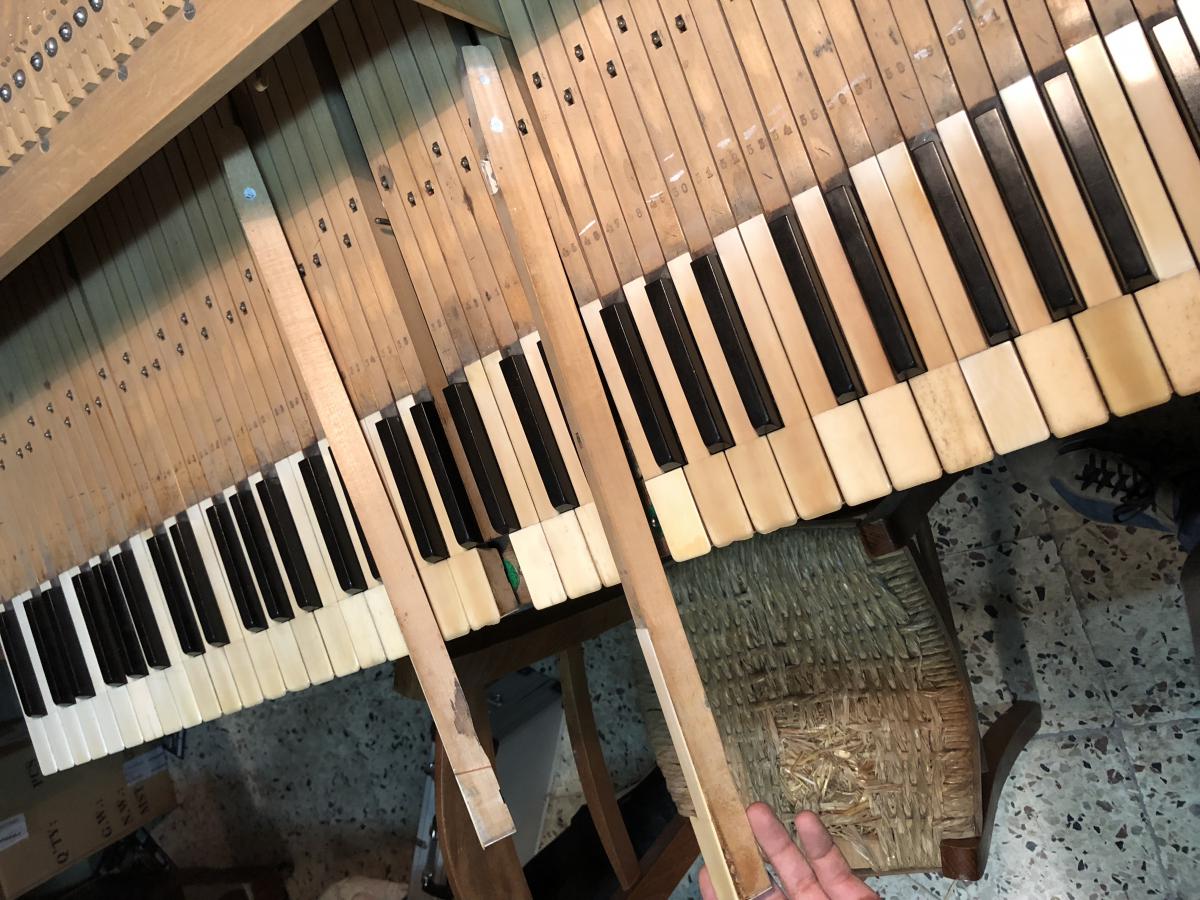
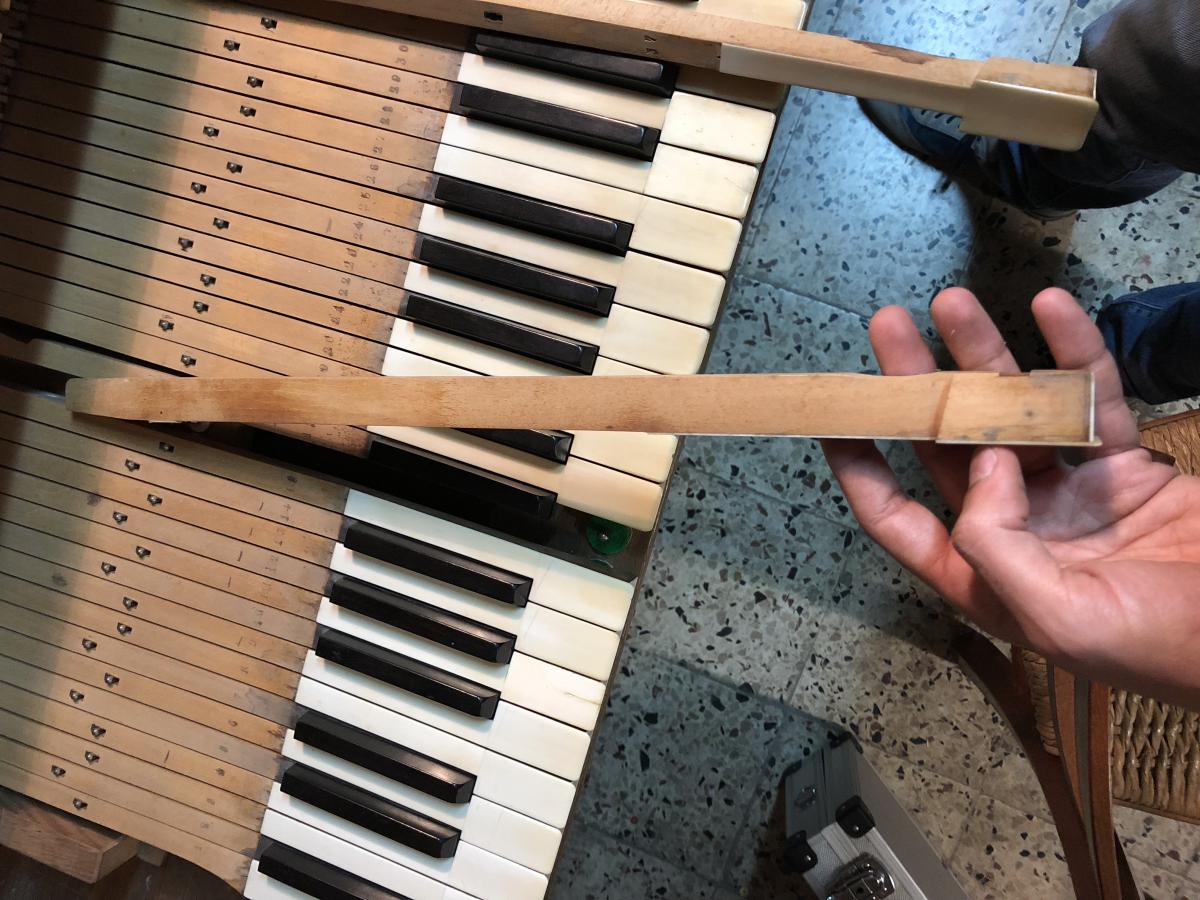
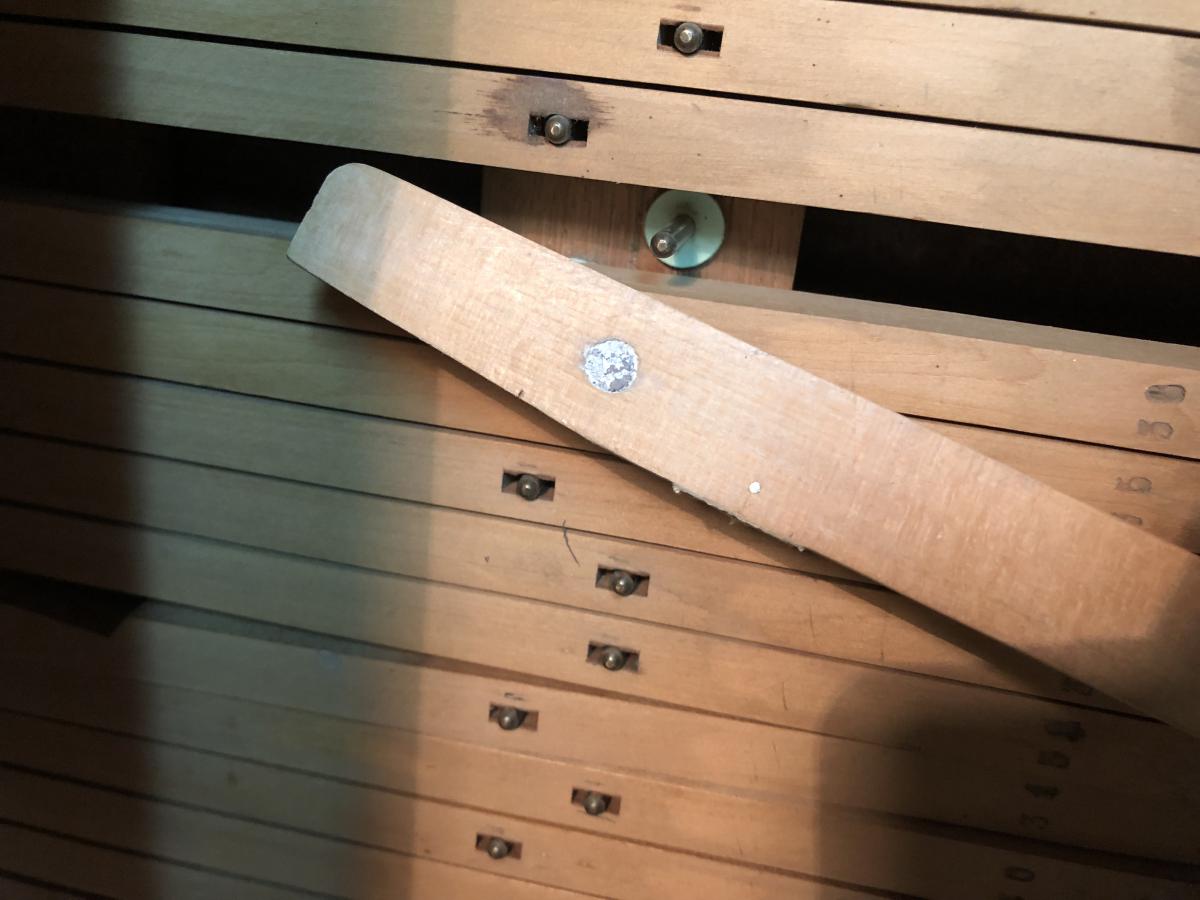
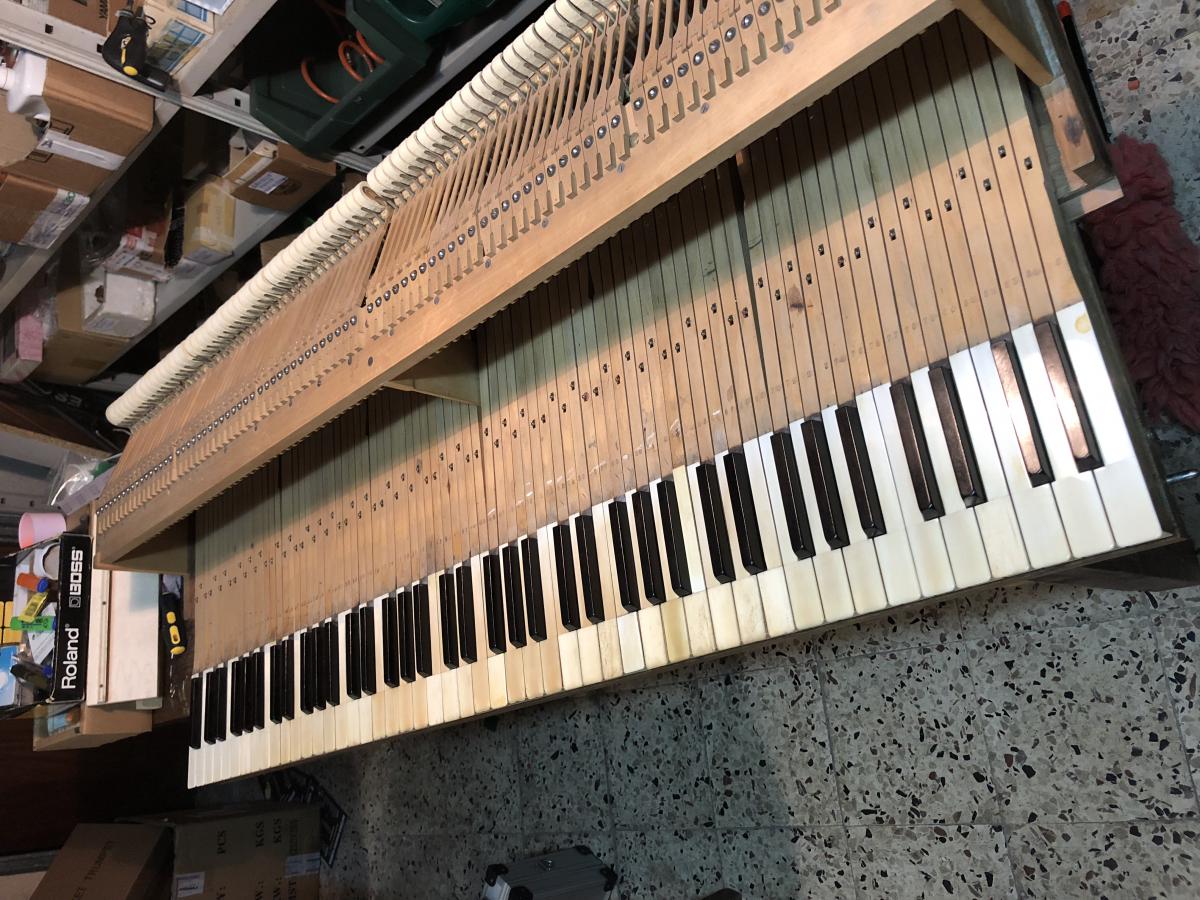
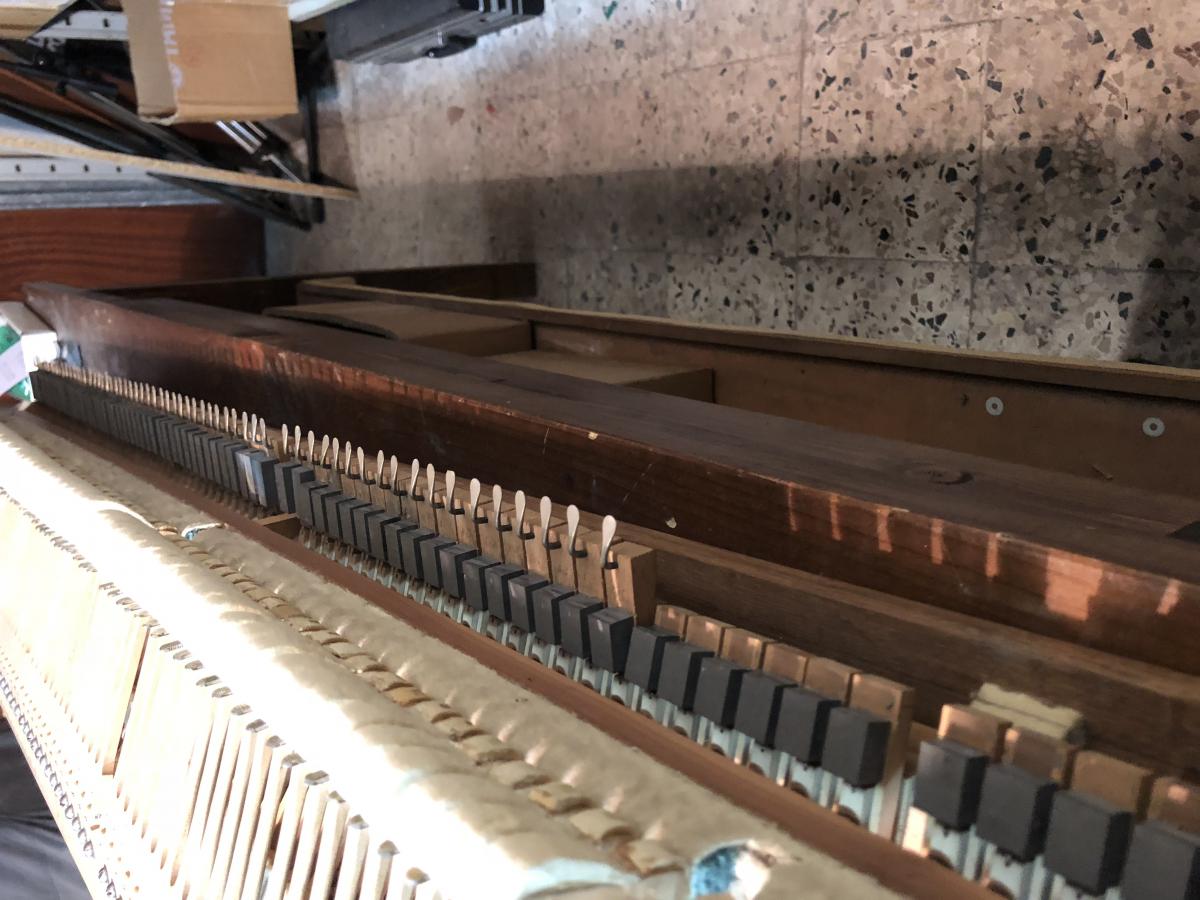
I am currently working on the restoration of an 1851 Erard grand piano, with straight strings and a spring-damper system located under the strings. The keyboard is extremely light, in my opinion due to several concomitant causes: lack of friction, discharged springs, very seasoned wood... but the factor that above all else caused the lightening is due to the weights... they have swollen and I had to remove the protruding part. Before proceeding to reweigh the keyboard, I am proceeding to re-establish the correct friction by replacing any gaskets and center pins; then once that is done, I will adjust the action, including the spring tension; only after these operations have been carried out will I proceed to re-weight the keyboard (in this piano, the weights are in the rear part of the key). I wanted to ask, should the key descent weight always be checked excluding the dampers, therefore with the right pedal depressed? Furthermore, the more or less charged spring affects the aforementioned weight, correct? I would also like to know if you consider the way I am proceeding to be effective...
Yes. Watch out for the weighting. Only the last two or three high notes may have weighting in the rear. One should tend to remove rather than add lead to the keyboard. I do not believe that the action is so light as to require weighting of the keys. Check. If necessary, a very tiny weight on the hammer tails. But first, restore the correct friction. It is possible that weights were added, with unsound decisiveness, to compensate for the excessive downward weight caused, instead, by excessive friction in the pins.
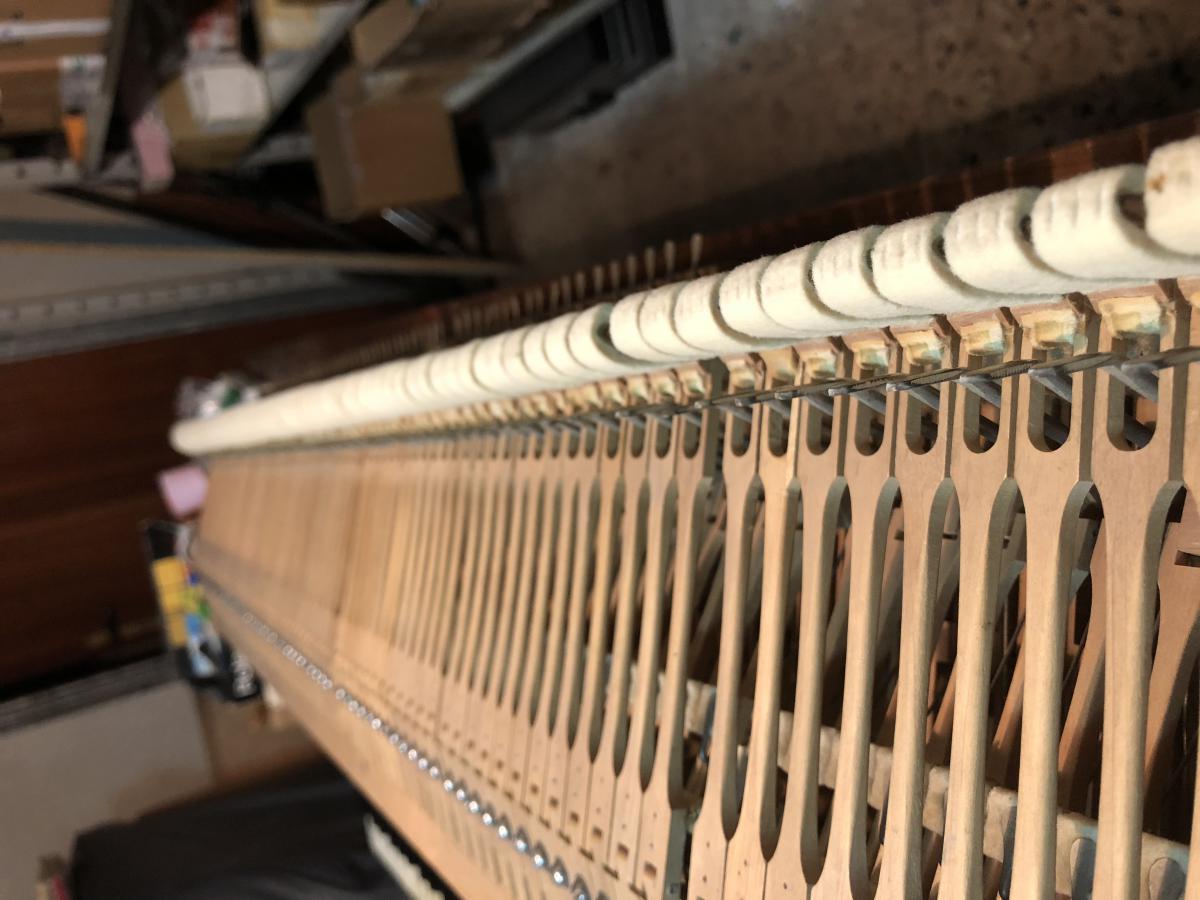
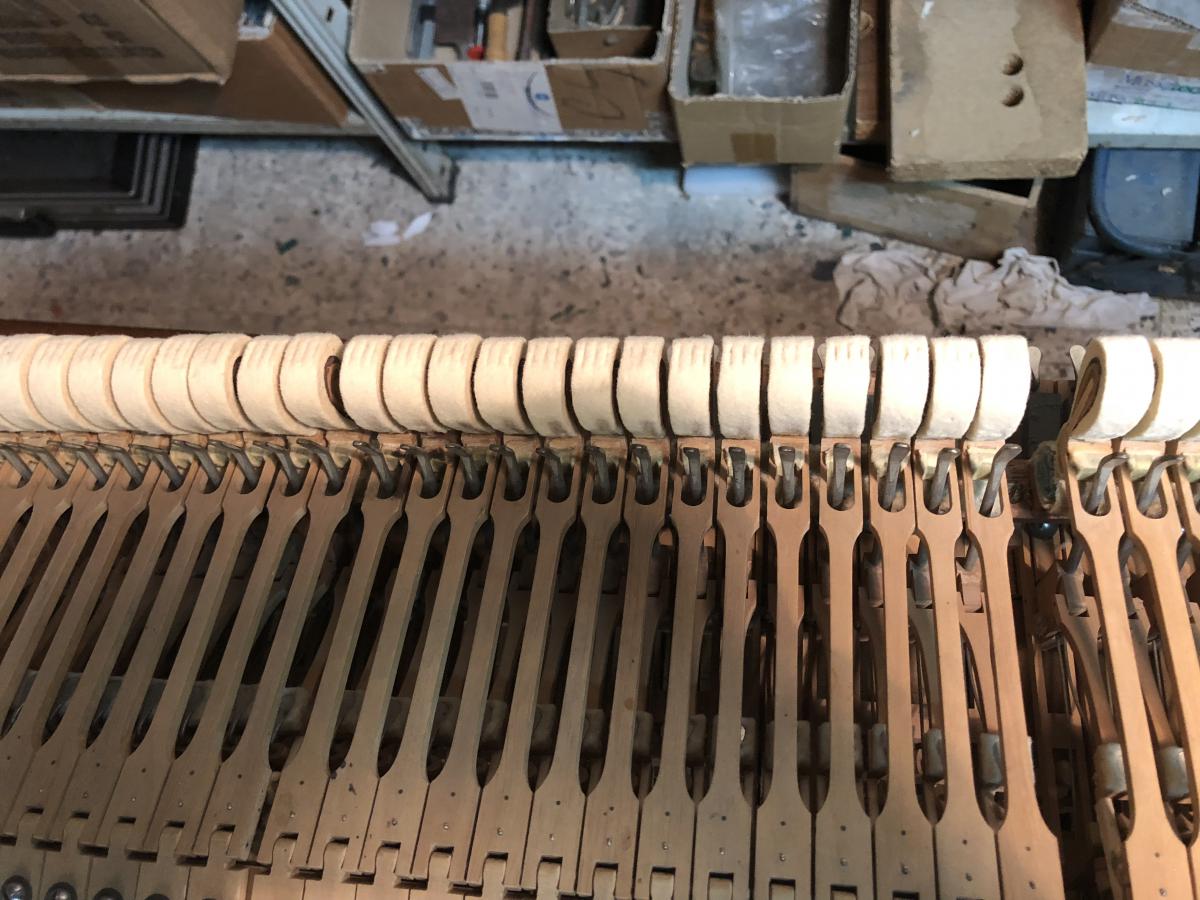
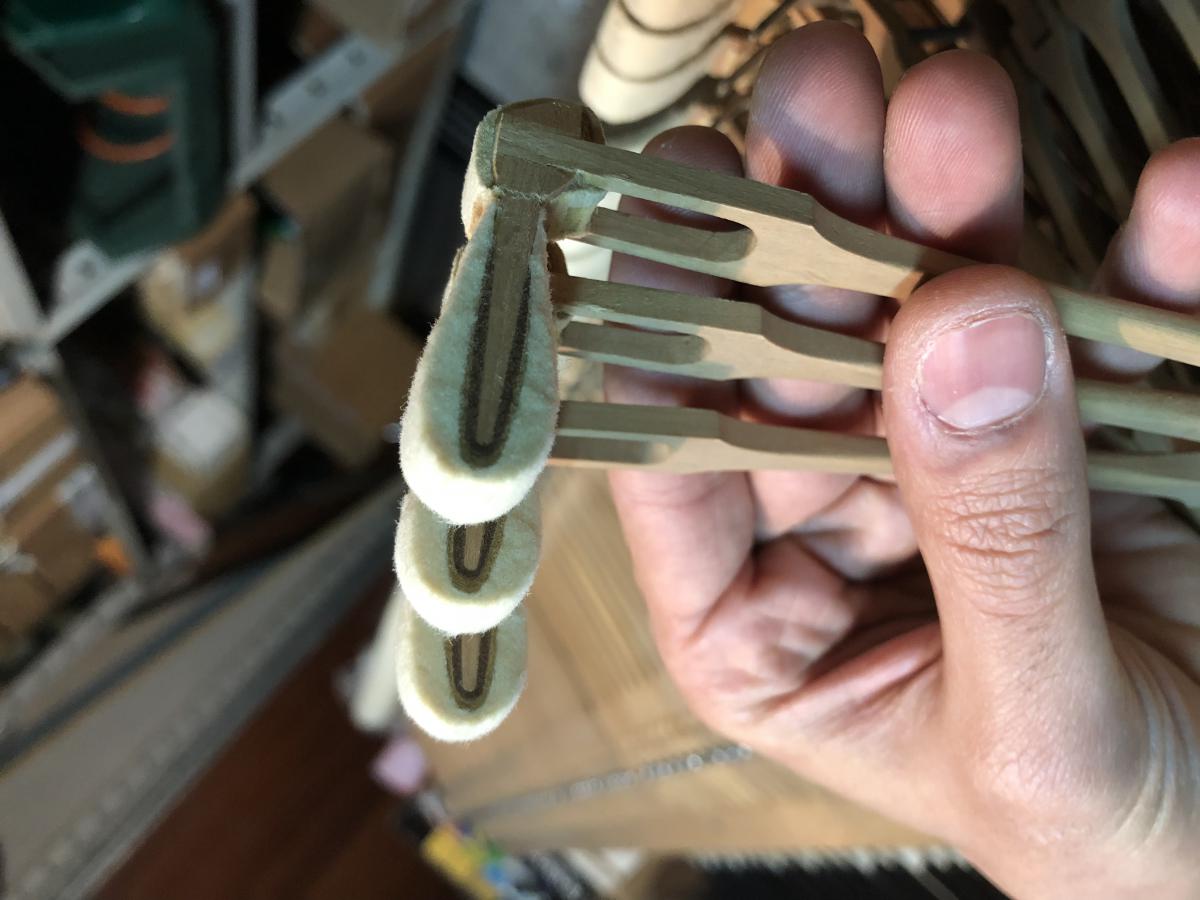
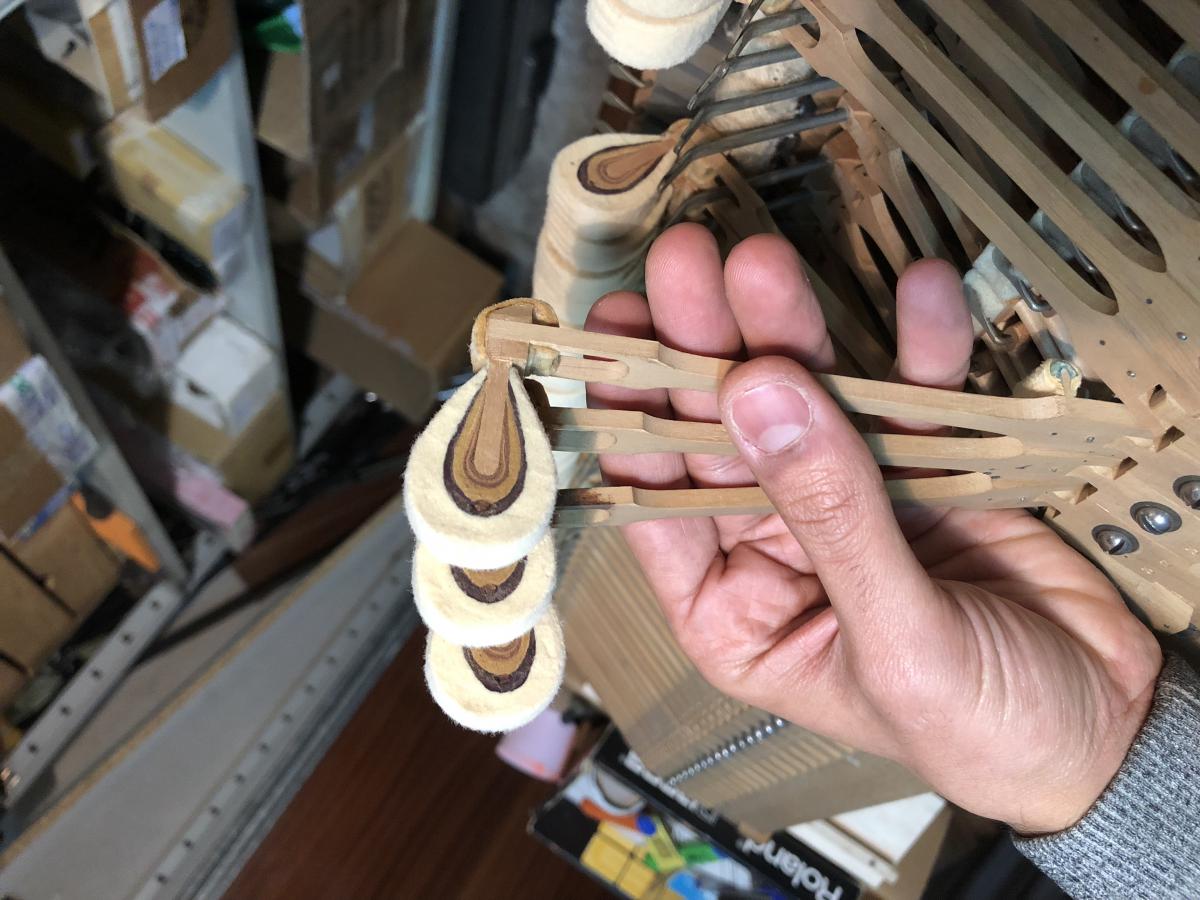
Thank you, Maestro. I am attaching some photos of the instrument in question here. The client categorically refused to consider replacing the hammer rail, so to save what could be saved, I had to proceed with a superficial shaving (to avoid reaching the actual wood in the treble hammers), though this left quite noticeable marks. I think if the client had wanted to, the most sensible option would have been to have the hammer rail re-felting by sending it to Abel or Renner, as it is presumably difficult to find hammers similar to those shown... but I await opinions on this. As for the weighting, even I was surprised that the factory only inserted small lead weights in the rear part of the key, whereas they weighted the capstans quite heavily.... what do you think?
It must be said that the key lever is very long. It will be less affected by rear weighting. Re-felting the hammers is a wise choice, perhaps succeeding in leaving the "under-felt" part which is very particular. The client could be convinced by saying that everything would remain original and that the geometry of the action would be preserved, which instead, in this way, with this excessive shaving, is significantly modified. Furthermore, by re-felting, the need to weight the keyboard at the rear might be eliminated. In fact, Renner or Abel can use suitable felt, perhaps with medium pressing. Be careful to have the hammers made slightly taller because they still need to be finished after re-felting. (Try to reconstruct the effective height of the original felt by observing the perpendicularity of the escapement lever with respect to the hammer shank axis. As much felt as necessary to obtain approximately 45 mm from the strings in the resting position). Good luck with your work
I am resuming this post to report a problem with the Erard grand piano that has left me quite stunned, hoping to receive some suggestions. I completed the action-keyboard regulation and replaced part of the copper bass strings that broke during tuning; those remaining have nonetheless maintained an excellent sound. No problems with the steel strings, which reached the chorister without issues. Having done this, I entrusted the cleaning part to my assistant, who varnished the cast iron part and positioned the piano on its side to apply anti-woodworm treatment, plug the holes, and touch up the wood with putty. Once the aesthetic part was completed, we put the piano back in position... and here comes the kicker: the bass strings are almost totally toneless, including those that were replaced (the steel strings, however, have maintained their resonance). I was trying to understand if varnishing the cast iron gold could have caused all this, but then my assistant admitted an important "detail"... he cleaned the soundboard in correspondence with the steel strings (a part that is difficult to access with the strings mounted) by applying a degreaser (Chanteclair) and tried to scrub it to remove encrustations.... then he blew with the help of a compressor to blow everything away. I believe this has undermined the vibratory capacity of the soundboard and I don't know if it can be reversed...