Restoration

1903 Bechstein Grand Piano

54 replies 14,027 views

Started by

Francesco

Member

Member

Opening post by Francesco

Posts
251
City
Torino

Dear friends,

I would like to discuss a bit about one piano brand in particular, Bechstein.

The main reason is that, where I go to school, as many of you know, there is a 1903 Bechstein concert grand piano, restored a few weeks ago ...

I have tried it more than once, and I have always found it very good: the sound is harmonious, elegant and expressive, the action agile, light (the key weight, the restorer told me, has returned to its original design of 48 grams) and responsive. I am available for anyone who wants more information ...

Who has ever played on a Bechstein, can tell me how you found it and your opinions, advice, considerations?

Thank you very much.

Bye!!! Francesco 1797

PS I am waiting for the input of Paolo Ferrarelli, who will surely be able to tell us something more, he is a technician ... ๐Ÿ˜•

Thank you very much.

Administrator

Reply 2 by Thesimon

Posts
4,504
City
Ariccia, RM

Hi Francesco, I once played on a Bechstein too; I liked the sound, but my keyboard certainly didn't have a weight of 48g. I think it was a little something, actually quite a bit more. It also seems strange to me that the original 1903 Bechstein design you are playing on has a let-off weight of 48g; perhaps the new action that was installed in this pianoโ€”since it seems to me I understood that it has been entirely restoredโ€”adopts this weight. As I repeat to you what I experienced, provided there is proper regulation (I can't tell you this for sure because I played it but certainly didn't inspect it), it certainly did not have a let-off weight of 48 grams...

Member

Reply 3 by Francesco

Posts
251
City
Torino

Ok, thanks...

anyway, if I'm not mistaken ๐Ÿ˜•, it seems to me that the action has not been replaced, but only regulated; the hammers have been voiced (according to the school archives, the last restoration at the school took place in November 1978, the only other restoration had taken place in April - May 1946 ... ๐Ÿ˜‰ I really wonder where this piano was during the two World Wars... not at school, since it is from 1972 ... ๐Ÿ˜‰) and it has been tuned; I am sure, however, that the keyboard has been replaced, as the document regarding the piano's ownership by the school reports an ivory keyboard... the current one is resin, if I'm not mistaken.

I await further news. thanks.

Ciao!! Francesco 1797

Moderator

Reply 4 by pianoexpert

Posts
3,876
City
rocca di papa

I know this type of instrument very well. First of all, I am very sorry that the keyboard cover has been replaced!!!!!!!! I would like to know what happened to the removed ivory!!!! I hope an adequate cover for the instrument has been installed.

Now I would like to know if the hammer rail has been replaced and what other type of restoration has been done.

The instrument in question is very particular. It is a holder of the "romantic sound". Soundboard not heavily loaded and light hammers....but be careful if they have only been shaved and how. One must worry that in the highs, their shape is not rounded. One must still check if the felt offers good elasticity and is suitable for tuning. The downward weight, yes, but what about the return weight? And then the tuning and regulation?

Anyway, it seems to me that you were satisfied with the trial....so....maybe everything is okay.

Is it a grand piano? Model D?

The Bechstein sound is creamy and not very aggressive. Romantic sound, as we said. This means prioritizing the sustain of the sound and the softening of that "curve" of its decay. Perhaps a little less "brilliant" on the attack. Anyway, wonderful!!!

The 180 cm Model A and the 203 cm Mod. B are also beautiful. Sometimes it happens that some models have some rare imprecision in the bridge cut on the mid-highs; sometimes I have encountered this. In these rare cases, it happens that the bridge pin that determines the string length has not been perfectly driven into the wood cut of the bridge itself. On the same string, two vibrating "lengths" are determined, originating what is called "false beat". But let's not dwell on it... they are rare cases!

Congratulations on being able to play such an instrument. It would be interesting for me to see and try it.

Regards, Paolo

Member

Reply 5 by Francesco

Posts
251
City
Torino

Thank you Paolo, I will inform myself about everything regarding the restoration of this piano as soon as possible, then I will reply and give you further clarifications.

You know, I am also curious to know what happened to the ivory keyboard cover ...

Anyway, I can tell you with certainty that:

- the action has not been replaced, but only regulated and the hammers voiced.

- the last 4 wound strings, the most serious ones, and the last 5 treble strings have been replaced;

- the restoration of the soundboard and the piano lid is still planned;

I will be happy to provide further data.

Thanks again!

Bye!! Francesco 1797

Moderator

Reply 6 by pianoexpert

Posts
3,876
City
rocca di papa

To restore the soundboard, disassemble all the strings....maybe cleaning?

What do you mean by "piano lid"?

Member

Reply 7 by Francesco

Posts
251
City
Torino

Yes, sorry Paolo, I probably meant cleaning ... it wouldn't have made sense to install the strings only to have to remove them to restore the soundboard ...

By "piano cover" I mean the case in which the instrument is contained ... "the black wooden box" (my piano technical vocabulary is certainly not yours ... ๐Ÿ˜‰ ... sorry, I cannot express myself differently. thank you)

Finally, I take this opportunity to ask you how the ... "lid" ๐Ÿ˜‰ ... closed, open or semi-open affects the sound?

I thank you for the patience you are dedicating to this discussion and with which you tolerate my "inadequate" terms.

Thank you very much. Bye!!!

Francesco 1797

PS As soon as I have more information I will let you know. Bye! ๐Ÿ˜•

Member

Reply 8 by Francesco

Posts
251
City
Torino

Dear friends,

here I am again. So, yesterday I played on this piano again... every time I just can't get up and leave... it is absolutely magnificent!!

But this time, I was a little worried, first of all because the piano is located in a primary school theater, and children often touch it; if it is open, even the strings, which horrified me... ๐Ÿ˜‰ ) .. after all, they cannot understand what kind of instrument that is!!! In fact, I have requested the restorer to fix the key lock as soon as possible, so as to keep it closed to slightly curious hands! ๐Ÿ˜‰ and also because... the Eb of the third octave makes a strange metallic hiss when the key is pressed ... ๐Ÿ˜• I am worried, what should I do?

Then... for pianoexpert: yes, it is a D model, made in Berlin as you know in 1903, but I cannot read the number (D 208, D 216...) ... it is a bit faded... where can I read it besides on the frame? I also have great news: the ivory covering has not been permanently removed... the resin one that is there now is temporary, waiting for the ivory one to be restored, which will take several months as it is being restored by a company a bit far from Turin ... To avoid having a working piano without a keyboard, this one was put on.

As I told you, the action has been regulated ... but - excuse me if my sources are a bit unstable - perhaps it was also replaced, a "younger" Renner should have been installed than the piano...

In any case, I confirm the let-off weight of 48 grams, which I was also able to measure thanks to your precious video tutorials.

Thank you very much and congratulations again ... I am truly satisfied with having subscribed to your site!

Ciao!! Francesco 1797 ๐Ÿ˜‰

PS: Finally, I take this opportunity to ask you how the ... "lid" ๐Ÿ˜‰ ... closed, open or half-open affects the sound? Thank you! Ciao!!!

Moderator

Reply 9 by pianoexpert

Posts
3,876
City
rocca di papa

I have never heard that an ivory cover must be disassembled to be restored. It would be interesting to know why it was disassembled. To disassemble it, heat must be used and very often it becomes deformed. Furthermore, I believe that when it is mounted, it can be restored better. Ivory suffers in the dark and with use, over many years, it can become porous and use can "hollow it out". Sometimes some people use 180-volume hydrogen peroxide which "eats it up". The best thing, in my opinion, is to "flatten" the ivory with 1000 grit emery cloth and if possible 2000, 3000. Then polishing paste. Finally, polish with a cloth disc and very fine Tripoli (a sort of dry paste that looks like plaster). Anyway, it will be interesting to know how they did it.

It is possible that the oscillation of the copper-wound string brushes against the vertical iron of the damper. Perhaps!!??

With the lid raised, the sound is louder and fuller. The pianist hears less, the audience more. Conversely with the lid half-closed.

It would be important to know who restored it and the "return" weight of the keys.

Hi Paolo

Member

Reply 11 by Francesco

Posts
251
City
Torino

Dear Paolo,

thank you for the speed with which you responded.

So ... as you know I am not an expert, but I will look into why the key cover was disassembled to restore it. Regarding the whistling sound ... seeing if the damper iron touches the string is something I can do myself (provided it doesn't touch anything)?

Finally, I accept your proposal: I will send some photos so that everyone can see them.

For now,... Bye and thanks a lot!!!

Francesco 1797

Moderator

Reply 12 by pianoexpert

Posts
3,876
City
rocca di papa

First, check if that's it and send me a photo. When I play fortissimo, the vibration should increase. However, it could also depend on the soundboard or micro-shifts of the bridge.

Member

Reply 13 by Francesco

Posts
251
City
Torino

pianoexpert wrote:

First, check if that's it and send me a photo. When I play fortissimo, the vibration should increase. However, it could also depend on the soundboard or micro-shifts of the bridge.

Ok Paolo, I'll try to do as you said. As soon as I have the chance to take some photos, I'll post them here. Thanks again. Bye!! Francesco 1797

Member

Reply 14 by Francesco

Posts
251
City
Torino

So... Here I am to update. First of all: I was hoping to be able to post some photos of the piano here, but I'm not allowed to take them ๐Ÿ˜† ... from the school office.

In any case, yesterday I played on the Bechstein again, for a full two and a half hours ๐Ÿ˜† ... I continue to appreciate the expressiveness of this instrument, even if, as Paolo said, it is anything but aggressive.

However, yesterday I encountered some factors in the piano's mechanics that left me perplexed...

in the first place, I noticed that the escapement, which should allow me to restrike the note without the key having returned completely to its resting position, almost ... DOES NOT EXIST! Or rather, when I go to restrike the blow, the hammer rises, but not with enough momentum to reach and strike the string. This "defect" is present especially in the treble region of the keyboard. Probably the mechanics (and in particular the escapement) need to be re-regulated. ๐Ÿ™‚

Furthermore, I thought that the ivory key coverings (original from 1903) had only been "sent for restoration"... They WERE REMOVED! The current keyboard (in resin or worse, plastic) is not exactly "smooth": if I lift the dampers from the sustain pedal, some keys do not return completely up! ๐Ÿ™‚๐Ÿ™‚

I don't know why I didn't notice these restoration defects before ... probably they are things that "jump out at you" ... or at the fingers" ( ๐Ÿ™‚ ) only after playing for quite a while ... possible?

In short, if up until about a month ago I was satisfied with the restoration, well, now ... I think it could have been done much better, given the level of the piano...

Well... not to mention the micro-shifts of the bridge ... as you say, Paolo. I tried playing, while in the meantime a friend of mine (wearing gloves, at my request) kept one hand on the bridge, applying light pressure... the metallic buzz was no longer heard! Now I am finishing middle school (next month ... written exams ๐Ÿ˜ƒ !), so (if all goes well) next year I will no longer be at this school. Anyway, I think I will return to this piano, both to check its condition and perhaps to be able to re-voice it... Anyway, I believe that if I have the chance to re-voice it by the end of the year, I will contact the restorer again...

That's all for now. Bye! Francesco 1797 Paris

PS I apologize again if it was not possible for me to post any photos...

Member

Reply 16 by gian

Posts
60

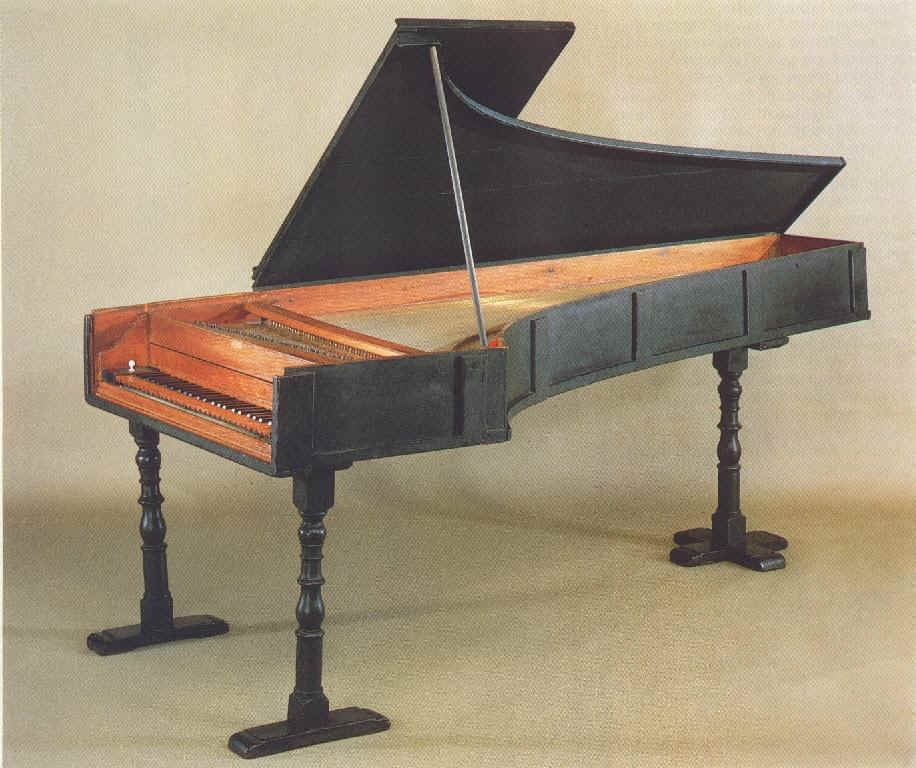
Hi Francesco, reading this discussion, reading your description of the piano, a Bechstein even from 1903, it makes one want to play it: I imagine it must be very fascinating to play an instrument built more than a century ago. How is the sound? I am trying to imagine it by fantasizing. It is not, in fact, for everyone to play such an ancient instrument. And what will it be like to play an even older piano, for example one from the 1800s, or even the 1700s, one of the first models built by Bartolomeo Cristofori? I get chills thinking about it, chills of pleasure, obviously. Consider yourself lucky Francesco because it is not for everyone to play such an instrument. All of this fascinated me so much that I went to Google Images looking for photographs of antique pianos and look what I found, a piano built by Bartolomeo Cristofori itself. Francesco, I know it's not easy, but why don't you try to describe the sound that the Bechstein you told us about in this discussion has? (Sorry for the question, which is not easy to answer; it's more or less like trying to describe the taste of a strawberry to someone who has never eaten one).

Attachment

Member

Reply 17 by Francesco

Posts
251
City
Torino

Francesco, I know it's not easy, but why don't you try to describe to us the sound that the Bechstein you told us about in this discussion has? (Forgive the question, which is not easy to answer; it's more or less like trying to describe the taste of a strawberry to someone who has never eaten one).

Alright, I'll try.

Well, I think that to answer this question I must go back to the first time I played this magnificent piano... about three or four years ago, I don't remember precisely, but I was in elementary school... it hadn't been restored yet... it had still all its charm and purity (I'll explain below why "had").

I opened the keyboard lid and saw a magnificent ivory keyboard, pleasantly yellowed by time. I still remember that on some keys the ivory moved a little... it rose slightly. I tried playing a few chords... I started with E-flat major, I still remember it... who knows how! I played an E-flat major chord with my right hand, and with my left a double octave of E-flat. Having played only that chord, I asked my teacher, who was there at the time, to give me a hand lifting the soundboard lid, to give an even better voice to the magnificent instrument.

Having done so, I continued playing... perhaps for half an hour. It was... very out of tune, the action slow and creaky, a bit stiff, and the sound absolutely... enchanting: as bad as its condition was, I had already fallen in love with its sound... sweet, expressive... I wouldn't know how to describe it well. The treble region was characterized by bright notes (even if out of tune), singable, light but at the same time expressive. I was also very struck by the "softness"โ€”allow me this termโ€”of the bass notes: they were indeed a rhythmic and melodic support, but they were so "controllable" that a chord played in a fairly low register did not bother the ear, as sometimes happens even on excellent upright pianos... the bass notes merged with the treble in a vibrant harmony so beautiful that a single chord was very pleasant to listen to... It seemed to me that playing right and left hands together, the high notes sang, and at the same time the low ones followed and supported them... a marvel, in short. I had never played on a piano so... similar to me. I know it might seem "crazy" to compare oneself to a piano (besides, theoretically, I would be 108 years old!!!), but it resembled me terribly: quiet but expressive, ... shy, even if this adjective is generally not used for instruments, and incapable of only one thing: being aggressive. There was no way, that piano did not want to be aggressive... Paolo later confirmed this to me by explaining that it is a piano with a typical romantic sound.

When I closed the piano, the thought that I would play it again was not a hope. It was a certainty.

And yet several years passed before I could do so. Three, or perhaps four. When I learned that it had been restored, I initially felt an irrepressible joy, like a dream coming true. I played it for half an hour, and it was like finding oneself in front of an old friend whom one hasn't seen for a long time but to whom one is very attached.

Then, every time I went to play it (from May of this year onwards, about once a week, for about an hour or two), I began to worry... the keyboard, which I initially thought had only been sent for restoration, was replaced with one made of resin... or worse, plastic, I don't know for certain. Some strings were replaced... but most remained the original ones... which is why the sound is always the same, perhaps improved and... now in tune...! Even the action remained the same, original from 1903...(Fortunately)... However, the restoration could have been done better. The bridge vibrates a little, perhaps it's not well fixed...

But from here on, you know the story... Bye!

PS:... Sorry Gian... rereading it I realized that rather than answering your question, I have told a story of my knowledge of the piano... if you have other more specific questions, don't worry, I am here...


Member

Reply 18 by gian

Posts
60

No Francesco, I have no other questions to ask you, because the story you told, of a person who loves the instrument not as an object, but as a "living entity", is so fascinating that, I say sincerely, it is a delight to read you. It is not madness to compare oneself to a piano; on the contrary, it demonstrates your noble soul, because a musician who loves the instrument they play is a sensitive person, a person who certainly gives their all when playing, a person therefore capable of transporting the listener into those dimensions of the spirit that only music, among human activities, is able to reach, even better than prayer; in fact, "music is prayer" (this quoted statement is not mine, it is said by the Vedas). Reading you, Francesco, I thought about the charm of the instrument, about the love one can feel for it, for a living entity, as I wrote above, and not as a musical "machine", an unromantic expression that a friend of mine uses to talk about the piano. It's not like that! I understand you, Francesco, because I too am a romantic person capable of feeling love for a "musical machine", so comparing oneself to a piano is a noble sentiment; in fact (and here I want to say something mean now), given what the world is, given what humanity actually is, it is instead madness to define oneself as men, men as we know them, devoid of humanity, devoid of good feelings, sick with selfishness and hypocrisy.

Francesco, I spoke to you about music as prayer, so I want to add this link to the Gayatri Mantra which is, it seems, the oldest existing prayer, whose Vedic origin is lost in the past millennia (the "Vedas" are the oldest philosophical literature of India upon which all their culture is based, indeed upon which all the spiritual culture of the world is based).

Member

Reply 19 by gian

Posts
60

Francesco, in the previous post I spoke about India, a country that I love very much, even though I am Italian. What I like about India is its spirituality, which is very different from Western materialism. I like its wisdom, its "magical" charm; therefore, I want to add another link that talks a bit about these things that fascinate me.

Moderator

Reply 20 by pianoexpert

Posts
3,876
City
rocca di papa

The spirituality that seems so far away and difficult to practice is present in Music. In all Music. When we perform a composition that has entered deep within us, we become a filter for divine messages. A sort of dematerialization of the body occurs. The proof is that when we have finished, we do not remember much of our physicality. Instead, during performance, especially in public, we have had a sort of truly spiritual experience far from the body. It almost feels like going to look "elsewhere" for those messages that music suggests to us, which we manage to understand, interpret, and set aside in a secret place, accessible only to us. Everything is magical. Materiality no longer exists. It has happened to me many times, in concert, to feel, even amidst the concentration, accompanied "on a stroll" and to breathe a fresh and light air. Absence of weight and great lightness of color and lines.

It sounds strange and poetic, but, even while being conscious and focused on the composition to be performed, one feels far from reality.

I really enjoyed watching these videos and I believe that India and its culture can suggest interesting paths to us.

Thank you

Log in to participate