Dear friends, here is the first (not in chronological order) of the articles I wrote for the A.B.F. magazine (Association Beethoven France). In particular, this one appeared in volume 10, second semester 2008. Having to adopt a "journalistic" approach, I had to fit everything into a certain length. As you can and will notice, I will never speak of the grand systems, but my research always pushes toward the less known aspects of Beethoven's biography and production. If you like this first article, I will post all the others. Who knows if truly, dear Simon, with quite a few additions, we might not actually make a small essay..... Happy reading!!!
CHRONICLE OF A MISSED ENCOUNTER :
BEETHOVEN AND SCHILLER'S « FIESCO »
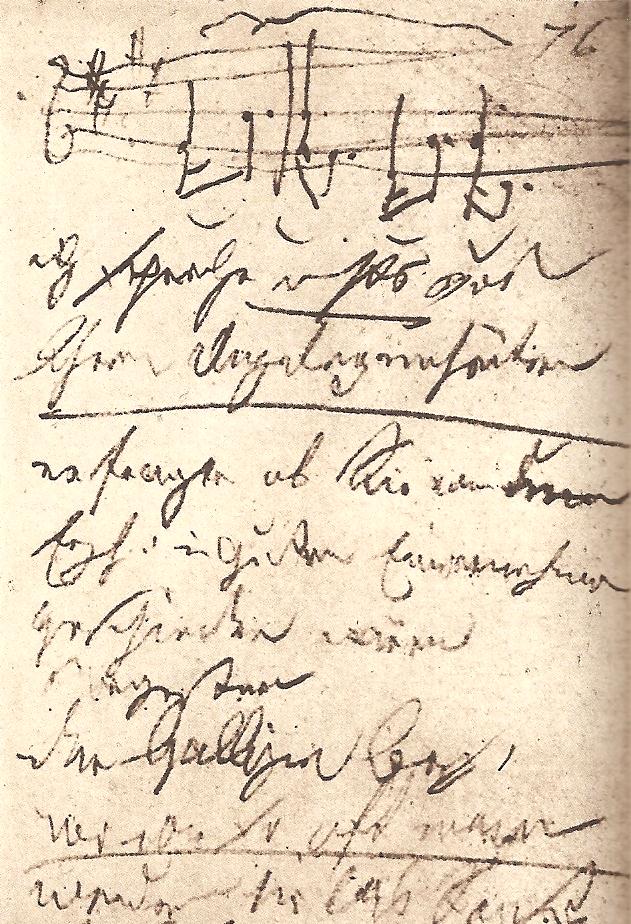
Starting from page 13a of conversation notebook number 31, from March 1823, kept in the Preussische Staatsbibliothek in Berlin, one can read the following conversation between Doctor Johann Baptist Bach and Beethoven himself, with Anton Schindler and the Maestro's nephew Karl also present:
13a Es soll das Buch Fiesco besteh[en], das vare ein würdiger Gegenstand Ihrer Bearbeitung.
Wanda ist nichts
Allein Fiesco ist schon klassisch
................................................
13b Sie schreiben nicht fur uns allein, sondern fur die ganze Welt
Crescentini hat es gesung[en], ware nicht neu.
................................................
14a Schiller und Beethoven.
Diese 2 Namen sind wûrdig bey ein ander zu stehen.
Ich seibst singe einen Part im Fiesco von Ihnen geschrieben.
................................................
14b Schiller
vorausgesetzt, daß es gut gesetzt wird.
Sie kennen meine Frau.
Ich bin zur guten Stunde weg, sonst hätten sie mich eingesperrt.
................................................
15a Schindler: Der unter Theil der Federn ist gar nicht zu brauchen.
geben Sie mir doch die Briefe an die Gesandten.
der Brud[er] will so nicht mitgehen.
Andere Schrift: Ich bin (................)
Sie (..............)
................................................
15b Neffe Karl: Krauge
Kroi
Bernard: Fiesco ist von Hofmann bearbeitet und verworfen worden, weil es nicht gut war. Forti wollte den Fiesco geben. Man hat von Lembert eine Oper fur Sie bestimt gehabt; vielleicht ist es die, welche jetzt ihr Bruder hat.
................................................
16a Von wem ist sie denn ?
Er ist imer in einer Art von Angst, als ob Ihre arbeiten liegen bleiben könnten. Er will ökonomisiren.
Ich glaube das der Hofrath von Melnik diese Woche ankomen wird.
Scbreibproben: Ich glaube Ich daß der
Hof Ich
................................................
And here is the translation of this group of very interesting pages :
13a There must be a text about Fiesco, which would be a subject for you to set to music.
Wanda is nothing
Only that Fiesco is already a classic
................................................
13b You do not write only for us, but for the whole world.
Crescentini sang it, it would not be new.
................................................
14a Schiller and Beethoven.
These 2 names are worthy of standing side by side.
I myself would sing a part in the Fiesco composed by you.
................................................
14b Schiller
Provided that it is well adapted.
You know my wife.
I manage to leave just in time, before they lock me inside.
................................................
15a Schindler: The lower part of the quills is completely unusable.
Give me the letters for the ambassadors.
So the broth(er) does not want to come along.
Other writing: I am (................)
You (..............)
................................................
15b Nephew Karl: Krauge
Kroi
Bernard: Fiesco was worked on by Hofmann and was rejected because it was not suitable. Forti would like to sing in the Fiesco. An opera must have been given to you by Lembert; perhaps it is the one that your brother has now.
................................................
16a But whose is it?
He is always in a kind of anguish, as if your works could be ignored. He wants to economize.
I believe the court councillor will arrive from Melnik this week.
Writing samples: I believe that he
Court I
................................................
And now some general considerations on this discussion, which probably took place at Beethoven's house in March 1823.
This notebook contains 26 sheets, in which, unfortunately, sheet 25 is missing, torn out and removed. Many topics are treated in this notebook: The nephew Karl speaks to Beethoven about his mother; The question of the sale of the Fugue for string quintet (later Opus 137), but above all the proposal by Doctor Bach to have the [text] adapted...
Schiller's Fiesco as an opera libretto to be set to music by the Maestro.
For several years, the master from Bonn had been searching, with a desperate and typical compulsion, for a subject that could reignite the torch of his operatic inspiration. In these late years of his life, dozens of projects appear in his conversation notebooks, some merely sketched, others immediately aborted.
The pages are filled with empty titles: Bacchus, Melusine, Dragomira, Attila, Antigone….
Until reaching the peak of inspiration, that Faust of Goethe, the greatest of Beethovenian passions, which interested the composer on several occasions, without him ever having written a single note.
The relationship with Goethe was, as we know, fraught, which nonetheless led to numerous vocal pages, such as Egmont, Opus 84; less tormented was the one with Friedrich Schiller, and, although less fruitful in measure, it was the bearer of that torch that would illuminate the speech in the Ninth Symphony, Opus 125.
Indeed, only a few other times did he approach his late inspirer with a written note: perhaps an attempt to set "An die Freude" to music while still a youth in Bonn, as passed down to us by the "Staatstrat" Bartholomäus Fischenisch in a letter dated January 23, 1793, addressed specifically to Charlotte Schiller, the poet's daughter:
"I enclose a composition of the Feuerfarb, and I would like to know your opinion on the matter. It is by a young man from here, whose musical talents are generally extolled, and whom the Prince-Elector has now sent to Vienna to study with Haydn. He will also set Schiller's Joy to music, stanza by stanza. I expect something perfect, since, as far as I know, he is entirely inclined toward what is great and noble... Besides, he does not concern himself with trifles, such as the one I enclose, composed only to satisfy a lady's desire."
Subsequently, a small sketch of the lied "In Einem Thal bei Armen Hirten", Biamonti 523, up to the astonishing "Gesang der Mönche" taken from "William Tell", WoO 104, in which secular Religion is reflected as the primal mirror of the yet-to-come MissaSolemnis.
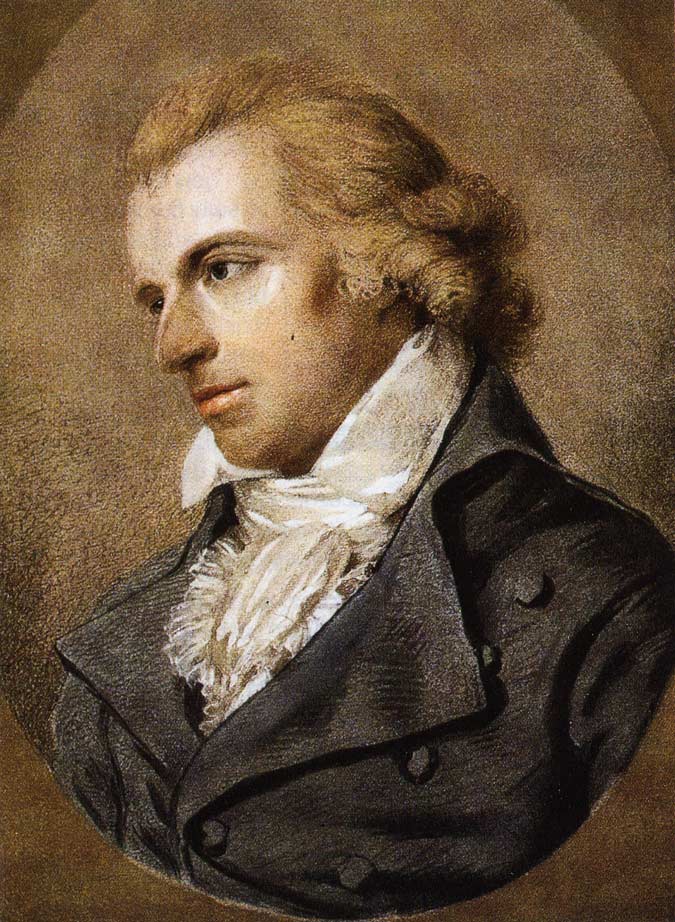
The tormented Beethovenian search seems to contrast with the creation of Fiesco or The Conspiracy of Fiesco in Genoa (Die Verschwörung des Fiesco zu Genua), a tragedy in prose in 5 acts that Friedrich Schiller (1759-1805) began to write in 1782 in Mannheim, immediately after the creation of "The Robbers".
The choice of the city is not accidental, since Schiller was in that place having deserted the army of the Duke of Württemberg. After taking up the position of theater director in the same city (Theaterdichter) and after reworking the tragedy a couple more times, Schiller succeeded in 1784 in staging it in the same theater; however, the success obtained with "The Robbers" did not favor Fiesco, which, although becoming a classic of German prose, never reached the popularity of the first tragedy written by the prodigy of Marbach.
Just as in Goethe's Egmont, what attracted Beethoven was the spirit of Sturm und Drang, namely Plutarchian heroes who stoically fight and die for their ideals. Historical background, freedom, courage, all refer the thought back to Egmont, but also to Leonora from Fidelio, as well as to the unknown heroine Leonore Proaska of Dunker.
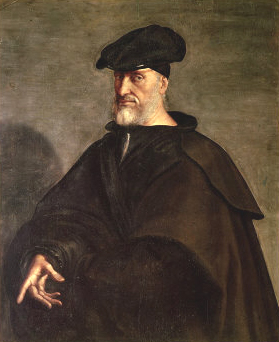
Obeying the strict rules of historical truth, Schiller draws inspiration from a fact that actually occurred in Genoa in the year 1547. With Genoa commanded by the old pro-Spanish Andrea Doria, Gian Luigi Fieschi "the Younger", Count of Lavagna, of the noble Fieschi family and leader of the pro-French party, plots a conspiracy to restore the liberties of the Republic of Genoa, which the conspirators believed had been stifled by the dictatorial power of Andrea Doria.
The insurrection proceeds rapidly, and the pro-French forces seem to take control of the city's defenses with ease, so much so that on the night preceding January 3, 1547, the conspirators manage to seize the harbor. On this occasion, Andrea Doria's nephew, Giannettino, is slaughtered, perhaps by Vincenzo Calcagno, who would pay for his deed a few days later with decapitation at Montoggio.
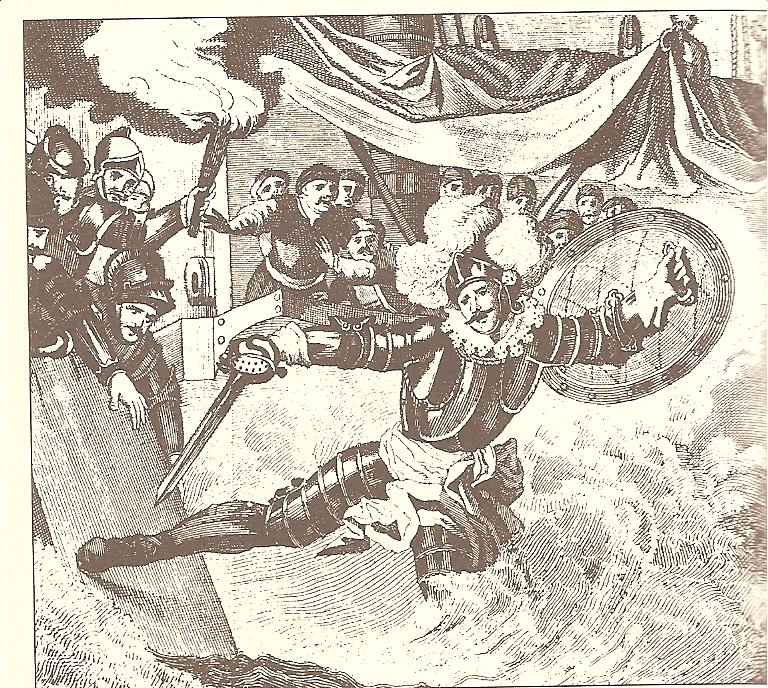
And it is only at this point that fate turns its back on the conspirators. While the galleys loyal to the Doria are being stormed, perhaps weighed down by heavy armor, Gian Luigi Fieschi slips from a gangway and falls into the sea. Dragged to the bottom by the weight of his own weapons, he drowns in a short time.
Only with the death of the twenty-five-year-old commander do the conspirators scatter and flee. The retaliation of the Doria, as passed down to us by the young Cardinal de Retz and the Scottish historian William Robertson, was terrible. From January 12, 1547, the hunt for the Fieschi began.
Decapitated: Gerolamo, Cybo"}
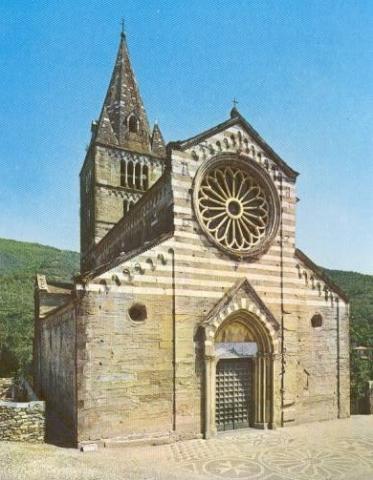
and other conspirators, killed all the descendants residing in Genoa. Their palaces were burned and razed to the ground, including the famous and magnificent Palazzo Fieschi in via Lata; marbles and furnishings were sold. Their holdings in Genoa and Liguria were eliminated, being absorbed into the territory of the Republic, and their assets were seized. The few survivors, who made great Genoa by donating two popes, Pope Adrian V (Ottobono Fieschi) and Pope Innocent IV (Sinibaldo de Fieschi), as well as Saint Catherine Fieschi Adorno (1447 – 1510), found refuge at the court of Versailles.
The harshness of the repression, which can only be understood by reflecting on how devoted the Ligurian people were to the good of liberty and the Republic, caused the survivors to even change their surnames, beginning the rapid decline that would lead to the extinction of the dynasty at the end of the eighteenth century.
Exactly respecting the rule that I have already had the opportunity to mention, Schiller observes the unity of place and time: the action indeed takes place in the palace of Count Fiesco in Genoa and does not extend for more than three days, precisely from midnight on December 31, 1547, to the night between January 2 and January 3, 1548.
In the preface to the book, the poet cites the sources from which he drew some of the protagonists of the tragedy, namely the aforementioned books by Retz and Robertson. Furthermore, from the progression of the plot, the freedom with which Schiller manages to recreate a plot functional to his work is evident.
Here are the protagonists, with their physical and moral descriptions, as they are presented to us in the tragedy:
· ANDREA DORIA, Doge of Genoa, a venerable old man of eighty years, showing clear signs of a high spirit: the main characteristics of this character are dignity, conciseness, and an aptitude for command.
·
· GIANNETTINO DORIA, nephew of the former and claimant to ducal power, twenty-six years of age, coarse and foul-mouthed in language, behavior, and manners, with a vulgar pride and disgusting characteristics. Both Dorias wear purple.
·
· FIESCO, Count of Lavagna, leader of the conspiracy, a tall, handsome young man, twenty-three years of age; his character is one of dignified pride and majestic affability; courteous, elegant, and malicious. The nobles wear black.
·
· VERRINA, a determined republican, sixty years of age; grave, austere, and inflexible.
·
· BURGOGNINO, a conspirator, a young man of twenty years; frank and likable, proud, quick, and spontaneous.
·
· CALCAGNO, a conspirator, a thin thirty-year-old libertine; hypocritical and enterprising.
·
· SACCO, a conspirator, forty-five years of age, without characteristic features in appearance.
·
· LOMELLINO, Giannettino's trusted man, a courtier.
·
· LEONORA, Fiesco's wife, eighteen years of age, great sensitivity; slender and pale, fine and sensitive, with a melancholy face. She wears black.
·
· GIULIA, widowed Countess of the noble Imperiali, sister of the youngest of the Dorias, twenty-five years of age; a proud coquette, tall and shapely, her beauty is marred by affectation, malicious character, sarcastic expression. She wears black.
·
· BERTA, Verrina's daughter, an innocent girl.
·
· ROMANO, a painter, frank and simple with the pride of genius.
·
· MULEY HASSAN, a Moor from Tunis, a soft character, an original mixture of rogueishness and humor.
·
· ROSA, ARABELLA, Leonora's maids.
·
· A German from the ducal guard, of honest simplicity and proven valor.
·
· CENTURIONE, CYBO, ASSERATO. Three seditious citizens.
·
The plot, written at the time with two different endings to meet the requirements of censorship, is quite close to the reality of the facts. The tyrant of Genoa is not Andrea Doria, but his nephew Giannettino (and this can be considered truthful: Andrea Doria, already undermined by gout, was mostly confined to his sumptuous palace).
For Schiller, the great admiral Andrea Doria had made the Republic of Genoa stronger and more prosperous and, although he had later transformed the dogeship into a lordship, he had preserved the republican liberties of Genoa. His successor, his nephew Giannettino Doria, is instead an irascible and vulgar despot whose regime soon provokes in Genoa a conspiracy against the Dorias orchestrated by Verrina, an ardent republican, whose daughter Berta had been raped by Giannettino.
Also for Schiller, as for Cardinal de Retz, Fiesco, Count of Lavagna, is apparently one of the many Plutarchian heroes who, in the name of country and liberty, rebel against oppression and are therefore easily convinced by Verrina to join the conspiracy. The conspiracy is crowned with success: the Dorias are overthrown, Giannettino is killed, and the republicans delude themselves into thinking they have regained liberty. However, even Fiesco, who has himself proclaimed Doge, aspires to
signoria: his immeasurable ambition is deaf even to the love of his wife Leonora and to the protests of the honest Verrina.
This man realizes that Fiesco is not a new Brutus, an avenger of republican liberties, but a new Caesar, an aspiring tyrant, and as such he must be stopped: not with dagger blows, but thrown into the sea with a shove. The true Brutus, the austere republican Verrina, will turn to old Andrea Doria, asking him to rule the city once again and guarantee its peace.
In conclusion, what was the psychological trigger that prompted Doctor Johann Baptist Bach to propose this very drama to the composer, which in many ways is so far from their Central European experience?
The transposition of Leonora's fidelity in Fidelio becomes here a fidelity at an even higher level, namely dedication to the good of the Republic. "Republics will be formed almost everywhere in Europe," Beethoven himself had said with a premonitory spirit. In this sense, the true Hero is Verrina, a man willing to return command of the Republic to the old tyrant Andrea Doria: a tyrant, yes, but an enlightened one.
Time, and the progression of his final illness, will turn Fiesco into a silent musical staff, but perhaps, on second thought, as Grillparzer said, "by then Beethoven had become so accustomed to granting boundless freedom of action to his fantasy that no libretto in the world could have contained its outbursts within due limits."
BIBLIOGRAPHY:
Numerous are the publications on the life and work of Schiller, which I will not mention.
Indispensable is the volume by Agostino Mascardi "La congiura del conte Gio. Luigi de' Fieschi" Gammarò Editore, 2007 ISBN: 8895010264
Interesting is the volume I Fieschi: potere, chiesa e territorio by Marina Firpo Frilli Editori
A unique discovery was the performance made within the scope of the cultural initiatives of Genoa, Capital of Culture 2004, staged on Wednesday, December 15, 2004, with an adaptation by Tonino Conte.
Images
1) Page from a conversation notebook
2) Friedrich Schiller, portrait by Ludovike Simanowitz in 1794
3) Andrea Doria, portrait by Sebastiano del Piombo
4) Death of Gian Luigi Fieschi, in an era lithograph
5) The Basilica of the Fieschi at S. Salvatore dei Fieschi in Cogorno (Genoa)