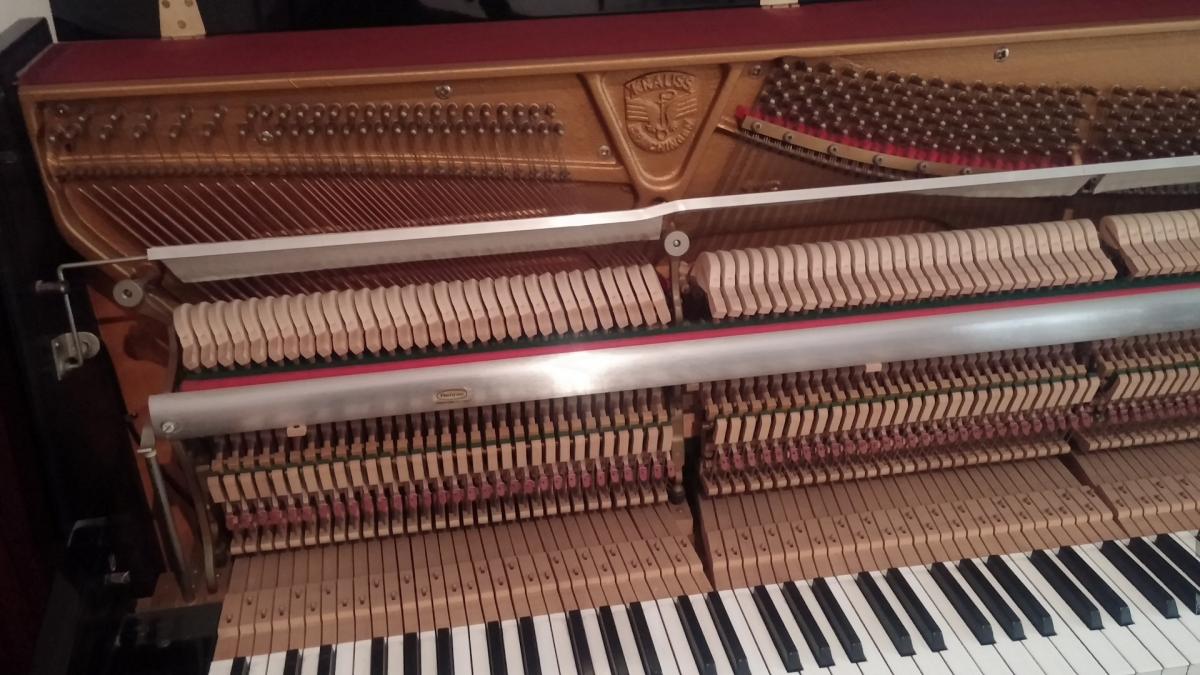
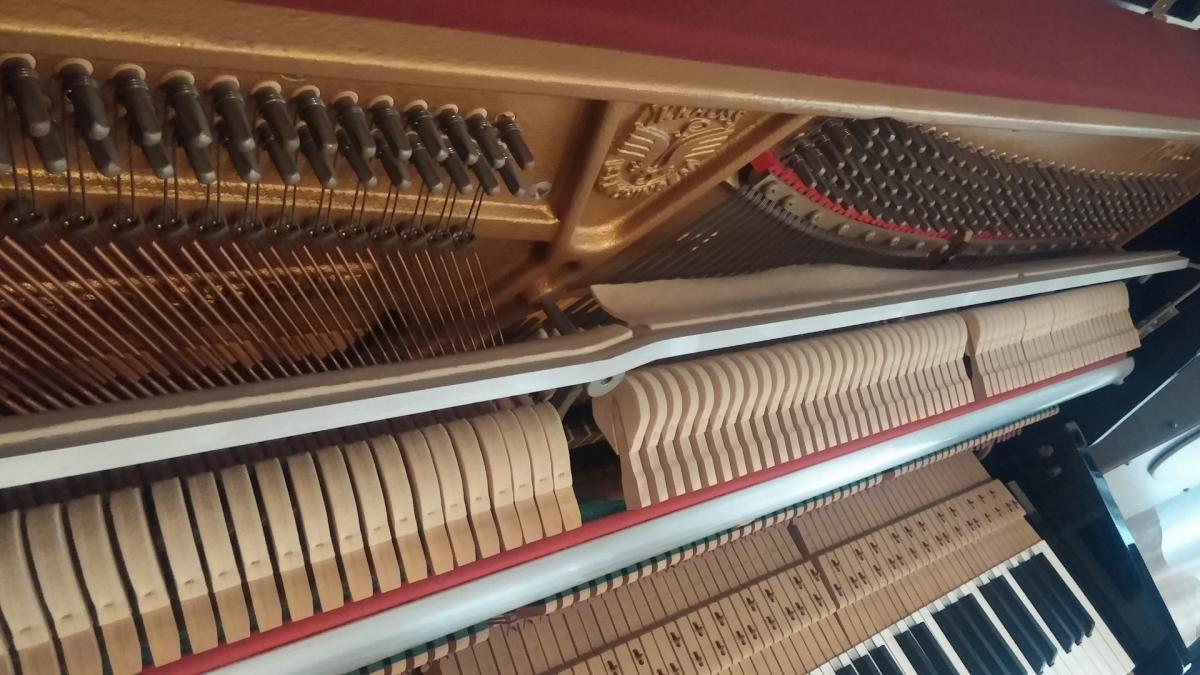
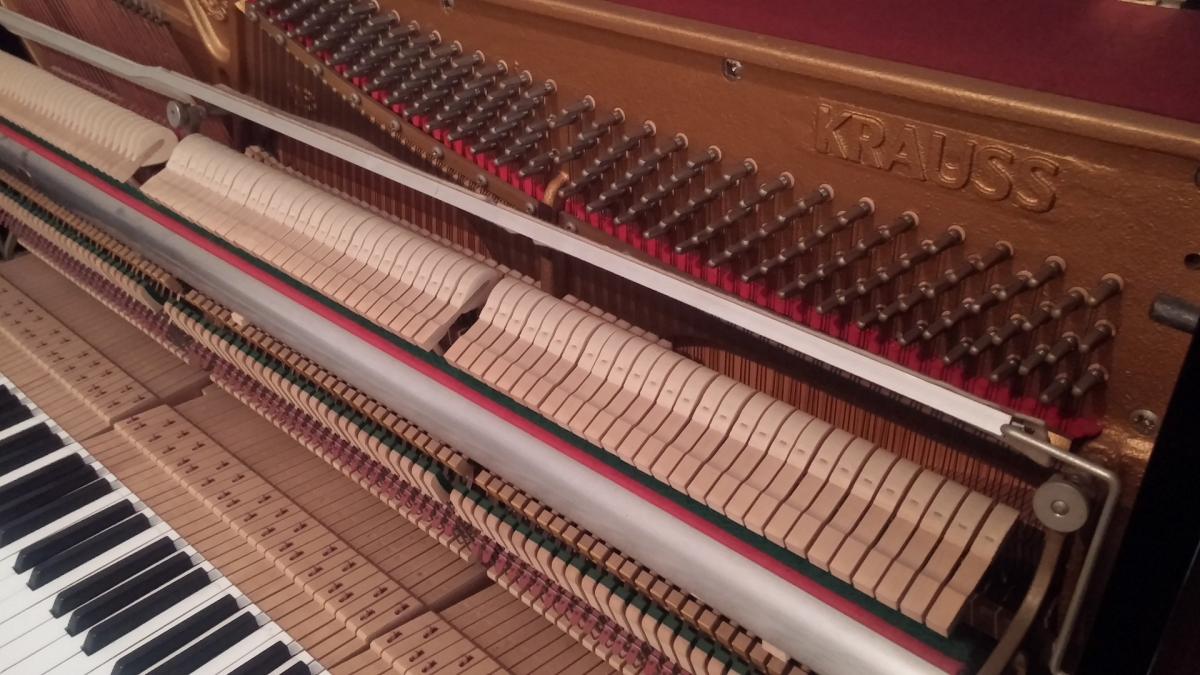
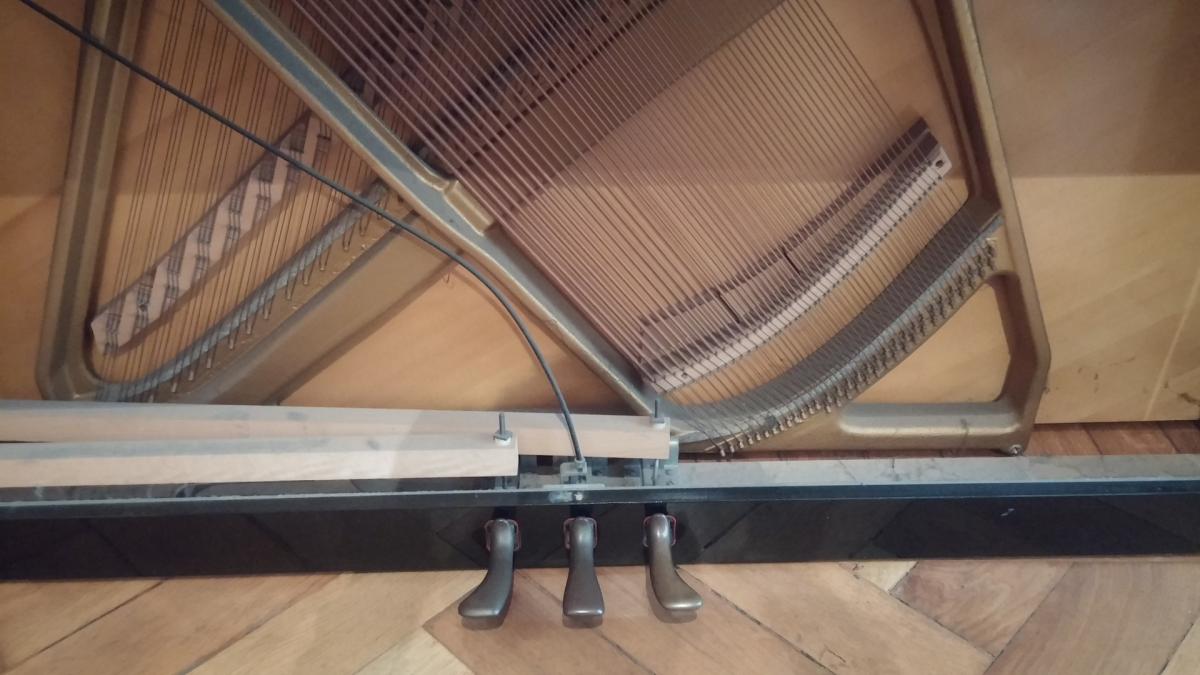
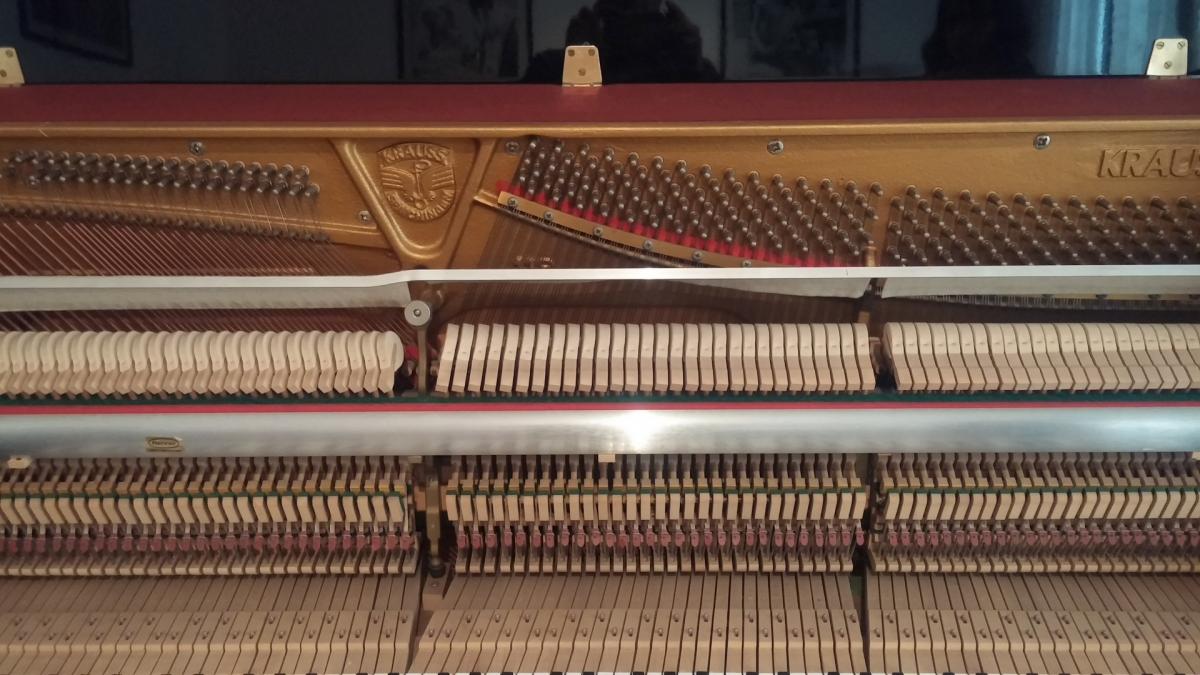
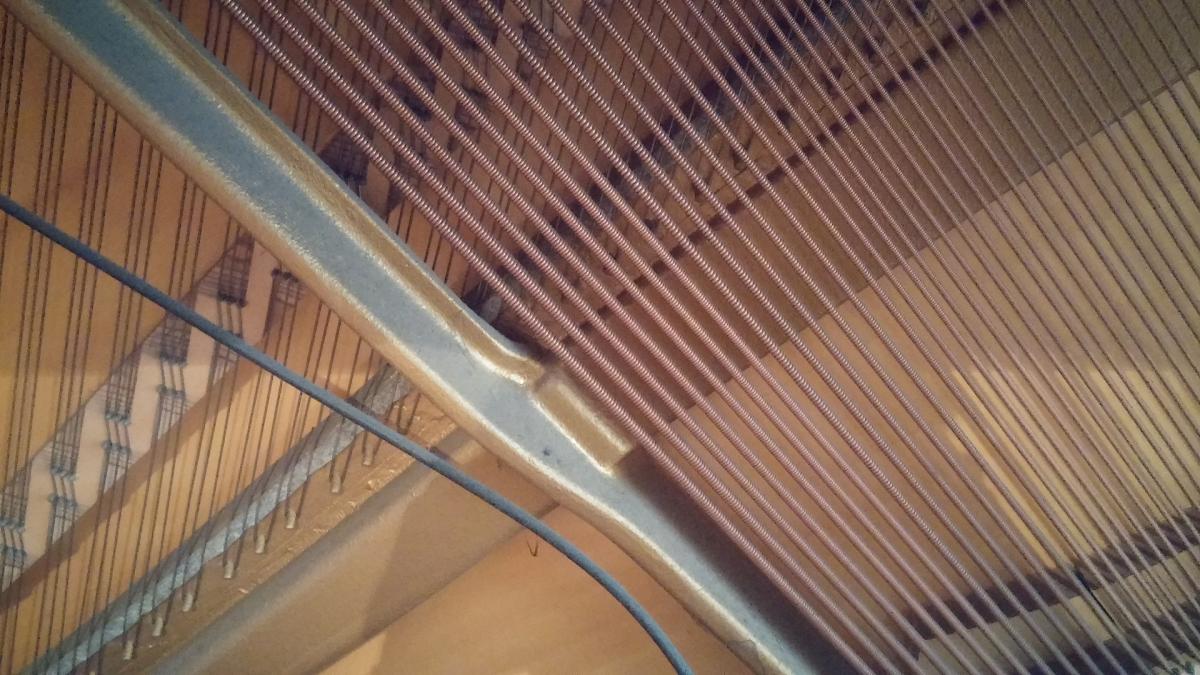
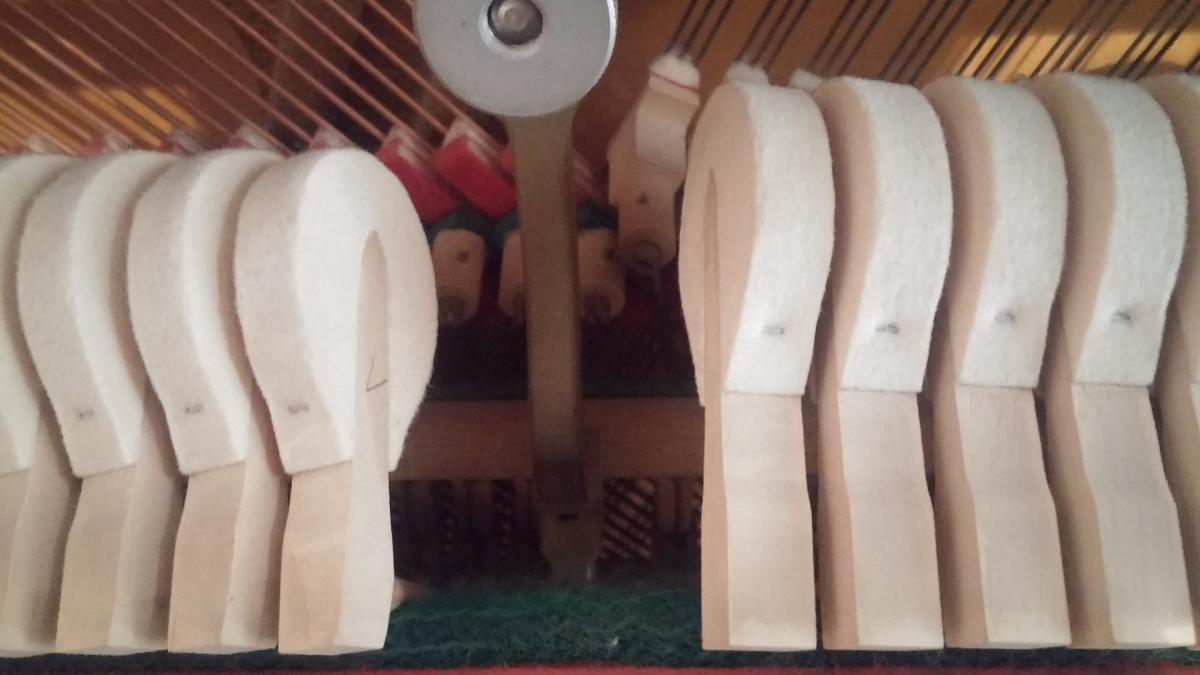
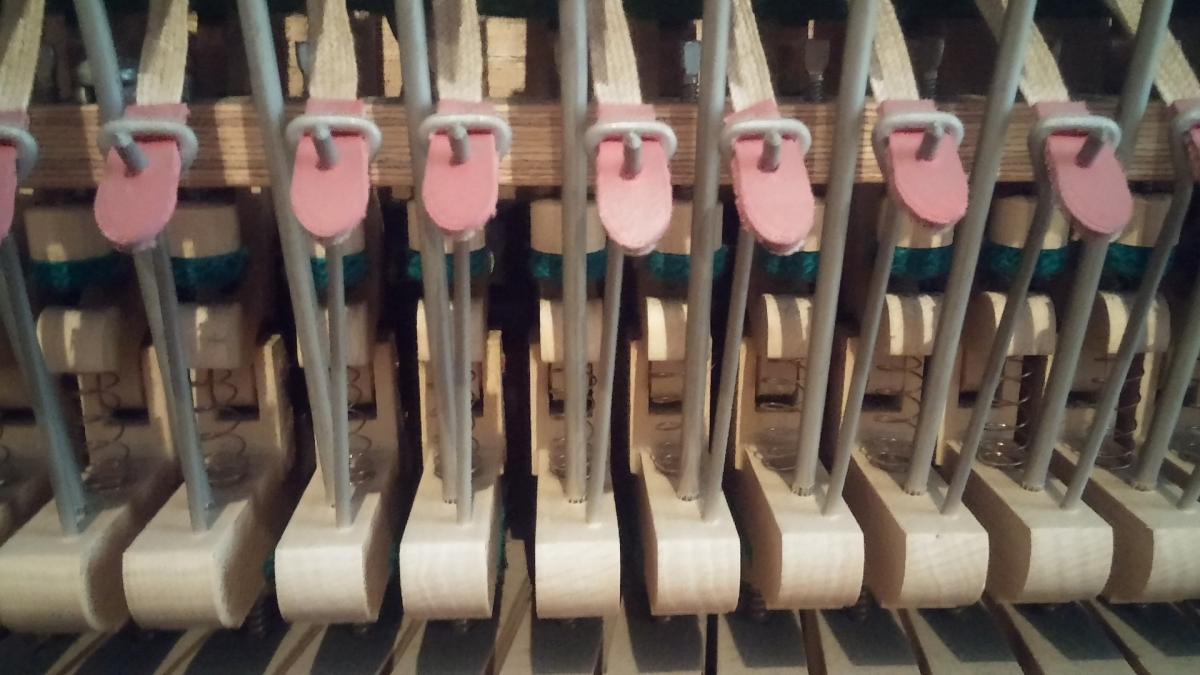
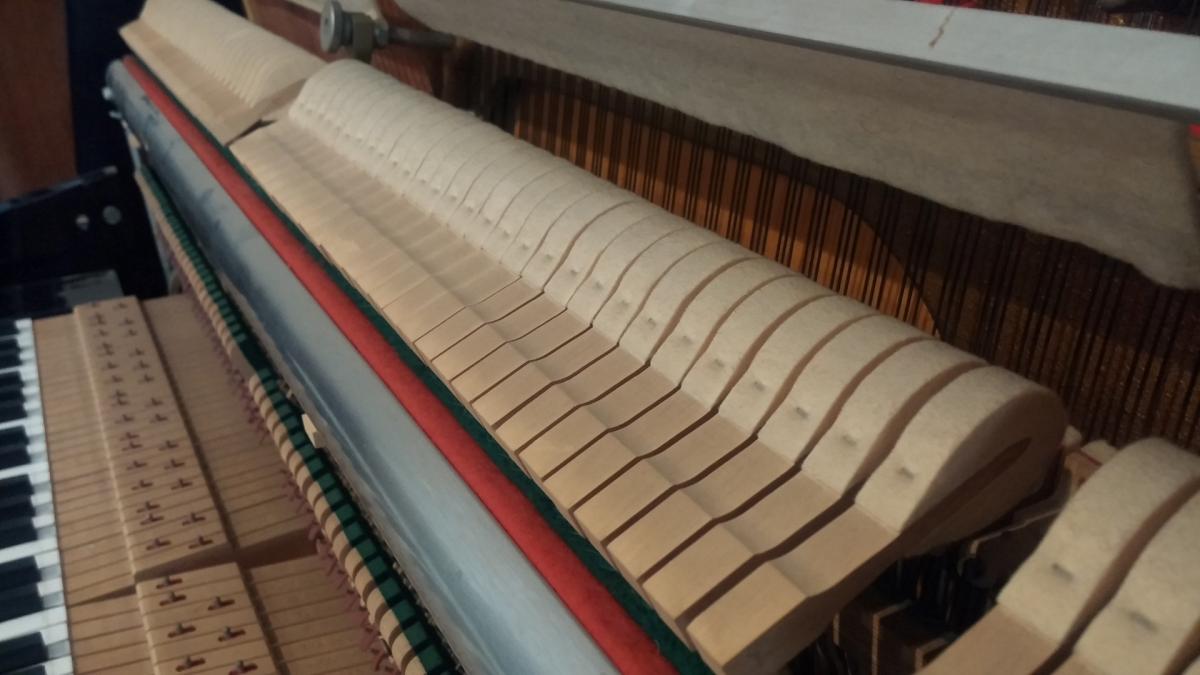
Hello everyone. Looking at the following photos depicting the interior of a 1984 Krauss R2 piano of 118 cm, I would like to ask you: what can you tell me about the state of the action? Is it original? Does it look well-maintained to you? Do the hammers look replaced to you? I have tried the piano in question: it is out of tune and the action is quite unregulated (if some keys are struck hard, the hammer hits the string, returns, and then bounces and hits the string a second time). But setting aside the adjustments that need to be made, do you think there is still something worth saving? What does the general state of wear look like to you?
Don't be shy with the seller and get him to agree to a discount; the mechanics are made of excellent materials and the condition is very good, so if you like the strings and the soundboard of the piano, it's fine, it's a good purchase. As I wrote to you, you will need a picky and precise technician like our good Paolo! Start demanding something from the shopkeeper's tuner; for the record, you will need one at least once every two years, so if you are satisfied with the way he prepares your piano, you will be his customer, otherwise... on to the next one!
The hammer rebound depends on an incorrect key dip relative to the hammer-string distance. As Andry says, it is a great instrument. Well prepared, it can sound wonderful! Let me know
I have a question for you experts: why do new pianos, even from good brands (I have also tried high-end Yamaha and Schimmel, all 130cm), always have very controlled and somewhat closed bass notes? For example, the used Krauss mentioned in this discussion, even though it's only a 118, has very deep, warm, and open bass... Do new pianos need to open up in sound? Or are they simply built worse?
I have a question for you experts: why do new pianos, even from good brands (I have also tried high-end Yamaha and Schimmel models, all 130cm), always have very controlled and somewhat closed bass notes? For example, the used Krauss mentioned in this discussion, even though it's only a 118, has very deep, warm, and open bass... Do new pianos need to open up in sound? Or are they simply built worse?
I'm not an expert, but I believe it is due to the fact that the new and newly regulated action needs time to settle in and perform at its best
Without bothering great experts, I can tell you that it obviously depends both on new materials; starting from the new plate, tuning to get to the core of the ''problem'' on high-quality new pianos—see Schimmel or top-of-the-line oriental brands—the difference in sound is made by the hammer felt! Between a new hammer felt and one well broken-in, there is certainly a difference, but this is assuming equal quality! Then, as for the settling of the woods, bridges, and soundboard, we are entering the realm of psychoacoustics or otherwise fine details for skilled tuners/musicians.
P.S. If I may, I always advise, as a simple student owning 2 pianos, not to rush the purchase; even if it doesn't fit your possibilities in terms of space or budget, go see grand pianos from 160-170 cm and up and get an idea of both the sound and the action.