I report
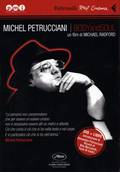
"Body and soul" by Michel Petrucciani
http://www.ansa.it/web/notizie/unlibroalgiorno/news/2012/06/07/-Body-soul-_6996541.html
Started by
Member
Member
I report
"Body and soul" by Michel Petrucciani
http://www.ansa.it/web/notizie/unlibroalgiorno/news/2012/06/07/-Body-soul-_6996541.html
Member
Thank you Oscar
Michel's body rests today just centimeters away from a true monument of music of all time. Petrucciani rests in the Parisian cemetery of Père Lachaise next to Frédéric Chopin.
Re-posting link http://www.findagrave.com/
Chopin
http://www.findagrave.com/cgi-bin/fg.cgi?page=gr&GRid=198
Petruciani
http://www.findagrave.com/cgi-bin/fg.cgi?page=gr&GRid=7755
Other "interesting" sites as well:
Member
Ehm ehm, guitarist ... “cheerful” sites. How modest is Petrucciani's tomb ...
Member
https://www.facebook.com/video.php?v=135367700007879
So now I am dead, damn, and in the tomb near mine is none other than Chopin. If they had told me when I was little, I would never have believed it. Aside from the fact that I never became a big man, because even at thirty-six years old I was one meter and two centimeters tall.
Of course, dying at thirty-six is no joke; it's like a short story that ends immediately, it's a bit too soon, damn, dying at thirty-six. But on the other hand, I already knew, I already knew it would end badly, my life. My life started badly from the beginning, yes, because as soon as I was born I broke into a thousand pieces, I crumbled like a biscuit. Oh yes, because my bones had little calcium in them, and so I have always been like a meringue, which shatters as soon as you touch it. Osteogenesis imperfecta, they called it, which means you have bones that look like breadsticks.
I was ugly even as a child, so I was hungry for beauty. I always watched television, because there were a lot of beauties in there. There were women with long hair and big eyes, and there was the music that I liked. When I was four years old, Duke Ellington was playing on the television once, and it was there, it was right there that I fell in love with the piano, and so I immediately asked my father if he would give me one. My parents bought me one, of course, but since it was a toy piano, out of anger I took a hammer and smashed it, because even though I was only four years old, I wanted a real piano.
The real piano they gave me, except I couldn't reach the pedals, damn, so my father built an extension so that if you pressed it with your feet, the pedals would be pressed too. And, oh, I played that piano so much that even when I wasn't playing it, I couldn't stop thinking about it, because it had gotten into my blood. “I'll send you to classical music lessons then, Michel,” my mother said, and I went, I went for eight years, I went, but at home in the evening I listened to my father's jazz records, which I liked more. My father had an instrument shop and played the guitar, he was good, and he had a great pile of records. I listened to them every day and knew them all by heart, but my father didn't believe it. “Let's hear it,” he said once, and I started and sang all the pieces, I sang them to him one after another. “Shit!” he said, and then he didn't say anything else.
When someone came into the shop to buy a piano, my father would call me and say: “Let him play it, boy, come on,” and I would sit down and start, I'd do a few jazz numbers of the right kind and that person would be stunned, damn, listening with their mouth open, and in the end, they would buy the piano. I was always in the shop, I always had my hands on the keys. And if I stopped, it was only to listen to a record. My parents didn't send me to school, so as not to have me teased by my classmates.
Since I didn't go to school, they would send me tapes from school with recorded lessons, but I didn't even listen to them, the tapes. I recorded the music I played on them, so I could listen back to myself. I would listen to myself and calculate the difference between me and Bill Evans, who worked magic with the piano, and he always seemed better to me.
Then one day Terry arrived. When the trumpeter Clark Terry happened to be in my area, his pianist ate some junk food and got the runs, so Terry was looking for a pianist to accompany him, and people told him that I was in the area, but he said that a thirteen-year-old boy was too young to accompany him, and that such a thing had never been seen anywhere. And when he finally saw me, he said I looked even smaller than a thirteen-year-old, and that he would never play with someone like that.
But when they put me on the stool and I started going at it, he said he had never heard anyone so good, and damn, if I could go. I liked Clark Terry, folks, he was a decent guy; he had started playing as a boy, in bars and then in the Navy band, but then he had also played with the great Duke, and now he wanted me, he really wanted me. So I entered the scene a bit, and at fifteen I even played with Kenny Clarke, a Black man who was someone who hit hard on the drums and also on the vibraphone, and who had invented a new way of playing the cymbal. Guys, he made it talk, he made it talk.
Aged eighteen I ran away from home, took my stuff and went to Paris where I recorded my first album. I started playing purely with Lee Konitz, someone who had learned the accordion by himself, and then the clarinet and then also the saxophone, and he knew how to handle the saxophone, guys, he really knew.
And even though I had no money and walked poorly, at nineteen I took a plane alone; I paid for the ticket with a blank check and went to America, because that was where the great jazz musicians were, it...
I knew, and I wanted to play together with them.
And there I met Charles Lloyd, who by then was playing the hippy in the middle of the woods and who was sad and no longer played because his pianist had abandoned him, and when I arrived, through my own fault, he started playing the sax again with me and two other crazies and together we made a fine quartet. We played in a lot of cities, and it always went great, and when we played in Montreux my name was written large on the door at the entrance, Michel Petrucciani, and in a newspaper they wrote that that concert demonstrated the true stature I had achieved in such a short time, and I remember that when I read the word stature in the newspaper at breakfast, the orange juice went down the wrong way and from laughing I even fell off my chair, and for a moment I almost broke myself. I played with them for three years and after that I left and began to play alone.
I loved it, the piano. During rehearsals I would touch that polished case. When I looked inside I saw the teeth of the piano laughing. And that keyboard so long. I had a bony callus in my shoulder that didn't let me spread my arm properly, and at concerts, to reach the end of the keyboard, I would hop on the seat like a blackbird. People, because I leaned forward, were afraid I would fall, but I never fell, because with my other hand I held onto the piano. Once, when I felt the audience all tense, I stopped and asked:
“How is it going?”
Then everyone laughed and settled more comfortably in their armchairs, and I continued.
At concerts there were always beautiful women who would carry me onto the stage, they would carry me in their arms like a child, since I only weighed twenty-five kilos, but then at twenty-five I learned to walk with crutches, and from then on I climbed onto the stool by myself, without fear, because my hands always had a great urge to touch the keys. When they carried me onto the stage, even though I was French I felt Neapolitan and swaggering like my grandfather who also played the guitar, and as soon as I started playing they said you could really see that I was taken by the music, well, you could tell from how I held my head high with my eyes lost in the air, without looking at the keyboard. But I held my head up only to breathe better, otherwise there wasn't enough oxygen.
Sometimes a bone would break while I was playing, a collarbone, I don't know, a rib, a shoulder blade, but I kept the pain to myself and stayed quiet, and I never stopped playing, because it was beautiful like when you make love.
And one evening after a concert there were two girls, one with dimples and one with a ponytail, and the one with the dimples looked at me and had eyes pitch black, and her name was Erlinda, and I smiled at her, and she, in front of everyone, took me in her arms and kissed me. And so after a while we got married. She wasn't just any woman, Erlinda Montano. She was a Navajo Indian, heavens, a redskin. A redskin and a dwarf, guys, can you imagine? I was twenty-one then, and one of my records came out that had a piece in it called Erlinda after her. She listened to it and smiled, and her dimples showed.
And with Erlinda I was happy and I would go to the seaside, and at the seaside I would buy myself floral shirts and shirts with palm trees, Hawaiian shirts with short sleeves that made me feel immediately on vacation. And I didn't buy them in big stores, the shirts, no, I bought them in children's stores. Ah, I felt so good, with Erlinda.
And then came Eugenia, who always told me that under the covers I knew what I was doing, and I liked making love, because it was just like playing the piano. And when I caressed her Eugenia would say, such warm hands, Michel, such warm hands, and I really felt them warm, my hands, as if there were hot music inside wanting to come out.
And to Eugenia too I dedicated a piece called Eugenia after her. I liked Eugenia a lot, and I stayed with her for five years, and I left her the day before the wedding because I had met Marie-Laure, who gave me a son, Alexander, with my same illness. Eugenia cried as much as she could when I told her I was leaving her, but that there was nothing to be done, one cannot love when one does not love. Now I was with Marie-Laure, I loved her, and when I asked her if she found me handsome, Marie-Laure said I was beautiful, and that the music stayed inside me like a flower in a vase, and when it came out it was fragrant.
Playing made me feel good, guys, you can't imagine, my hands would turn to fire. With my hands on the keys I was happy.
I composed. Once I wrote a slow piece of only four notes that I liked very much. Perhaps it was the most beautiful, because it was beautiful and simple, and sweet like a poem. Cantabile, it was called, Cantabile, because it made you want to sing it like a song, even though it had no words.
And one day in Bologna together with Lucio Dalla I also played before the Pope, and Lucio played the clarinet which sounded as if it were crying, and I played like a prayer. In the end John Paul was moved, and I too was moved, and I wanted to kneel and I couldn't. And I remember that while
I used to play, the monsignors would tap their feet to the beat, and with their hands they would sway their skirts in time, and damn, it was almost time for them to get up and start dancing.
When I played sometimes I would put strange things on my head, Sicilian caps and large hats that looked like sombreros, and I would sweat inside them but I wouldn't take them off, I kept them tight and went on, and I would sweat terribly inside the shirts that in the end were so wet that if you squeezed them water would come out, and I would descend from the stage soaking wet with sweat, and when I came down from the stage I was never alone, because the women wanted me, they ran after me, people, for kisses and autographs, and so after Marie-Laure came Gilda, and she too played the piano, she played classical music and she liked Chopin. She was Sicilian, taught at the conservatory, and without ever having spoken to me before she told me that she had been following me for many days, because once at a concert the memory of my hands had remained with her like a companion. And I loved her so much that I married her, Gilda, I married her and after a little while we divorced.
And last came Isabelle, with light eyes, Isabelle who loved me more than all the others, who tried to make me live in a Parisian house and tried to make me stop drinking and using drugs.
And I wanted all these stories because I wanted to live love stories with beautiful women, love stories like those I saw on television, where the groom picks up the bride in his arms, carries her into the room and then they kiss. Only that my women were the ones who picked me up, and I gladly let them.
Volevo dormire con delle donne belle, cavoli, ma certe notti dal dolore nelle ossa non dormivo, e quelle notti che arrivavano una dietro l'altra la spalla, i nervi, il polso, l'osso del ginocchio li sentivo a uno a uno. Solo le mani erano forti e sempre calde.
I wanted to sleep with beautiful women, damn, but some nights from the pain in my bones I couldn't sleep, and those nights that arrived one after another, I felt the shoulder, the nerves, the wrist, the kneecap one by one. Only my hands were strong and always warm.
But at concerts I played and played, guys, you should have been there, and the notes from the soundboard of my piano came out like shadows that had a voice, and rose high up and then fell down, and they were a crackling rain that fell in buckets on the people listening, on my gnawed bones, on my heart.
Playing was beautiful, it was my life. With my feet I went slow, you understand, but with my hands I went at a hundred miles an hour and I always felt them warm, I felt them, my hands, and I saw the keyboard smoking. I played and I went out into the world, and in all the world I held a lot of concerts, and in the last year of concerts alone I counted two hundred and twenty.
I played, I played, I always played. I would climb onto the stool and then I would take off like a rocket, I would go into orbit. I always had spotlights in my face while I played, and in the dark I saw nothing, but those down from the stage in the dark, I felt them holding their breath while I hammered on the keys, and no one ever coughed, no one coughed, and no one ever blew their nose.
And when I started from the fingers all that music would come out of me, it would come out, it came out like fresh water, it soaked the keyboard and went down onto the wood of the stage planks, it flowed down onto the floor and soaked the feet of the spectators one by one, and rose up their legs and went up, and they would get cold, and in the end with the lights on you could see them all wet, standing, all drenched, clapping their hands. And after the women would come into the dressing room and kiss me. And I knew that I was ugly, but with music and women, all the beauty came to me.
I earned well, I earned. Unbelievable. They gave me a lot of money, guys, and when I played with the other musicians I always divided it in equal parts, even if they weren't famous like me. And with the limousine we went to four-star hotels and how I loved it. In the room I would flip all the switches and turn on all the lights at once, I would turn them on, and then I would open the fridge and drink everything that was there, and every night I took a bath in the tub with foam inside.
Once in Bergamo while I was playing I broke my right arm, but no one noticed, because I played the whole time with my broken arm as if it were nothing. At another concert one evening we played for two hours, it was deathly hot and I sweated like a fountain. My hands were burning, my head too, I was tired and my back ached, and I only wanted to go back to the hotel and lie down in bed. But they asked for an encore, and then another encore and another one, and so I played for another half hour, I played, and at home the doctor said that I had broken my coccyx, which is the buttock bone, the last bone of the spine before the ass.
After concerts my doctor would visit me, he would shake his head and say enough, Michel, enough, you can't go on like this. And then with his hands in his pockets he would walk up and down the studio, he would look at me askance, he would get angry and forbid me from doing more concerts, but instead I would smile and do them. I did them because they were my life, the concerts, like food, women, and friends.
I liked it, life, damn. I
They enjoyed so many things. Playing, making love, being with friends. Even eating; I loved it, and sometimes friends would come over to the house and I would cook, and we would eat and drink heartily, with wine, sweets, and homemade pasta, and the dish I made best was Pollo alla Petrucciani, which was finger-licking good. And when I cooked the chicken, I put my heart into it, I really went for it, and I did it well, and doing it well was harder than playing the piano. We would eat and drink, and at some point, there was always someone playing.
And, after eating, when everyone was leaving, I would play on the rug with my son Alexander, and we would play quietly because he had bones like ricotta cheese just like me, and one day, while we were playing quietly, all of a sudden he made a sad face, looked at his mother and said: “Why did you make me?”
I was going full throttle, playing everywhere and with everyone by then. When I played with Dizzy Gillespie, I saw that he had a completely bent trumpet, and I asked him how on earth do you play? And he replied that it was his wife who had bent it by hitting it against the floor, and that since then the trumpet sounded much better. I played with Miles Davis, whose trumpet brought out melancholy. And then I played at the Blue Note, which I would never have even dreamed of, the Blue Note, wow.
Mio padre was proud, he used to say that I was really good with the piano. That I was the best. “When I am no longer here,” he would say, “you play, always play, Michel, and while you play remember that I will always be above you, watching you from up there.”
And instead, now it is I who looks down at him from up here.
A Christmas came, and I hated Christmas, because as a child at Christmas and New Year's I was always in the hospital with some broken bone.
Finally, a Christmas came when I was all in one piece and only had a bit of a cold, and after came New Year's, and on New Year's, while going for a walk on the beach hand-in-hand with my woman, I caught that pneumonia, and on the beach I fell to the ground like a dried fig. I pulled myself up from the ground and things were no longer things, they were shadows. So Isabelle took me in her arms and kissed me, and then we went to the hospital. Sitting on the chair she had that strange look, coming from those clear eyes full of fear. And from the bed I watched her crying with those big, clear eyes and I smiled and thought that being so ugly, I was happy to have such a beautiful woman near me, and I thought that I had always had beautiful women by my side. And then on January 6th, from under the blanket, I told her that my hands were cold and asked her if she wanted to warm them for me.
She then took my hands in hers and warmed them, and after a moment she went out to get me a coffee, and right at that moment I died, wow, on January 6th, and now here near Chopin I feel like laughing, thinking about it, because I, surrounded by beautiful women, died just as the Epiphany was arriving.
taken from: Antonio Ferrara, in “Parole Fuori” Il Castoro editions, Milan, 2013