I have just joined the forum, and I would like to take this opportunity to compliment you on the excellent resources I have found.
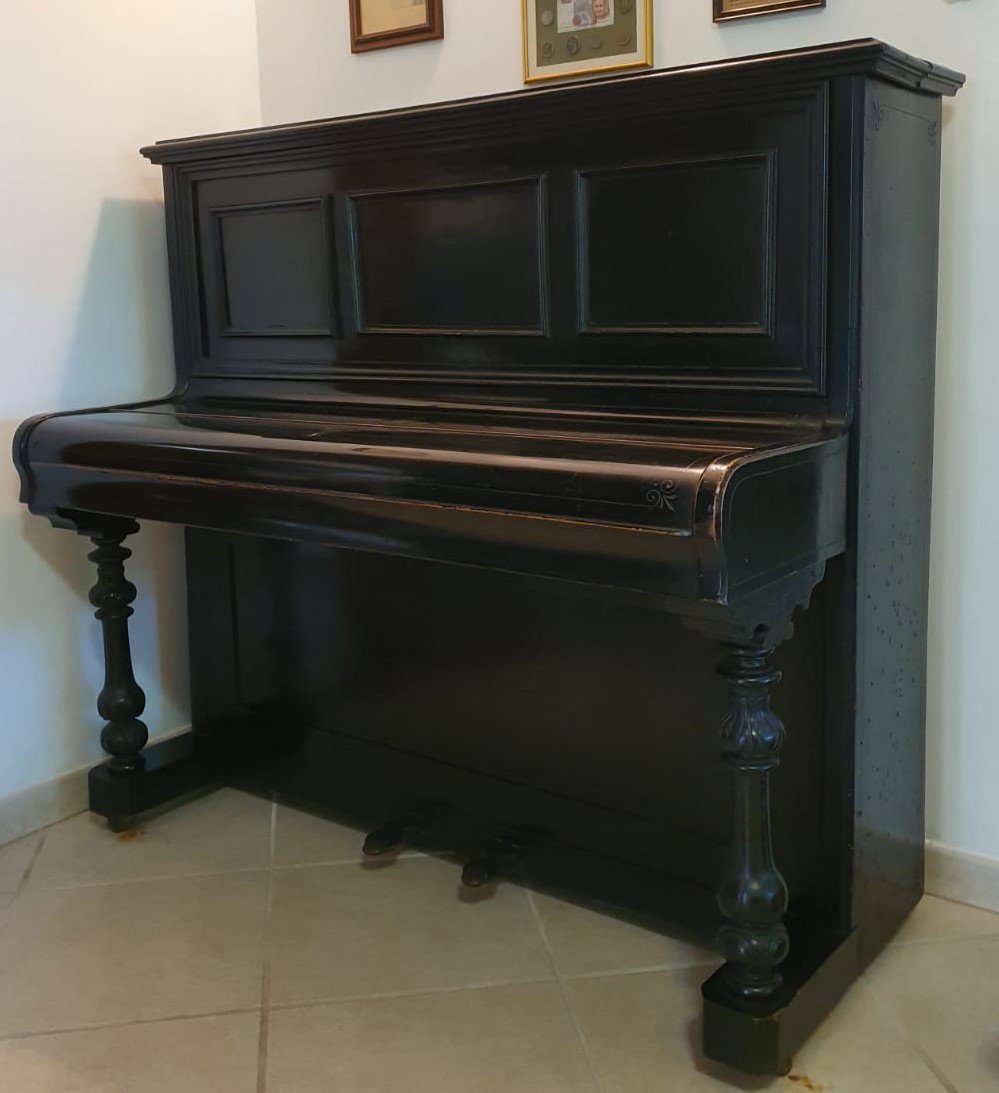
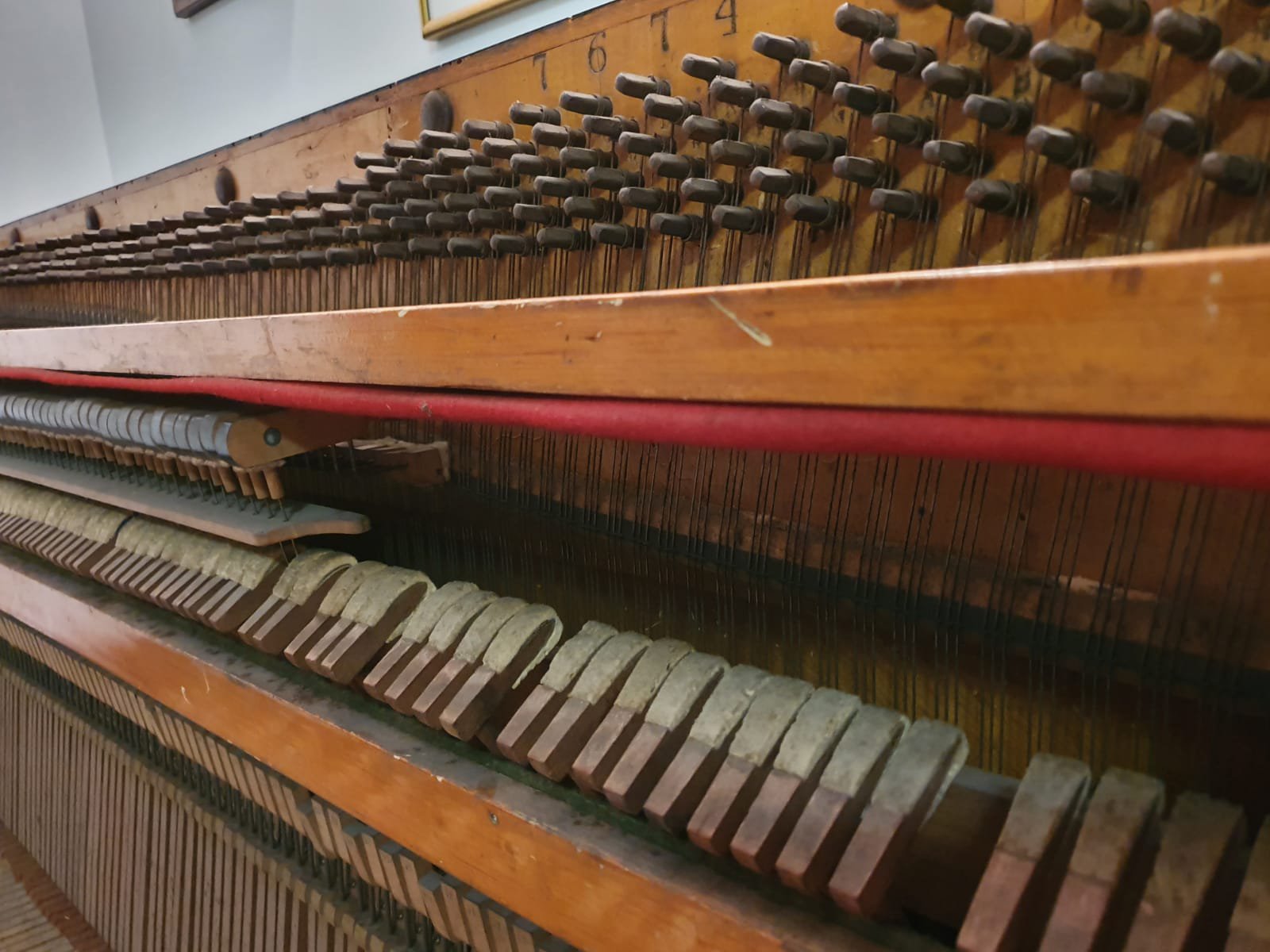
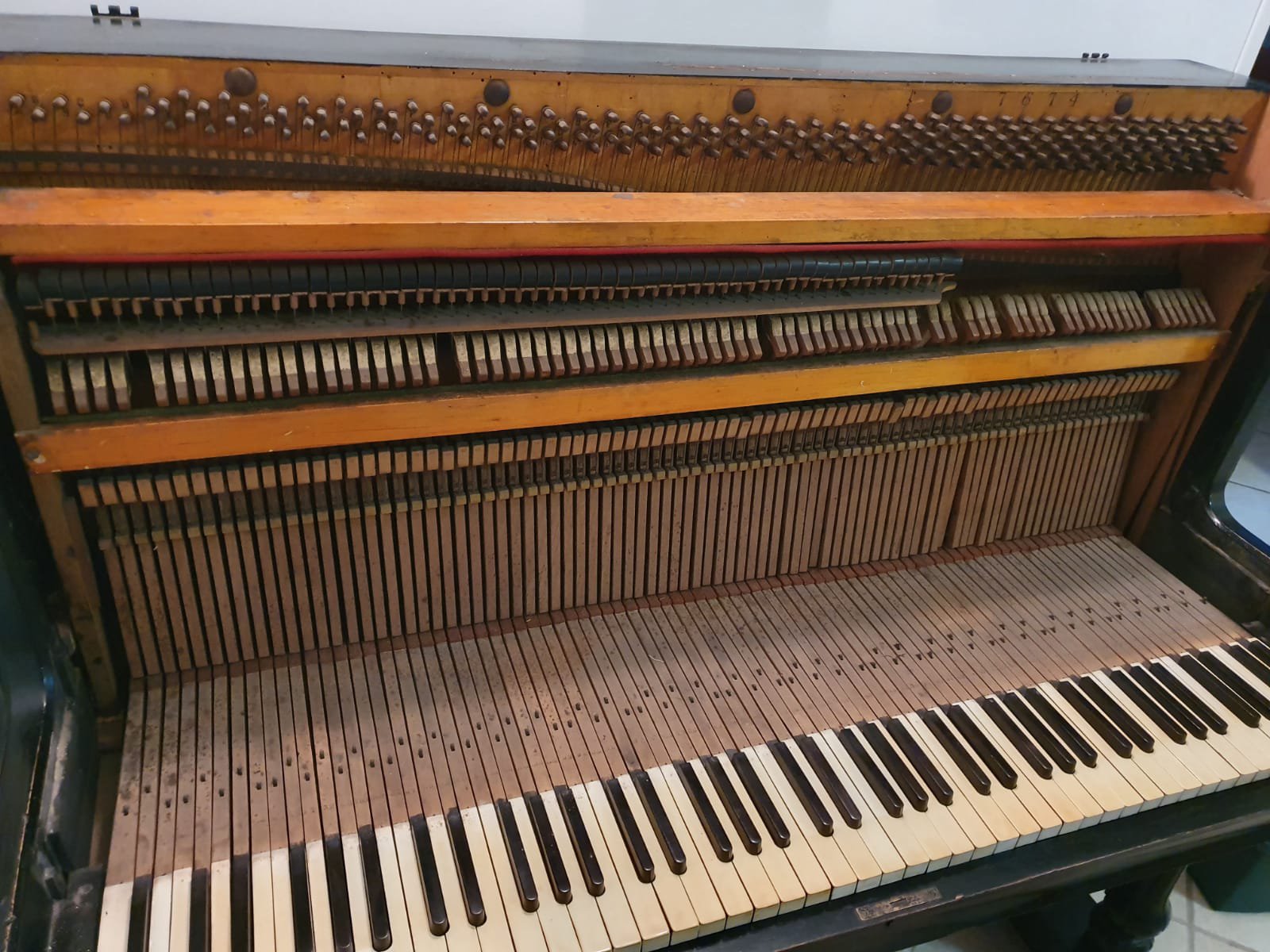
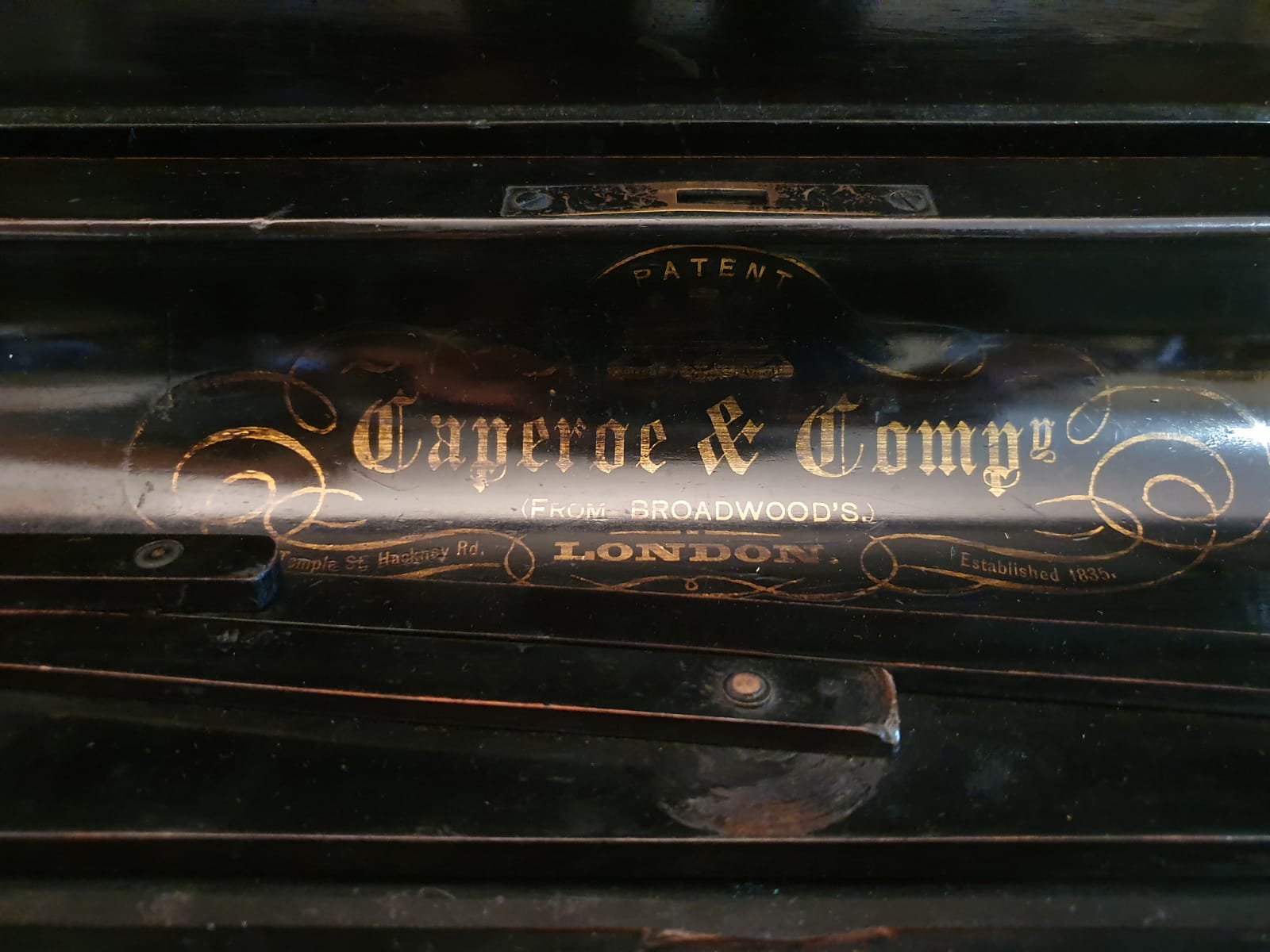
I am a young man with a passion for the piano but with rather limited knowledge. Recently, I have been thinking about looking into an old piano passed down through generations (likely belonging to my great-grandfather) which no one has cared for for years. It is a Broadwood with bayonet or bird cage action (alas), non-cross strung, and 85 keys. Looking at the website (http://www.broadwood.co.uk/serial_numbers.html#Cottage Uprights), I presume it is a "Cottage Upright"; judging by the serial number (7674), it seems to have been produced between 1845 and 1850, but I am not certain of this reconstruction.
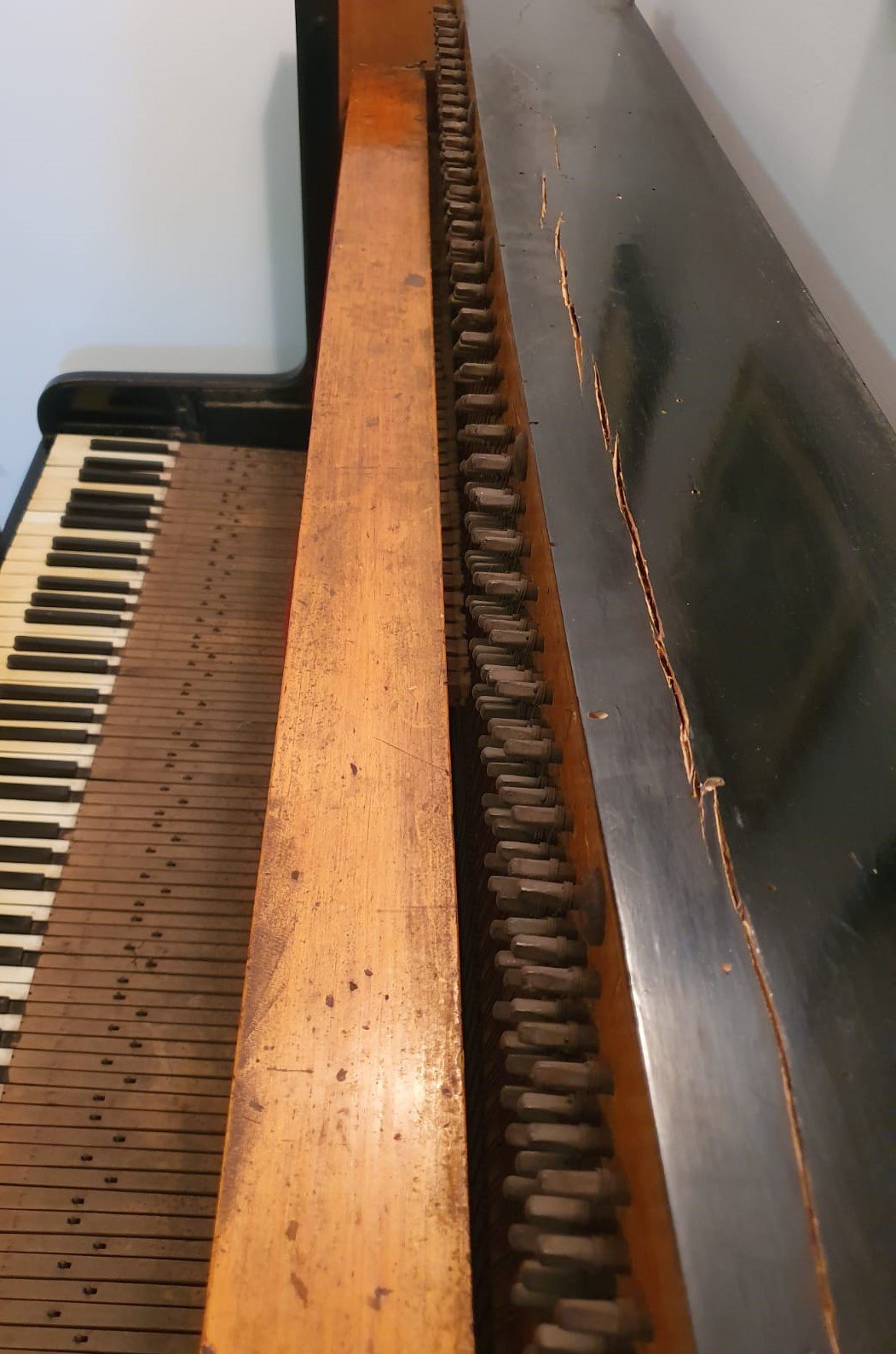
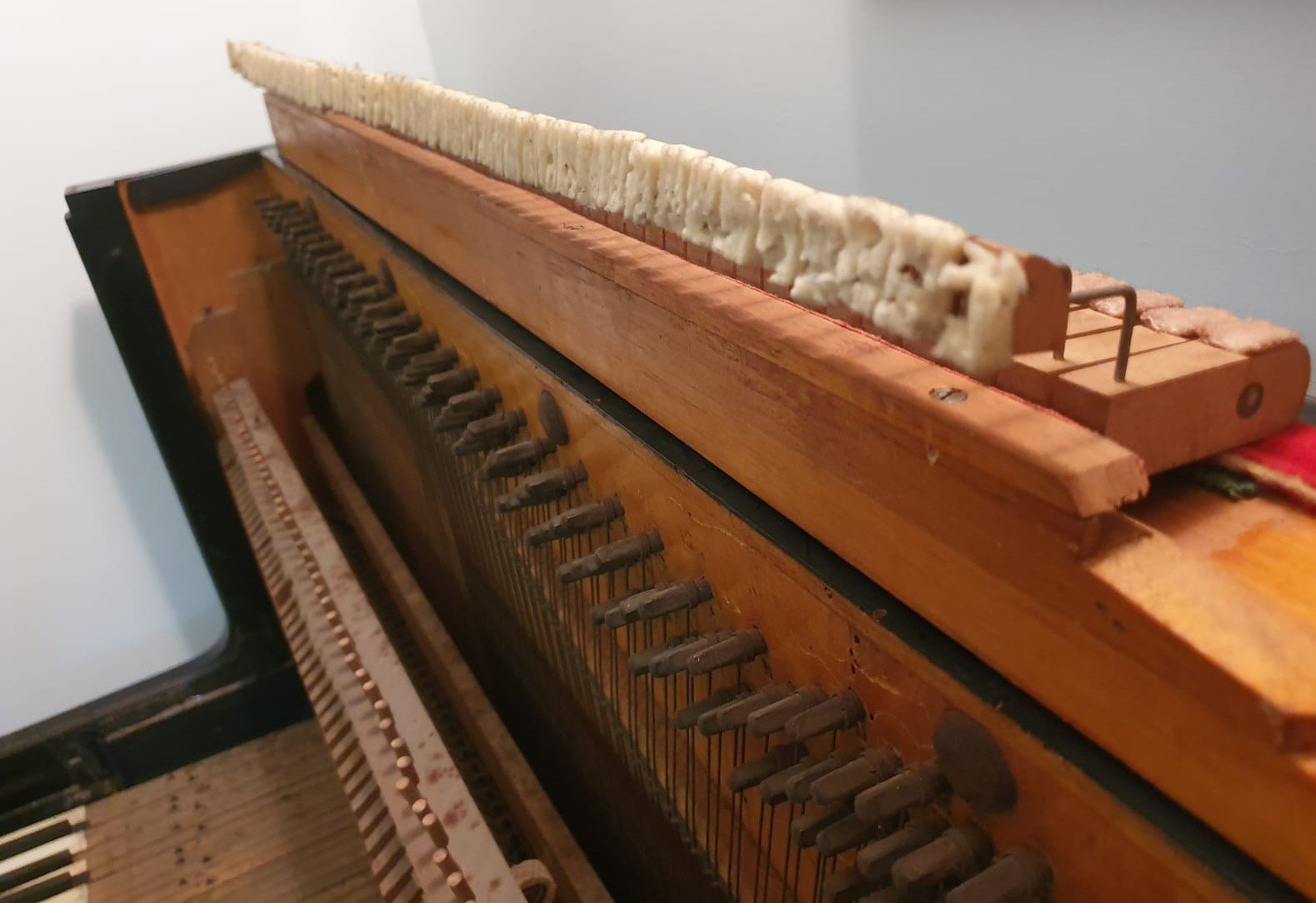
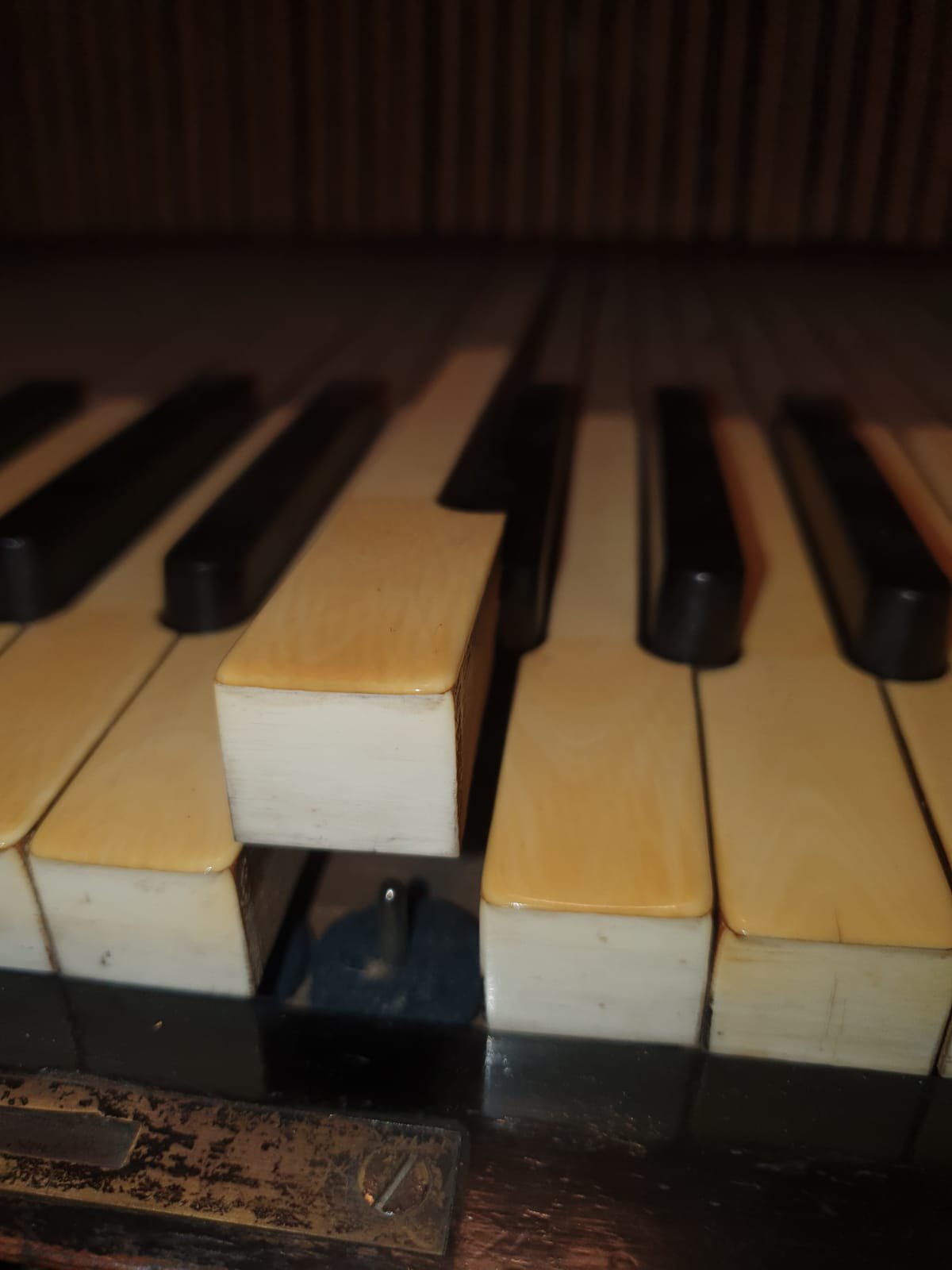
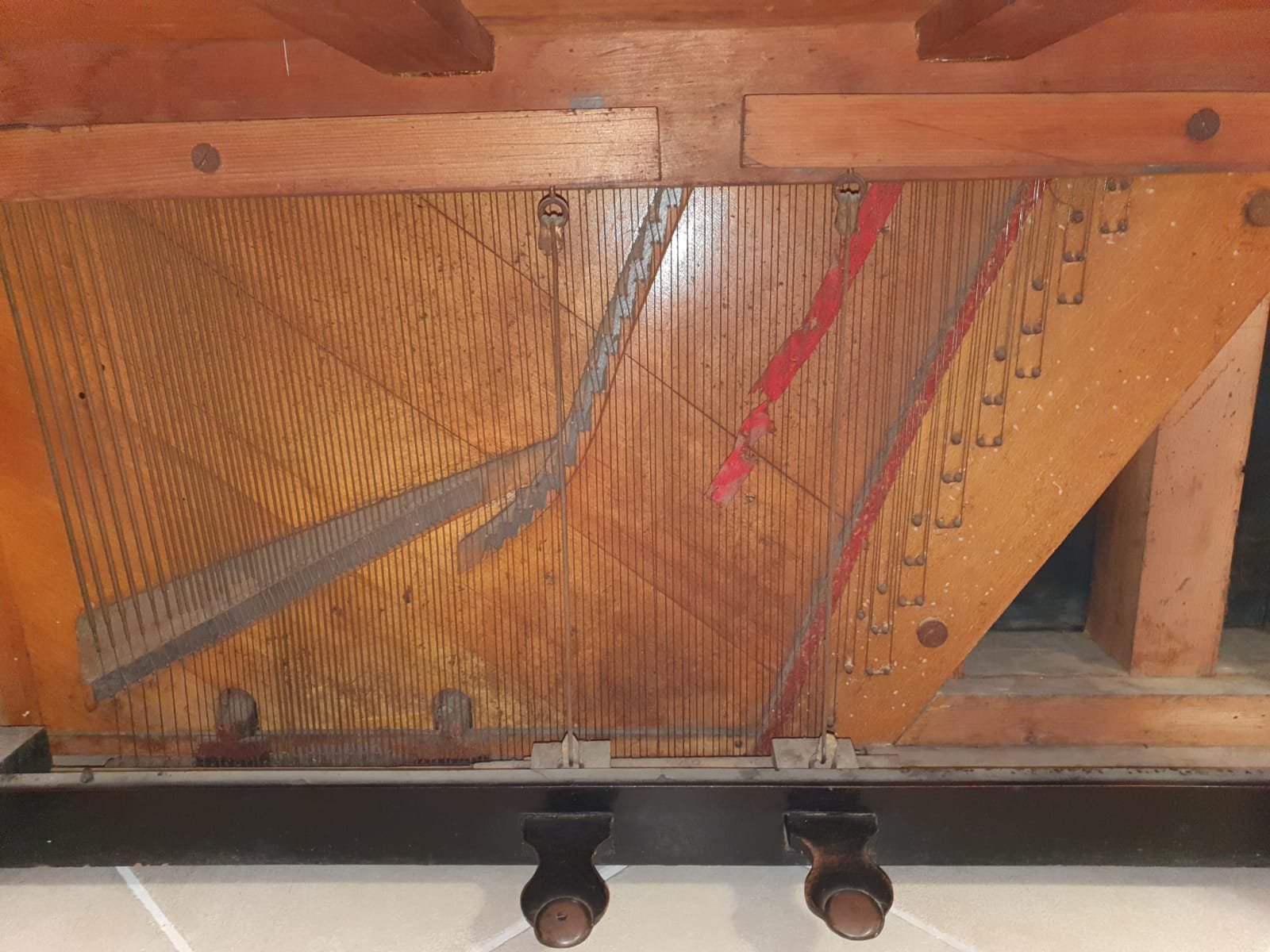
So far, I have found some problems: woodworm (marks are also visible on the soundboard), a bad crack on the top part, and problems with practically the entire action (hammers, some hammers are even missing due to broken stiles, dampers, regulation, felts, keys, etc.), plus others that you will surely find. Unfortunately, I read that any restoration activity is often discouraged on this type of piano, but I would like to receive some advice from you regarding this specific case. Being only a music enthusiast, my ambition is very, very low: it would be enough for me to get it playing in a semi-decent way again. I have also included some photos and an audio file. What would you recommend?
Dear Andrea, I am sorry to give you bad news, but I do not think it is worth spending money on this instrument. In addition to what you have illustrated, it is an upright piano, which tends not to hold its tuning.
Now, in these cases, you must evaluate whether this instrument has historical or sentimental value for you. If so, the expense, even without expecting great results, can perhaps be justified.
There are, however, some concerns to address. For example, I believe the large crack at the top of the soundboard extends down to the ankle block. If that is the case, the piano is unrecoverable. I also see many cracks in the soundboard.
By inserting a strip of paper inside the crack at the top of the soundboard, I can say that it is at least 6-7 cm deep; I also noticed many cracks in the soundboard.
I absolutely agree that it's not worth spending too much on it. Having fairly good manual dexterity and a bit of time, I would like to try doing some small work, more than anything to learn something about an instrument where there would be little or nothing to lose. Listening to the audio file as well, do you think there is any hope of getting some decent notes out of it?