So, first of all, I wasn't familiar with this piece, so it can only help both our knowledge to add some comments.
Listening to it without a "musical mind," I would say that you performed it in a fluid, light, and soulful way... let me explain: listening as a listener who doesn't play the piano and therefore knows nothing about piano technique, your performance is truly very brilliant (curiosity... on which piano did you play it? You know, if it's true that the piano doesn't do the performance... the performer plays the piano! 🙂 ! Bah, what kind of reasoning I'm doing 🙂 ).
From a technical point of view - I always remind myself that I am not a pianist nor a critic, I am "someone who knows how to put their hands on the piano," which is quite different - there are very few things I can notice, given my level is significantly lower than yours... in any case, if I can give you a piece of advice: if I'm not mistaken, the piece is in D-flat Major ... (not exactly a walk in the park)... despite this, try to slightly loosen the right hand from the left, just a little. Then free yourself almost entirely (but not ENTIRELY!! 🙂😃 ) from the time, or rather, try to "not feel" the quarter notes ( 😉😆 but... it's not in 4/4, is it? 😆 ) that are beating...
Anyway... a truly professional and brilliant performance 🙂 ! Keep it up!!!!!
PS What I told you should perhaps be taken with a grain of salt... let's just say that not being a professional, not knowing the piece, and not even having the sheet music, perhaps it is all a bit... risky, but it is what I felt while listening to the piece. Congratulations again and let us know how it went!
G
Gennarino
Reply 3 by Gennarino
Bravo Simone!!
Excellent performance, unfortunately hesitant in the first two/three bars regarding tempo.
As is your habit, variations in tempo, rubato and variations in timbre; these things make it a very intimate version.
I found reflections of Ashkenazy and Rubinstein (especially) and a pinch of Kissin.
I performed two distinct listens: the first without sheet music and only listening with eyes closed, the second with the sheet music in front of me.
The first listen achieves a very high score (110/110 + honors), the second drops a few points, because some liberties you take might not please a purist.
I am telling you this because I know you have to take the private candidate exam.
You know it, anyway: if one wants to say something in life, one must speak and have their own say, not repeat what others say.
So, go full throttle and show them who you are !!!!!!!!!!!!!!!!!!!!
Hi Simone! I knew the piece well, so......I'll be mean. Just kidding, of course, okay? Saying the things that come to mind, the first thing I noticed is that the pulse doesn't arrive immediately and at the beginning I felt a sort of hesitation....but...we know that recordings are the enemies of musicians, right? You surely started it a thousand times and in a thousand different ways. Aside from this, I still feel the practice a bit too much, and I think you should let go of the mental reins holding the horse of performance, since by now you have to trust the horse, right? Because I really think it can run on its own. On the contrary, I find the study done on the piece excellent, and I really like how the accents and harmonic clarity....all the transitions and all the entries are truly heard, and furthermore, I find a good independence between left and right that at certain moments I didn't dislike at all. Do you love Michelangeli? There is real intimacy but not so surreal, and I like the attempt to articulate all the notes as if they were well-meditated without getting too carried away by the flow that would make everything more fluid, but.....be careful! This game will cost you dearly in my opinion if you don't find the intimate pulse that you already have clear in your head and poof! One distraction is enough to unmask this enchantment. These are, however, the words of a failed pianist and therefore.....I hope one day to be able to play it like that.
P.S. It also applies to me that you go to the exam and give your opinion but.....before starting, remember me, okay? Let us know how it went and good luck!!! Break a leg!
Thank you all for listening to this masterpiece by Chopin.
@fabio
You are right to be mean, I was the first one to request meanness 😆
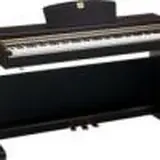
In any case, yes it's true that at the beginning there is a hesitation in the tempo; I recorded it on the first take without thinking about the first bars before starting (Big mistake! One always sings the first bars in one's mind before starting). Therefore, I found myself too slow compared to the tempo I took later, which in my opinion was the right one. I know Michelangeli's interpretations but I don't like his interpretation of the Berceuse very much. An exceptional pianist, perhaps the best in the world regarding clarity, but at an interpretive level on Chopin, in my opinion, Artur Rubinstein leads, followed by Vladimir Horowitz. Another thing to consider is that it was played on a digital piano, which doesn't help much, aside from the key weight which certainly isn't like that of a grand piano, and also the dynamics (on a digital, you hear EVERYTHING!). This is not to justify myself, but objectively I play much better on a grand. There is more tonal color, more fluidity in the passages, especially on the twenty-second notes, more confidence in having a ready and real key response compared to that of an 800 euro digital. In any case, thank you so much for the advice, I appreciate it very much. If I have a shred of time, I will try to record from the grand by Monday since I leave on Tuesday and have my exam on Wednesday, and I will post it here on the forum. It's not a promise, but if my family leaves the living room free without confusion, I will do this rehearsal.
Greetings to all, I look forward to more constructive criticism like Fabio's.
Hi Simone! In fact, I suspected the use of digital because I also used it for recording, but if that's the case... wow, you are seriously good, since digital is impossible to play in terms of control compared to the coda. The judgment changes for the better, but mine was still a good judgment and from the beginning it was understood that it was due to recording anxiety, which makes you forget that everything remains. Do you know what I used to do? I would record myself for about an hour until I forgot I was being "observed" and sometimes.....it worked! Thank you also for defining my criticism as constructive. Rubinstein indeed reigns over everyone and I fully agree with you, even if I wouldn't have linked your version or rather your interpretive intent to him. Anyway, try on the coda and even if the recording turns out to be less precise and clean in my opinion, the interpretive and timbral aspects will be captured much better. Well done again and thank you.
Simone, I found your performance simply wonderful. Not being a musician, I don't dare to offer any criticism or advice at all. I only say that I wish I could play like you because I love the sound of the piano so much. Very well done!
Thank you so much for the compliment, this was just a recording test with the digital piano... You know, the Berceuse is a piece that has been heard played in a thousand different ways. Lisitsa plays it very fast, others very slowly. In my opinion, one must never lose sight of the image of what we are playing. Berceuse in French means lullaby, but I think the English term provides the better image, "cradle song," which is "canzone culla." My image is that of a mother cradling her child. I don't see speed; I see tranquility and love. In my opinion, tranquility must permeate the transition from one variation to another, and it is precisely within the variations that love must emerge. The variation is thus the key analytical element upon which this piece is articulated, so much so that Chopin's original title was indeed "Variations."
Kind regards,
S
stefano
Member
Reply 10 by stefano
Posts
205
Beautiful comparison, that of the mother cradling her child. You are right, Lisitsa's version is also too fast in my opinion.
I don't record from the digital piano, but with the digital piano. It sounds stupid to say it like that, but in reality I don't use the audio output of the digital keyboard to record, but rather I leverage the MIDI information of the digital piano by connecting it to a PC and using samples from major piano brands. What you hear is a sample of a 1923 Steinway D.
I don't record from the digital piano, but with the digital piano. It sounds like a stupidity said this way, but in reality I do not use the audio output of the digital keyboard to record, but rather I exploit the MIDI information of the digital piano by connecting it to a PC and using samples from major piano brands. What you hear is the sample of a 1923 Steinway D.
Thank you, you are very kind, but if I can disturb you again.... what software do you use? And by doing this, is the dynamics captured faithfully?.
I use Logic Professional, an Apple production software available only for Mac systems, but you can achieve the same things even with similar software for PC such as Cubase, Pro Tools, Nuendo, just to name a few. Well, I would say that the dynamics are perfectly respected...