Tuning

"Cloned tuning"?

29 replies 6,745 views

Started by

forte

Member

Member

Opening post by forte

Posts
3

I hear a lot about manual and electronic tuning, and I believe I have understood that the renowned tuning programs essentially perform two functions: 1) they help to obtain a distance between notes individually adapted to each single instrument; 2) they record the values found for each single note, for that specific instrument, so that the subsequent tuning will be reduced to "cloning" the first tuning, without having to worry about finding the correct distance between the notes again, with an obvious saving of resources. This implies that it is taken for granted that various parameters in the instrument (impedance variations due both to tensions accumulated in the wooden structure and to "mass-humidity" acquired/released by it) remain substantially negligible. In other words, only the harp-string-bridge-pin-soundboard-harp system is considered a variable, as it is subjected to extremely high tensions and therefore subject to going out of tune; variations in other structures, subjected to less extreme stresses, are considered negligible.

If I have correctly interpreted what was recalled above, one could try to "decouple" the problems (that is, decompose a complicated problem into several simple problems); in principle, it should be possible to perform, or have one's trusted tuner perform, point (1), and so far nothing new. However, as soon as the tuning is completed, one could measure the pitch of every single note in any way, perhaps with a simple free PC program (for example: Audacity). The values thus obtained, even noted on plain paper, would constitute the "DNA" of that instrument, and should make subsequent "easy" tunings possible. In other words, if the calibration of the strings is cloned with the right values, with the right code we previously noted, everything should return to normal. ...said like this it seems even obvious, and this does not make me feel at ease. Why have I never heard of anyone trying this? Can someone tell me if I have misinterpreted or poorly processed the notions above?

Thank you for your hospitality among you and for your attention.

Antonio

Administrator

Reply 2 by Thesimon

Posts
4,504
City
Ariccia, RM

Dear Antonio, I am sorry to tell you that they are misinterpreted...

Let's try to clarify.

By-ear tuning is based on the number of beats that, between certain harmonic ratios, must equal a certain number per second. This type of tuning requires a lot of natural talent; some people cannot even hear the beats, let alone ensure there are a certain number per second! And it is anyway the method that produces warmer, more human, and more pleasant-to-the-ear results.

Regarding electronic tuning, the matter becomes more complex.

There are chromatic electronic tuners and electronic piano tuners.

Chromatic tuners are for guitars and instruments that do not require the calculation of inharmonicity. To be fair, inharmonicity exists in all string instruments, but we can assume it to be negligible in instruments like the guitar. Thus, for the guitar, a chromatic tuner fits the needs very well.

Tuning a piano with a chromatic tuner is possible but produces results that, to use only one word, are disgusting. We have also discussed this topic in other posts. In any case, electronic tuners for pianos, or software used on PCs for piano tuning, all take into account the inharmonicity of the strings. In fact, the first operation to be performed with these tuners is the calculation of inharmonicity. Different notes are taken in different regions of the keyboard and played to the software, which will calculate the inharmonicity curve. Except for the central zone of the keyboard, which does not deviate much from the guide frequencies, the bass tends to become flat and the treble tends to be sharp. Based on this calculation, the program determines how much these notes should be sharp or flat based precisely on the inharmonicity so that the harmonic ratios between notes return the correct number of beats per second.

It is then possible, through human effort, to save the file of these measurements (naming the file, for example: Steinway Pinco Pallino) to reuse it in future tunings of THAT SPECIFIC AND UNIQUE PIANO without having to re-perform the inharmonicity calculation, unless obviously the strings have been changed in the meantime. Once the calculation is performed, the software will tell us note by note how much to raise its frequency.

All software, however, follows algorithms; therefore, there is no software that of its own accord performs one operation first and then another during repetitions for convenience. Usually, once the inharmonicity calculation has been performed, when playing a note, the SW measures the frequency of that note by comparing it with the correct frequency according to the inharmonicity curve and shows it as flat or sharp depending on the difference. The tuner will then aim to bring the frequency of the played note to match the ideal one indicated by the instrument.

I hope the landscape is clearer to you now.

Member

Reply 3 by forte

Posts
3

Dearest,

From your overview, I would seem to be able to derive the following summary:

1) Piano software does not do everything by itself as might have perhaps appeared from my writing, but "one must instruct them", first to calculate the disharmony, and then to record it.

2) From what I understand, it would only involve "disharmony between the strings" and nothing of another kind, which would not refute the hypothesis that, once such disharmony—specific to that single instrument—has been encoded, it could be used infinitely on that single instrument, at least theoretically.

3) Also from what you tell me, as a consequence of the previous point, once the disharmony curve has been recorded, to regulate the strings one would no longer need either an ear or sophisticated software, but a more rudimentary software would suffice (which I learn from You is called "chromatic", and I immediately try to adapt: "to speak incorrectly is not only a bad thing in itself, but it also harms the soul" Plato, Phaedo). In fact, in this case, we would only ask the chromatic software to help "those who move the ankles" to bring the frequency of the played note to match that of the ideal one recorded previously (even on a simple sheet of paper).

Thank you

Administrator

Reply 4 by Thesimon

Posts
4,504
City
Ariccia, RM

1) The fact of recording the inharmonicity curve to a file is your choice so that you do not have to re-perform the calculation if you were to retune that piano, a matter of convenience, to save time... Such a calculation is indeed unique to each piano. Even if you were to find yourself tuning the same model as the one for which you already have the saved file, you would still have to re-perform the calculation. Identical piano models do not have the same inharmonicity.

2) As far as I know, inharmonicity is relative to the string. Thicker and shorter strings are more inharmonic; we can say that inharmonicity is directly proportional to the cross-section of the strings and inversely proportional to their length. If inharmonicity is also determined by other factors, the experts will let us know; I can only tell you how a software works...

I presume, however, that, logically speaking, even if other factors were to contribute to inharmonicity, since the string is what produces the sound before any other components (soundboard, etc., etc., act as amplifiers for this primordial signal), these others would be negligible.

3) The whole process is executed by the same software; in reality, what happens is that if we tune A4 to 440 Hz, the A of the lower octave should be 220 Hz, which is half. Calculating the inharmonicity at that point, it should be more flat (lower), and it is all the more flat the more inharmonic the piano is (this often happens with upright pianos). The subsequent A (A5) should go to 880 Hz, but it will probably be slightly sharp (higher) because, if you remember, I told you that inharmonicity causes sounds to become increasingly sharp as you move towards the treble, while becoming increasingly flat as you move towards the bass. In practice, we would find A3 at 219.93 Hz, for example, and A5 at 881.12 Hz. This deviation of -0.07 Hz for the bass and 1.12 Hz for the treble represents the inharmonicity curve, which is however calculated for each of the 88 keys of the piano. And then, clearly, the tuner moves the tuning pins to bring the real frequency to the level of that recalculated by the software, and if everything has been done correctly, the correct harmonic ratios should be maintained.

From this discussion, the importance of performing a preliminary inharmonicity calculation that is as detailed and precise as possible becomes evident. The final tuning practically depends on this first step.

An incorrect calculation produces an erroneous correction of theoretical frequencies; an erroneous correction produces an incorrect tuning that does not respect the correct harmonic ratios.

Member

Reply 5 by forte

Posts
3

It seems to me that an experimental verification cannot be avoided, in order to remove any doubt. Of course, I would find the idea of equipping every piano with a sort of "tuning booklet," in which the frequency of every single string is noted, a frequency that would not change for the entire life of the instrument, quite convenient.

Thank you again, I really appreciate it.

Moderator

Reply 6 by pianoexpert

Posts
3,876
City
rocca di papa

It's all correct, but in practice it isn't like that. It is true that sophisticated software exists that can be followed to tune well and quickly, but one must be Tuners. What does it mean to be a Tuner? It means knowing how to verify the correct beats of the temperament and knowing how to handle the tuning hammer. In fact, it is not enough to just turn and reach the exact frequency. One must "stop" the ankle after it has settled. This must be done uniformly across the entire range of the keyboard. A Tuner who tunes in half an hour.....cannot perform a stabilized tuning. About 1 and a half or 2 hours are fine, and one must understand how the piano reacts.

Member

Reply 7 by riccardoM

Posts
39

in my opinion they didn't understand your intervention...

i will summarize your thought:

i will have the piano tuned by an expert tuner on Monday

on Wednesday I will record the frequency of every note of the piano

a year from now I will use a chromatic tuner that indicates to me the frequency of every note and I will tune it according to the frequency that I had recorded on the Wednesday of one year prior

Moderator

Reply 8 by pianoexpert

Posts
3,876
City
rocca di papa

Yes, I think I understood correctly. However, it is extremely difficult to reproduce a tuning because "manual dexterity" comes into play. An ankle pulled incorrectly can, a moment after an exact measurement, produce an incorrect frequency... because "it moves". It is quite difficult for a non-expert to stabilize a frequency... and a series of combined frequencies... even if copied and cloned so to speak. And then it's not guaranteed that the tuning will be perfect..... the inharmonicity of the instrument presents us with some compensatory choices. Then there are some things that the human ear perceives as correct, even though they "are not" correct (low extremes and/or high extremes)........

Administrator

Reply 9 by Thesimon

Posts
4,504
City
Ariccia, RM
riccardoM wrote:

in my opinion they didn't understand your point...

i will summarize your thinking:

i will have the piano tuned by an expert tuner on Monday

on Wednesday I record the frequency of every note on the piano

a year from now I use a chromatic tuner that indicates the frequency of every note and I tune it according to the frequency I had recorded on the Wednesday of a year before

And I continue to say that 'it doesn't work'! Because by being stretched constantly, the strings change elasticity and this affects disharmony; over time they rust, which affects disharmony... Then, as Paolo says, even if one were able to establish a 'decent tuning,' one must find the right ankle support, otherwise the tuning lasts from Christmas to St. Stephen's Day; and then what? Who will intone it for you?

What is the biggest mistake? Once again, trying to replace the tuner. I think that spending 80 or 100 euros every six months to tune the piano is not an enormous expense. And just spend it! But when your car breaks down, when you have to build a wall, when a pipe breaks, don't you call the mechanic, the bricklayer, and the plumber respectively?

Not to mention that the tuner should perform periodic interventions so that you don't get hit with the full blow all at once. Instead, often—either because the piano is left to itself or because DIY solutions are attempted—in the best-case scenario, the blow comes because for years it was only tuned when it also required other interventions; and in the worst case, the double blow comes because damage has also been done.

And call this blessed piano tuner!

Member

Reply 10 by riccardoM

Posts
39

ehm... since nobody wants to replace a tuner, we were just discussing a possible strategy to simplify life (and therefore also the price) for the tuner himself. Now rust etc etc manifest themselves after at least 10 years; in these 10 years it is assumed that a piano does not change its inharmonicity and after these blessed 10 years the tuner does it by ear again and records the frequencies of all the notes, and the following times he will at least have a trace...

Come on, we are in the third millennium, let technology help us...

Administrator

Reply 11 by Thesimon

Posts
4,504
City
Ariccia, RM

Ok, then do as you said if you are convinced; record the frequencies, retune it yourselves after a year and then call the tuner back one minute after finishing and let's hear what he tells you... What am I supposed to tell you? If you are convinced...

I have no desire to start doing calculations and wasting time to prove to you that what you want to do doesn't work, so do as you see fit; in the end, they are your pianos, not mine.

However, I want to provide a prompt... I want to make you reflect on the fact that instrument tuning is a subject as old as the Bible, arising from studies by mathematicians and physicists. It is still a subject treated and discussed. With today's technology, instruments are still tuned by ear; only very recently has software been used for tuning, and despite calculating inharmonicity, they manage to split the octave well but get completely lost in the lows and highs. At this point, I also want to make your lives easier... Without having to note down frequencies, it would be enough to take a recorder, record note by note, and retune on that basis until I no longer hear beats between the played note and the recorded note. Coincidentally, however, people continue to tune by ear or via software that calculates inharmonicity. Do you truly believe, with all due respect, that these scientists hadn't already thought of your solution, or do you really think you have invented a new tuning method?

You draw your own conclusions...

Administrator

Reply 12 by Thesimon

Posts
4,504
City
Ariccia, RM
riccardoM wrote:

ehm... since nobody wants to replace a tuner, we were just discussing a possible strategy to simplify life (and therefore also the price) for the tuner himself. Now rust etc. etc. manifest themselves after at least 10 years; in these 10 years, it is assumed that a piano does not change its inharmonicity, and after these blessed 10 years, the tuner tunes by ear again and records the frequencies of all the notes, so that subsequent times they have at least a trace...

Come on, we are in the third millennium, let technology help us...

A parte il fatto che continuo a dire che sia errato (leggi il post sopra). The tuner spends less time tuning by ear. The job of tuning is not hearing when it is in tune—a tuner can tell in a millisecond if a note is in tune or out of tune; it is stabilizing the pins that requires experience and time, otherwise the tuning only lasts 3 minutes. Ask any tuner about the truth of my words.

It is true that rust manifests every 10 years, but if we want to be formal, with every tuning, the strings change their disharmonicity.

Come on, don't talk to me about technology... Please, technology puts food on my table, but I am realistic enough to say that in some things it is still immature.

I have one of those software programs for tuning with inharmonicity calculation. It splits the octave well but gets lost in the lows and highs. It even beats octaves played two octaves apart! With this, I have said everything. There is no need for me to say anything else.

Try the solutions, don't leave them as theory, and then we can go back to talking.

Member

Reply 13 by Sergio

Posts
226
City
Priverno

I would like to add: the inharmonicity within an octave does not have a linear pattern such that one could precisely "train" an advanced tuner, for that matter. The electronic device can deduce (but not exactly) the octave split.

What do you think, Simone?

Member

Reply 14 by riccardoM

Posts
39
TheSimon wrote:

Aside from the fact that I keep saying it is wrong

If you have fun that way, suit yourself.

The future will be pianos that self-tune via sensors on every note.

Ps if technology that feeds you also offers me food

Administrator

Reply 15 by Thesimon

Posts
4,504
City
Ariccia, RM
riccardoM wrote:

If you have fun that way, suit yourself.

The future will be pianos that self-tune via sensors on every note.

Ps if technology that gives food to me also offers food to you

Oh, so then??? What is this tone? How dare you? You better check yourself!! My sentence about technology was not referring to the fact that I believe I am the master of the world or otherwise better than any other person regarding technology; it was to say that I am certainly not the type who disdains it, but when I see that it doesn't work, it doesn't work and I say so openly! So try to stay calm and respect the opinions of those who think differently from you!! You are free to think whatever you want and even strenuously defend your points of view, but without being offensive!

Returning to the topic at hand...

Call all the tuners you want and ask them: www.aiarp.it since you don't trust those who have already replied to you here; you can find many others on that site. If I say that reasoning is wrong, it is because I have excellent reasons to support this thesis, and you can refute it and assert your idea in any way, but without being offensive! Who knows you?? Who gave you this confidence?

To tune my piano, I call my trusted tuner, but since I respect your opinion, I renew my invitation to carry out your idea on your own piano if you are convinced it works; why should I care??

Sergio wrote:

I would like to add: inharmonicity within an octave does not have such a linear progression as to be able to precisely "train" an advanced tuner, for that matter. The electronic device can deduce (but not exactly) the octave spacing.

What do you think, Simone?

Great point...

Starting from the definition of inharmonicity, which is the degree of deviation of real harmonics from the ideal harmonics of the harmonic series, it can be inferred that the less elastic (stiff), thicker, and shorter a string is, the greater the inharmonicity will be, and therefore the more the real partials will deviate from the ideal harmonics.

The strings are made of harmonic steel and their thickness is the result of several passes through a machine that decreases their cross-section at each pass.

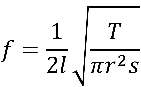
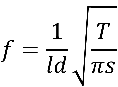
The plate/scale is appropriately calculated using the following relationship:

delivered from which, by performing simple substitutions, we obtain:

Here, the behavior of string elongation is not taken into account, nor the fact that bass strings are copper-wound, the non-homogeneity of the cross-section especially in the bass where the winding is not homogeneous, torsional vibrations, longitudinal vibrations, the decay transient, and rotational vibrations; one thus ends up complicating that simple relationship so much that using a computer for calculating a complete scale becomes practically necessary.

All these variables together with other theoretical ones determine inharmonicity. By theoretical, I mean just the fact that the real string does not have a cross-section in the order of [missing values] and a length of [missing values].

Thus, we can say that every string possesses its own inharmonicity which is different from any other on the piano. Tension, but in particular tuning, causes the string subjected to pulling to thin out. As it thins, the variables mentioned above are modified: torsional vibrations, rotational vibrations, etc., etc.; therefore, the inharmonicity also changes, as does the tension required to bring it to frequency according to the formulas reported above. These variables are then not linear for all strings, because each string has its own length and cross-section, so each responds differently to the change in tension. Piano manufacturers still try to compensate for these problems with different non-linear string sections and lengths. Returning to tuning, we particularly notice that if the cross-section (d) of the string becomes smaller, since f is inversely proportional to d, the frequency increases; therefore, to re-establish the initial frequency, the tension, which is instead directly proportional to the frequency, must be lower. In essence, with the thinning of the string, the same frequency is obtained by applying a lower tension load (fewer kg). This operation is limited by the breaking point, i.e., that limit identified by the intersection of the graphs of thinning vs. time and tension vs. time. The meeting point of the two graphs represents the breaking point. To be extreme, it is much easier to break an acute string because it has higher tension and is thinner.

I will now show you the graph representing the measurement made on the real correction and that made by a software which calculates a curve called Railsback by its inventor (curve of"}

Average inharmonicity).

The jagged red line represents the actual correction made based on the inharmonicity of each individual note, which turns out to be VERY DIFFERENT from the Railsback average value curve.

Now I will show you the correction curve of a software—the name of which I will not mention for obvious reasons—for piano tuning, and I want to specify that all electronic tuners are based on this principle; therefore, I have taken a random one, since they do not allow the calculation of the inharmonicity of every note, but instead perform an average based on octave-by-octave inharmonicity calculations, almost completely neglecting the calculation for high notes as they contain fewer partials.

As you can see, the graph looks more like Railsback, precisely because it performs an average estimate of inharmonicity.

I will tell you: the results are not even bad and the division of the central octave is good, but there is a reason why the division of the center is good, which is the same reason why tuning starts from the center even by ear. In the center, inharmonicity is very low (you can see it from the graphs, particularly from the first one, which is clearer with the keyboard at the bottom, where in the center the inharmonicity correction is close to zero); consequently, it is very simple for both the tuner and the electronic instrument to establish the correct ratios. This is why tuning starts with A 440Hz, because statistically it is the string with the least inharmonicity. The problem arises when going down or up. Going up, the sounds become progressively increasing, and at the bottom, decreasing. The tuner restores the correct harmonic ratios by ear based on the beats that are generated between the fundamental of one note and the partials of the second (which partial depends on the harmonic ratio we have chosen), and does not worry in the slightest about what the inharmonicity of the string being tuned is, because the ear takes into account harmonic ratios, not inharmonicity; therefore, once the correct number of beats is established, that tuning already takes inharmonicity into account—this is why it is said that in terms of tuning, the human ear is very, very rigorous. The software, on the contrary, must always adhere to mathematical rules, so it takes the theoretical frequency for that note, corrects it by reporting the value intercepted on the inharmonicity graph for that note, and indicates whether the note is flat or sharp. However, you can see in the first graph that this approach is not always valid, because every string has a different inharmonicity coefficient.

This is why, all things considered, these software programs do not produce poor results, but they have nothing to do with tuning by ear.

Now, returning to the initial topic, having cleared up these matters. Recording a frequency and using an electronic tuner to reproduce that same frequency is something that does not work, because we have said that with every tuning, physical variables that determine inharmonicity are modified, and thus the inharmonicity itself is modified. This means that by reproducing the same frequencies as previous tunings, the harmonic ratios will certainly not be respected. It will certainly be a decent tuning, setting aside all the complications arising from the correct use of the tuning hammer, stabilization of the pins, etc., etc., but it will not be EXACT like one done by ear.


www.aiarp.itAttachmentAttachmentAttachmentAttachmentdisarmonicita1.jpgdisarmonicita2.jpg

Member

Reply 16 by riccardoM

Posts
39
TheSimon wrote:

Oh, so then ??? What's with this tone? How dare you? You better check yourself!! My sentence about technology wasn't referring to the fact that I think I am the master of the world or otherwise better than any other person regarding technology; it was to say that I am certainly not the type who disdains it, but when I see that it doesn't work, it doesn't work and I say so openly! So try to stay calm and respect the opinions of those who think differently from you!! You are completely free to think whatever you want and even strenuously defend your points of view, but without being offensive!

I replied to you in the same tone as your reply; for me, the matter is closed

Member

Reply 17 by riccardoM

Posts
39

In your whole beautiful speech, you forgot the time parameter. You said that with every tuning the inharmonicity increases, but not by how much as a function of time; I am almost certain that in 10 years of normal use, a well-maintained piano increases its inharmonicity by a delta equal to the average error made by a tuner.

Ultimately, a tuner uses an algorithm to tune, and therefore sooner or later technology will also be able to replicate it

Administrator

Reply 18 by Thesimon

Posts
4,504
City
Ariccia, RM
riccardoM wrote:

I replied to you in the same tone as your reply, for me the matter is closed

It doesn't seem like that to me at all; I haven't offended anyone.

riccardoM wrote:

In your whole fine speech, you forgot the time parameter. You said that with every tuning, inharmonicity increases, but not by how much as a function of time; I am almost certain that in 10 years of normal use, a well-maintained piano increases its inharmonicity by a delta equal to the average error made by a tuner.

Fine, if things really are as you say, can you explain to me then why tuners don't tune following your method? In essence, why shouldn't such an effective methodology be used by anyone if it promises such precise and fast results? However, please argue your point instead of just throwing it out there... Time was not considered because it varies from piano to piano.

A tuner, in the last instance, uses an algorithm to tune, and therefore sooner or later technology will also succeed in replicating it

You said it correctly, sooner or later... I didn't write anywhere that technology will never be able to equal tuning by ear. Not now, though; right now it doesn't work...

We proved it just three days ago on my piano. Bass and treble, completely out of tune. If people want to continue denying the evidence here, then for me the matter is closed; what is the point of reasoning?

Member

Reply 19 by riccardoM

Posts
39

but what is this tone? i haven't offended anyone and I don't want to impose my ideas like you do.

What test did you do? did you use a software to tune, my point is totally different.

The topic was interesting but if it has to generate these tones I'll pass, I have other things to do.

You are right.

Administrator

Reply 20 by Thesimon

Posts
4,504
City
Ariccia, RM
TheSimon wrote:

Ok, then do as you said if you are convinced, record the frequencies, retune it yourselves...

...do as you deem most appropriate, in the end they are your pianos, not mine.

TheSimon wrote:

You are completely free to think however you want and even strenuously defend your points of view, but without being offensive!

....

To tune my piano, I call my trusted tuner, but since I respect your opinion, I renew my invitation to carry out your idea on your own piano if you are convinced it works; why should I care??...

I want to impose ?? Luckily everything is written down... It seems to me that you are the one who wants to impose, since you want to convince without arguing. I have an idea and I have argued my reasons, you?? What have you done? So far I haven't read a single argument from you, I have only seen troll behavior.

I renew my invitation to moderate your tone with me; I am not your brother, try to calm down and respond properly, I am starting to lose my patience, this is the second warning, at the third you can go home and won't set foot here again...

Log in to participate