Hello everyone, this is my first post on this wonderful forum and so please excuse me if I use some "non-technical" terms.
I have an Ed Krauss upright piano purchased about 25 years ago.
Thanks to your guides and comments, I managed to resolve a very annoying "clicking" problem on some keys.
Where the problem occurred, I resolved it by tightening the screws that fix the hammer to the rail. In fact, before performing this intervention, the hammers had horizontal play which was almost zeroed out after giving them a good tighten.
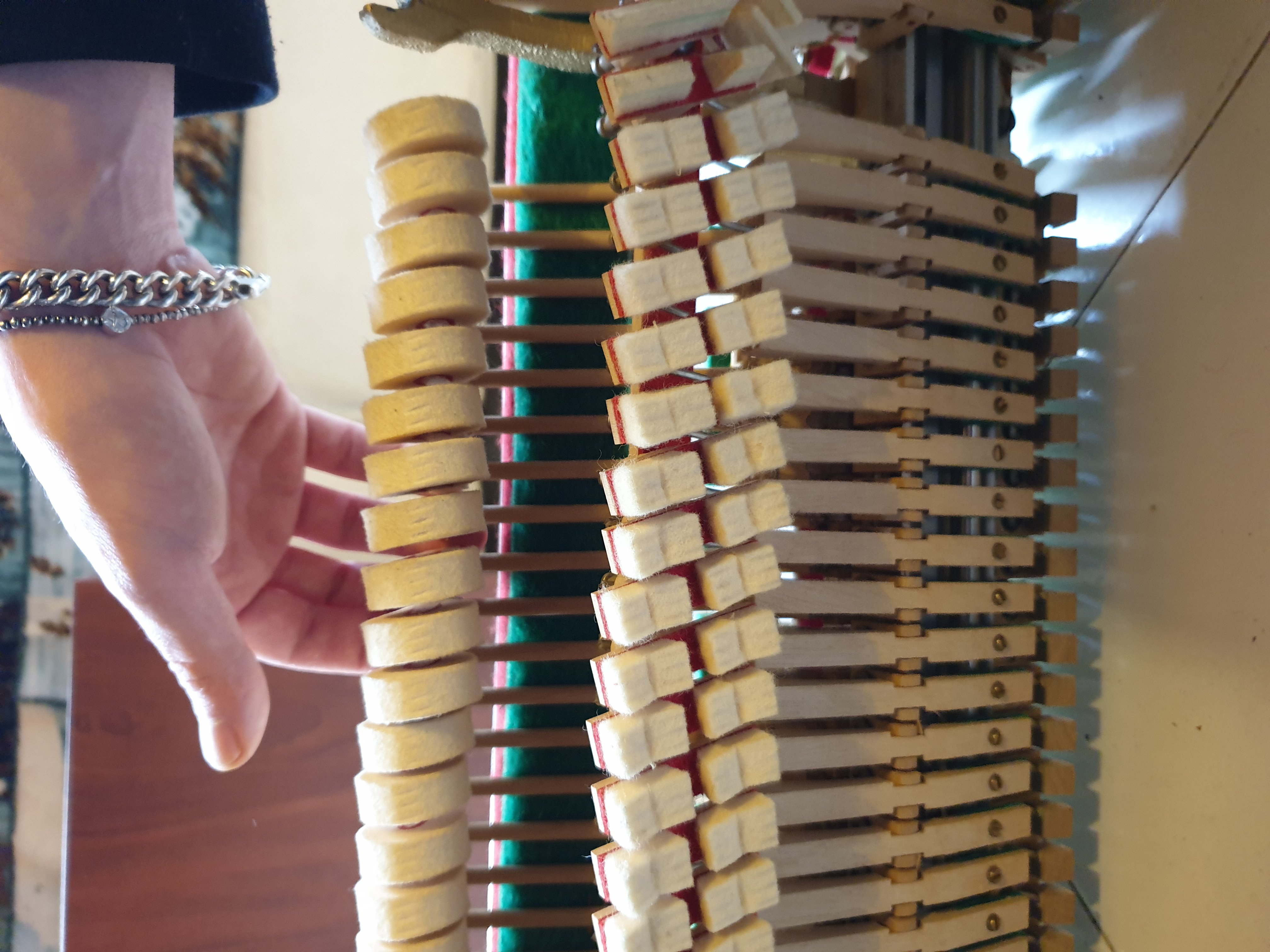
Some keys, however, despite the tightening, continued to have the problem. In this case, I noticed that the horizontal play was occurring in the entire block where the damper lever is located.
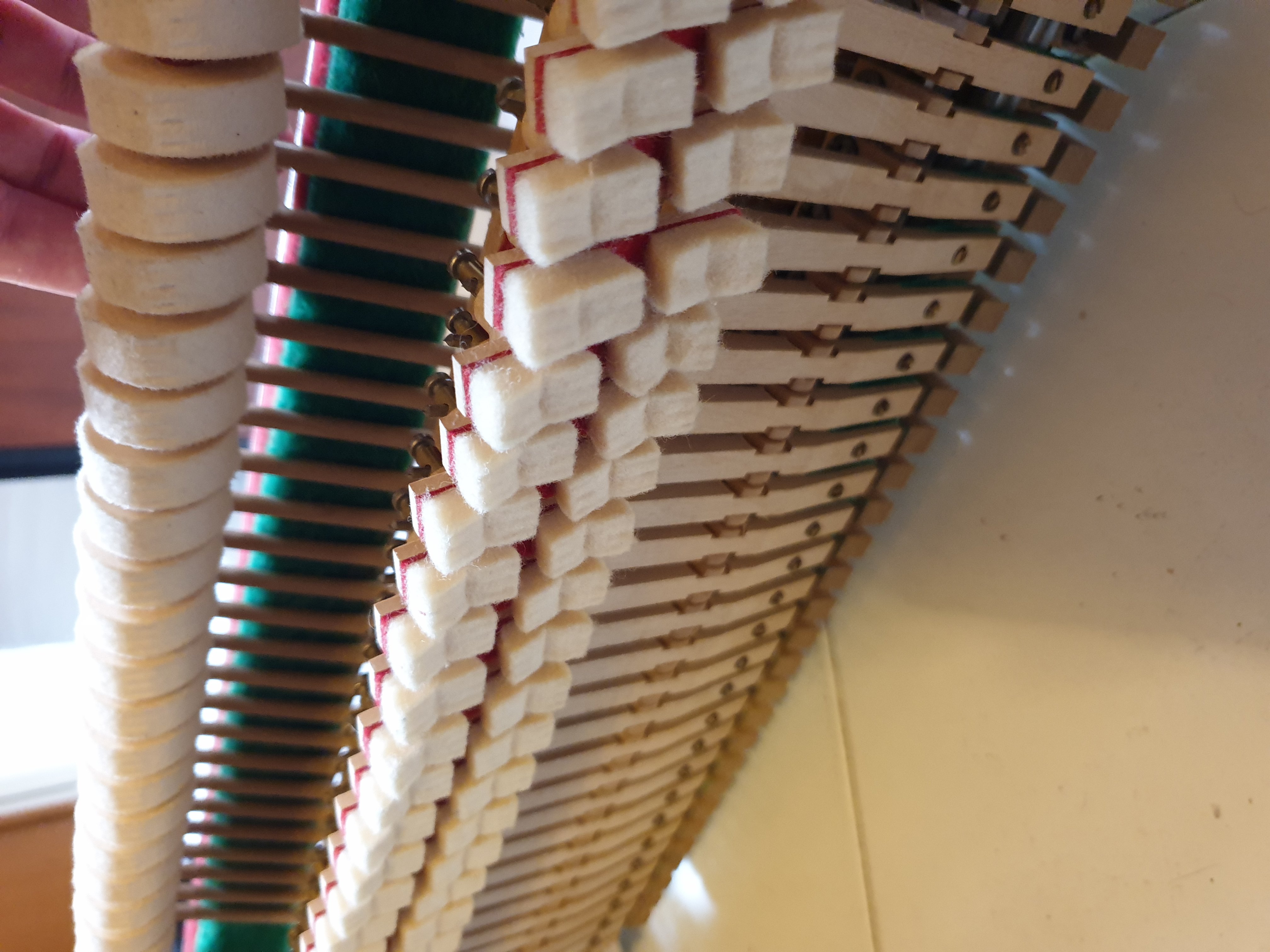
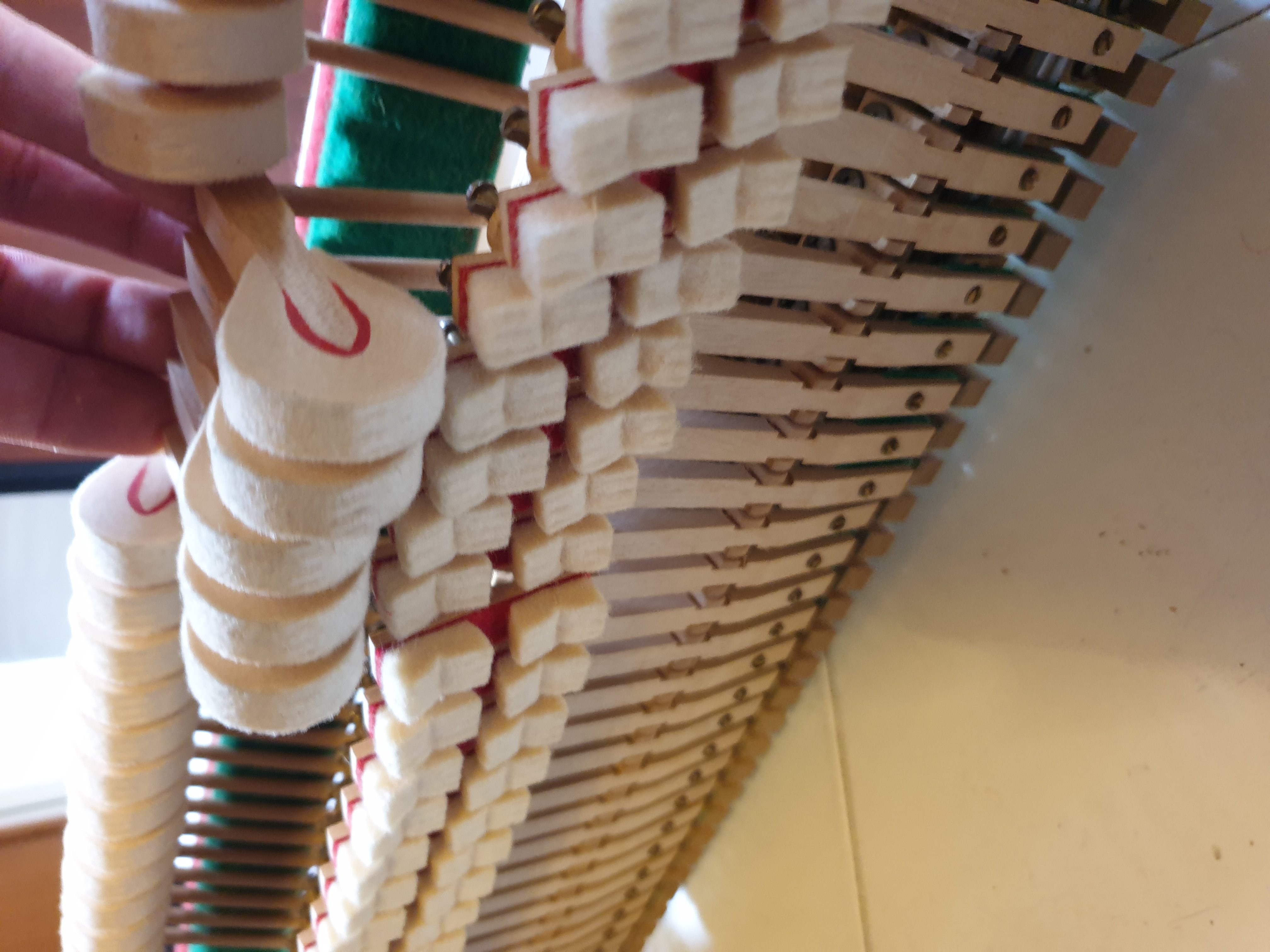
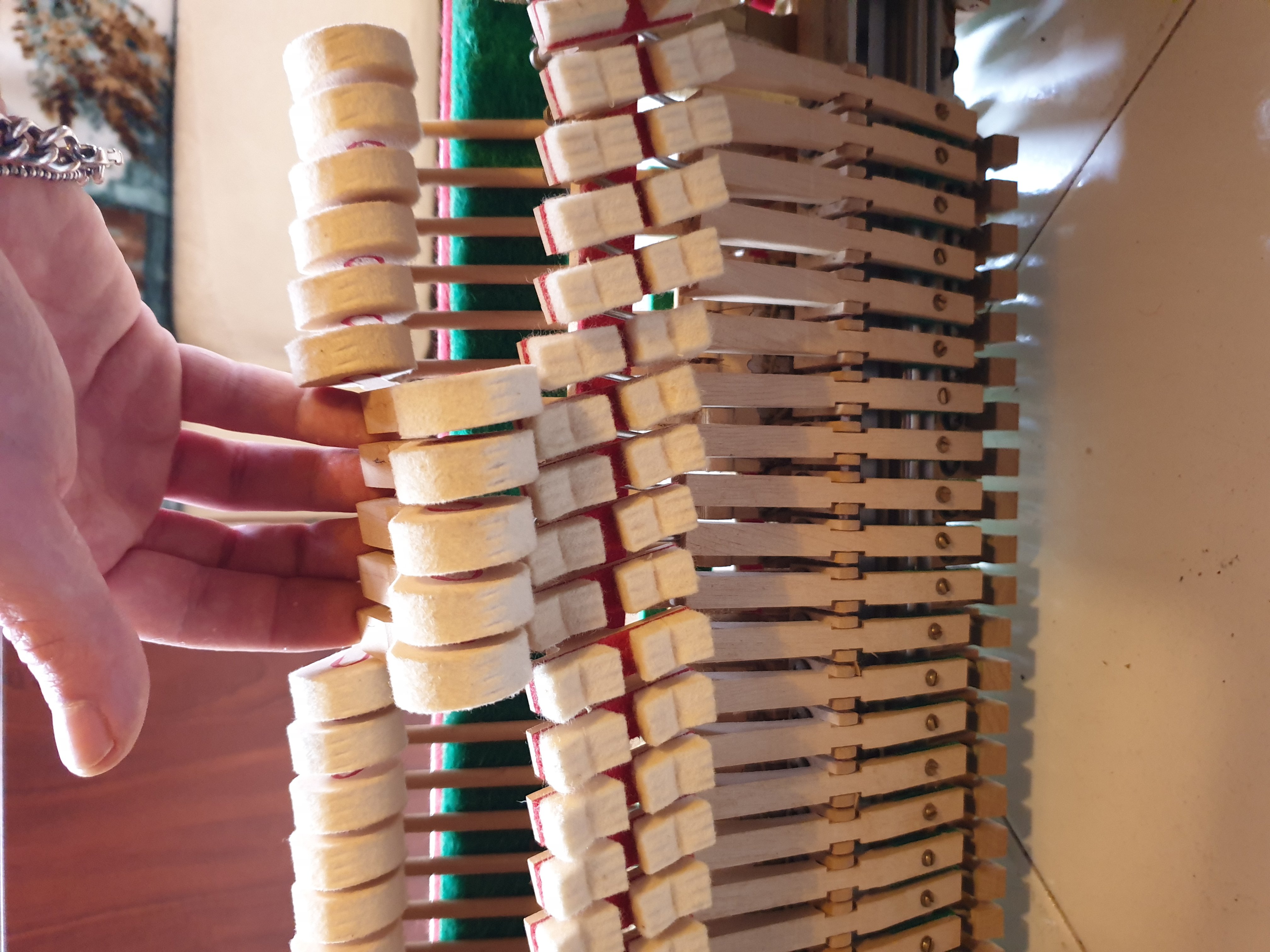
I removed all the action from the piano to access the back side and tightened the screws that attach the damper lever system to the rail at the bottom.
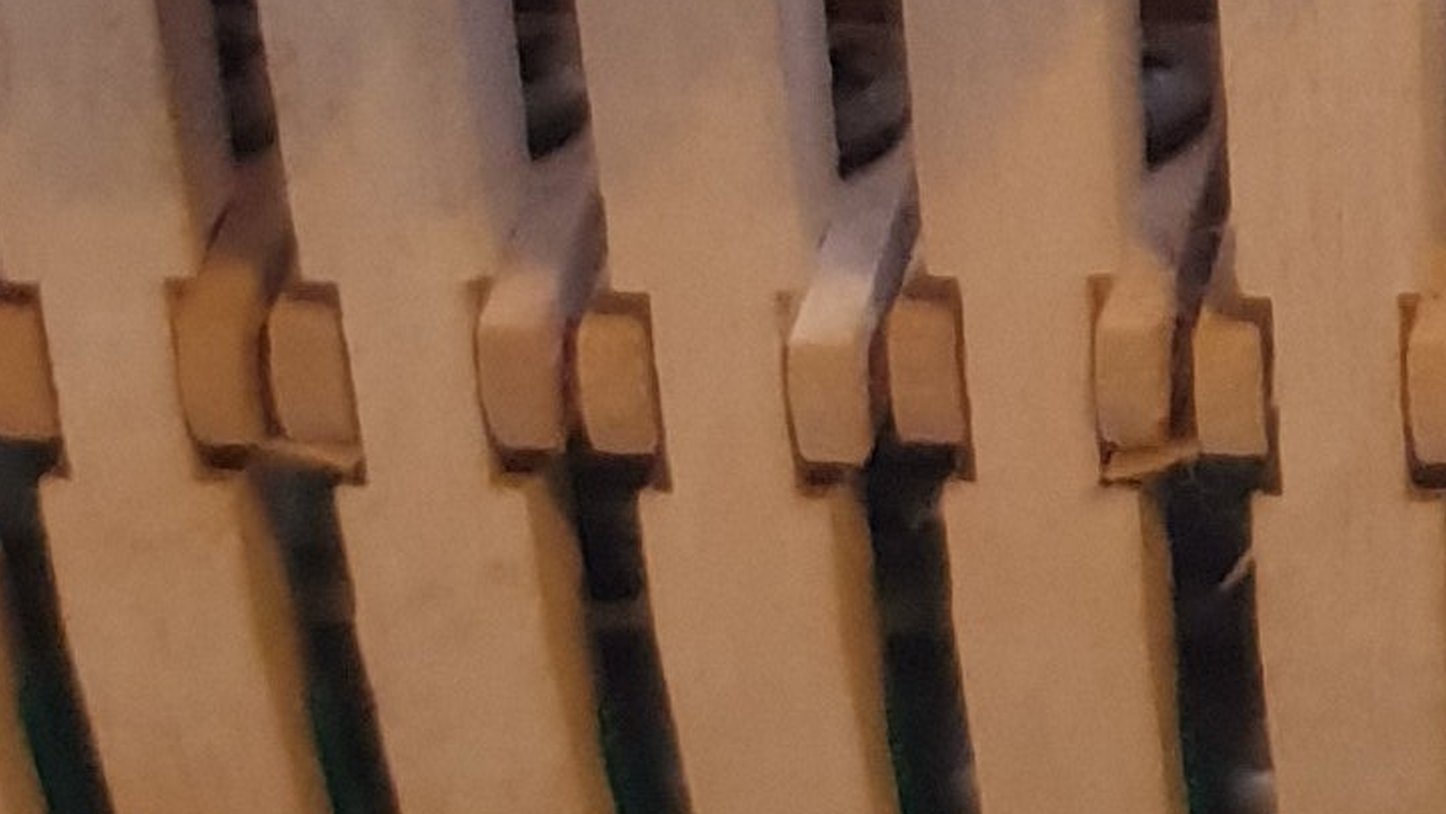
By doing this, I managed to eliminate all the "clicking" noises from the keys but unfortunately, I don't know if due to movement during extraction, a new problem has appeared on 3 notes (G3, G#3, A3): I believe the dampers have become misaligned.
In practice, when I play a staccato on these notes, the sound is not stopped immediately as happens with the other keys, but a very slight reverb with some resonances can be heard.
I hope I haven't caused an "unfixable mess"!
Could someone give me some tips or perhaps specific instructions on how to perform the adjustment of these dampers that are exhibiting the problem?
I noticed that the wooden rod that rests on the "spoon" (I don't know if that's what it's called) which pushes the damper back and forth, has a small screw used to move the wooden rod further from or closer to the spoon, but I believe this is only used to regulate when the damper releases from the strings during the hammer stroke.
How do I instead regulate the alignment or ensure that when the key is released, the damper has more force on the strings in order to stop them?
Thank you all!