Hi Enrico. It's good to see you here again...
Thank you for sharing your recording of Debussy's Clair de lune, which is a piece that reminds me of many things because I won a piano competition with it as a child.
From the very first measures, it is evident that you have solid technical control: the arpeggio flows cleanly, the attacks are sharp, and the reading remains orderly from beginning to end. With Debussy, I tend not to overdo the rubato too much, but these are stylistic choices.
The pedal, on an upright like yours, is always a minefield: just half a second too long and the sound becomes muddy. You use it with prudence, leaving the voices legible even in the middle passages where you go quite low into the left-hand bass notes that risk muddying everything. If you wanted to try a touch of Impressionist magic, you could try even more frequent micro-changes: very rapid half-pedaling that makes the harmonics vibrate without creating an indistinct cloud.
The melody, especially in the mid-high registers, emerges very clearly; again in the bass, where the upright does not offer the same depth as a grand piano, a slight relaxation of weight in the hand could make the upper line sing even more, restoring that "lunar glow" that emerges, for example, in Michelangeli.
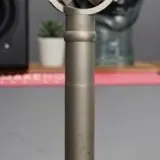
In the title, it says you used an NT4 for the recording. I find that it captures the brilliance of the highs well and provides a sharp stereo image. Keep in mind that I am listening to it through two Genelec studio monitors, so I have excellent monitoring.
What is missing, though it is physiological on an upright, is a bit of body in the low frequencies. You could experiment with placing the microphones a few centimeters lower toward the soundboard, or add a slightly distant room mic to provide more depth of field.
The instrument seems well-prepared.
Your reading seems elegant and sincere to me, prioritizing clarity of song and coherent phrasing. The timbral palette is inevitably limited by the instrument.
Compliments on the work!