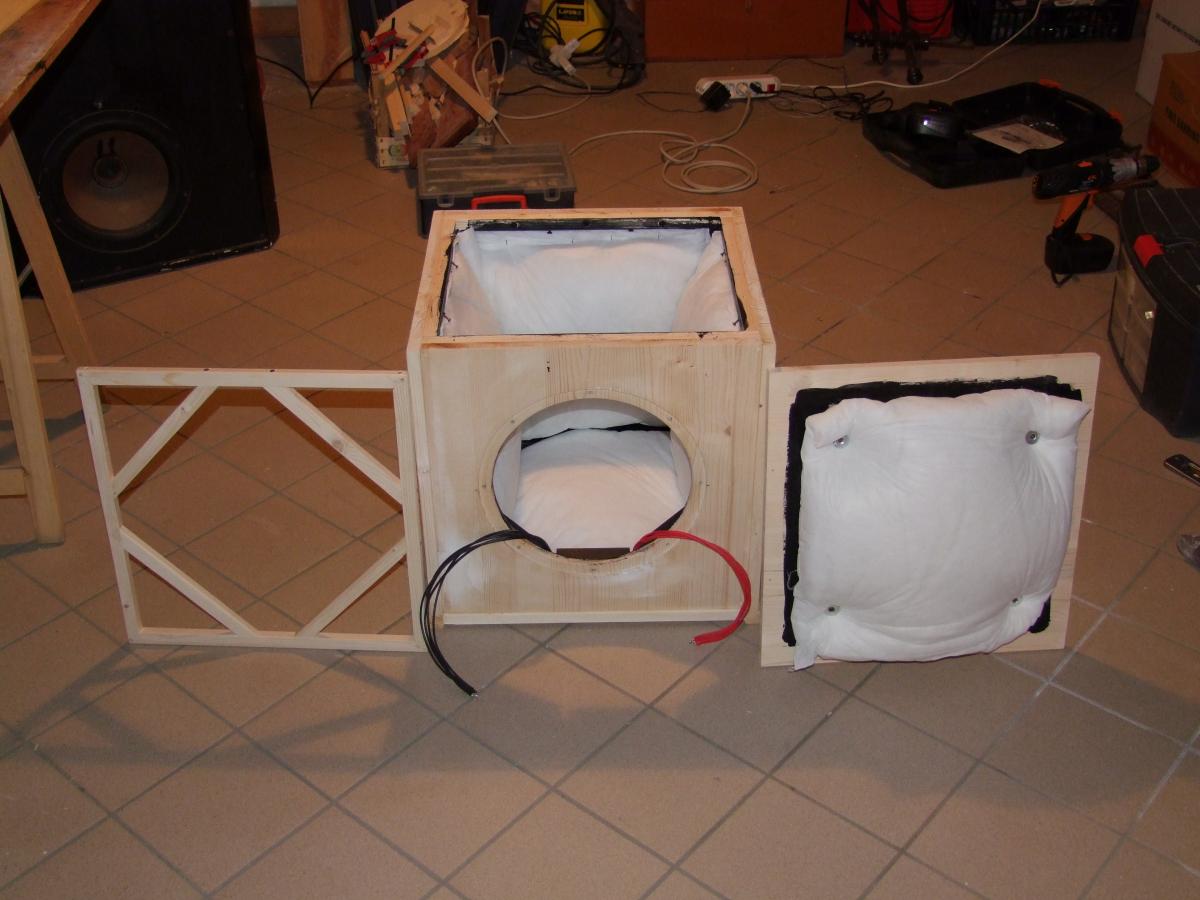
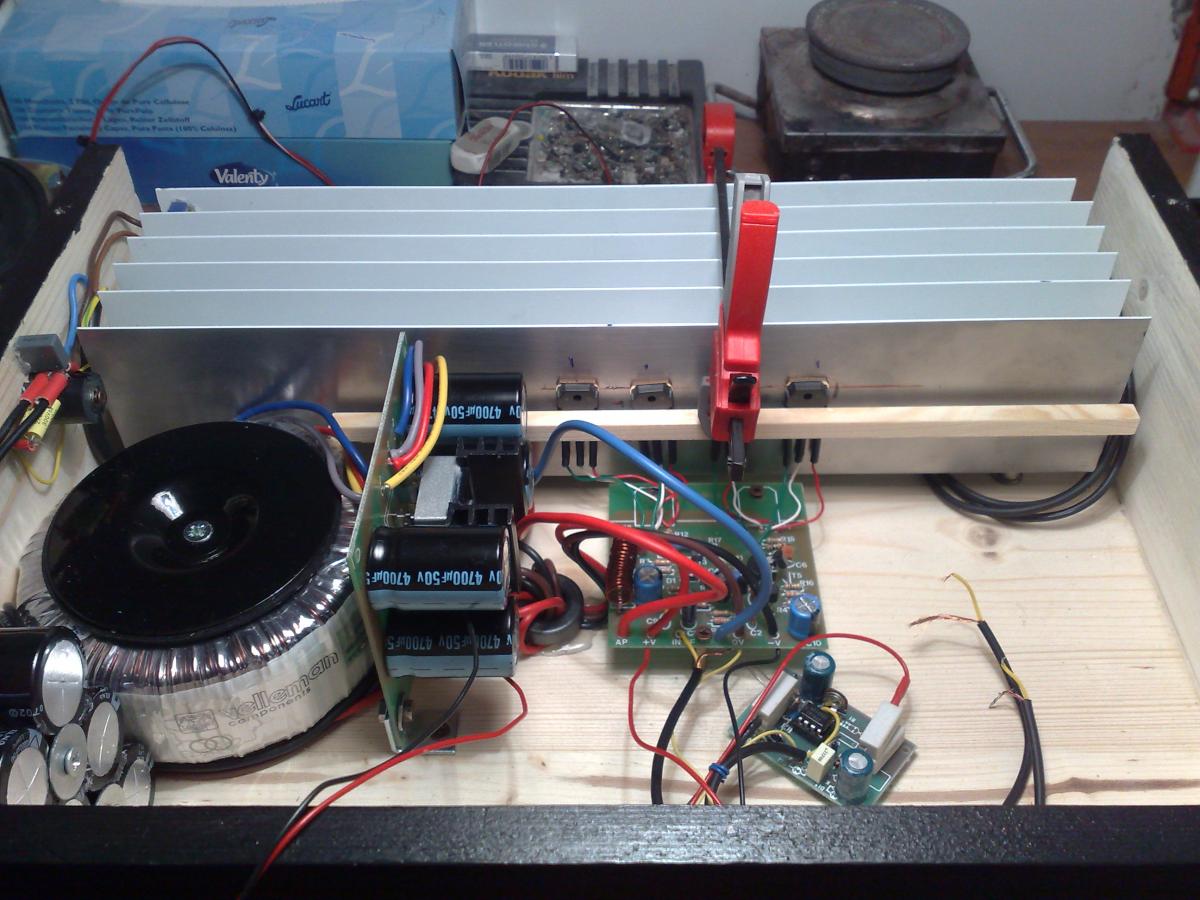
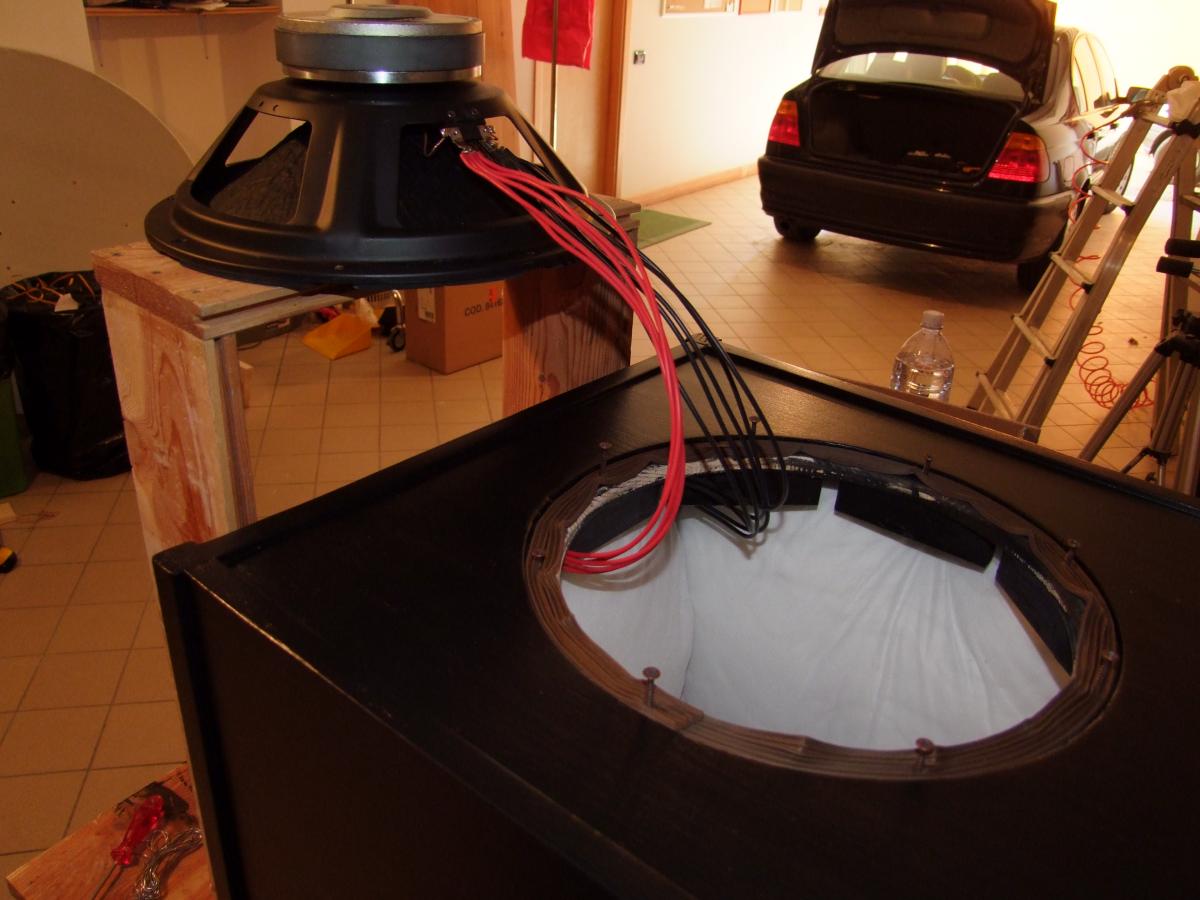
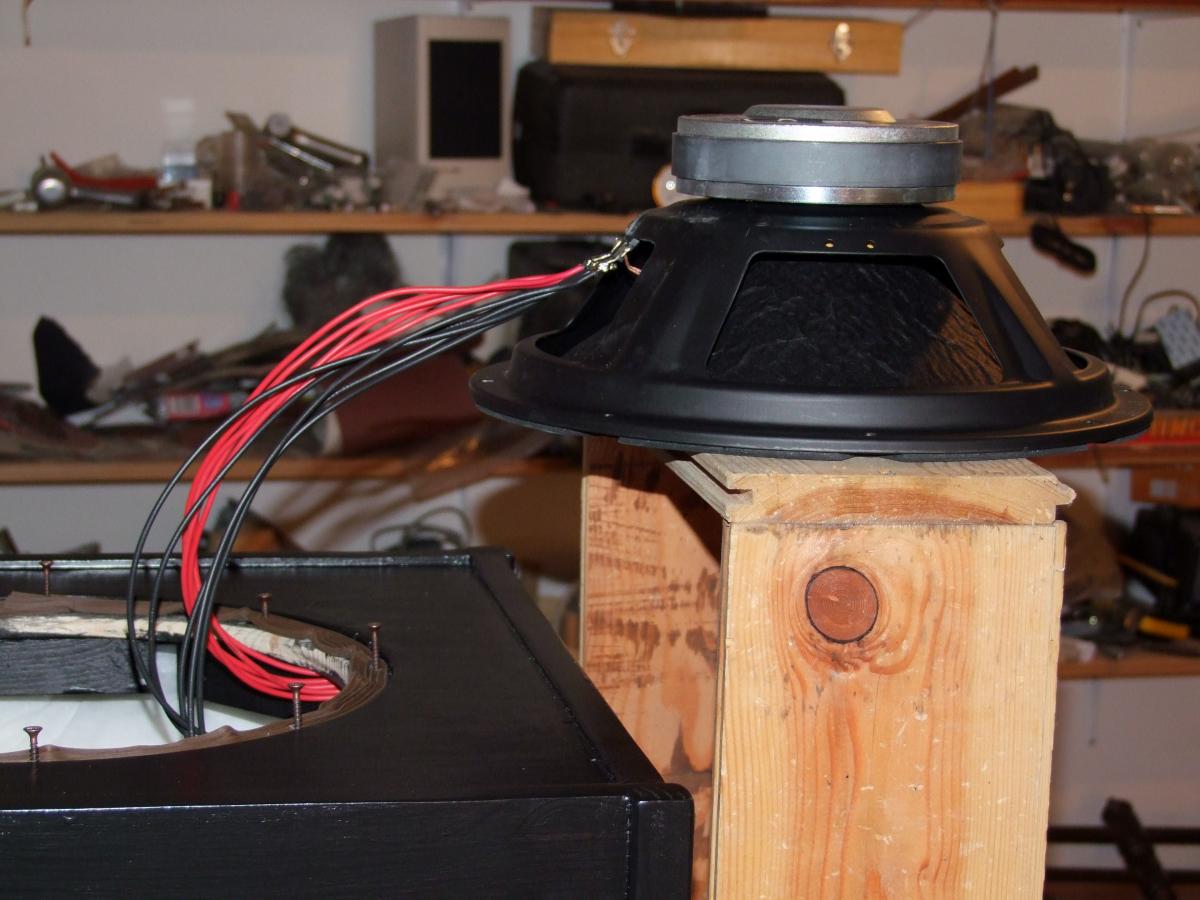
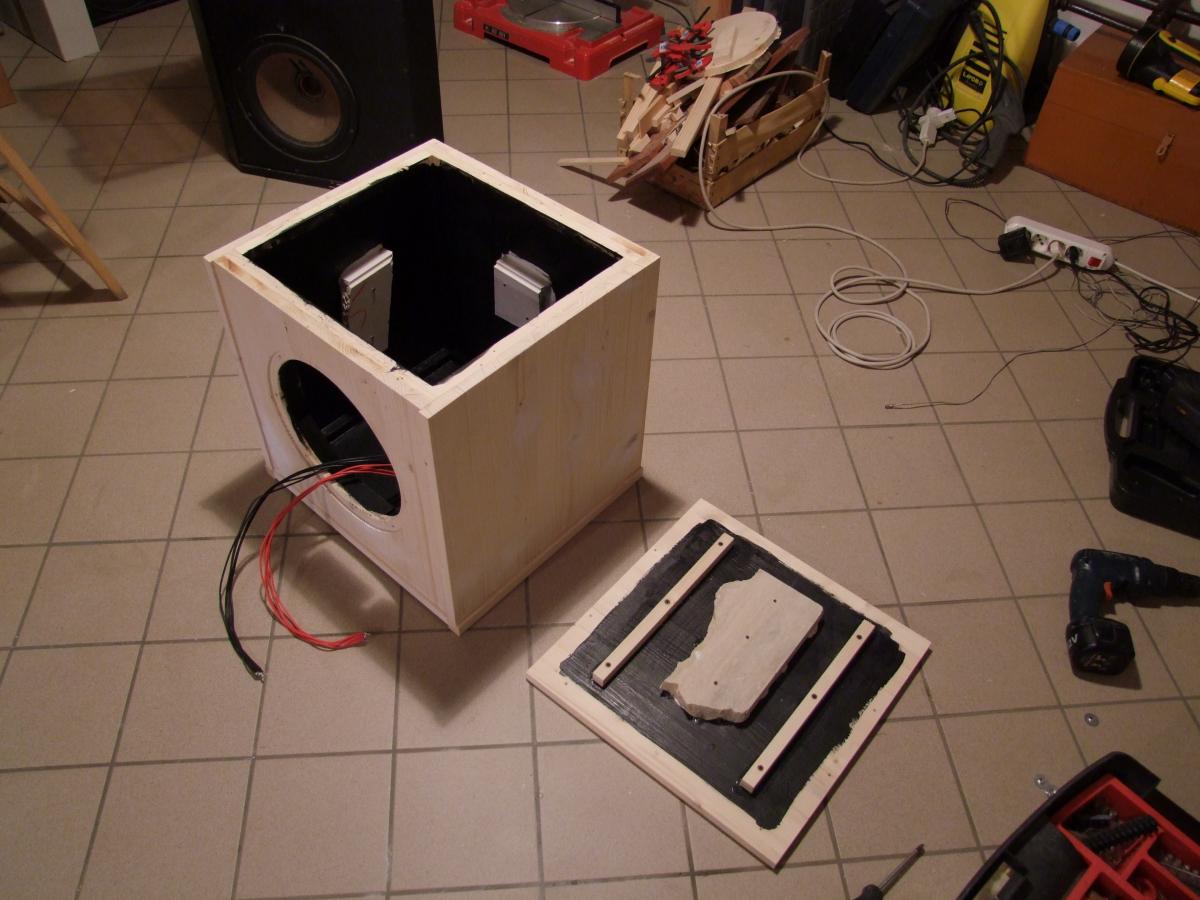
Ok Vitrus, just take a look at this project of mine: 400W rms MOSFET amplifier (peak >700W) using a domestic radiator as a heatsink to avoid noisy fans.
Active band-pass filter from 0 to 40Hz, all made of spruce.
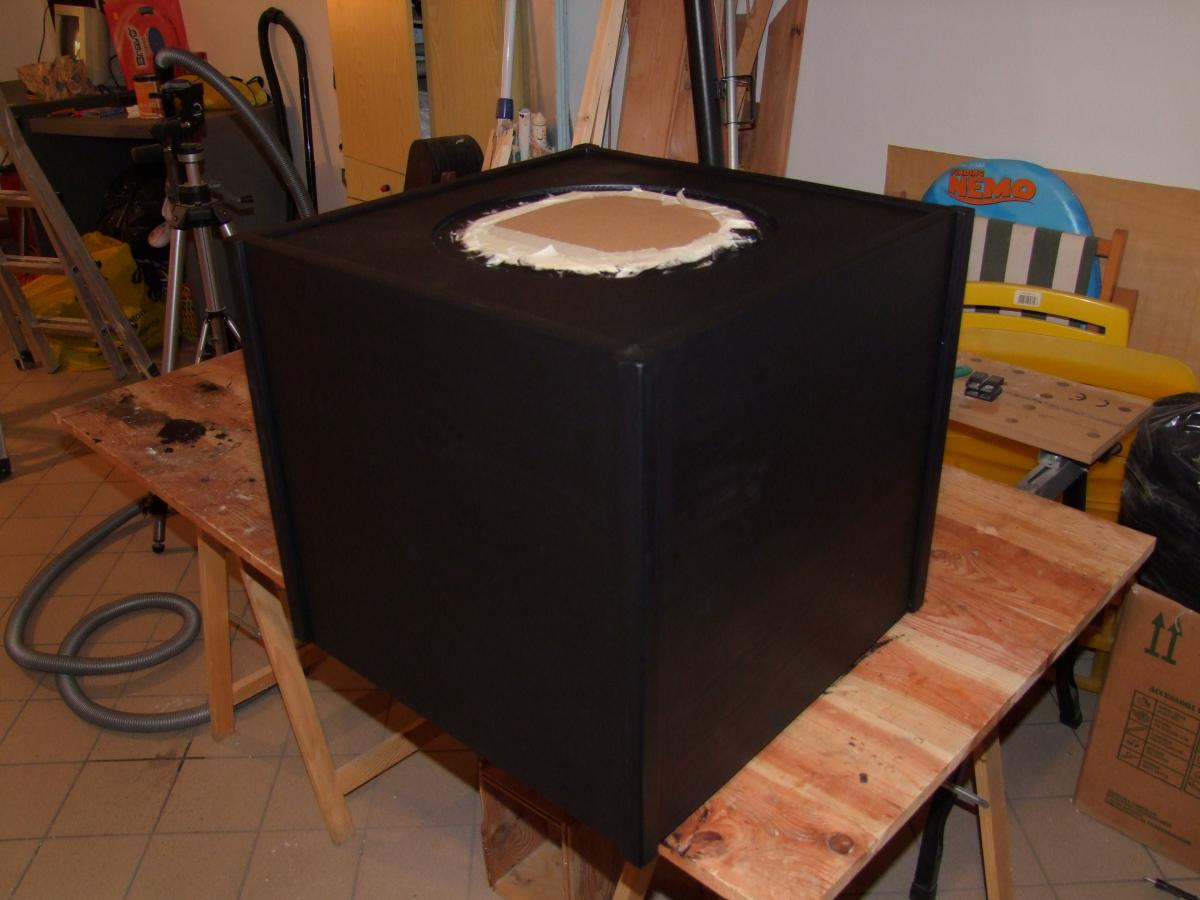
A crossoverless speaker with a rigid 40 kg suspension.
I hear the organ pedalboard fantastically!
Bye, Sergio.
V
Vitrus
Member
Reply 2 by Vitrus
Posts
37
Sergio wrote:
400W rms MOSFET amplifier (peak >700W) using a domestic radiator as a heatsink to avoid noisy fans.
Active filter, passband from 0 to 40Hz, all made of spruce.
Non-crossover loudspeaker with a rigid 40 kg suspension.
I hear the organ pedalboard fantastically!
Ciao, Sergio.
Dear Sergio,
No fans... as master S. Jobs suggests..., of course it is better to avoid humming even if the frequencies at play are below 50Hz. The toroidal transformer is a good choice.
I imagine that the damping factor is quite high.
It seems to me that the MOSFETs still need to be attached to the radiator. For the MOSFET connections to the PCB, I would use conductors with a larger cross-section... with 700W peak rms, you have impulsive currents exceeding 80 A.
Congratulations on the result which, as you say, satisfies you... and I certainly believe it.
The power levels I work with are about one tenth of yours.... or even one hundredth.
Hello Vitrus, yes I hadn't fixed the mosfets yet; I used an aeronautical-type silicone grease to seal some parts of the F104 which seems to have extremely high thermal conductivity.
The initial project planned for a pair of mosfets in complementary symmetry, but then I added another pair in parallel to further lower the output impedance.
I chose thin wires when connecting the mosfets to better match the dispersion of the mos characteristics and also to be able to omit the classic power resistors of about 0.33 Ω in series with the drains.
The amp rests on a speaker with 60 cm of 12 mm² cable. The speaker is connected with 5 small cables of 1.5 mm² in parallel, almost zero impedance seen by the speaker: extremely tight bass.
Good work, Sergio.
V
Vitrus
Member
Reply 4 by Vitrus
Posts
37
Hello Sergio,
...great, but an overheating of the output stages could generate thermal runaway with a further increase in current...a 0.33 resistor would limit it.
I was wondering if, in addition to the parallel push-pull, the design includes feedback to further lower the output impedance...I imagine so, since the speaker is well controlled
Good morning Vitrus, I see that you have very clear ideas. I solved it by inserting 15 turns of 1 mm in series with the load and with the mosfet connections using 0.25 mm² cables. Of course, the whole thing is heavily counter-reactive.
One last detail: 50,000uF + 50,000uF of smoothing!
Perhaps one day I will convert to valves: but can you perceive sonic advantages with them? I am not convinced.