Tonight I return to talk to you about authors and sheet music, after a week spent sanding fixtures, helping to redo bathrooms, and trying to get my cursed PC back in working order—yes, the same one from last time!
Now it lies there, beside me, with its exhausted and tattered video flashing gloomily and emitting dull noises that would try to intimidate me, but I am not easily impressed and continue calmly pressing the keys on my wife's very old laptop which (the PC, not the wife!) winks at me smilingly.
Well, today we are talking about an author from Spain.
PianoExpert expects Isaac Albéniz, perhaps with his Third Sonata Op. 68, which I adore, TheSimon Manuel de Falla with, say, the Spanish Dance No. 1, which I also like very much, and so on. (@Francesco1797: and what would you like?)
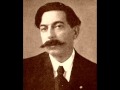
But no! Tonight I just want to digress, and therefore I will talk to you again about a so-called minor, Enrique Granados, even though Pablo Casals considered him the first among the modern Spaniards.
Casals' judgment was probably influenced by friendship and respect for Granados' enormous abilities, as he was essentially a self-taught musician. In fact, his training was irregular, involving teachers of different levels and different artistic faiths; it was only thanks to his willpower that Enrique managed, despite everything, to become a great composer and, above all, a great pianist (here PianoExpert could hold a seminar!).
Like Albéniz, Granados rarely cites popular melodies and often resorts to themes of his own invention, but, unlike the former, he is less tied to the expressions of Spanish folk music, being influenced by the European trends developing in his time.
Regarding Granados, more than his large-scale works, the small piano pieces are interesting, some of which are truly excellent and almost all extremely enjoyable.
In his works we find piano compositions of varying difficulty, from the simple Cuentos de la juventud to the complex Goyescas, of which I especially remind you of "El fandango de Candil" ("Allegretto gallardo" indicates the author in the score!), a massive composition and among the greatest modern Spanish works.
Tonight I must run to review a thesis, so I cannot go on any further.
I therefore propose something more immediate and of less complexity that I tried to tackle almost as soon as I started scratching the piano keys: the fifth of the "Spanish Dances", the famous "Andaluza"", which I began to adore since I played the guitar admiring the magical Segovia and which I still adore for the contrast between the rhythmic obsession of the accompaniment (left + right) and the melodious singing (right).
There are various piano performances, but the one by Alicia de Larrocha (which for me is perhaps the best) I discovered irremediably ruined in the final part. I spent an hour trying to set it right but I didn't like the result; therefore, instead, I propose the one—also excellent—by Claudio Carbò. There is also one by Benedetto Michelangeli, but he was 19 years old when he recorded it and you can tell; in any case, it has almost nothing of the Spanish style as it was played at the beginning of the 1900s, but it paints an almost hysterical Granados who never existed, whereas he was certainly a loser: but that is another story I will tell you next time I talk to you about Enrique.