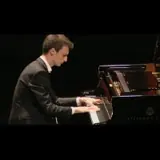
Good morning, I have just finished studying this étude.. this is the first performance from beginning to end that I am doing; in fact, it is still immature for my tastes, especially in the coda.
Despite everything, I recorded it and so I am proposing it to you, enjoy the listening
PS: In the background, you might happen to hear a parrot whistling, don't mind it eheh
Etude Tableau Op. 39 No. 6 Rachmaninov.wav
Audio and score
Follow the score as you listen
Score synced with the recording
Performance breathingAbove the line the performer speeds up, below it slows down against the written tempo.
Loading score…
0:000:00
N
nancy
Member
Reply 2 by nancy
Posts
521
Hi pianothor, I should preface this by saying I don't know the piece very well... I probably wouldn't even know how to play it... I'll tell you what I hear, but take it as a very simple listening impression!
It seems to me that you are on the right track... well done! Of course, it is clear that it is in the study phase, especially in the coda, as you said, where there are still technical difficulties. It needs to mature... and become clearer in the dialogue between the parts, but it seems to me that your interpretative intentions are excellent! I liked it!
It would also be nice to be able to listen to it again in a little while... thank you for sharing it with us...
C
Crazypiano
Member
Reply 3 by Crazypiano
Posts
73
I didn't know the piece; it seemed a bit cold and "mechanical" to me. Perhaps this dialogue was presented in a somewhat schematic way. It is certainly technically well-crafted, but probably, as Nancy says, it needs to mature more musically. Anyway, I wouldn't know how to play it... so hats off to them.
You are right, I have yet to start seriously working on the interpretative aspect since I have just finished setting it in time from beginning to end. The fact that it sounds a bit "clunky" to you pleases me because while it is true that Rachmaninov is considered the last of the Romantics, we must not forget that we are in the 1900s, precisely during World War I when he composed these studies. The vision of factories converted to military production, of restrictive life, soldier marches, tracked vehicles... I am convinced this should not be neglected, and therefore one should not favor the excessive honey that so many spread over this study.
I will record a better version soon anyway; I really like comparing the various versions of the pieces I study: beginning, during, and end... it helps a lot
PS: looking back at it, I discovered that I added notes in one spot x)