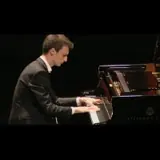
The object of my attention is not LL —defending whom is not within my interests— but rather the critical apparatus used to define his limits. It is a reflection that goes beyond this specific case. The stigmatization of virtuosity, which almost needs to be "justified" because in itself it is not part of that constellation of qualities that would define Music with a capital M, seems to me rather symptomatic of the fact that the excesses we criticize end up destructuring even the categories through which we observe reality. In short—reworking the famous saying—I do not fear Lang Lang himself, but I fear the Lang Lang in me. Hence the example of the part of the documentary on Horowitz. Being surrounded by ignorance is stripping us of many of the most genuine pleasures of musical enjoyment, due to a presumed necessity for opposition that I find questionable.
T
Tiger
Member
Reply 42 by Tiger
Posts
447
There is a "right" time for every work, even if not strictly so. But LL's comedies are something else. And with Sony's blessing. It's also funny in its "No look," a typical move of soccer players when they perform feints.... Mah!
Gentlemen, there are live recordings of Horowitz from the 70s; I own some LPs, which are of a vulgarity and indecency almost equal to the clown of the rising sun.
D
Dino
Member
Reply 44 by Dino
Posts
277
It is true that there are some terrible recordings of Horowitz. But also beautiful things. I don't define it as interpretation because that's not the point, I simply mean here "the way a piece is presented to us", let's put it that way. The approach to a piece can be completely incorrect, while still maintaining its own internal logic (even if erroneous). Then there are those performances that don't even have logic, but are completely random, according to the moment and the mood. This is Lang Lang. This is what I meant. Anyway, for all the rubbish he has done, Horowitz remains a fine pianist (who personally never enthralled me, but that's another story), this guy.... well
I am taking back the reins of the discussion that I personally started to give an opinion and to compare myself with you regarding the musical part of the EXPO opening, not the EXPO itself, since that would be a political discussion that I do not wish to tackle!
First of all, I would like to respond to TTW. As a non-pianist, I cannot think of someone who is presented as "The greatest pianist in the world". We had the opportunity to showcase Italian talents and launch them into a global perspective, which seems very limited to me in Italy, but instead we called "the greatest pianist (at least for them) in the world".
Delving deeper into the LL discussion and responding to Dino, in my opinion, his interpretations do not follow the moment and the mood. They have a logic that is wrong but is specifically structured to turn him into a "stage animal" capable of leaving the audience speechless even simply by playing Fra Martino Campanaro, perhaps played as a prestissimo.
Then obviously one could say "but how can you say that someone is playing a piece correctly or incorrectly"? And there we obviously address discussions that head toward a single goal: the beauty of music. Music is an art that should not be forced; if the composer wanted to write a piece as "adagio" rather than "allegro", it means they wanted to create a balance that only holds with that specific character. Then, we all make variations in tempo and not just those—also variations in touch, dynamics, and expression—but these are the small variations that distinguish every musician; it is not about completely subverting everything!
As for the "no look" mentioned by "Tiger", I can only say that if you search on Google, you can even find tutorials on how to imitate Lang Lang's position, namely the one with the back leaned back, hands barely touching the white keys, and the right foot suspended over the sustain pedal—a position that, to be imitated, requires an engineer's study to prevent the bench from collapsing under your weight.
C
Chopin
Member
Reply 46 by Chopin
Posts
218
In the new generation of "musical phenomena," I notice a relationship between the use of the head with hair and body movement. Everything is exaggerated, even where technical-musical difficulty requires no emphasis. They are trained from a very young age to move their heads and hair to the maximum.
Here, I see that the comparison with Horowitz didn't only occur to me. And it is precisely at the next step of this comparison that I would like to arrive, and I would like to propose an anthropological focus, not solely musical-phenomenological, namely: what differentiates a young Lang Lang from a young Horowitz (assuming an equal distance from the application of what would be the right criteria for making music, because for example if we take tempo and speed, even great pianists like Sokolov often raise perplexities in many)? What led to the mature interpretations of a Horowitz (I am thinking of his Chabrier or his scenes from an exhibition or many things by Schumann)—what forces were in the air that allowed a young talent to nourish himself and evolve until reaching where we know he did? Why do they seem so difficult to evoke today? The point is to reason and ask these questions in a positive way, because the 'boogeyman' of music marketing made of hair and stardom (as if he were born today) which, in my opinion, forgets everything, is spoken about because it is often not easy to conduct a targeted reflection on the most precious aspects of the musical experiences of the greats. Hence my perplexity regarding the isolation of virtuosity as the aspect to focus on when noting the nefarious aspects of the Lang Lang phenomenon. If anything, it is one of the few things he is at least capable of doing and which, for the moment, are still perceivable by the general public as qualities (see the cadence of the third of Rach or the Wanderer at Carnegie Hall). But precisely, in my opinion, that is not the point. There are illustrious absences both in music and in what Mandorlato proposes to us, as well as in the criticisms leveled against him.
D
Dino
Member
Reply 48 by Dino
Posts
277
... beyond any consideration, I would like to remind you that Horowitz was the son of a very different musical culture. I am not saying worse or better, I am saying different. To Scriabin, since he was mentioned, he was close in era and nationality, language, and cultural heritage. And do not come telling me that these are uninfluential things....
Maybe I'll say something stupid, but (just to make a "joke") given the turn the discussion has taken, I feel like making a comparison between the excess of movement in some performers and a sport that, especially in recent years, has seen the level of performance grow increasingly in terms of gestures and theatrics that have nothing to do with the sport itself—I'm talking about football (a sport that personally doesn't interest me, but which is practiced by failed actors): even here (in many sports centers) they teach children with a certain care how to throw themselves to the ground simulating a foul or some kind of contact, "forgetting" why they are there in the first place.
S
Shark
Member
Reply 50 by Shark
Posts
106
Speaking of gestures....it seems to me that even a good part of composers abuse them a bit.
Have you re-read yourselves?? Guys, I am embarrassed for you, really. There are those who call it a stupid face or a clown of the rising sun. "Almond-eyed," moreover, is an exquisitely RACIST offense. It would be unworthy even toward a stranger, and you do it to someone who earns a living playing. Fine? Bad? Too fast? Too slow? WHO CARES!
You are boors. Lovers of music and boors. Protectors of the "right tempo" and boors. Very fine musical exegetes and boors.
Have you even re-read yourselves?? Guys, I am embarrassed for you, truly. There are those who call it a stupid face or a clown from the land of the rising sun. "Almond-eyed," furthermore, is an exquisitely RACIST offense. It would be unworthy even toward a stranger, and you do it to someone who earns a living playing. Fine? Bad? Too fast? Too slow? WHO CARES!
You are boors. Music lovers and boors. Protectors of the "right tempo" and boors. Very fine musical exegetes and boors.
Comments made about the person are obviously wrong, not to mention the racist ones, but comments made about their way of playing etc. are freedom of opinion and in my view there is nothing wrong with criticizing a way of playing both positively and negatively. Because let's face it, every day we comment on something that isn't right, an ugly place or other things; maybe not always publicly, but we do it, and it would be equally boorish to claim otherwise. If negative criticism did not exist, there would be no comparison and society would be flat, eliminating that desire for competition driven by the want to please everyone that pushes one to always do better. Naturally, negative criticism must not be destructive; for example, I might even contradict myself regarding some performances by Lang Lang that I liked.
Mistakes like using the wrong term happen to everyone, Thallo.. I am sure that Rotore used that term to indicate LL simply with a\u0027nother word.
Regarding the criticisms calling him a clown or a fool, I think everyone is free to think as they wish; perhaps more appropriate terms could have been used.. In short, he isn't quite a clown because I want to see you all performing certain pieces..
His interpretations, however, are ridiculous.. . I am writing from a mobile phone, so I apologize in advance for any errors
For once I find myself in complete agreement with Thallo, from the first letter of the post to the last.
We can stay here discussing who we like and who we don't like all day long, but without offending anyone's dignity. Despite finding Lang Lang's performance outrageous, I still consider him a great pianist endowed with great technique. I may not share his artistic choices, but I personally do not feel that I have sullied his name, and I would ask you to do the same. Let's try not to let things degenerate, please. Let's talk about music and performers, and this context cannot leave room for such low definitions. Let's try to return to our usual level.
Thank you.
G
giovannip
Member
Reply 55 by giovannip
Posts
553
I have followed this discussion from the beginning without intervening; I wanted to see where it would lead.
It seemed to me to understand that Lang Lang is not very loved by fellow musicians or alleged ones; I speak as an ignorant person in the sense that I do not know how one should behave when performing a piece. There are rules that must be respected, let's look at some: posture, restraint in performance, not overacting! Possibly playing in the middle ground without overdoing it, respecting the tempo of execution, etc., etc. All this seems like stuff for fundamentalists to me!
Music, just like every form of art, like the word itself, evolves and changes over time whether it wants to or not. What seems logical and obvious to us today, beautiful or ugly, will not be tomorrow. And also thanks to him, millions of young people in the world are starting to play the piano, bringing them closer to classical music and more, inserting a multitude of people into the workforce.
This Mr. Lang does not limit himself only to making himself look good and getting rich, but is also involved in social work as an ambassador for UNICEF, etc.; in China, Lang Lang has created a Foundation and a music school to support young talents who want to pursue the dream of becoming musicians, paying for the entire project out of his own pocket.
I like Lang Lang just as I like Glenn Gould, another eccentric one.
I have followed this discussion from the beginning without intervening; I wanted to see where it would lead.
It seemed to me to understand that Lang Lang is not very loved by fellow musicians or alleged ones; I speak as an ignorant person in the sense that I do not know how one should behave when performing a piece. There are rules that must be respected—let's look at some: posture, restraint in performance, not overacting too much! If possible, playing at an average level without overdoing it, respecting the tempo of execution, etc., etc. All this seems like stuff for fundamentalists to me!
Music, just like every form of art, like the word itself, evolves and changes over time whether it wants to or not. What seems logical and obvious to us today, beautiful or ugly, will not be tomorrow. And also thanks to him, millions of young people in the world are starting to play the piano, bringing them closer to classical music and more, inserting a multitude of people into the workforce.
This Mr. Lang does not limit himself only to making himself look good and rich, but is also engaged in social work as an ambassador for UNICEF, etc.; in China, Lang Lang has created a Foundation and a music school to support young talents who want to pursue the dream of becoming musicians, paying for the entire project out of his own pocket.
A Lang Lang appeals to me just as Glenn Gould, another eccentric, appeals to me.
Personally speaking, as I have already said, I do not consider the human aspect of Lang Lang because I have not had the chance to meet him in person; perhaps I don't like how he sounds, but then I discover he is very likable and I enjoy talking to him—who can ever say! I have evaluated the aspect of the concert artist Lang Lang, namely that slice of his personality that he has made public (which is what happens when someone dedicates themselves to art with its pros and cons).
Returning to the musical aspect, as I said at the beginning of the discussion, these are my personal ideas; I did not repeat them in the comment made further down because I take for granted that everything I am stating is an opinion that I deliberately want to clash with yours, not to create conflict but to create a discussion (which I would have wanted to be more peaceful, but in effect it was a bit aggressive). Personally, I am both a fundamentalist and not; that is, there are things that in my opinion should not be touched, not because they cannot be touched, but because things do not always need to be changed. It is not so much a fear of change—on the contrary, personally, I often change my mind even from one day to the next—it is more a form of respect that I have developed by becoming attached to the pieces I have played from the beginning of my studies until now.
That being said, I continue to repeat that I would never allow myself to touch upon the human aspect of Lang Lang, also because from what I know, he had a rather difficult childhood and early adolescence, and I would authorize you to beat me up if I ever did so.