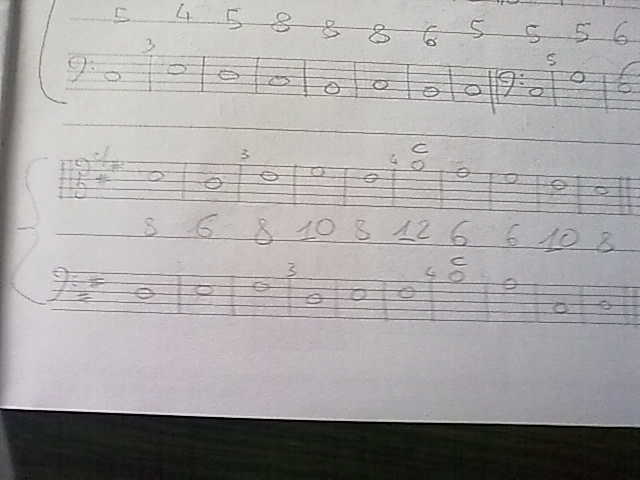
The first species is obvious, you just have to use thirds and sixths and you never make mistakes...
Well, it's not that simple. And we are not talking about a basso d'armonia.
First of all, DanielePiano did not specify the type of counterpoint he is studying. Whether Renaissance counterpoint (modal), Baroque counterpoint, or tonal counterpoint.
Also, I repeat, it is not a basso d'armonia. The goal of studying counterpoint is not just to write a correct exercise without errors, but to develop a particular cantability in the parts. The melodic movement of the parts matters greatly. And the success of a good counterpoint exercise is not having done it without errors, but having developed good cantability in all the voices.
One cannot immediately move to 4-part counterpoint if the student does not master 2 parts... or 3 parts, because precisely the difficulty of counterpoint is not in avoiding errors (otherwise what would change compared to a basso d'armonia?).
And, within tonal counterpoint, study must be approached in stages... leading the student to master the parts and melodies by first going through all species of counterpoint... it is a training ground. Just as the imitated and fugato bass of the 4th year of composition... is an abstract form... it does not exist historically but is an excellent training ground and preparatory for many things.
and the division of study (speaking of a tonal, "hybrid", purely academic counterpoint) is:
- 1st species - note against note
- 2nd species - two notes against one
- 3rd species - four notes against one
- 4th species - syncopation
- 5th species - florid counterpoint
and this up to 4 parts... then from 5 parts onwards... it is assumed that the student has enough mastery and only the 1st and 5th species are tackled.
all major, minor, and perfect intervals including the major sixth. One can also perform an octave leap and execute chromatic semitones.
False. In counterpoint up to 6 parts, the major 6th is forbidden. It is allowed in 7 and 8 parts. Chromaticism is absolutely not allowed in strict counterpoint (modal and tonal).
And then... in 2-part first species counterpoint, you cannot have more than 3 thirds or 3 sixths in a row.
it is not possible to make leaps on augmented, diminished, and seventh intervals.
Well... let's not generalize. Even in harmony... the augmented 4th is allowed if after this interval one immediately rises by a diatonic semitone... so that the last note of the interval would correspond to the leading tone (in C: fa-si-do). Also the diminished 5th if immediately after one descends by a diatonic semitone. The augmented 2nd is not viewed favorably... but sometimes it is tolerated... in harmony. In counterpoint, no.
....can the hidden fifth be placed in the penultimate measure??
For parallelism errors, the same rules studied in harmony are followed.
Seventh and ninth leaps can be reached in 2 leaps... both in harmony and in counterpoint. It is preferable that the 2nd leap proceeds by a minor 2nd (in harmony).
P.S.
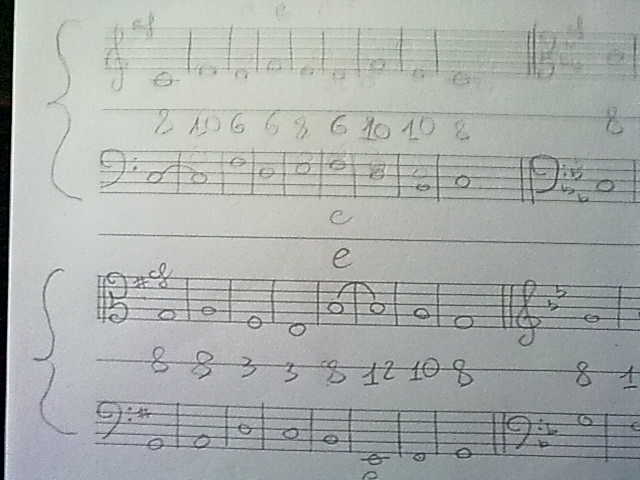
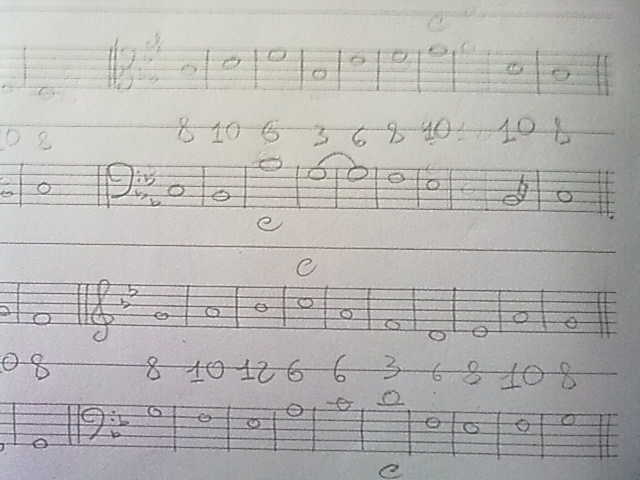
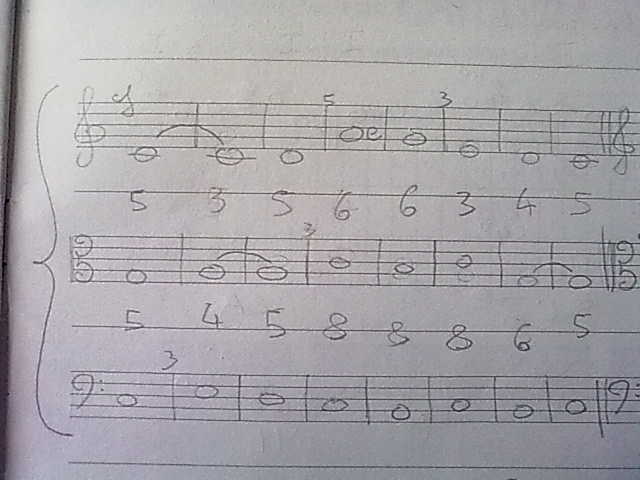
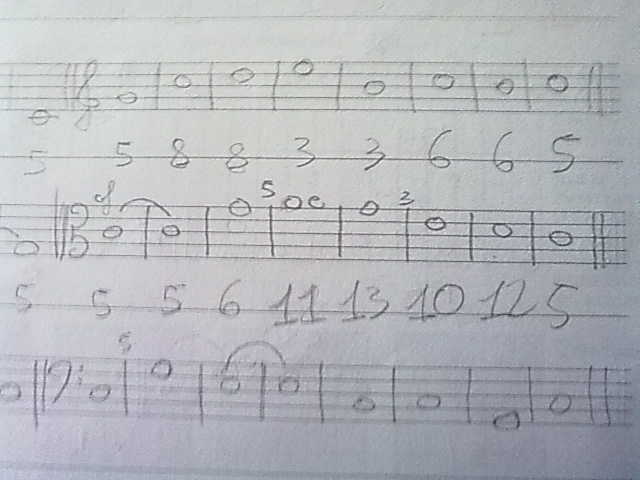
I looked quickly and superficially at some exercises... but it is 2 parts... not 3. And anyway there are quite a few errors... and some regarding the movement of the parts are simply unwatchable.
If the user is interested, I can look at them more closely.