I am reporting the availability of the following Work:
FUNCTIONAL HARMONY
- Tonal
- Modal
- Modal/chromatic
- Chromatic
The undersigned, Giuseppe Perna, is its author.
Available upon request from the author: gppinoperna04@gmail.com
Giuseppe Perna, a composer and musician from Foggia, is a pianist, writer, and theorist deeply immersed in musical modality and its related harmonizations. Already the author of other essays on modal harmony, in this new and definitive book on the subject, Perna demonstrates how much freedom and novelty can be derived from an in-depth study of a topic developed in a modern way, which establishes its own virtues thanks to direct field experience: a precious series of practical tips aimed not only at improvisational practice, but also useful for a correct "thinking" approach to the subject, which is truly neglected today because erroneously considered to have no further possible developments. With "Functional Harmony," Perna dispels many preconceptions; he writes with proverbial clarity that can well be understood even by non-professionals and illustrates his thoughts with illustrative staves, providing cognitive insights that are rarely found within the scope of the scarce musical literature in question, at least that currently available in Italy. Thus, a unique book that demonstrates attachment to his musical vision (listening to which is recommended for better understanding), which runs in grooves that refuse labels or similarities, and which seeks to demonstrate how direct and emotional discoveries on the instrument can be an essential basis for the mature evolution of any musician.
Editorial Note
Giuseppe Perna plays exclusively by improvising and has developed a very personal style. His compositions have a meditative character with a vague oriental flavor due to the frequent use of chromatized Modes according to a personal technique and often in the absence of a well-defined melodic structure. Technically, we can speak of a modal-chromatic style in which, as he says, - improvisation is freedom, freedom from the rules of an exacting and severe pedagogy, a risky path not for the artist but to reach that audience that does not want to think about that inner music which is often vulnerability, fragility, weakness, canons detached from the society of happiness = oppression in which we live -
Author's Note
I believe it is a deficiency that many authors have forgotten that listening is of vital importance in the learning process. I intend to evoke a return to such practice. From a didactic point of view, listening and analyzing what one hears, when compared with the study of the text, produces results far superior to the two methods taken separately. It is possible to listen to compositions created and performed by the Author in "solo piano" by downloading the albums from various online stores such as "www.apple.com"
It is possible to listen to some of the Author's compositions in solo piano performance at the following link:
http://www.youtube.c...K3_fMg7MKjLE71A
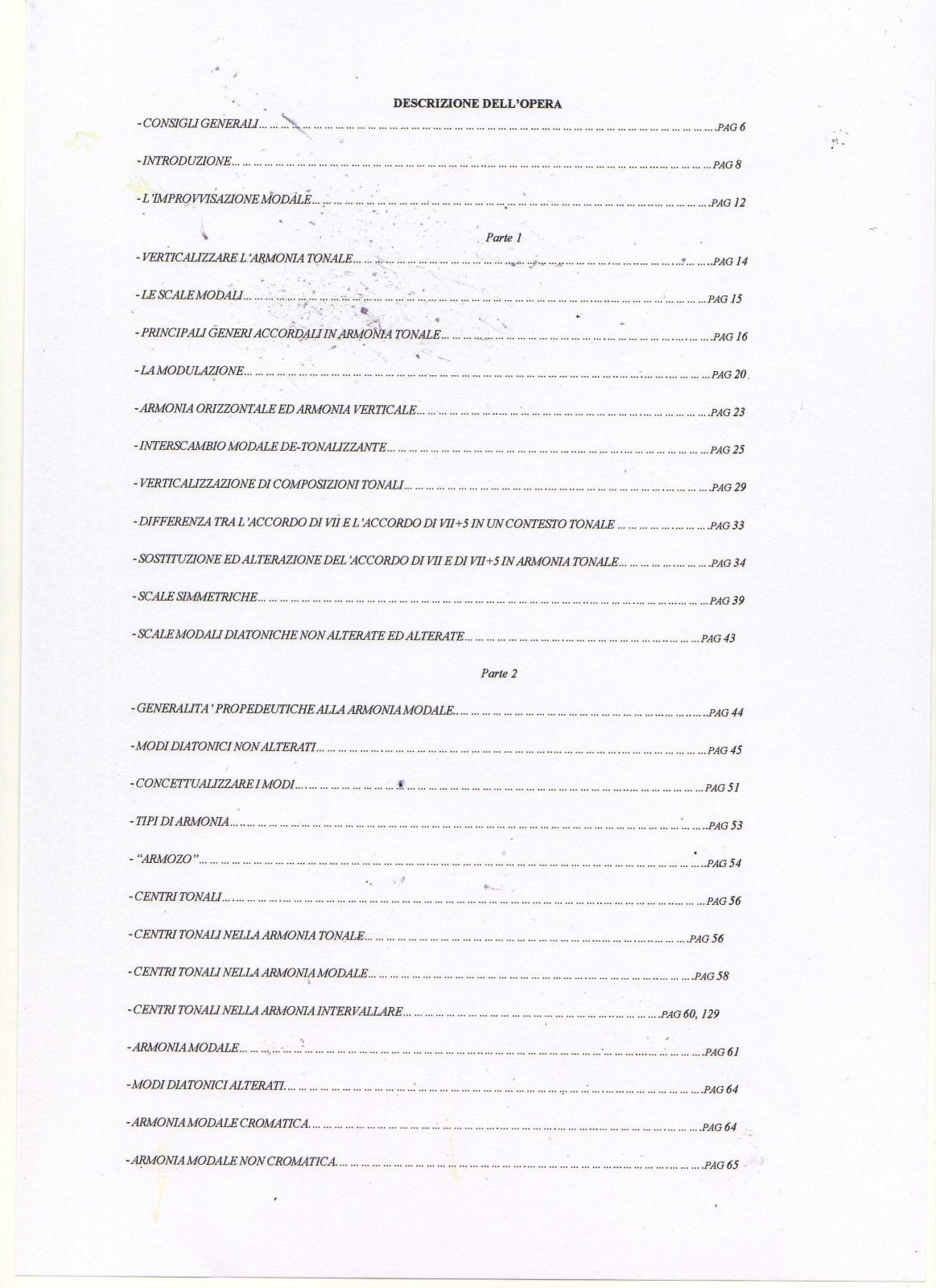
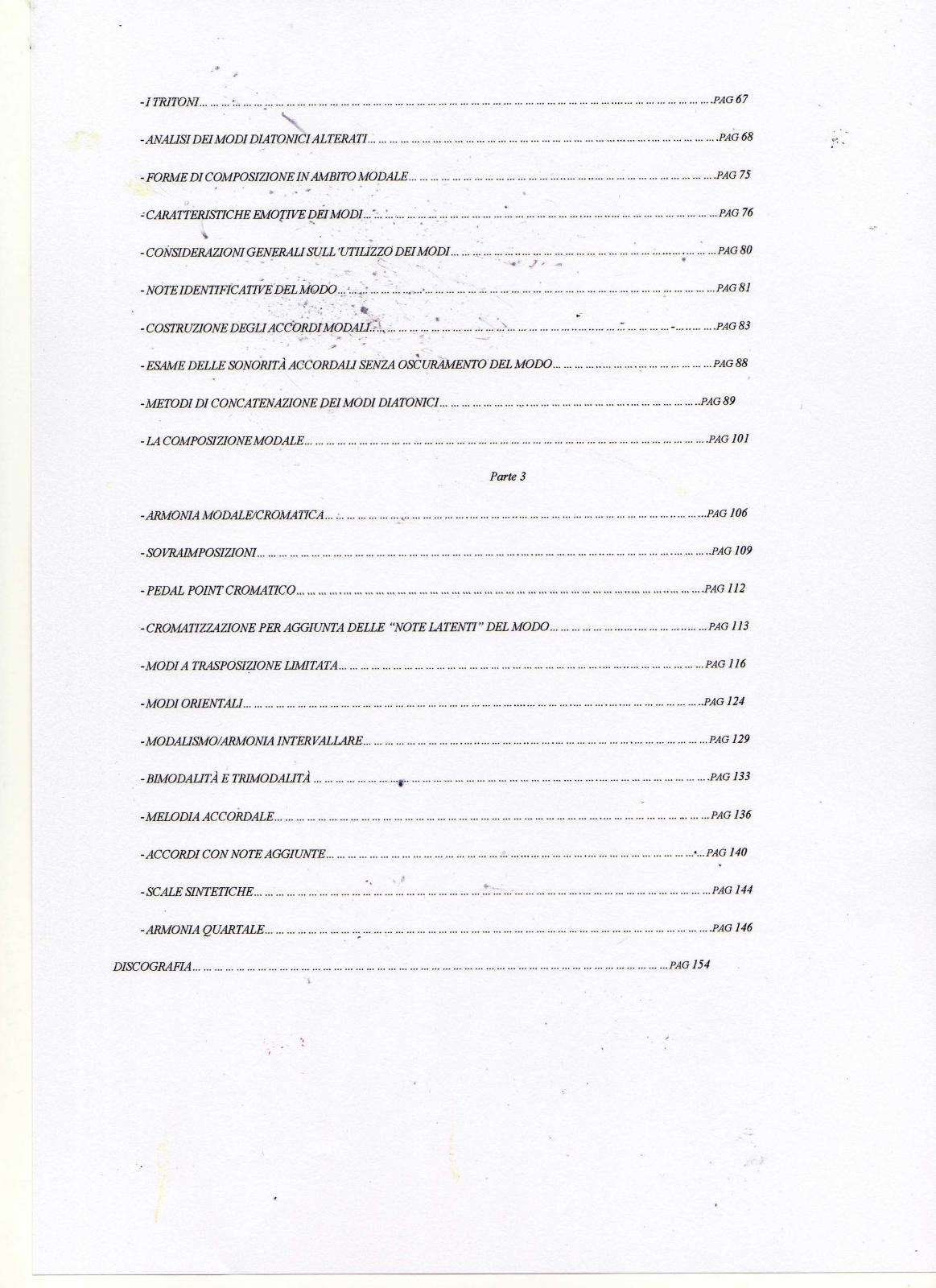
Attached, the index of the Work.