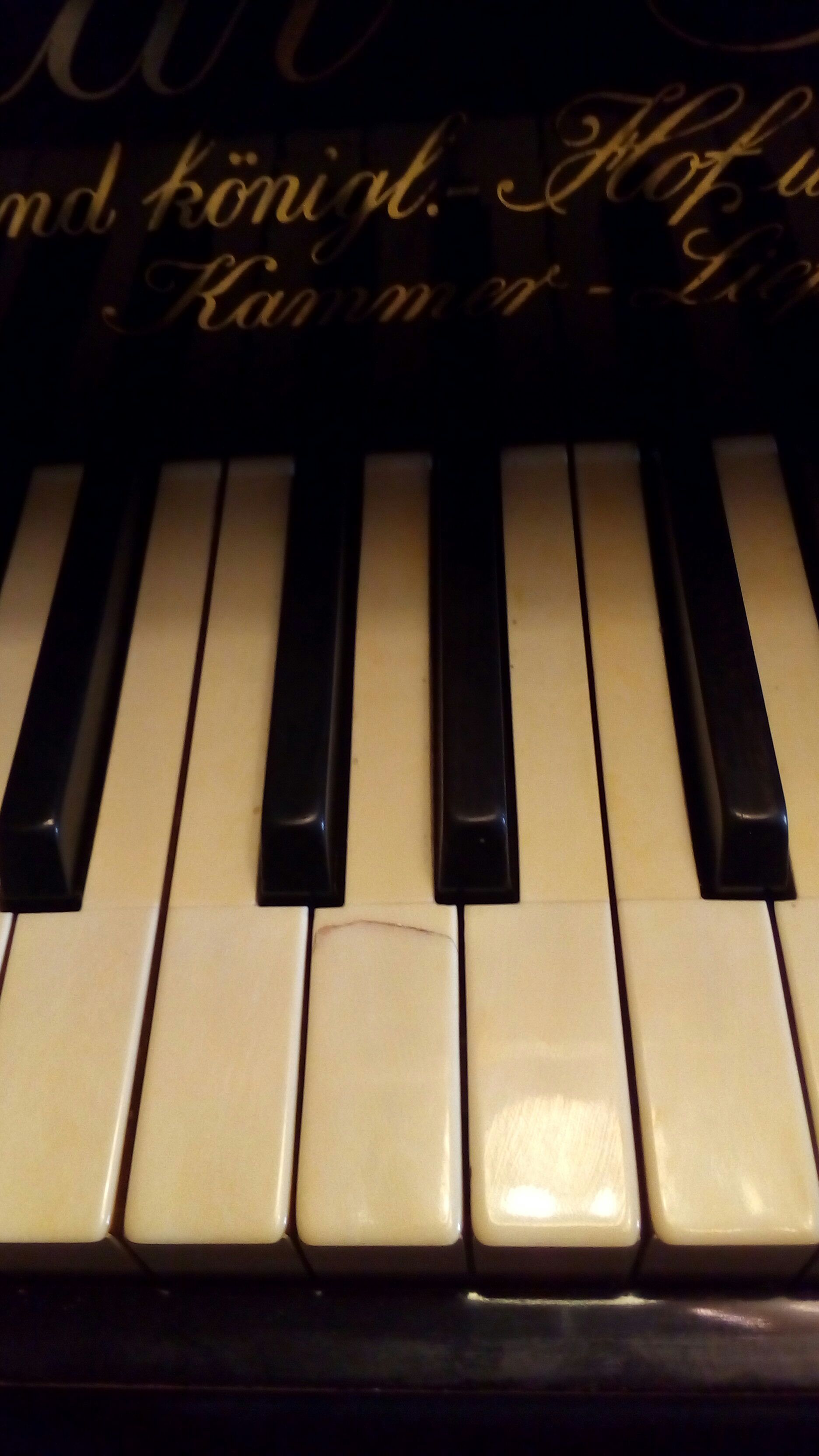
Good morning, I have come into possession of a 1914 grand piano, 185 cm in length to be precise, and I wanted to know what I could do to improve the aesthetic condition of the cabinet. Are there any products that are not too aggressive? The piano is black, I believe with a shellac finish, if I am not mistaken. Thank you!
I work as a professional polisher. As far as I know, very little can be done except to re-polish after reapplying the black finish. Then spirit swab and shellac. Every "layer" or coat must be allowed to dry, and the next day it can be removed with an old dry CLOTH rag. Wool must absolutely not be used! Any liquid product can only contribute to further damaging or dulling the surface
Ok then it's better to leave it as it is. Thanks for the answer, I will surely ask for more advice because for now I'll leave it for a couple of days to get used to the new environment before undertaking improvements. Have a good day!
How can I clean the inside of the piano? I've given it a few passes with the vacuum cleaner after removing the action, being very careful not to cause damage, but the dust from two world wars is literally killing me.
What can I do about this key? Should I leave it as it is? I also have a spare ivory veneer. It's just that I know it's a job for technicians. The "problem" is that when playing, you can feel the edge under the finger
The repair is difficult. In fact, to replace it, you need a blade of identical length and color. To glue it, special glue and a special clamp are required. To polish the new blade, cloth discs on a machine are needed. You can use some 600 or 1000 grit bodywork sandpaper on that spot and then polish the small flattened part with a cloth disc on a drill + polishing compound. Regardless, the mark of the crack will be visible.
Dear Pianoexpert, an extremely eccentric idea has occurred to me regarding the first ivory key. What if, hypothetically, I asked a dentist-dental technician to level the crack with some of that paste they use for dental fillings? I know it might seem like a blasphemous idea, but if I found someone willing to do it, it could be almost less invasive than a replacement. What do you think?
certainly, but the color must be respected. Therefore, the color must be tested with a specific kit that the dental technician should have. However, I do not think the intervention can be invisible. we need to see how deep the crack goes. another possibility is to replace the paddle with one of the high extremes or the low extremes