

Dear friends of the forum,
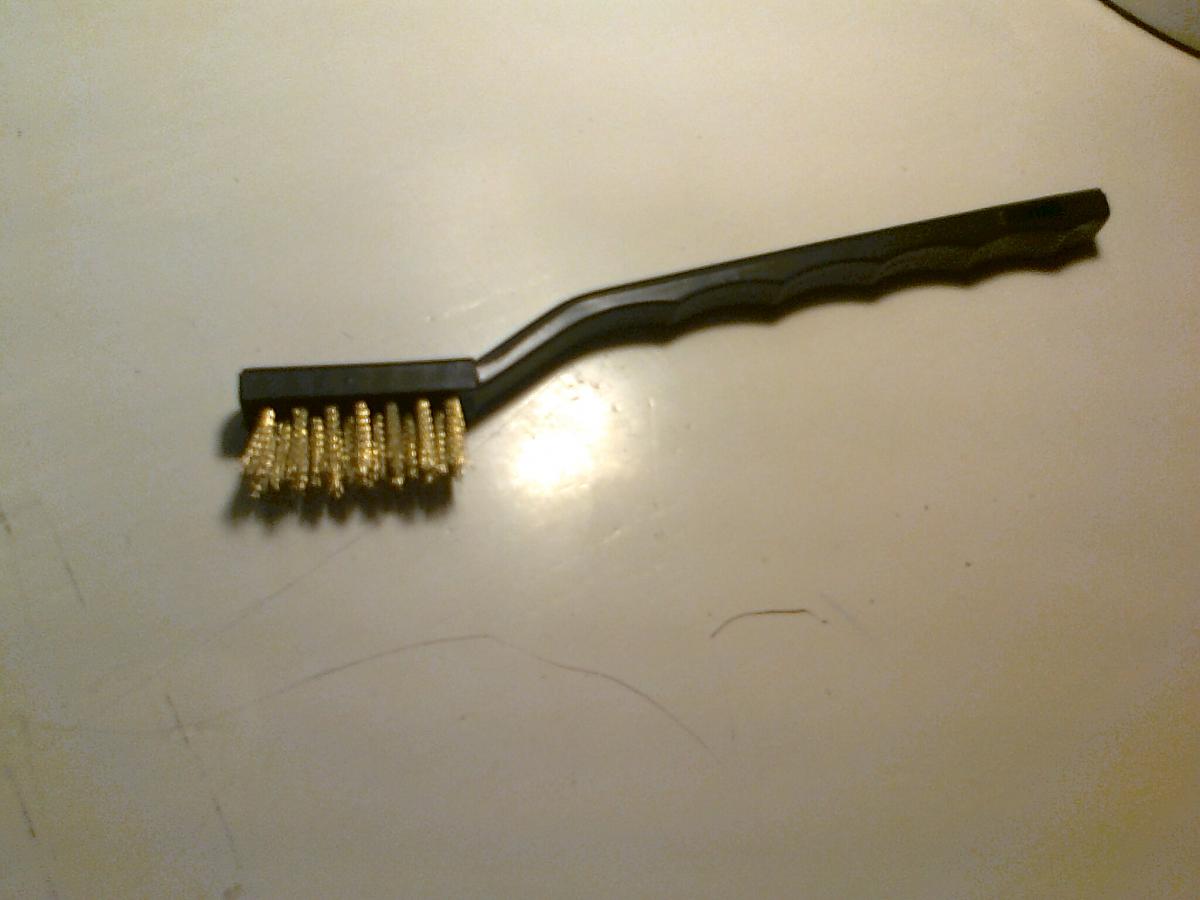
on youtube I saw an American tuner shaving the hammer rail with this brass toothbrush.
What do you think?
Started by
Pianoaccordatore
Dear friends of the forum,
on youtube I saw an American tuner shaving the hammer rail with this brass toothbrush.
What do you think?

Administrator
mmmmmmm..... 😟

Moderator
O.o I have no idea!! I called the technician for next week, I think mine needs resurfacing too. Fingers crossed!! 😃
Anyway it looks more like a toothbrush for horses ahahhaha
Member
Americans are a bit in their own way. Just think that for the hammers they even used an iron as a softener. Steam might regenerate, but I don't know what effect it can have on the hammer wood. Anyway, I am not a technician, but that little brush doesn't seem like the best thing. We are waiting for Paolo.

Moderator
That toothbrush is being used by someone to "comb." I disagree. Shaving must be done with emery paper, first 180, then 280, then 360 and also 500. The hammers must preserve their original shape, so it is unthinkable to round off their apex, definitively ruining their structure. More rounded at the lows and more pointed in the highs. After shaving, one proceeds to a new voicing. In fact, by shaving, a disproportion is created again between the expanded mass and the compressed mass. Of course, one cannot shave off much. The hammers would lose too much weight, too much energy. Be careful that the apex lies parallel to the strings at the moment of impact, assuming the strings are on the same striking "plane." This is very important for sound clarity, especially in the highs.

Member
Hi everyone !! I'll take advantage of this discussion to ask for a clarification:
When the technician brought me the Schulz Pollmann, I performed the voicing/shaving of the hammer rail. I noticed that the hammers of the treble section (the sharper ones) were almost untouched; in fact, they still show signs of wear, especially at the point of percussion. I don't know, maybe because there was little felt left he didn't dare! Is it usually done this way?
Thank you very much
Lorenzo
yes.
One must never sand the hammers of the extreme highs, as doing so will expose the wood or weaken the felt to the point that the strings would quickly cut through the wood.
Flattening the hammer felt is better than having the wood strike the strings. . .
Member
These notions are interesting!
Why is it that when I move the keyboard slightly on the wooden board, I penalize some keys and improve others?
In any case, I cannot find a condition that satisfies me.
Regards, Sergio.
Moderator
Why the strike point changes. The strike point is very important. As the hammers wear down, the point changes. If the hammer rail is then shaved, you must move the action further in to allow the hammers to strike at the design point. The lower hammer (because it is shaved or worn) has more travel, and the longer arc causes it to strike closer to the capstan.
The technician was right not to shave the treble... perhaps there was little felt, Lorenzo. Soon you will have to replace the hammer rail. Remember that the passing of years also causes hammers to lose elasticity.
Member
Thanks Pianoexpert, I will look for a mechanical positioning point that offers a good compromise and then I will individually center the hammers to optimize sound quality.
I noticed that the treble hammers, and particularly the highest treble ones, strike the strings in the immediate vicinity of the nut (visually right on the nut).
Question: could I have more sonic efficiency (my pf doesn't sound very well in the high keys) if the hammers struck the strings a few millimeters further from the nut?
I will send some photos of the hammers for advice on a possible shaving.
Regards, Sergio.
The striking point of hammer 88 in the vertical must strike the string at a distance of approximately 2 - 2.7 mm from the tuning pin cap.
The striking point of hammer 88 in the grand piano must strike the string at a distance of approximately 2.16 - 3 mm from the tuning pin cap.
Member
Thank you Pianoaccordatore, mine is a grand piano.
Can I therefore increase the volume of the upper mids a bit by increasing this quota, perhaps bringing it to the maximum?
Sergio.
Member
pianoexpert wrote:
Because the striking point changes. The striking point is very important. As the hammers wear down, the point changes. If the hammer rail is then shaved, you must move the action further in to allow the hammers to strike at the design point. The lower hammer (because it has been shaved or worn) has a longer stroke, and the larger arc of travel causes it to strike closer to the capstan.
The technician was right not to shave the treble... perhaps there was little felt, Lorenzo. Soon you will have to replace the hammer rail again. Remember that the passing of years also causes hammers to lose elasticity.
Thank you! In fact, I believe my piano could sound much, much better! So shaving cannot be defined as a job to restore 100% efficiency! Weight loss, even minimal variation in shape, change of the striking point... in short, it is just a way to patch things up!!
Moderator
Eh...Yes.