Restoration

Help Amara surprise

15 replies 4,962 views

Started by

Gimez

Member

Member

Opening post by Gimez

Posts
13
City
Modena

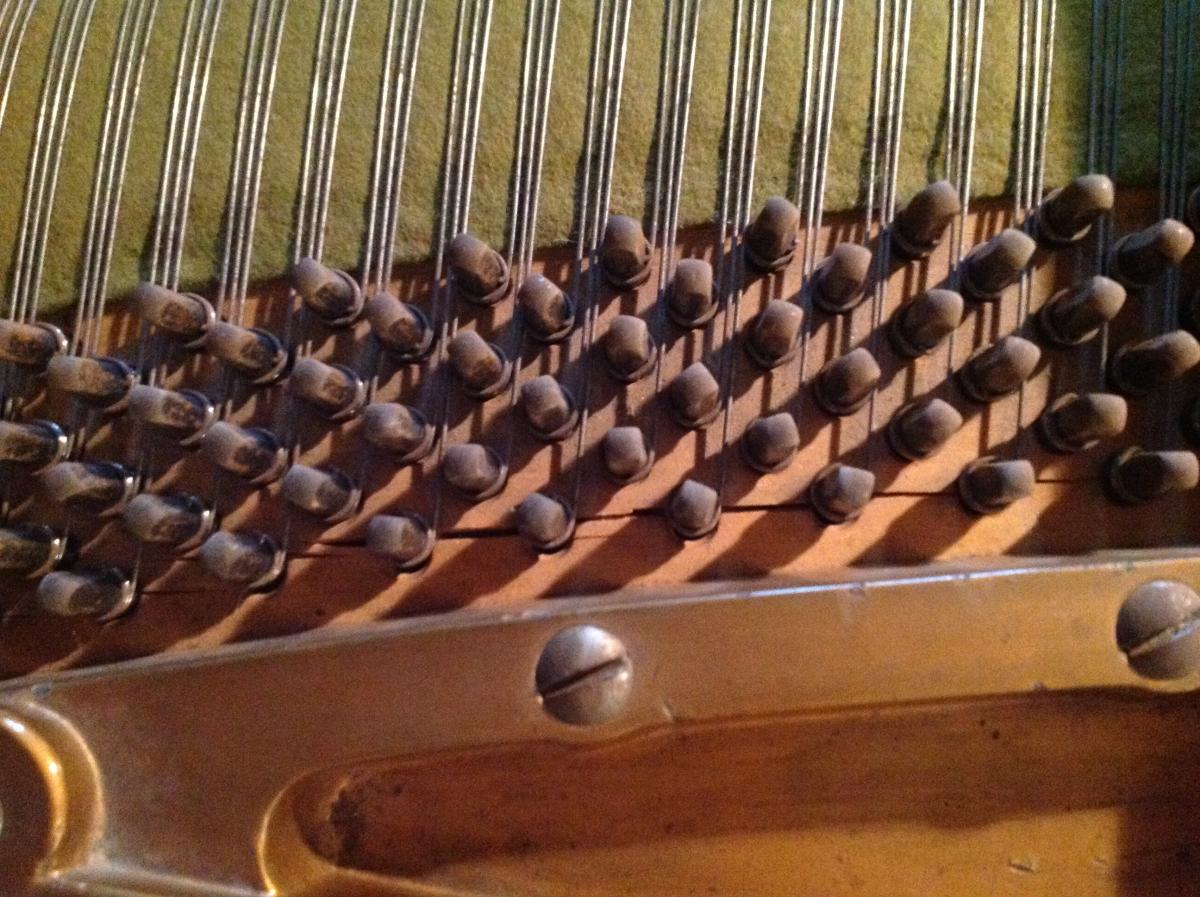
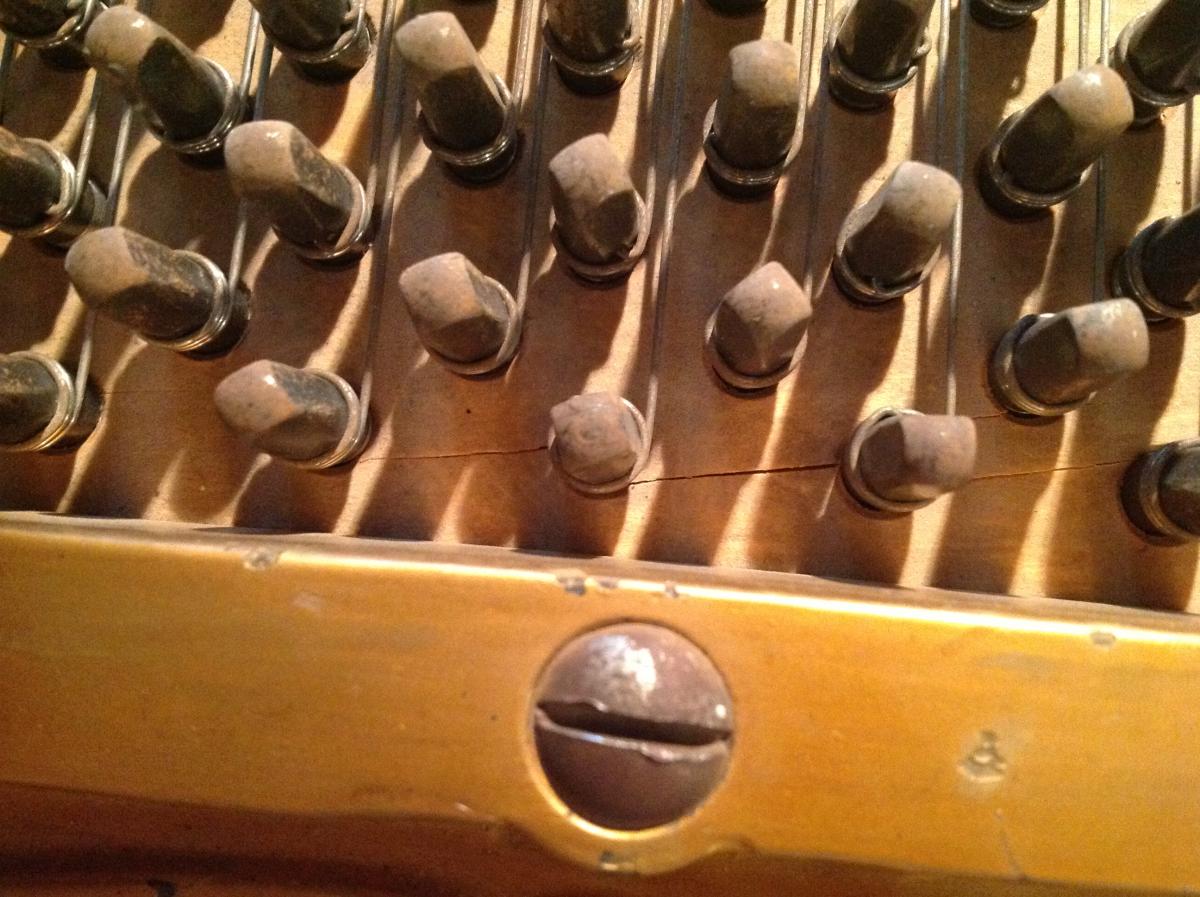
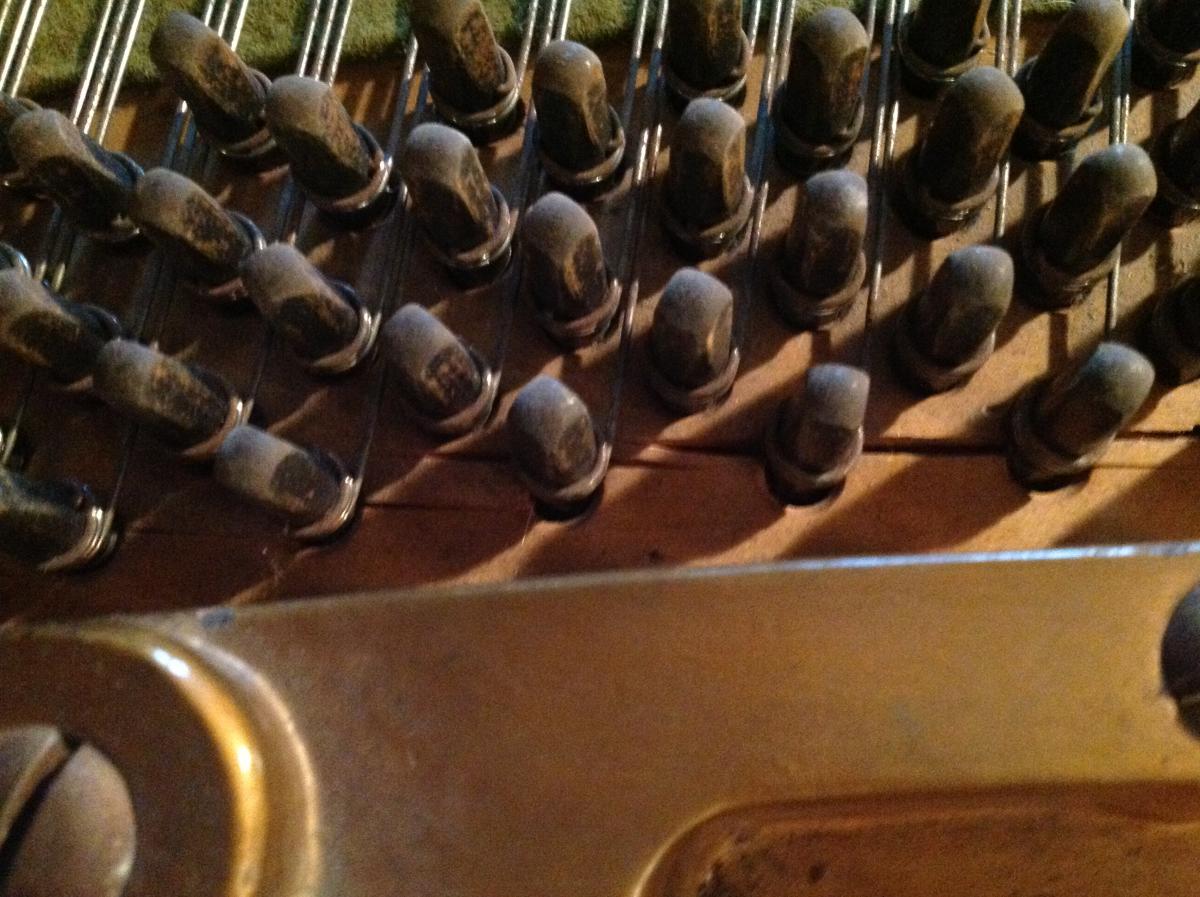
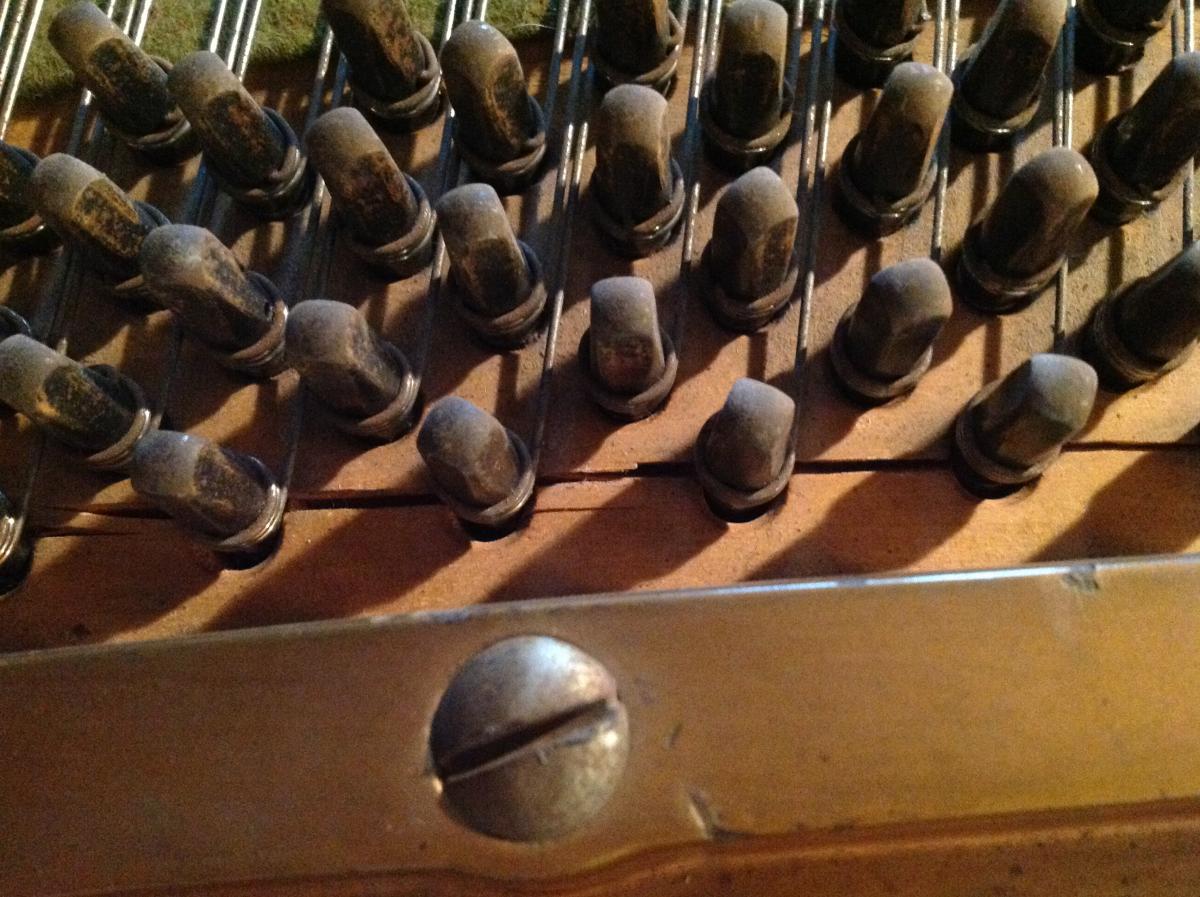
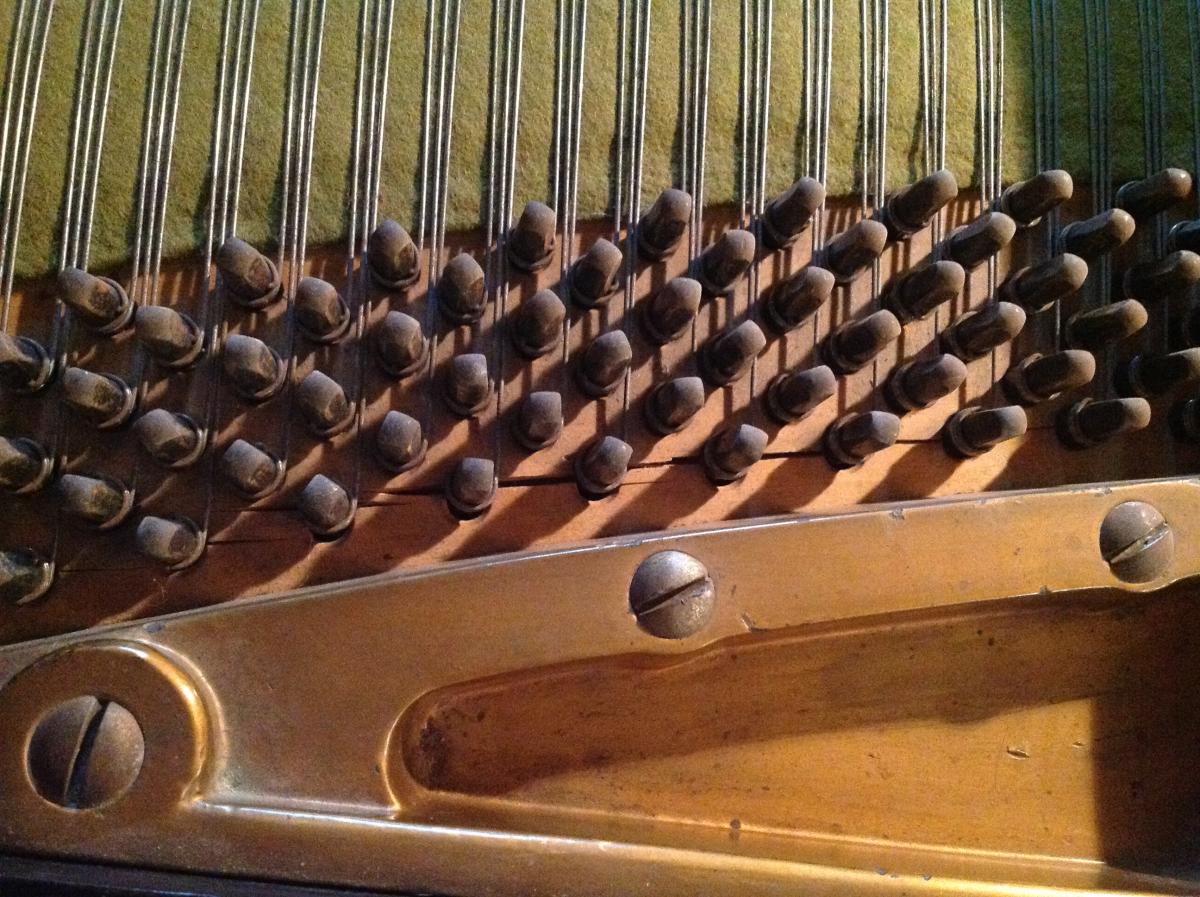
Hello everyone, I recently purchased a Bechstein 1/2 grand piano from a private seller, I think it's a V model, 200 cm long, built in 1888. Before buying it, I went to see it, and due to my inexperience, I hadn't noticed some large cracks in the soundboard. The grand piano didn't cost much, a little over 2000 Euros, and it was covered in dust; I mainly checked that there were no cracks in the frame, and indeed the metal frame has no cracks, but due to the dust, I hadn't seen those large cracks visible in the photos regarding the wooden soundboard in the central part and another lighter crack in the treble area. I only noticed it a short while ago while I was busy cleaning it with the vacuum cleaner...... I am devastated..... on Tuesday afternoon the technician is coming to tune it and to provide an estimate for the restoration, but until Tuesday, when I will receive a professional response ..... knowing myself........ I know that in the meantime I will suffer the pains of hell due to the many doubts arising in my mind......

I therefore ask the kind Maestro Paolo Ferrarelli or anyone who can provide clarification if this issue can be repaired and roughly what costs I will encounter.

I thank in advance whoever is willing to help me

Gimez

AttachmentAttachmentAttachmentAttachmentAttachment

Member

Reply 2 by Gimez

Posts
13
City
Modena

I would add that from my own thorough examination, using a flashlight and a lens, the crack should only affect the first soundboard strip, as the underlying board seems to be intact; the depth of the crack is around 5/6 millimeters.

On Tuesday afternoon, with the tuner's intervention, I will know whether or not it holds the tuning, but it goes without saying that sooner or later I will have to face the replacement of the soundboard cap, as I imagine it will continue to worsen over time... The tuning technician I spoke to on the phone this afternoon, after viewing the photographs, advised me to request quotes from specialized companies regarding this replacement, as he is unable to perform it, also telling me that it is a demanding and expensive job......

I am devastated !!!!!

Can anyone give me some advice ???

Thank you Gimez (Modena)

Moderator

Reply 3 by pianoexpert

Posts
3,876
City
rocca di papa

First, you must check if the tuning pins in the damaged area hold the tuning. The cracks might be superficial. If they don't hold, one can attempt—I say attempt—to remove the affected pins, loosen most of the strings in the area, and repair the splits with two-component epoxy glue. By reinserting the pins, the diameters of the holes will be reconstructed using beech wood veneer. Another hypothesis is to replace the soundboard rib/bridge block, but it must be verified whether it is necessary to remove the frame. I don't remember regarding the Bechstein, but the soundboard is visible and it is possible that it is only screwed in. Naturally, the strings could break given their age, and other restorations should also be carried out. Once disassembled, the soundboard can be perfectly reproduced and drilled by a specialized company. It must be verified if the costs are worth it. In fact, on such an old piano, one must also check the state of the "crown" of the soundboard and the condition of the bridges. The strings should absolutely be replaced as well, tuning pins included. The bass strings, reproduced and mounted. Hammers of the same shape and weight, etc..

Member

Reply 4 by Gimez

Posts
13
City
Modena

Dear Maestro, thank you for your reply; now together with the tuner/technician I will calmly evaluate what to do. It is clear that if it were not a prohibitive expense, it would be worth undertaking a serious restoration; as long as the soundboard is being replaced and the frame is being dismantled, it is worth changing the strings and tuning pins and addressing everything you just told me, but I imagine that for a good job it will take several thousand euros..... a first estimate, which reached me this evening, in an approximate manner, since the company technician should see the piano in person, spoke to me of about 2500 / 3000 euros, without then counting the mechanical interventions......

Member

Reply 6 by Gimez

Posts
13
City
Modena

A serious renovation, I understand, that I will have to face sooner or later, also for the good of the Piano; however, at the moment I am not in a position to handle high expenses, as having already purchased this instrument was a great sacrifice for me, so as soon as I have clearer ideas about what figures I will have to pay and what interventions I will have to undergo, I will try to assess the situation.

For the moment, provisional solutions may be fine, such as gluing the cracked soundboard and adjusting the action, provided that the pins hold the tuning, just so I can play it, but sooner or later I will have to deal with a more serious matter; at this point, I think it is better to wait until I have the money, perhaps even a year more, and then proceed in a very professional manner rather than acting immediately with half-measures.....

I am also very tempted by DIY; I am very familiar with woodworking and I possess various carpentry tools, including a semi-professional router, a drill press, etc. etc., and I also have a lot of time available, it's just that these types of interventions require an experience that I unfortunately do not have.......

On Tuesday, after the tuner's intervention, if I am not bothering you, I will let you know how the situation develops

Member

Reply 8 by Gimez

Posts
13
City
Modena

Hello !!!

The tuning technician came; even from his inspection, it seems that only the upper rim is cracked. He tuned it low, at 420 Hz; it seems the pins are holding.... further on we will try to tune it higher, since I don't have to play with other instruments for the moment, I'll leave it like this..... as already mentioned previously, sooner or later I will have to undergo a serious restoration; in this regard, I have already requested various quotes. The work to be done, setting aside the case and the action, will be....... replacement of the soundboard cap, the strings, and the pins..... polishing or painting the frame, checking the tension of the soundboard, the bridges, etc. etc., although I must say that the soundboard, which I cleaned myself with a brush and vacuum cleaner, shows no cracks, but by loosening the string tension, being an antique piano, it could detach from the braces or crack..... all this could cost me several thousand Euros, so I am looking into it very calmly.......

As for the action.... which is very unregulated..... in September I will have it repaired by the tuning technician, who has already proven to be very competent, although rightfully he won't do it for free......

I was asking you, kind Maestro, since my piano has an action quite different from the RENNER that you use in your videos, could you indicate the main adjustment points ??? so that while waiting to have it repaired by the technician, I can try to improve the mechanical quality....

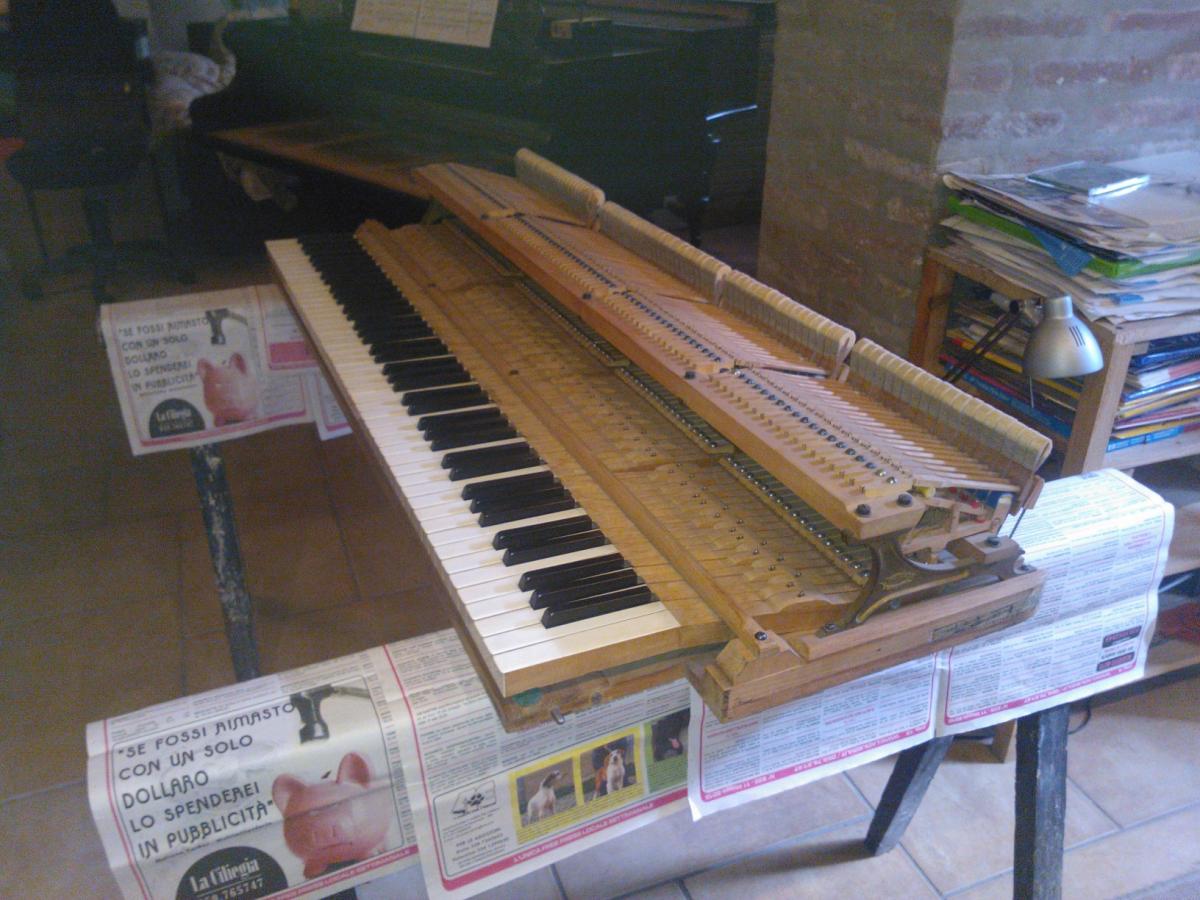
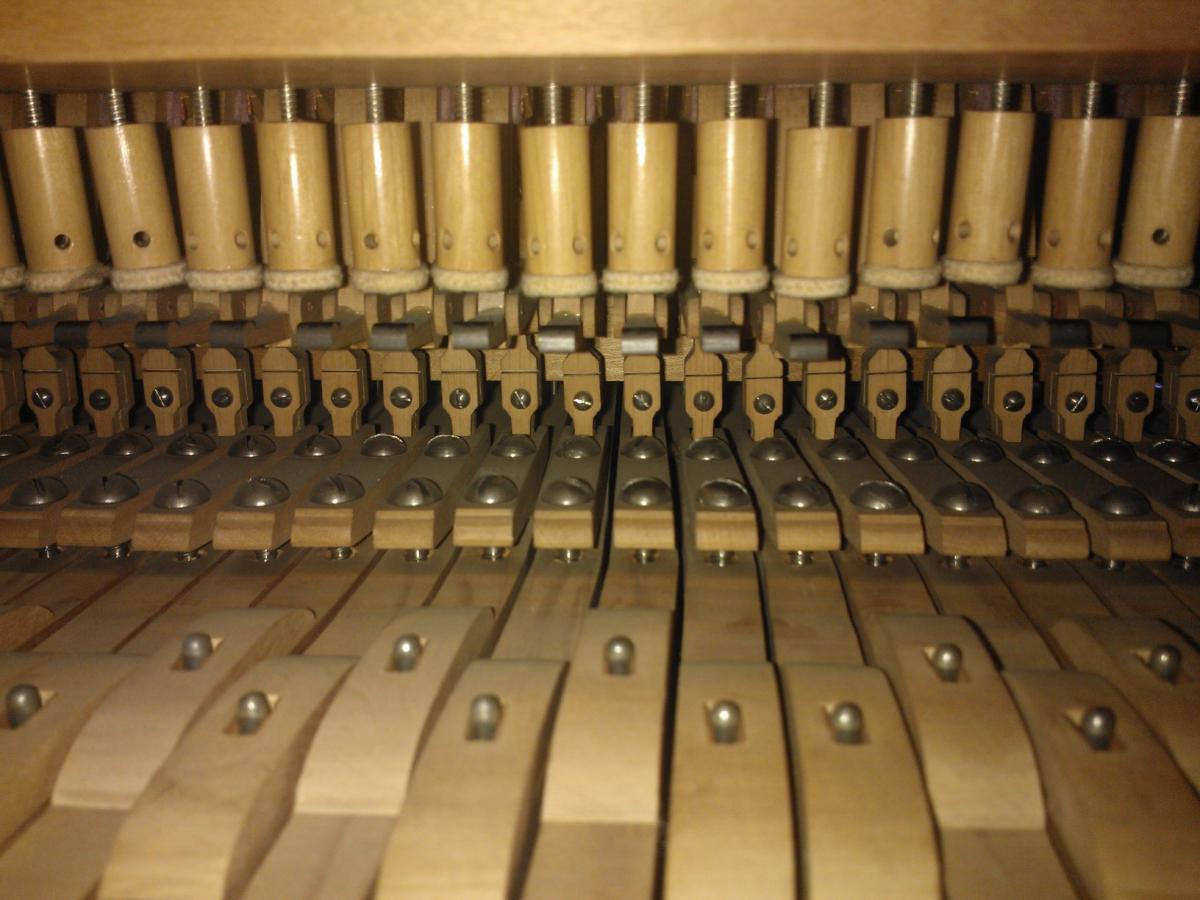
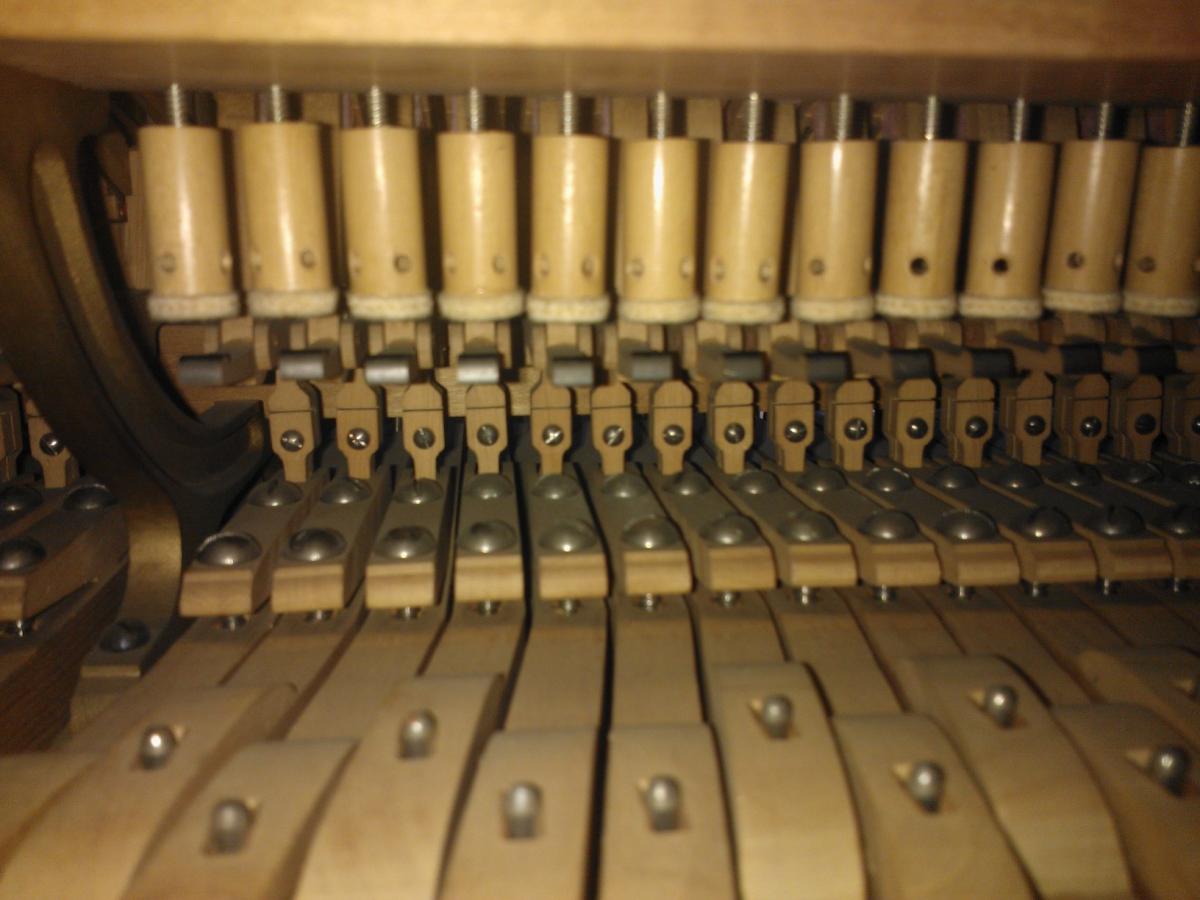
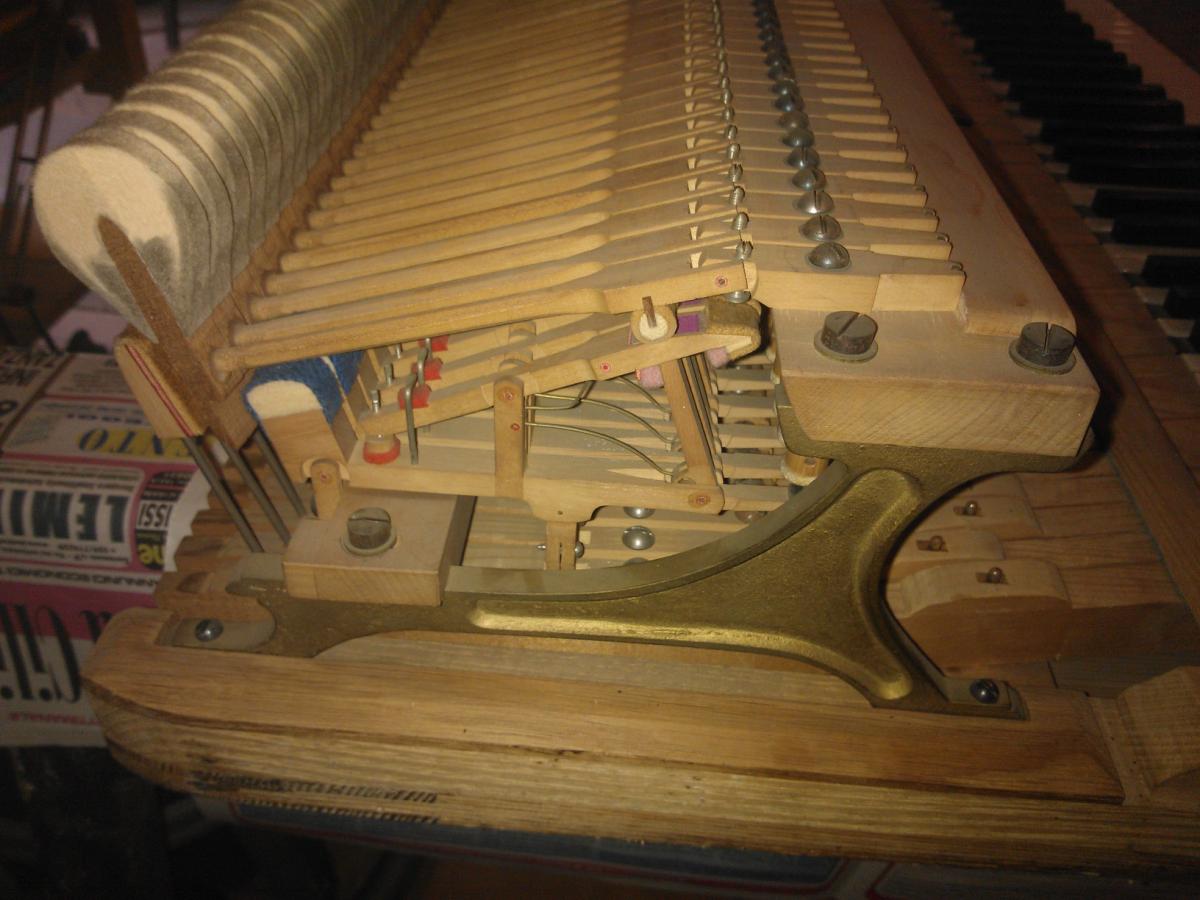
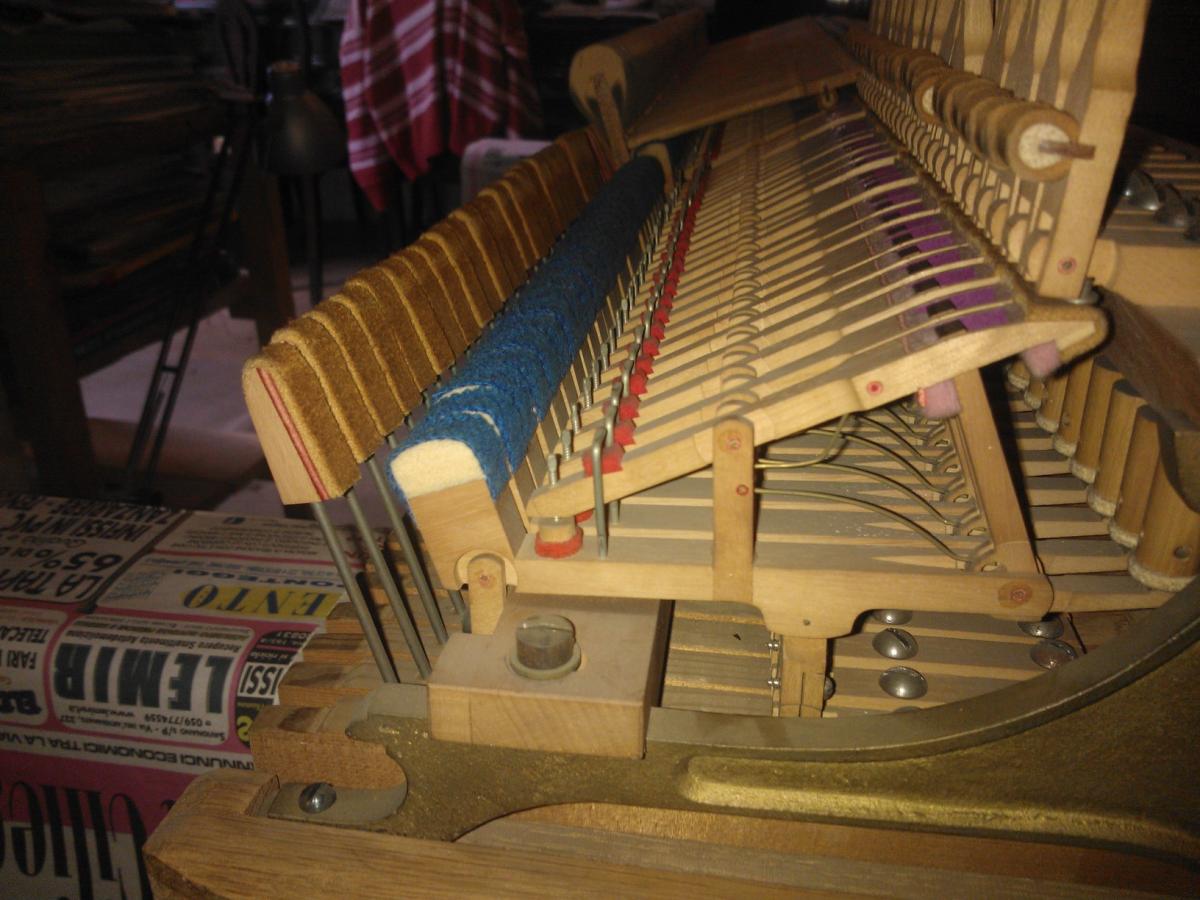
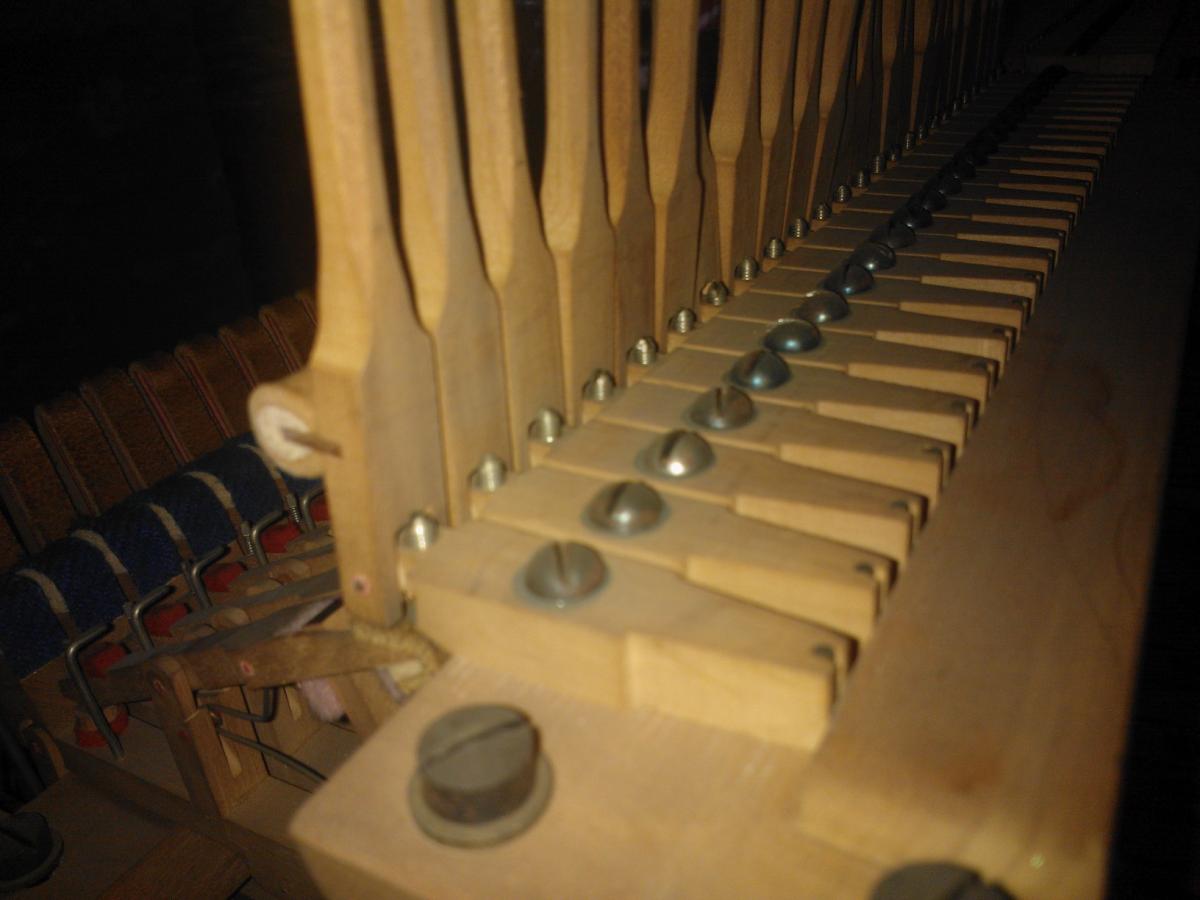
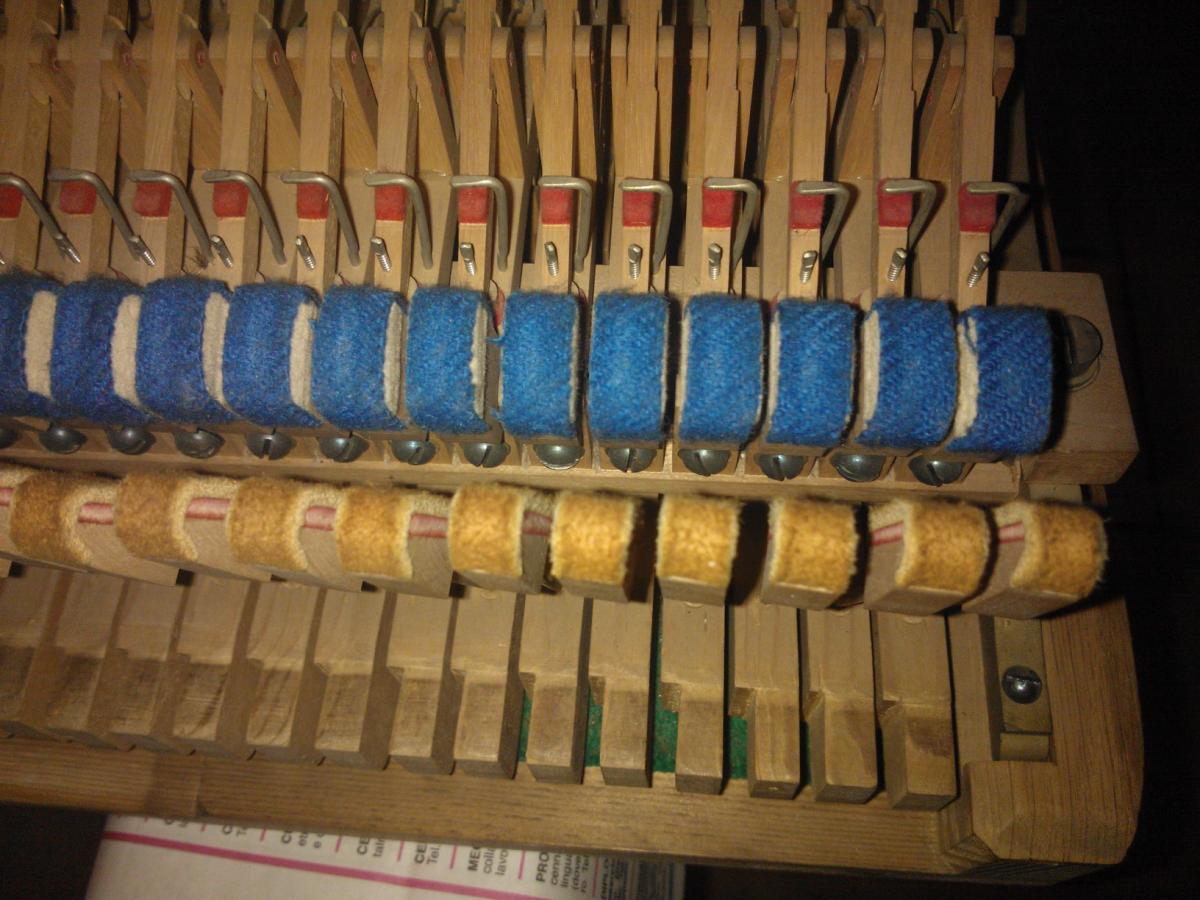
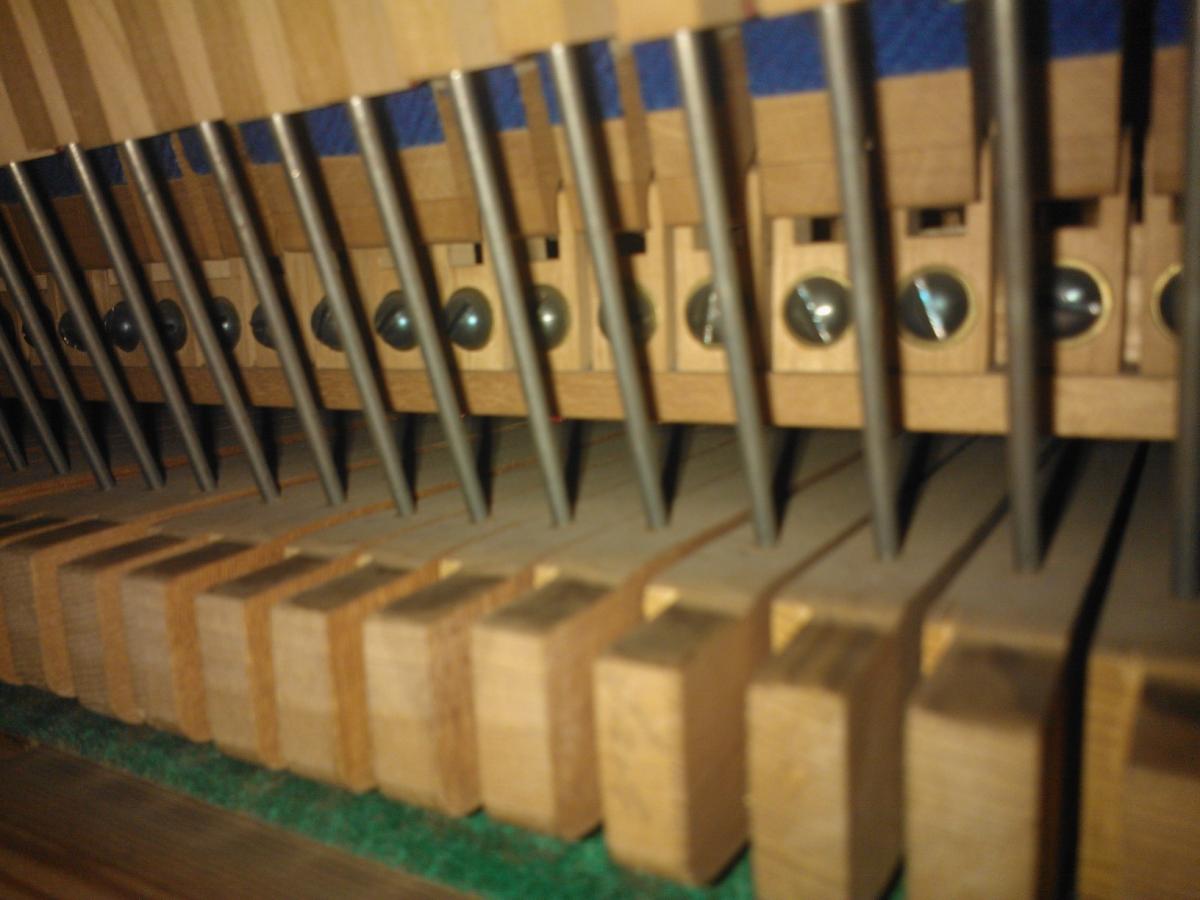
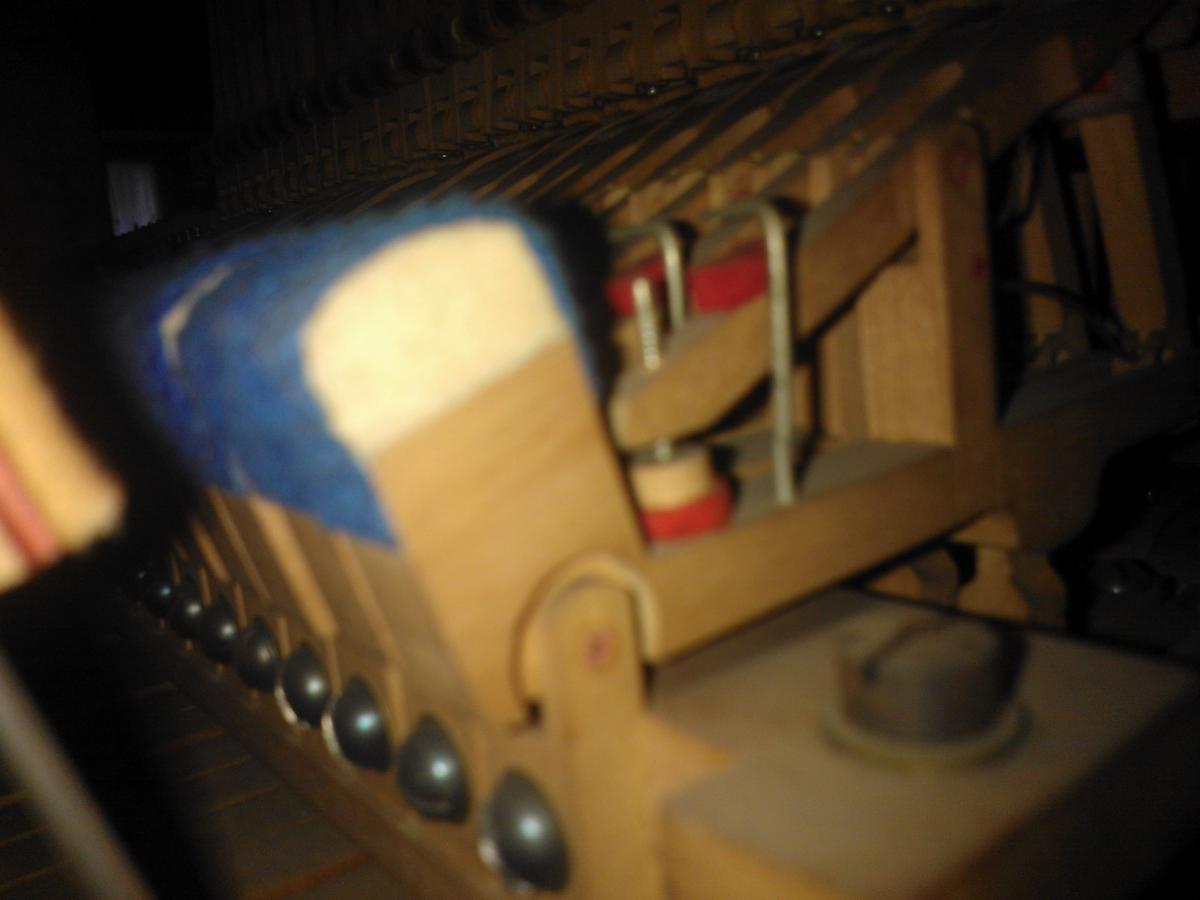
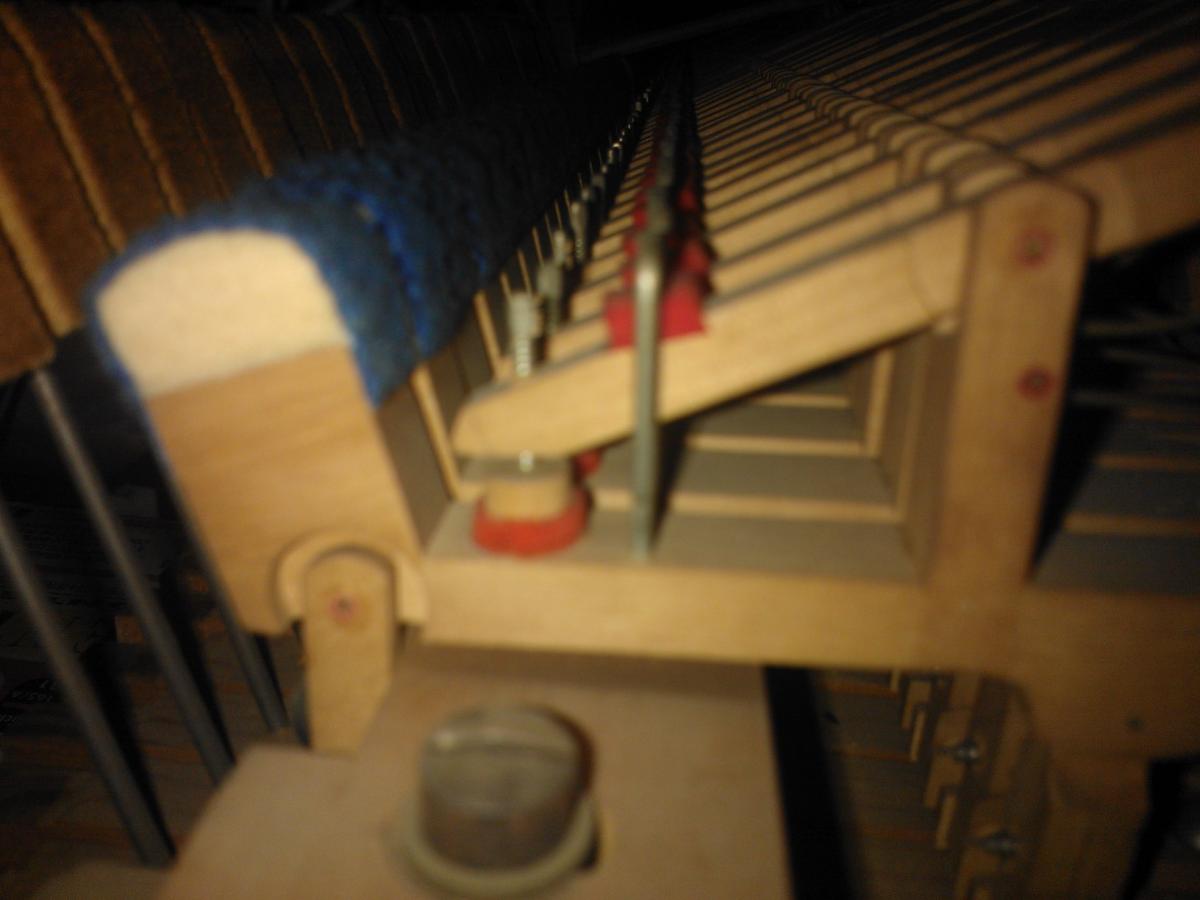
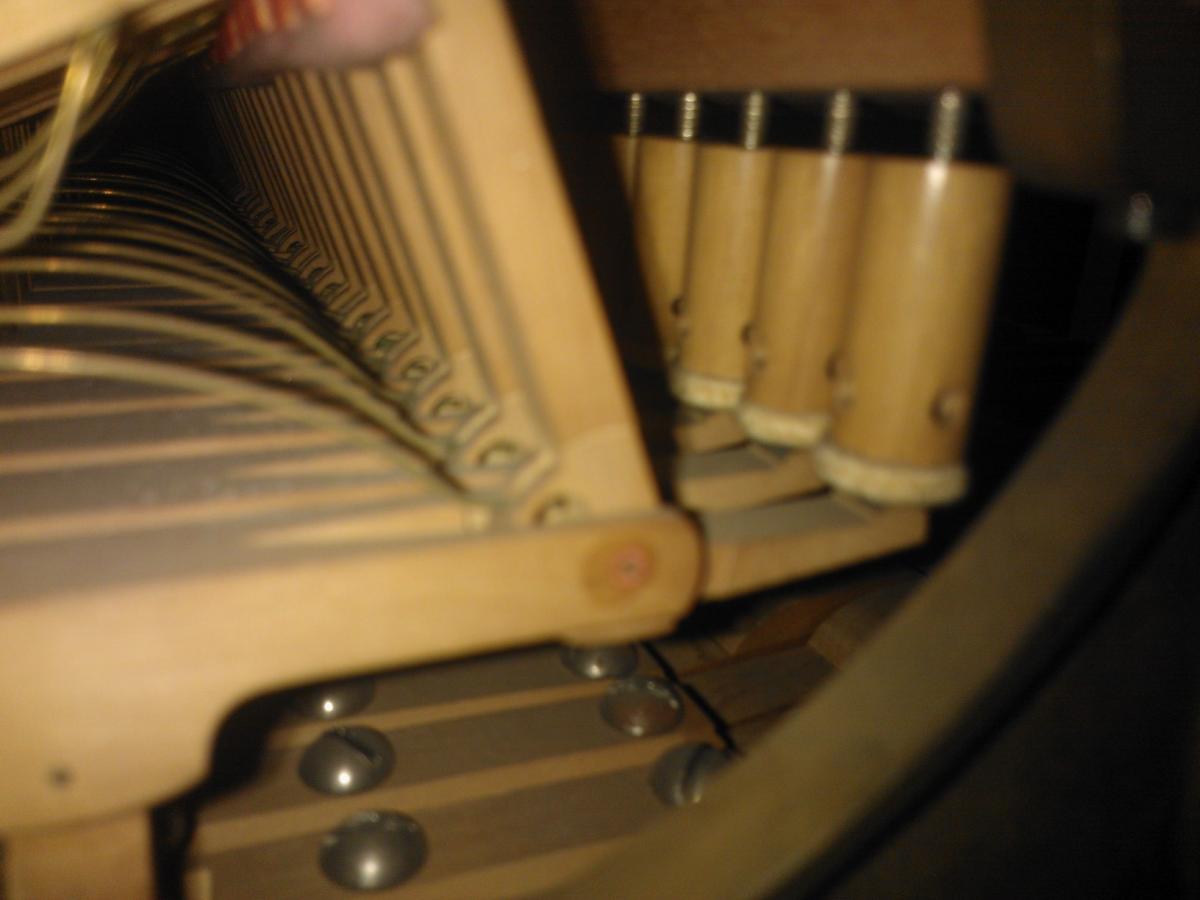
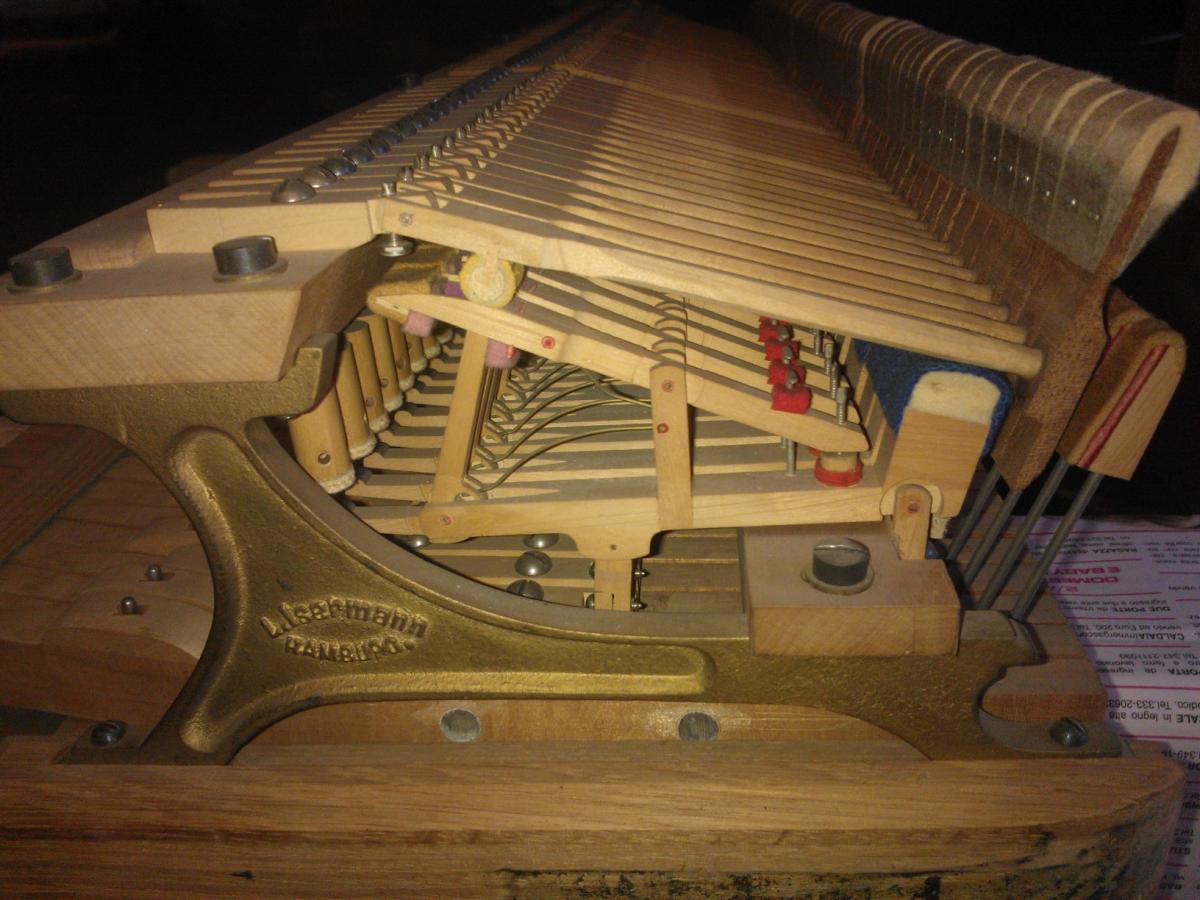
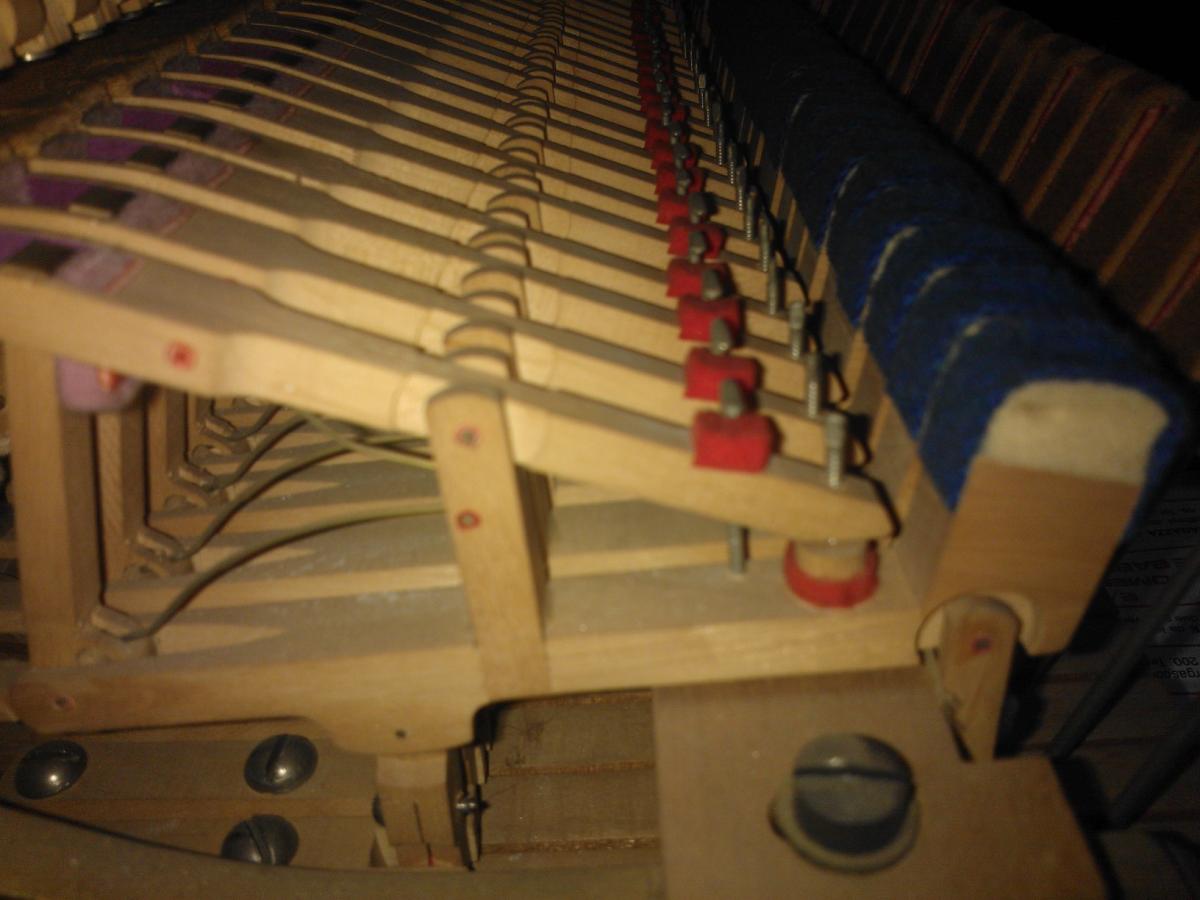
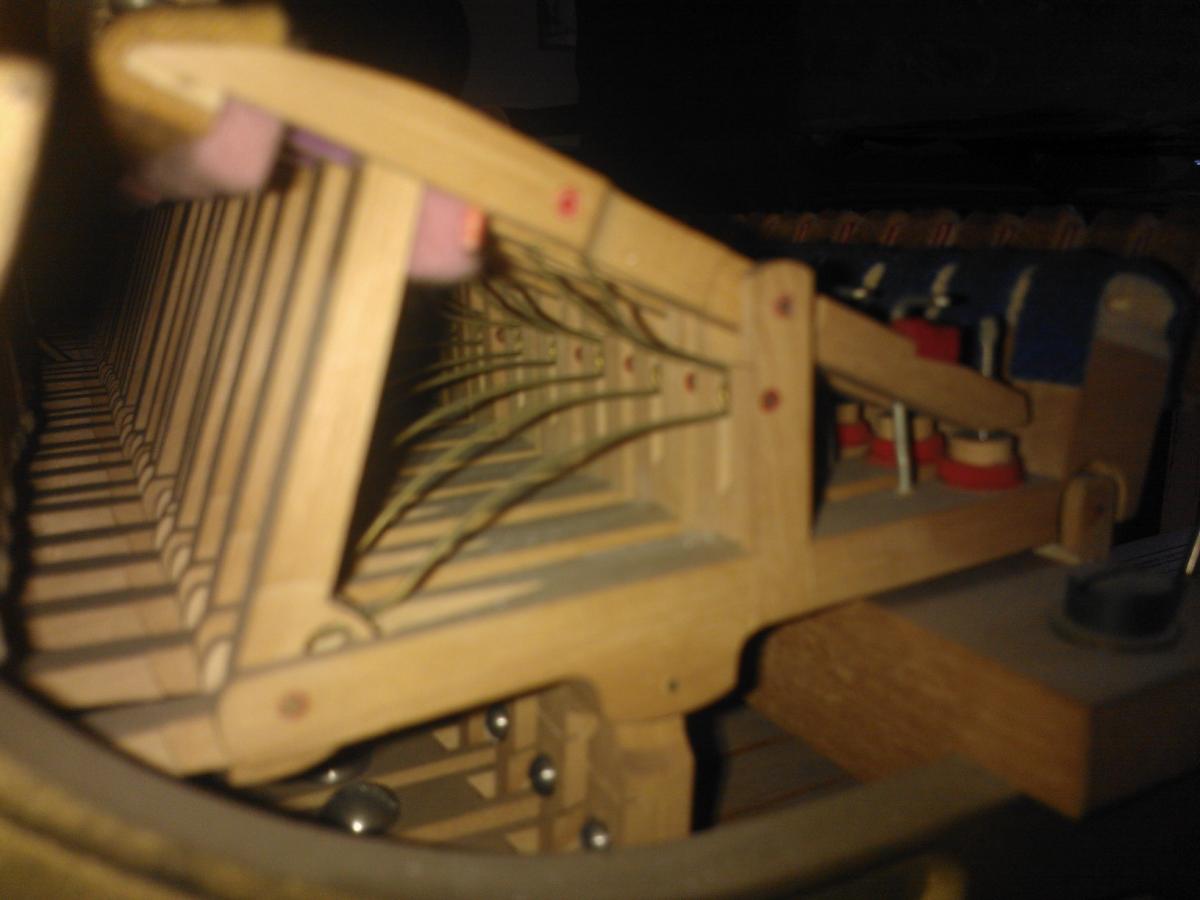
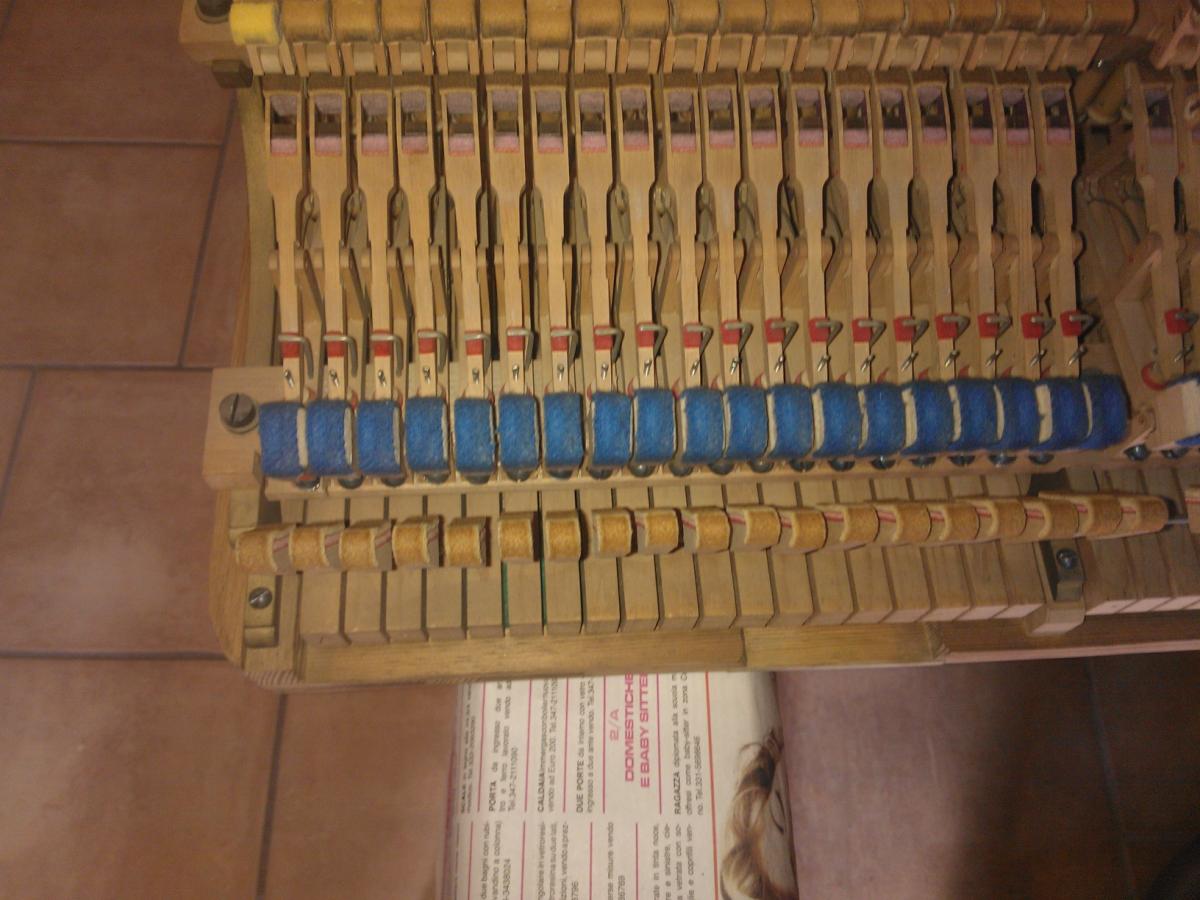
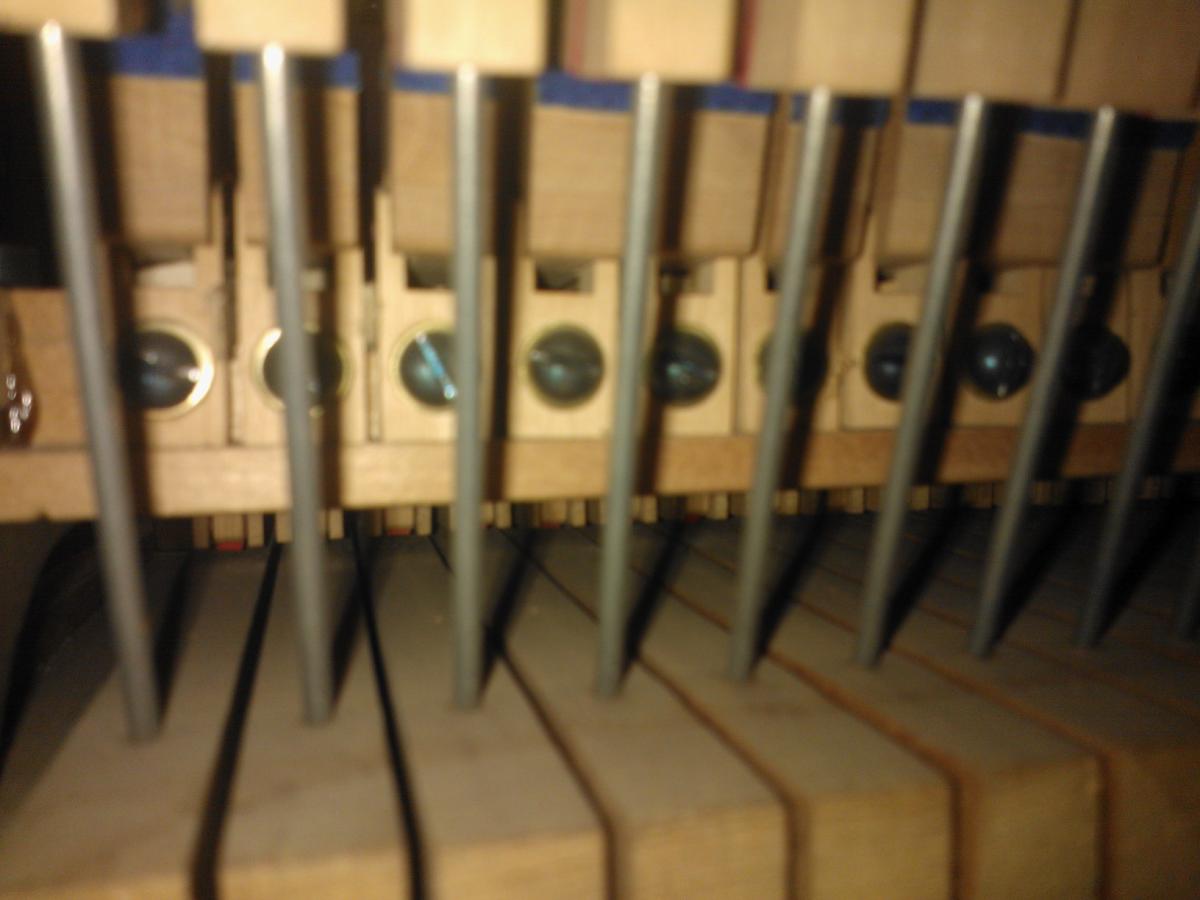
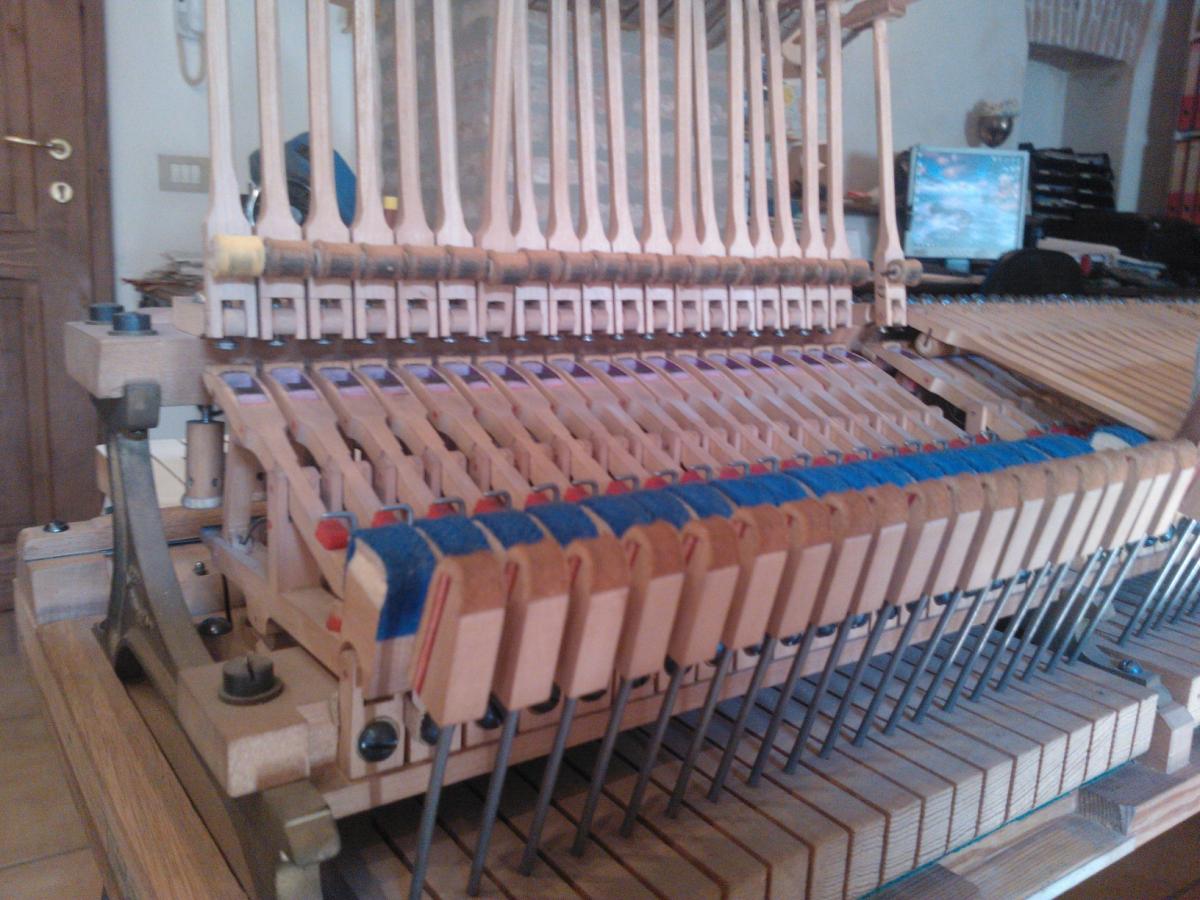
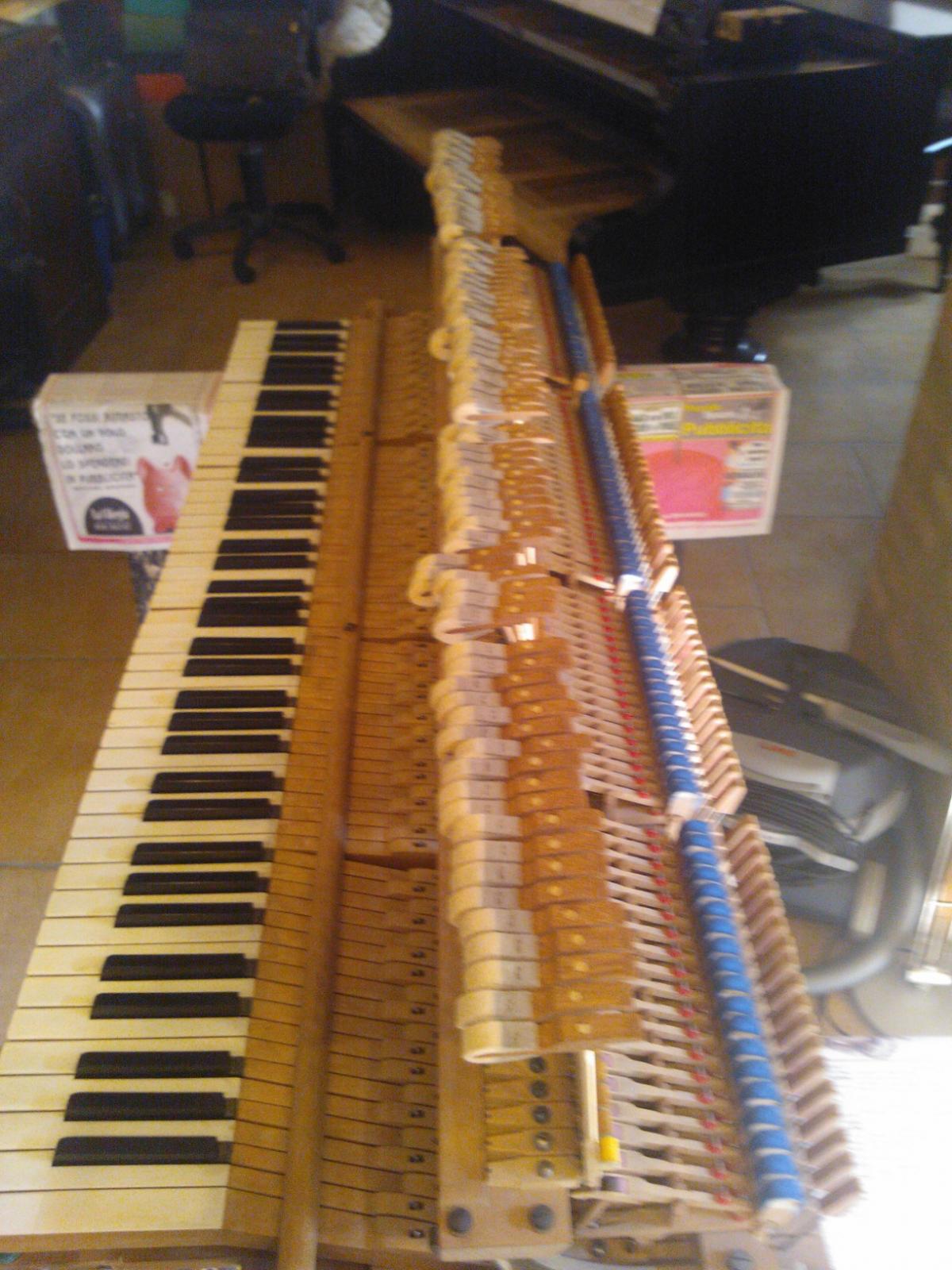
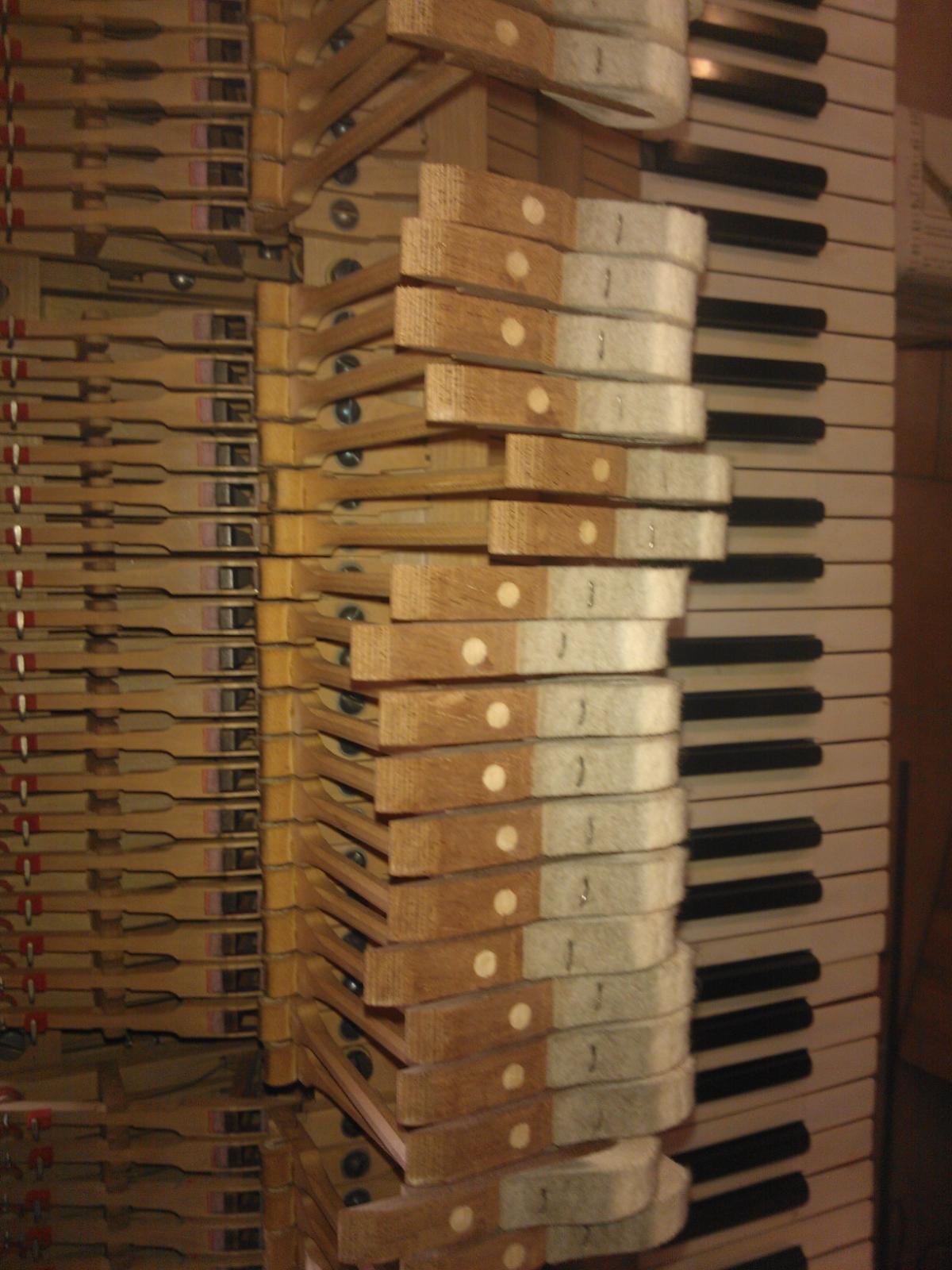
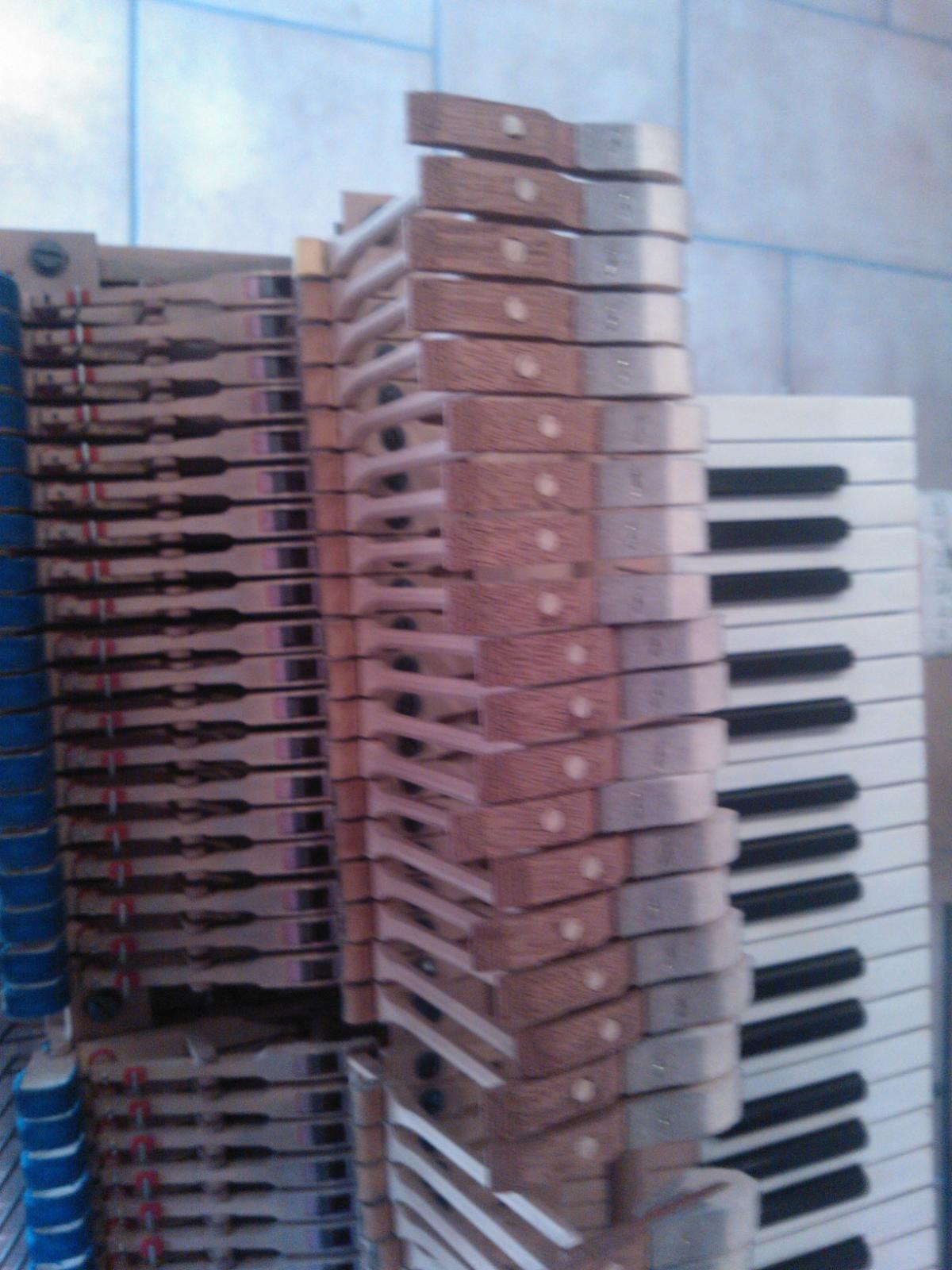
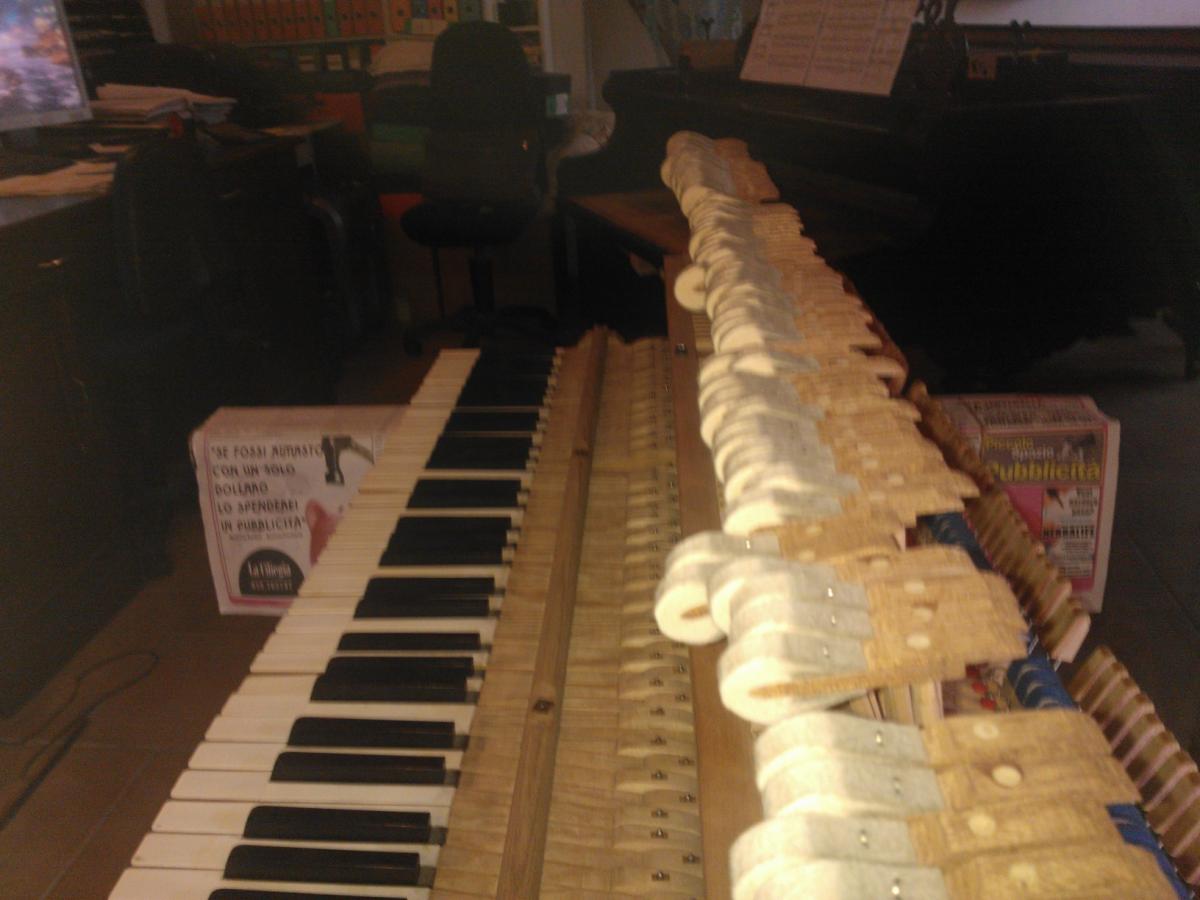
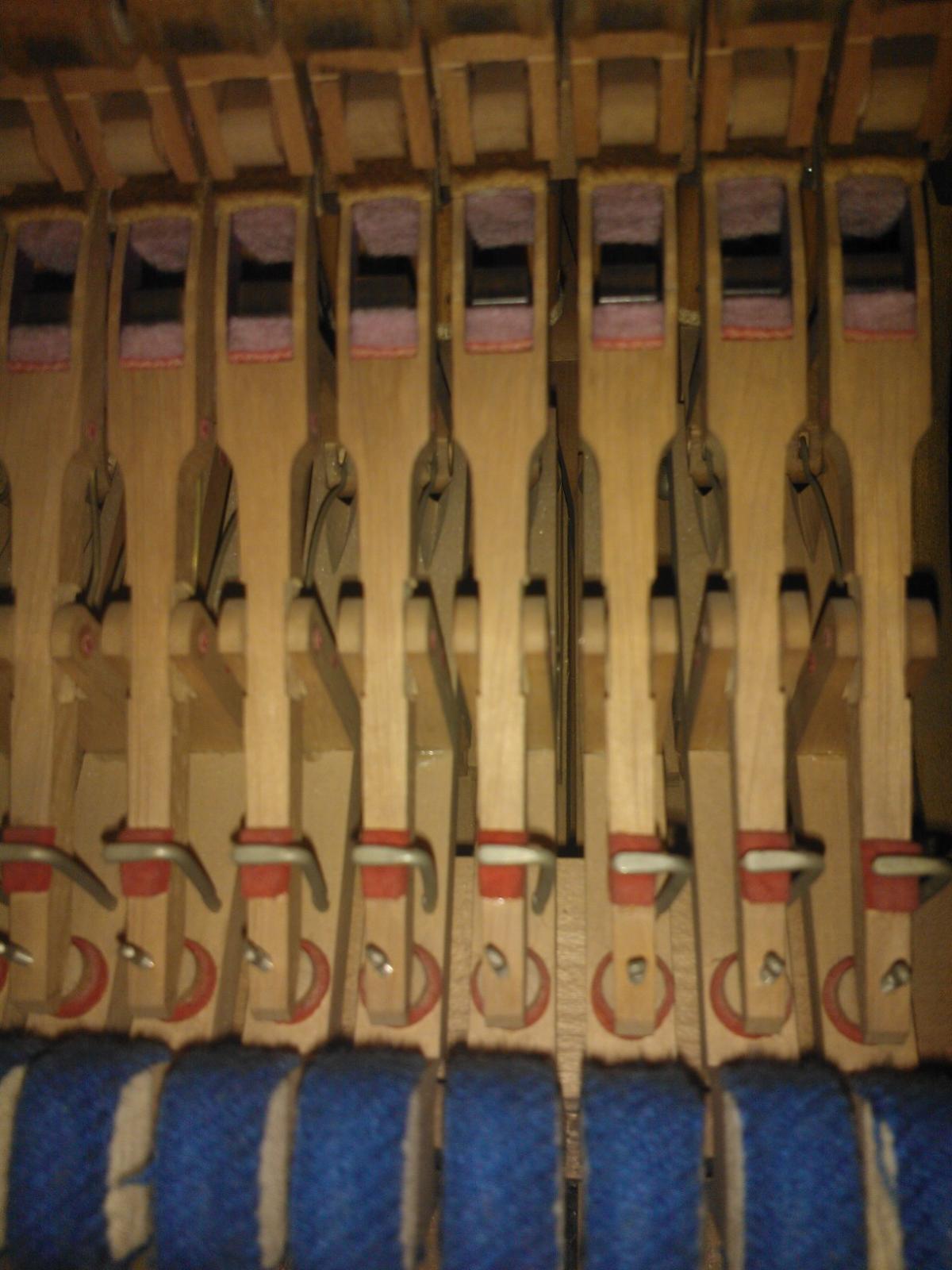
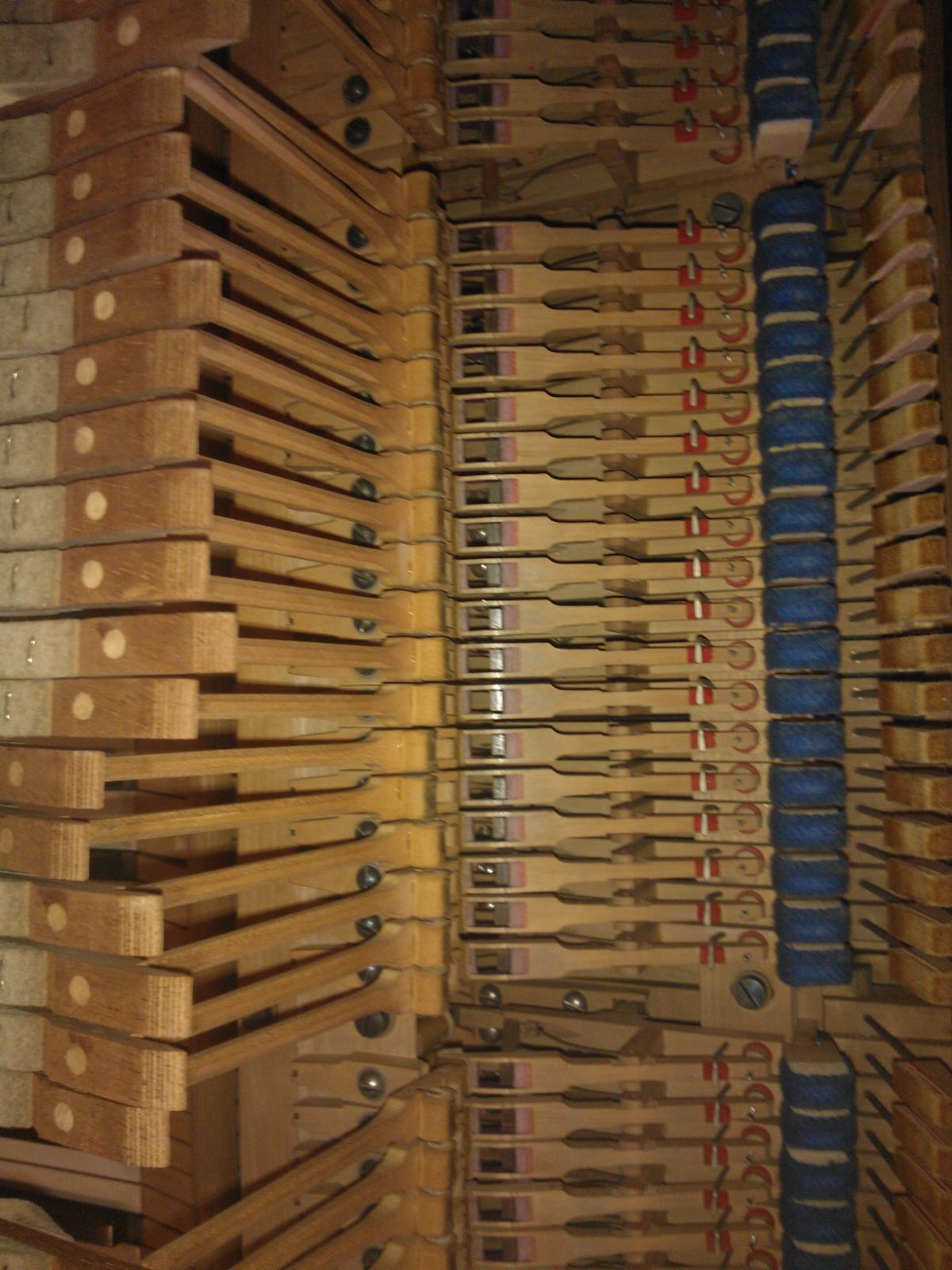
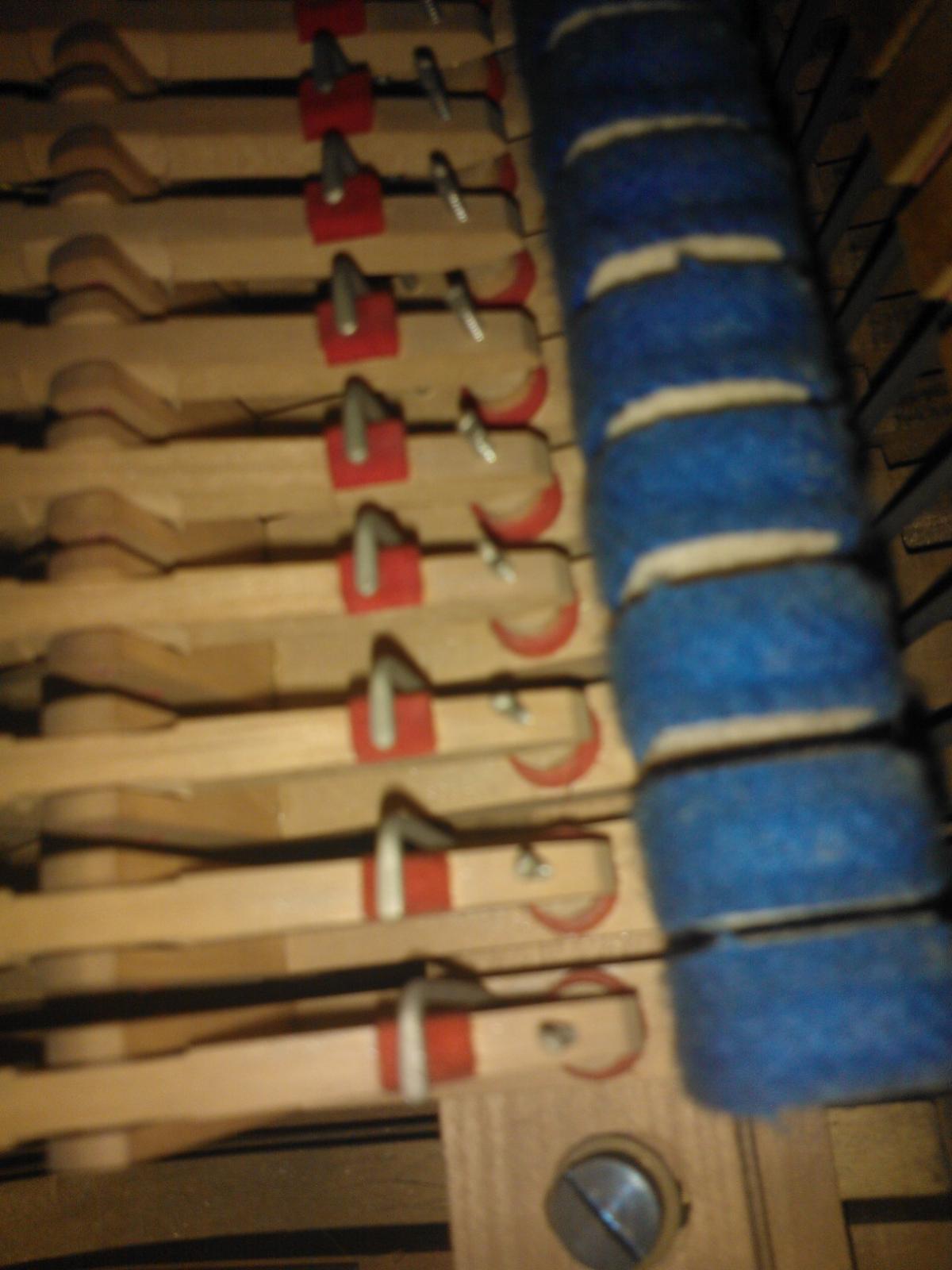
Tomorrow I will try to photograph it in detail and publish the photos; for the moment I can say that it doesn't have a regulator, but a sort of horizontal little piece of wood equipped with 2 screws at the ends and a notch in which a wooden pin is sunk, which supports the triangular escapement mechanism. I imagine that by acting delicately on these two screws, the mechanism rises and falls as happens with the regulator...... when pressing the key slowly, the hammers sense the escapement very far from the string; you had said that this distance was approximately equal to the diameter of the string, whereas for me they trigger even at 1 cm, 1.5 cm from the string...... then on some keys, the escapement lever is slightly higher than the hole in the repetition lever, right under the roller..... on some keys instead, the escapement cannot be felt; I tried to lower the escapement button but without results......... when the hammers are in the resting position, they rest completely on the felt underneath (I think it's called let-off), whereas I seem to remember they should be slightly distant....... to polish the keys, I would like to manage to extract them, but upon initial examination they seem attached to the mechanism and therefore I don't know if it is possible to extract only the key.............

So, I would like to try, with great delicacy, to adjust these things, while any friction, and any replacement of parts subject to wear including hammer rebuilding, will be fixed in September by the technician who has both the experience and the means to perform them......

As soon as I can, I will publish detailed photos of the action; I would be truly grateful if you could indicate the adjustment points to try to optimize the action without causing damage, being very inexperienced......

Kind Regards Gimez

Moderator

Reply 9 by pianoexpert

Posts
3,876
City
rocca di papa

Waiting for photos. I've returned late now and am going to rest. I will reply to you during the day. It involves mechanics "related".....but not too much. Goodnight

Moderator

Reply 11 by pianoexpert

Posts
3,876
City
rocca di papa

I must say; truly beautiful and very well maintained! I wouldn't do much. I would just brush the rollers and use a 500 grit sandpaper. Then a little bit of teflon powder. The action is a legato type. So, adjust one screw first and then the other. There is a bit of checking all the parts and the smoothness of the entire mechanism to do. So, the question mark lies in the soundboard, although I would try tuning and checking the stability.

Member

Reply 12 by Gimez

Posts
13
City
Modena

Thank you, most kind Maestro, your opinion largely coincides with that of the technician/tuner; I think I will indeed follow your advice. Regarding the action, I have already agreed with the Technician to have it repaired in September; he estimated a cost of approximately 1000 euros, including regulation of the entire action, replacement of worn parts, hammer felting since he told me they are still in good condition and not worth replacing—the hammers are "Renner"—key polishing, etc., etc., until the optimal restoration of the mechanical part and the keyboard; therefore, I think the cost is also fair.

In the meantime, I wanted to try regulating the action myself, but perhaps (due to my inexperience) it is better that I let it go and entrust the work to expert hands.........

The soundboard seems to hold the tuning well; for now, it is tuned to 420 Hz, but in September he will try to tune it higher. In the meantime, I am continuing to ask for quotes for the replacement, as sooner or later, as soon as I have the financial means, I will certainly undertake this intervention as well.

Most kind Maestro, thank you very much for your precious advice.

Cordially, Gimez

Moderator

Reply 13 by pianoexpert

Posts
3,876
City
rocca di papa

I take the liberty of advising not to touch the hammers for now. In any case, the felting is fine, but one must request the same weight and specify which compression to apply. This can be evaluated by playing the instrument after proper preparation: regulation, tuning, and voicing. Good news regarding the action, which should not be touched if the tuning holds. Here too, it is advisable to bring the tuning above 440 just once to allow the structure to settle. Either no string will break or perhaps one (they would break anyway by gradually and timidly reaching the required and desired level). It might be appropriate to replace the treble strings and those of the "cantabile" section. These are the strings that gain the most stiffness over time.

Reply 14 by Historical author

Hello everyone, I am also joining this topic.

As rightly stated by Pianoexpert, maximum attention must be paid during the felting/hammer replacement phase; in fact, one gram more on the hammer corresponds to an increase in the key descent weight of 5/6 grams.

Therefore, in case of re-felting or hammer replacement, the new hammer assembly must be identical and perfectly compatible with the old one.

Member

Reply 15 by Gimez

Posts
13
City
Modena

Thank you James..... my trusted technician here in Modena is a competent person and knows Bechstein well, which makes me feel relatively calm, since this piano has already undergone a restoration in the past; I hope that whoever did it back then took the precaution, during replacements, to respect the original weights and measurements.

I therefore hope that the technician to whom I will entrust the task of fixing the mechanics also knows how to check these things.

If I had the financial means, I would have it restored by Bechstein in Germany; they provide this service directly at the factory, restoring its original character from the era in which it was born and providing a Bechstein warranty on the replaced parts, as explained on their official page. I wrote to them and was told that they cannot provide estimates via photos, but that I would have to book an inspection carried out by one of their experts at a cost of 500 euros, to be performed directly at their factory headquarters; only after a careful examination would they be able to estimate a quote...... calculating even the cost of moving the piano all the way to Germany, I gave up....

Reply 16 by Historical author

Hello,

I am sure that your trusted technician will know how to restore your piano to its former glory, typical of this glorious brand.

Keep us updated...

Log in to participate