Study

Help, Bach is killing me

5 replies 3,739 views

Started by

Pianovibes

Member

Member

Opening post by Pianovibes

Posts
4
City
Palermo

Hello everyone,

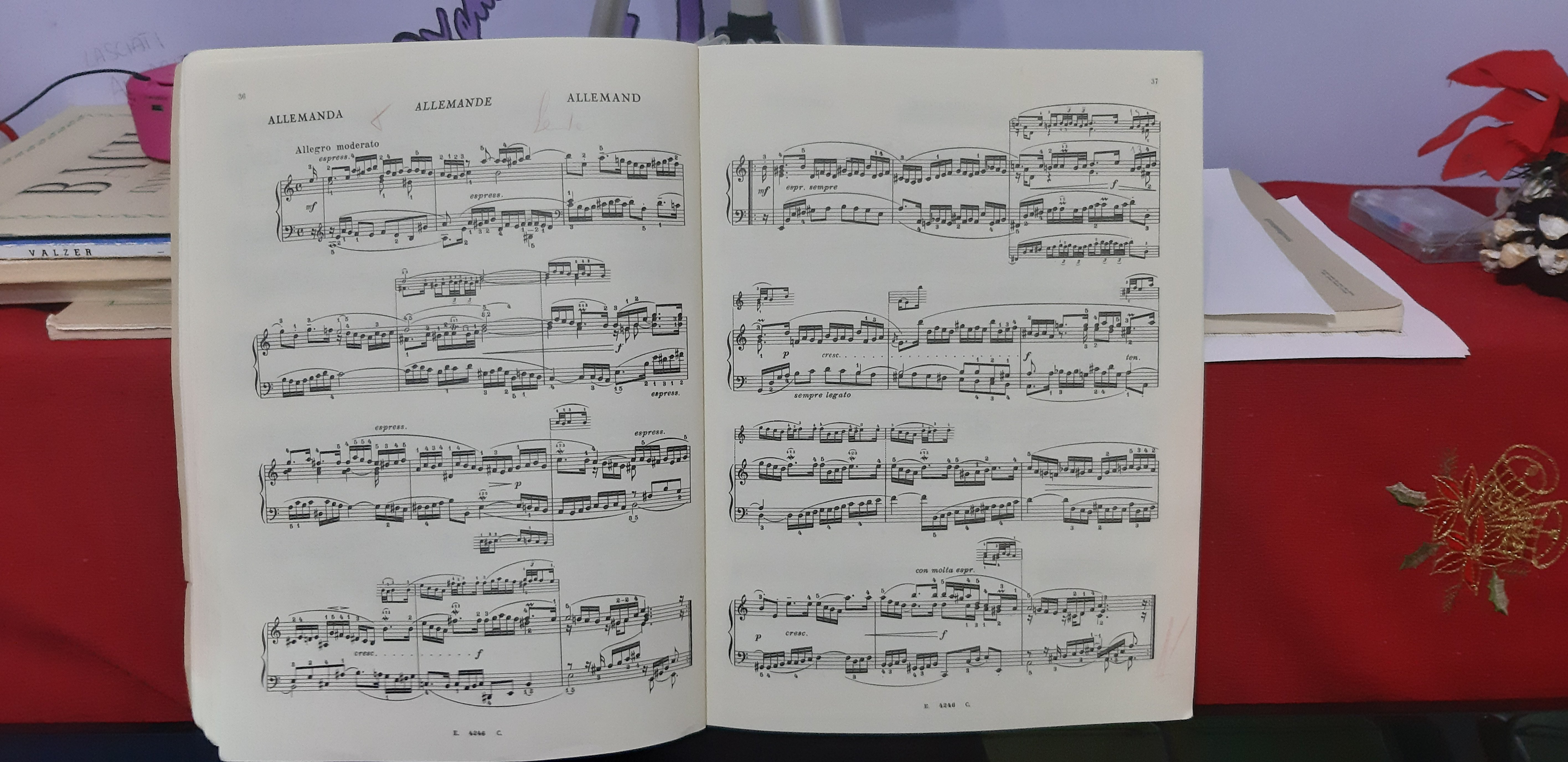
Unfortunately, I have a teacher who is making me lose the wonderful aspects of the piano and I can't move forward; in fact, they don't correct me, and when they do, they don't know how to explain. I have to keep this teacher until June because having them against me in the commission would not be the most desirable thing. I have to take the 5th-year pre-academic exam and Bach is proving to be a great obstacle, but I can't overcome it on my own, so I am in crisis. I don't want to quit; it would be like rejecting a part of myself. Any advice on how to improve my study of Bach and my study in general? I should mention that I practice a lot hands separately and do a lot of technique, but once hands are joined, even if I try to speed up a little, it turns out terrible. At the moment, I am stuck on Bach's second English Suite; the prelude was removed from my program by the teacher, telling me ''it will never turn out well for you anyway'', and now I am stuck on the Allemande. I have already read the first page of the Courante as well, but I have the same problem.

I trust in your help, thank you very much

Moderator

Reply 2 by pianoexpert

Posts
3,876
City
rocca di papa

But perhaps, from what you are telling me, you have to wait a little longer to take the fifth year. Bach is perhaps the most difficult part of the program. Send me a video. I don't think it's a matter of "technique". Perhaps you accelerated your study programs too much? How are the Etudes, the sonata, and the romantic piece going?

A good system is to study fast with a stop on the beat unit. I have written several posts about this. It's just a matter of looking for them. For the inventions, one must realize the separate voices. And establish good fingering (especially in the parts where the two hands divide the voice)

Moderator

Reply 3 by Frank

Posts
3,838
City
-

In general, Bach opens the mind rather than killing it... but I understand what you might mean.

The real issue, in my opinion, is something else and is also very profound. Given that Bach wrote his own pedagogy and his works can be considered a "complete" pedagogical cycle for his aesthetics, I wonder how this problem has only emerged now:

I expect that you have first studied at least:

- the 19 easy pieces from the Notebook for Anna MAGDALENA

- the small preludes and fughettas

- the 2 and 3-part inventions

- the French suites

What have you studied from this list? If the answer is nothing, the appropriate metaphor might be: how can you expect to make a newborn run a marathon when they don't even know how to walk? They would feel dead.

That being said, the English Suites are one of the mandatory steps to reach virtuosity. If you don't do these, you will then have problems with the Well-Tempered Clavier, and without the latter, you won't have the foundations for Bach's concertos.

I hope you haven't skipped steps, because the cost is exactly what you are describing. Clearly Paolo was much more concise and effective than me: "Perhaps you accelerated your study programs too much".

A video of you playing that describes where you are at never hurts... try to post something.

Good luck

Member

Reply 4 by Pianovibes

Posts
4
City
Palermo

Your responses make me shudder and make me think about how unlucky I have been over the years. I had completed

the 19 easy pieces, the Inventions, and the small Preludes and Fughettas even before entering the conservatory 7 years ago.

I was only 12 years old, with parents who know almost nothing about music, let alone how a conservatory works, and when I entered and

the teacher made me restart from the first trombone book [sic - likely meaning piano method] and back to basics with a first-year program; we didn't realize that I could take a leap forward,

such so that over the years I always said when we did studies that I had already done them. Between school and academic commitments, plus the boredom of going backward at a pianistic level, it resulted in me playing less and less and losing interest in the instrument.

Everyone was moving forward, I was moving backward. I finished school and now that I play even 8 hours a day, I am almost at a standstill. I have changed 4 teachers, one worse than the last,

because if you aren't well-connected, being good is useless. Now I will surely change teachers seeking a better master, but it will be hard to manage to get admitted.

I apologize for the outburst, but when you realize certain things, you lose your mind. I love the piano and I have always felt like I had let it down, to the point of believing I wasn't talented, whereas now I only feel that I have been unlucky and very naive.

The studies, the romantic piece, and the sonatas are fine, no problem; in fact, I could perform 2 programs with how many I have ready.

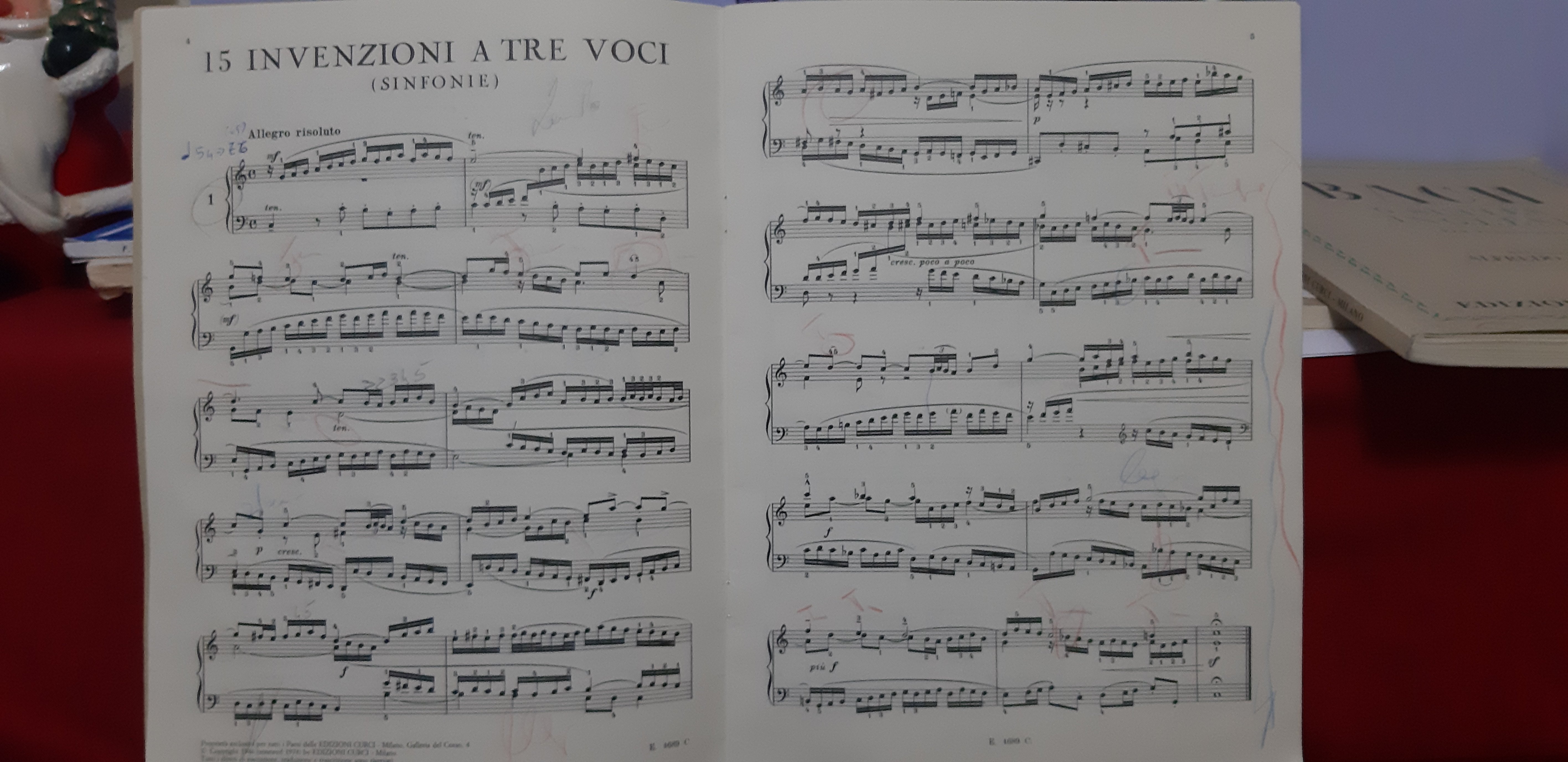
I am attaching the video of the Allemande from the second English Suite and the first three-voice Invention; please excuse me if there are errors, but there are certain things I cannot manage to correct.

20200118_113821.jpg20200118_113842.jpg

Member

Reply 5 by Pianovibes

Posts
4
City
Palermo

For my entrance exam, I brought exactly 2 two-voice inventions

a Clementi sonatina

the 4-octave scales without thirds and sixths

and I don't remember if there was also a study by Pozzoli or Duvernoy

Then at the end, I was asked for the scales and just one thing of my choice, and I chose to play the Clementi sonatina out of the entire program

Member

Reply 6 by pianothor

Posts
217
City
Mantova

Why don't you try playing it from memory? If you have studied it a lot, I think you should trust your muscle memory and play while opening your ears wide. This way you will feel much freer and you will also be able to phrase better. The sheet music is for the first few days and always while studying. Now try to close your eyes, "let" your hands go and listen as if you were listening to someone else's concert.

The truly incredible and surprising thing is that the human body is perfectly capable of correcting every movement without you wanting to correct it

Log in to participate