

Ok on the theory, but having to use them, what difference or precautions should be taken when using Wagnerian tubas instead of "modern" tubas?
Member
Opening post by Marzapane
- Posts
- 210
Started by
Marzapane
Member
Member
Ok on the theory, but having to use them, what difference or precautions should be taken when using Wagnerian tubas instead of "modern" tubas?
Member
Marzapane wrote:Ok on the theory, but having to use them, what difference or precautions should be taken when using Wagner tubas instead of "modern" tubas?
First of all, it should be said that Wagner tubas are subsequent to the tubas (contrabasses) that are normally used in an orchestra.
Their sound is very similar to that of horns, whereas tubas come from the flugelhorn family.
The biggest problem is having them; in my opinion, but I wonder what utility you could actually derive from them, sincerely...
Member
On a famous treatise it is written that they will be ancient, that they have a lot of limitations, but they sound better ... like natural trumpets:
On finding them I agree... and who has them?!

Moderator
Carlos wrote:what utility you could derive from it, sincerely...
They would probably be useful in a stylistic reconstruction, which, if done properly, takes into account the instruments of the period.
A bit like including the violone in the instrumentation for Baroque-style pieces... referring specifically to the High Baroque where, if one also specifies the oboe... one cannot play tricks. If the instrumentation is Baroque, it must take into account the period extensions of all the instruments.
Member
Talentuoso wrote:On a famous treatise it is written that they will be ancient, that they have a lot of limitations, but they sound better ... like natural trumpets.
Well, I'm a bit skeptical; I would like to know who this treatise belongs to (especially when it is from, which is not to be underestimated).
Ancient? Not really, they are quite recent instruments, but I would say that aside from that, history has already had its say, given that they quickly ceased to be used and composers with a highly refined taste for timbre like Strauss, Debussy, Ravel did not take them into consideration, in years when they were certainly more available than today. The reality is that there are instruments that can probably do the same things, namely flicorns and horns, of which Wagner tubas combine the characteristics, but...
As for the stylistic reconstruction suggested by Frank, I find it tricky because it would be a reconstruction in a manner of speaking: you write a piece "in the manner of Wagner" with Wagner tubas. Period. In my opinion, the game isn't worth the candle, also because it is certainly not the Wagner tubas that identify his style, nor his orchestral color.
Member
I could simply take them as samples and use them in a musique concrète piece, because I want that sonority (it's not a technical matter of an ancient instrument, but of timbre), or I modify their spectrum and go with synthesis
Member
Carlos wrote:i would like to know who this treatise belongs to (especially when it is from, which should not be underestimated).
I am making a blunder: Rimsky-Korsakov?
I will mention a curiosity regarding the erroneous way of calling this instrument the "Wagnerian tuba"; rather than erroneous, I would say improper, because the correct name for this instrument is Wagner-Tube.
The error may perhaps be attributed to a German conductor - presumably Richter - who, when the Ring was performed in London for the first time, pronounced the term "tube" (=tubo) in the German way (which sounds like "tuba" in English). Perhaps this is not a correct explanation, but it is plausible.
To answer Marzapane, I continue with the quotation:
"These Tuben, conceived by Wagner to fill some gaps in the sonic range of the brass, exist in two formats - in Bb and in F - having the same pitch, respectively, as the horn in Bb and that in F, and the same part of the harmonic series. Regarding the bore, they are a halfway point between the horn and the saxhorn and provide for horn players to play them using their own mouthpieces. They feature four valves: the fourth serves to improve the intonation of the low octave. Wagner himself uses them only in the Ring, where they are played by the second quartet of horns; horns 5 and 7 play the instruments in Bb and 6 and 8 those in F. They have also been used by subsequent composers - for example by Bruckner in his last three symphonies, by Richard Strauss in Elektra, Die Frau ohne Schatten, and in the Alpine Symphony, and by Stravinsky in The Firebird (original version)."
extracted from "Storia degli strumenti musicali" a. c. by Anthony Baines, BUR, Milan, 1983.
P.S. in the DEUMM the voice Wagnerian tuba does not contribute to clarifying the issue and skims over the subject.
Member
Stradivari wrote:I'm sharing a curiosity regarding the erroneous way of calling this instrument the "Wagnerian tuba"; rather than erroneous, I would say improper because the correct name for this instrument is Wagner-Tube.
This one, honestly, I didn't understand. «Tuba wagneriana» is the Italian equivalent of «Wagner-tube».

Moderator
Stradivari wrote:On Richard Strauss (...) in the Alpine symphony
ahahahahah
Strauss wrote "Eine Alpensinfonie", which is not even a symphony in the strict sense but a program symphony, or symphonic poem...

Member
thallo wrote:Strauss wrote "Eine Alpensinfonie"[...]
I did not want to harp on it, because there was already the matter of the Wagnerian "tube" which seemed sufficiently comical to me...
Member
Stradivari wrote:excerpt from "History of Musical Instruments" b.c. by Anthony Baines, BUR, Milan, 1983.
It seemed like a good text... oh well. Where do you all draw your information from?
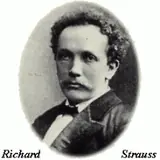
Member
As you test it, Casella seems excellent to me, and then there is always Berlioz's treatise.
faccio un esempio che forse può chiarire la faccenda :
wanting to achieve a certain type of sound, today in an orchestra I might want to use the soprano flugelhorn, because there is no instrument that can replace it and it would sit immediately below the trumpets ... or I might want to use the basset horn because neither the bass clarinet nor the clarinet in A can replace it ... Wagner tubas, on the other hand, can very well be replaced by modern instruments, already mentioned above ...
i don't see the utility therefore of using instruments that are no longer manufactured, have not been perfected, and are also rare to find ... another problem is also finding a good instrumentalist who knows how to play it while avoiding all the limitations that the instrument has ...
P.S.
To tell the truth, in the score of the Symphony of the Alps, which I have studied for a long time, Strauss does not actually mention Wagner tubas but only indicates Bass Tuba.