I didn't know where to post this, then I noticed this section; feel free to move it to a more appropriate place.
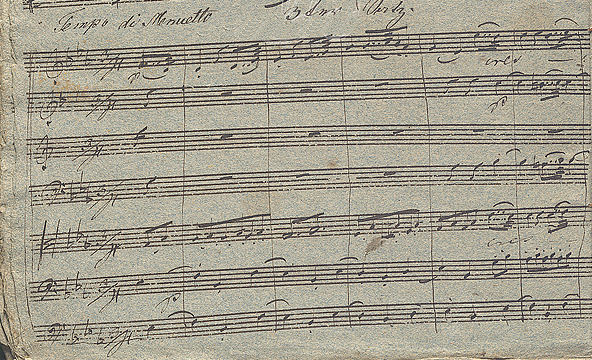
I have a doubt regarding Beethoven's Op. 49 No. 2, specifically the second movement; I notice that Beethoven's sextet reprises the second movement of this sonata in the minuet but!
In the first edition, nothing is indicated for the left hand (only a "dolce")... Arrau, Brendel, and Baremboim propose a legato accompaniment; however, in the sextet version, the viola accompaniment is explicitly written with staccato dots.
In your opinion, should it also be played staccato at the piano as the viola part requires? Or, since the piece has been revised, shouldn't some comparisons be made?
This is the video of the sonata performed by Arrau
https://www.youtube....h?v=VRqFGO1mKgA
This one, instead, is to let you listen to it on the sextet
where in the accompaniment (initially for viola) there are staccato dots.
Interesting question. The problems you raise are two, and two different ones. I will go in order. The fact that Beethoven in another (previous) version indicates a different articulation is not binding, in my opinion. There is another case, namely the Variations on the theme of the "Eroica" (which are actually prior to the Symphony) where the theme is written in long values, while in the symphony it is played pizzicato: this does not impose (nor authorize, in my view) playing the variations' theme staccato for piano, but it would nonetheless be a choice with some reason, even if I do not approve of it. Beethoven in the Minuetto of op. 49 no. 2 did not write staccato articulation, therefore it is not staccato. But he did not write legato articulation either, therefore it is not even legato. I believe it should be played naturally, i.e., separated but not staccato, and phrasing as the part suggests (that is, with a minuet step).
Great Variations, I haven't played them for years! And I felt like playing the theme staccato and my teacher used to tell me not to do it
C
Carlos
Member
Reply 4 by Carlos
Posts
759
She was right...
T
ttw
Member
Reply 5 by ttw
Posts
277
Some points:
- performance practice carries weight
- how much 18th-century music has precise indications regarding phrasing?
- generally, when composers write for keyboard (Op. 49 is more harpsichordistic... rather than pianistic) they are well aware of how other instruments sound or should sound
- The good Charles Rosen (may he rest in peace) regarding Op. 49 said:
"Op. 49 also belongs to the 18th-century sonatas."
[...]
"Op. 49 No. 2 is less personal (compared to Op. 49 No. 1). It is evident that Beethoven dedicated little effort to it; dynamic markings are almost entirely missing."
It could very well be that, in addition to dynamics, he failed to mark the staccato out of negligence.
I think it is important that the interpretation has its own coherence, and if an interpreter wanted to use a staccato, by virtue of the fact that the identical passage played by an orchestral ensemble is proposed by Beethoven himself with staccato, I would not blame them... as long as this choice is made within an artistic context and not so much for....
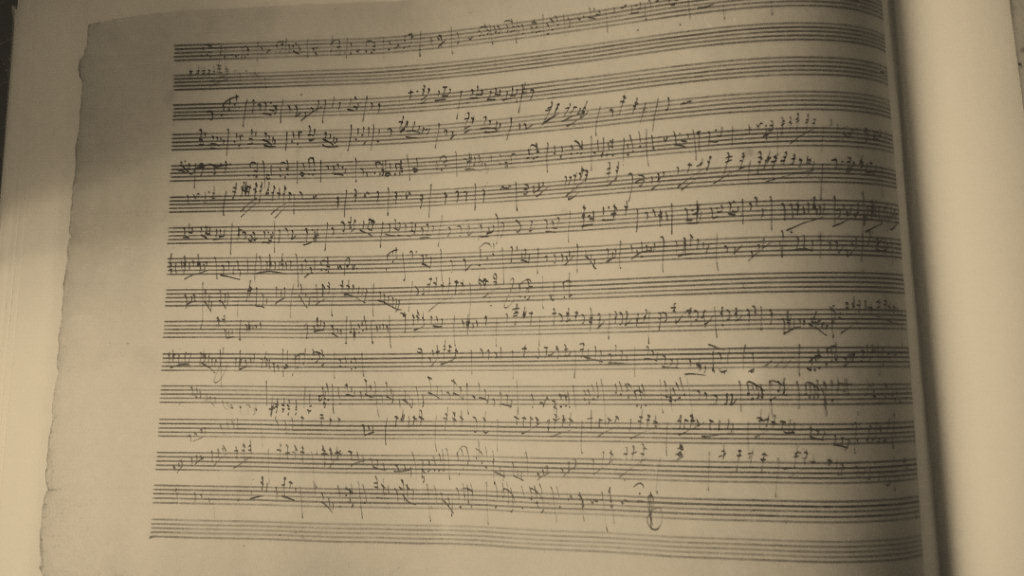
While the discussion regarding interpretation continues, I took a tour through my sketchbooks. What you see below is page 106 verso of the Kafka Skizzenbuch (Kafka Miscellanea) kept at the British Museum:
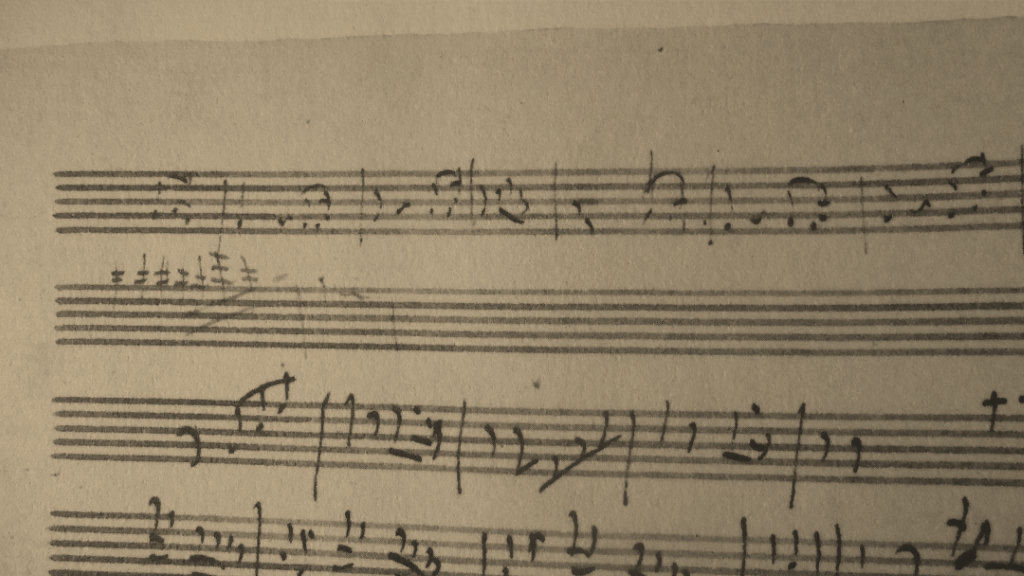
And here is the detail of the theme: Not bad.... Our [composer] copied it from another notebook called "NE 257" of the BH. Where do I find this beautiful copy: Mythical..... Undoubtedly Opus 49 derives from the material of the little booklet, at least in this movement; the first movement is sketched on the same pages 106 verso - recto of the Kafka. The other sketches of the little booklet are in Berlin: Staatsbibliothek zu Berlin Preußischer Kulturbesitz, Musikabteilung mit Mendelssohn-Archiv and at the Jagiellonska library in Krakow. Aside from the fact that they only correspond in the first section of the exposition, did you see what a stroke of genius the elision of the double note in the fourth bar is? Imagine that he will make the same choice by eliding the double note from the sketch of the andante of the Ninth Symphony 20 and more years later! So, staccato? I would avoid a staccato that is too heavy; it has a bassoon effect, a bit like what is sometimes heard in Waldstein..... I don't mind it, but perhaps it isn't quite correct.
Happy Holidays to all!!
R
Rach3
Member
Reply 7 by Rach3
Posts
61
OrlandiArmando wrote:
have you seen what a stroke of genius the elision of the double note in the fourth measure is? Do you think he will make the same choice by eliding the double note from the sketch of the Andante of the Ninth Symphony 20 and more years later!