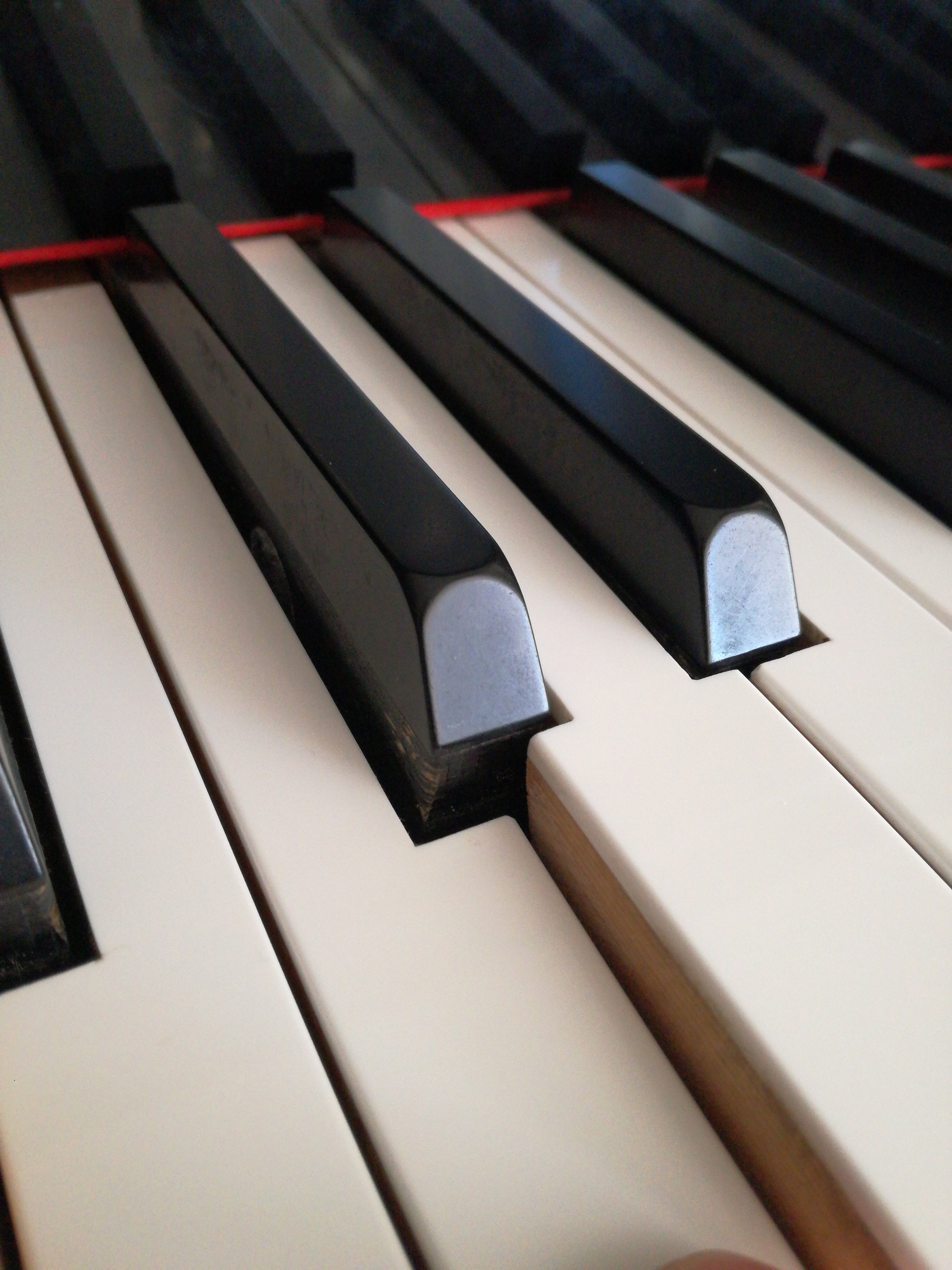
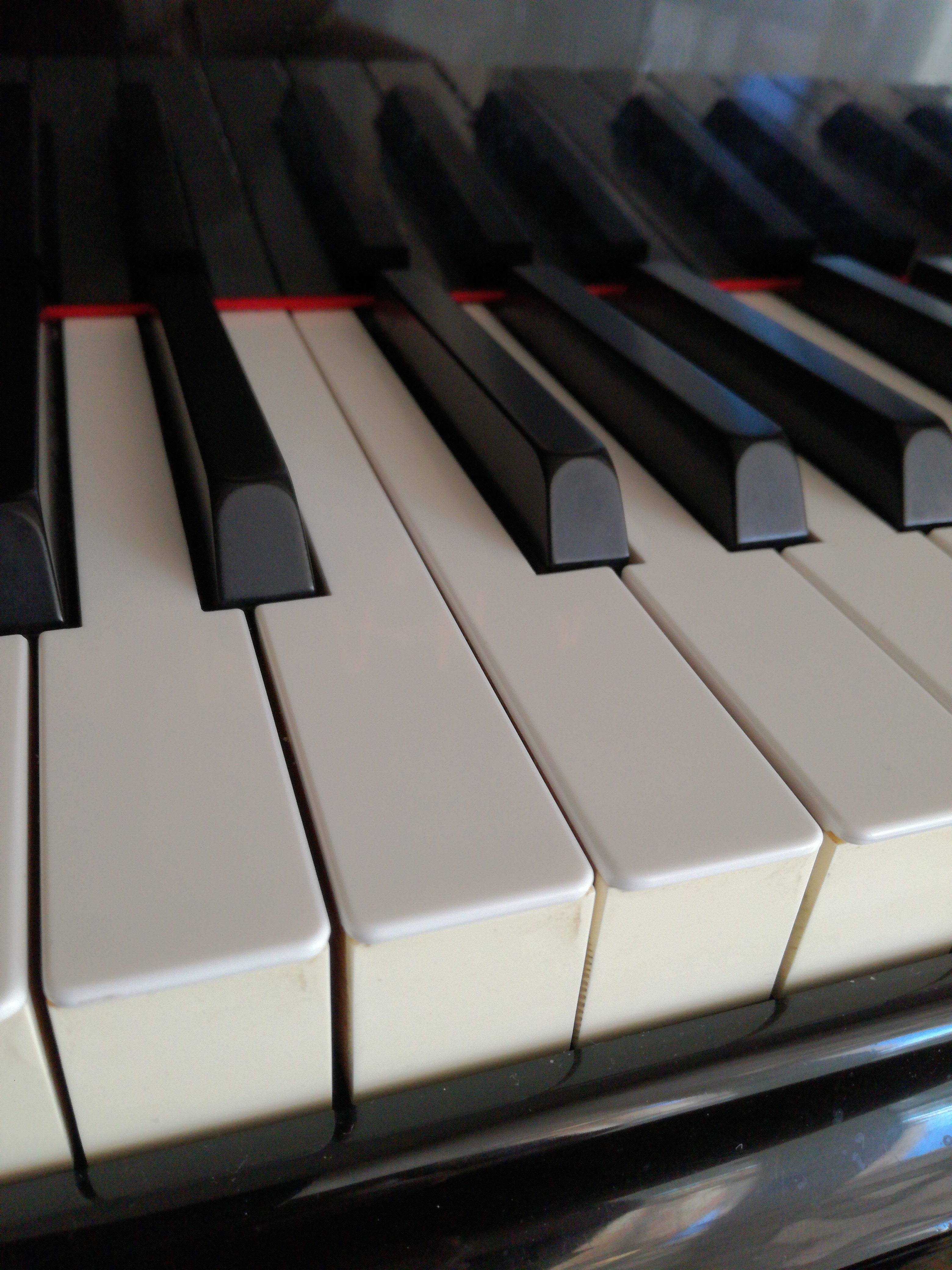
First of all, happy holidays. I own a 1973 Yamaha C3 with an Abel action. I tried a new Yamaha C3 in the shop and mine seemed much less controllable (especially in the return) and less "dynamic." There was only one aspect I preferred: the key covering material, which allowed for better grip, whereas on mine, fingers tend to slip. I think that, in the past, they were replaced because they are white and very smooth on the surface (unfortunately, they remind me a lot of a digital piano), while the front ones are cream-colored and less slippery. I was told that this is work that was done on many Yamaha pianos of that era due to an attempt to emulate ivory that had poor results (is this true?). Now I ask: is it possible to replace the coverings? Is it worth it? Is it expensive work? Is ivory or bone better? In any case, my technician must do it because the key dip must be adjusted from scratch based on the new coverings. I also have another impression regarding the black keys: it seems that mine have a thin layer of plastic material, while on the new one, it feels like touching the wood directly.
I don't think it's worth it. Furthermore, I believe the photo coverage is original Yamaha. There are, however, more matte covers or those that give an ivory feel. Replacement offers many choices. (replacement that must be done by an expert technician)
I am reopening this old discussion because I would like to understand the difference between the plastic materials used today in piano keyboards, even on high-end grand pianos. In particular, between Neotex (Kawai) and Ivorite (Yamaha). Based on your experience, which of the two provides a sensation more similar to an ivory keyboard?
I own a Kawai digital piano (CA 97) with a surface defined as "Ivory & Ebony Touch", and I find it quite slippery. It is probably a lack of technique, but I find the repeated black keys in Chopin's Waltz Op. 69 No. 2 really difficult.
Well, let's just say that the materials used today, now that ivory has been rightfully banned, are of a different quality. In my opinion, the good level of repetition cannot depend on the quality of the keyboard covering. As a pianist, I also feel a difference between an ivory keyboard and one made of synthetic material. However, we must not focus on these differences and we must ensure that they do not constitute a determining problem. Furthermore, the ebony black key has truly become a rarity. The pianist learns to choose the most appropriate approach depending on the keyboards and the regulation conditions of the pianos. Unfortunately, it is our curse to always play on different and unknown pianos. This is similar to the conditions of an actor's vocal use depending on the acoustics of the theater. There is a sort of "psychoacoustics" that would like to have power over us. In short, try not to seek (a play on words) the solution in these details. Instead, search for the right "basic pianistic gesture" (see also my video tutorials on piano technique) which helps us understand which optimal solution to seek and how to work during practice. In this, the proximity of a Master is fundamental.
P.S. the CA 97 is a beautiful digital piano. I tried all the CA series in Frankfurt at the Kawai stand during Musikmesse, and I must say that I was very satisfied!