Restoration

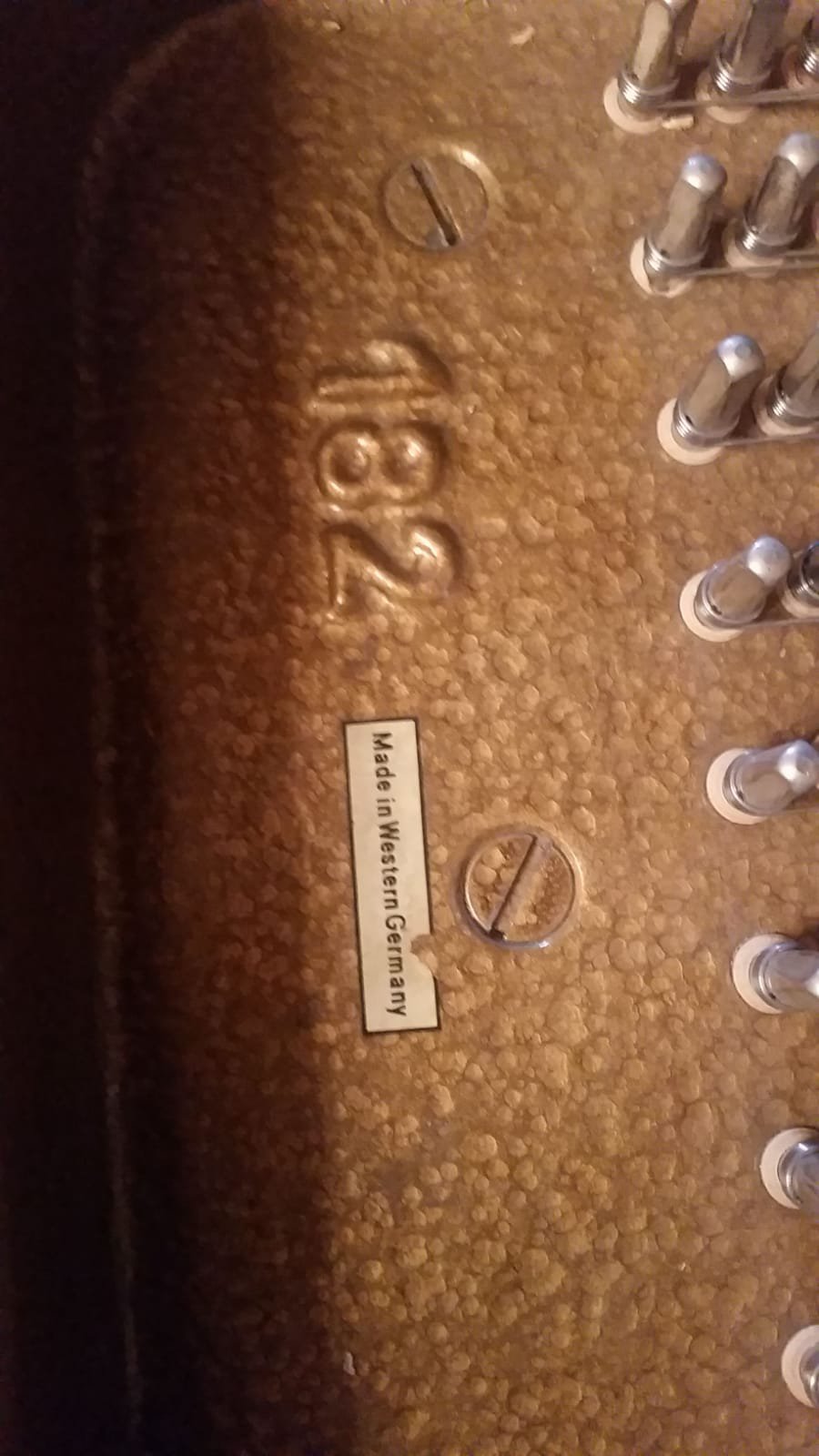
Krauss 182 Quotation

33 replies 7,429 views

Started by

GIUSEPPEPIANO

Member

Member

Opening post by GIUSEPPEPIANO

Posts
49
City
COSENZA

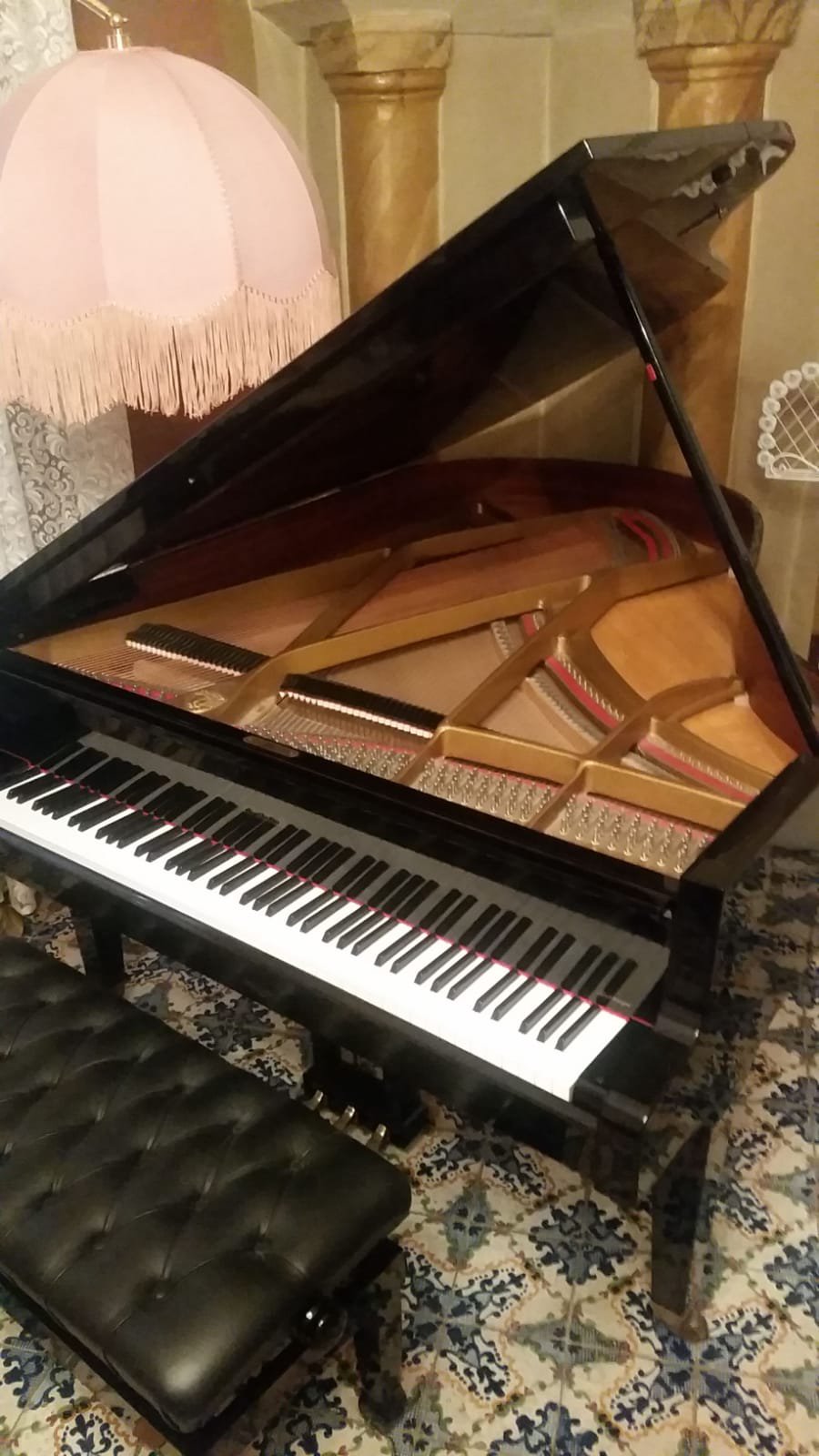
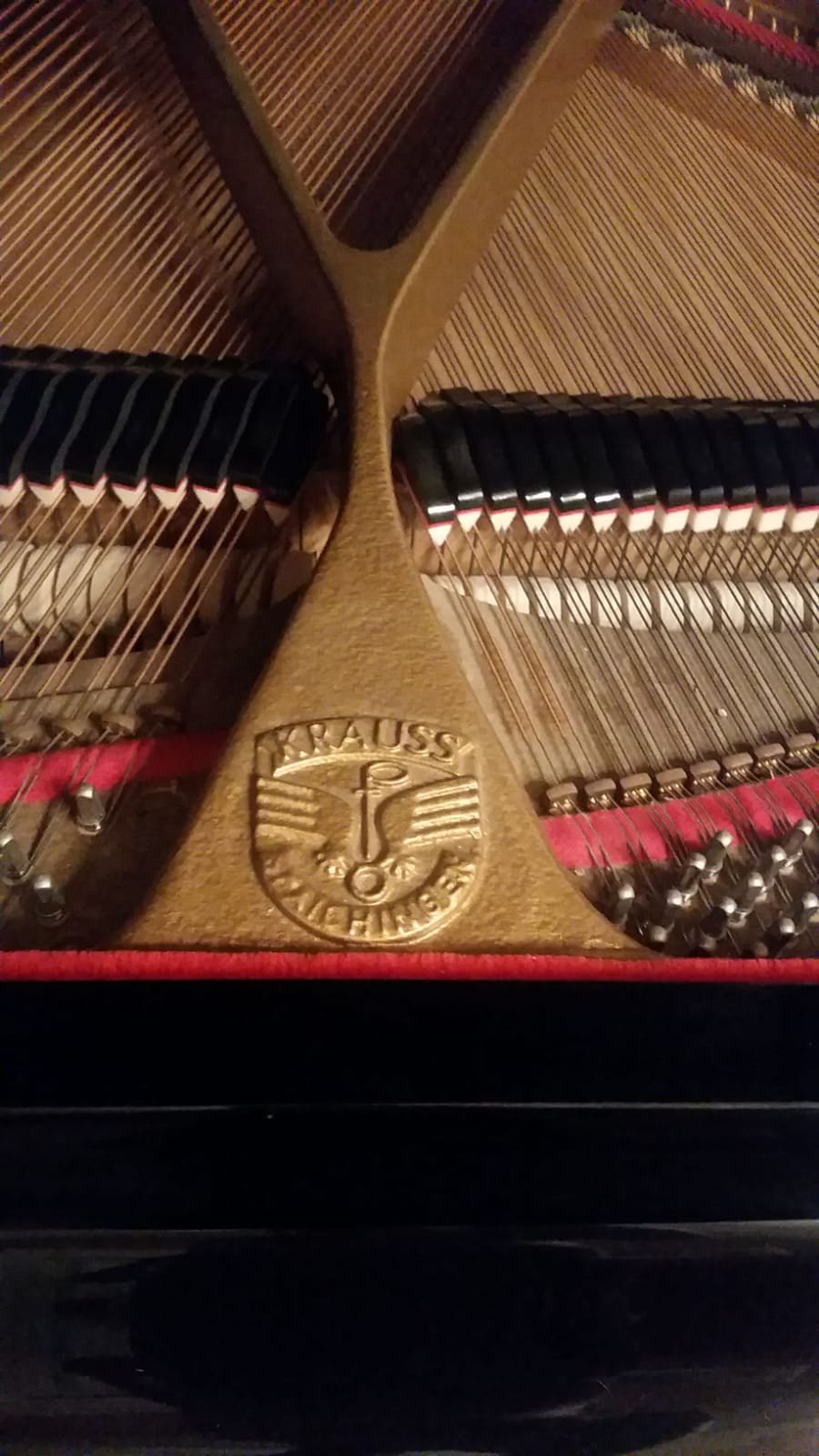
Hello to all the friends of the forum, I am writing to ask for advice on the valuation of a Krauss mod. 182. I am in negotiations with a private individual; however, I have not yet seen it in person (given the distance). From the photos, though, it seems to be in good condition, hammer rail included. If I'm not mistaken, all Krauss (at least the uprights) used Renner action and hammer rails, but correct me if I'm wrong.

Based on my experience, the market value would be around €9,000-10,000 (purchased in a shop, with warranty, etc.). But I need the opinion of another technician. I can't find much on this model on the internet. Built around the mid-'80s, three pedals.

in your opinion, how much could I resell it for?

a good Sunday to everyone

F4A7BC9B-8E18-43F0-A7BA-4DE83C96B3D9.jpegF61740B8-8C35-40DC-8F3A-8CECB5A31F60.jpegAEA35D2B-49D5-45AF-9729-A8AAE4A1D1AE.jpeg869F6A8E-1FF3-4645-8C1E-421C478B63F6.jpegE05B902E-C996-4079-9AB5-BB8EE0B3D226.jpeg

Member

Reply 2 by giovannig

Posts
514
City
Monza

Piano built in West Germany, which can therefore be considered a German instrument in every respect, unlike the remaining relatives from East Germany that suffered a decline in production, materials, technology, etc.

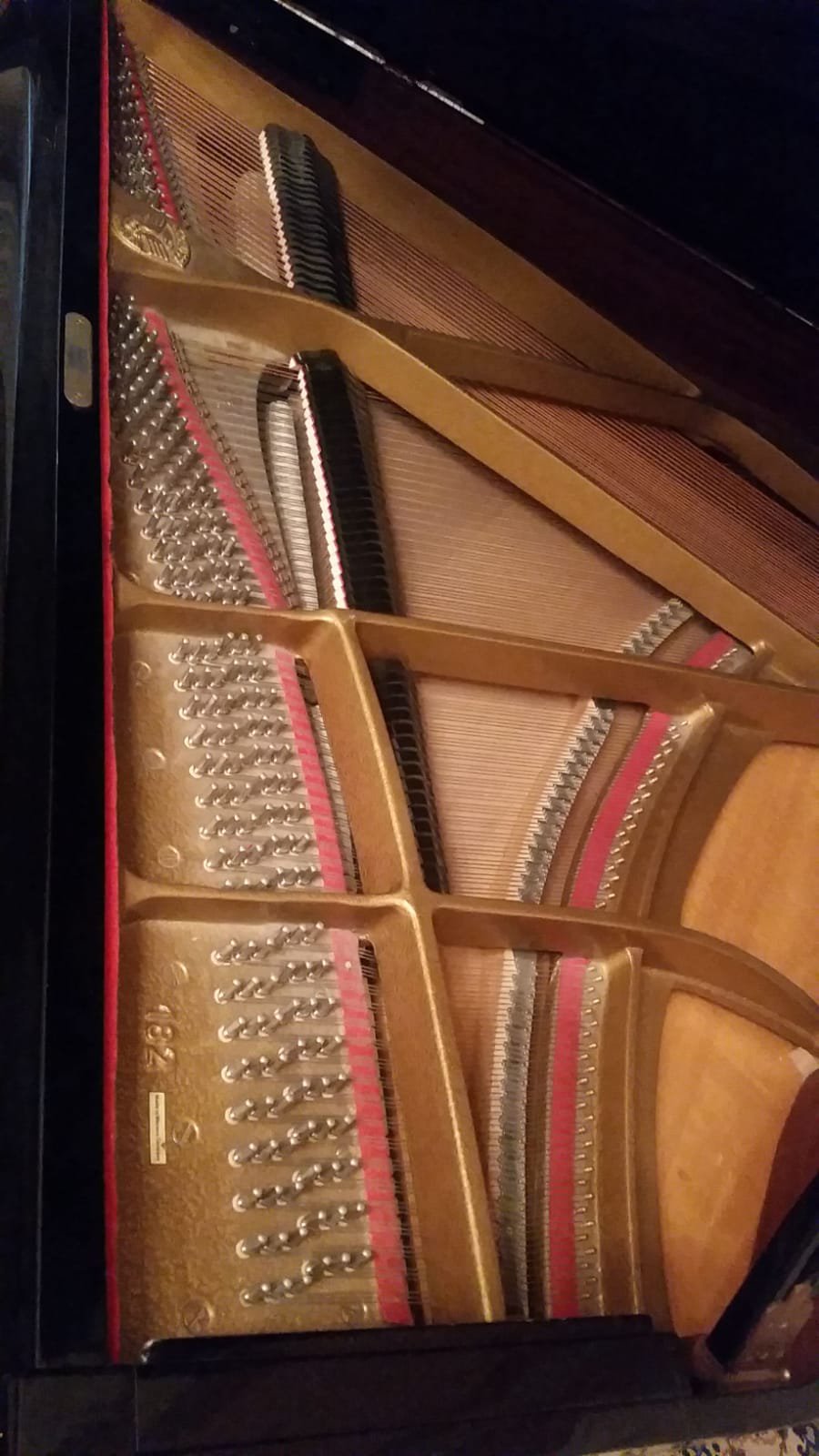
Given the good state of maintenance and wear (the condition of the action should be verified in person regardless), given its origin and age (the instrument is probably from the late 70s or early 80s), it wouldn't be absurd to think of paying 5/6 thousand euros in a private sale.

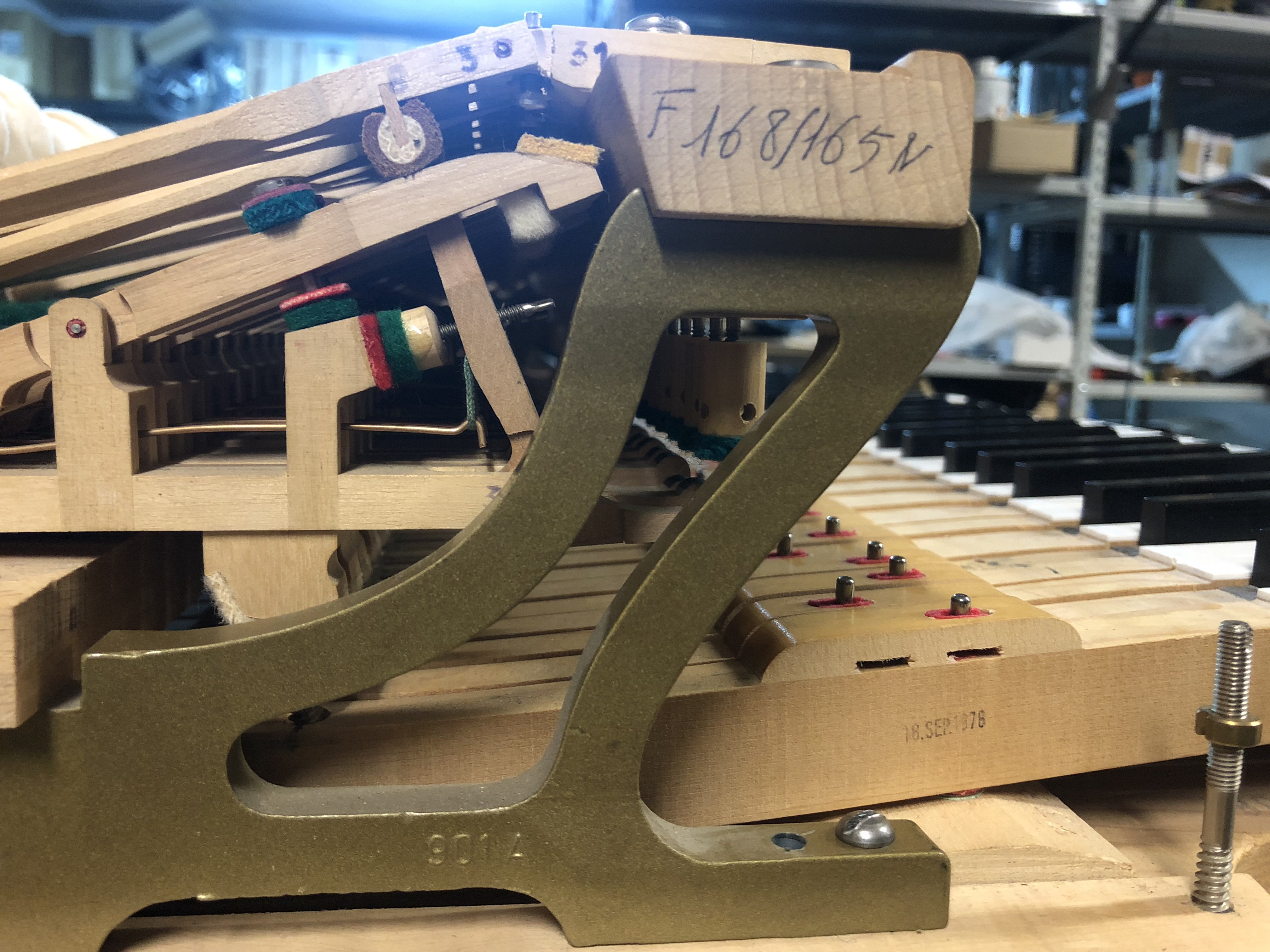
Personally, the instrument does not convince me and I would not purchase it due to the lack of cast iron in the frame part adjacent to the entire rim, an unusual choice intended to save a few kg of cast iron but exposing the frame to the risk of breakage. A measurement of the length and thickness of the strings would allow one to understand what loads it is subjected to and what the actual risk is.

Ciao.

Member

Reply 3 by GIUSEPPEPIANO

Posts
49
City
COSENZA

Hi Giovanni,

the lack of a portion of cast iron struck me immediately as well. It was the first thing I noticed. So you are saying it was a maneuver to lower the final cost of the instrument? But what could be the actual savings on a few kilos of cast iron?

I had rather thought that this might be part of broader design specifications, for the purpose of, for example, increasing the sound volume. But correct me if I'm wrong.

saluti

Member

Reply 4 by giovannig

Posts
514
City
Monza

Visionary piano designers have always existed, and we have had them in Italy as well. People who dreamed at night of speaking with their deceased father, who would give suggestions to be applied by the workers in the workshop the next morning.

Along the struts, the plate is fixed and there is no resonance. The cast iron does not have the effect of damping the sound; it is probably not a choice that affects the final cost of an instrument, but rather one that leads to savings in total production costs for that series of hundreds of instruments, likely produced under other brands as well. And it is a saving of time because in that area the rim was made to create the void (underneath).

I see only a design deficiency aimed at cost-cutting.

Member

Reply 6 by GIUSEPPEPIANO

Posts
49
City
COSENZA

In the end, we completed the purchase at a favorable price. Once in the shop, I checked the various adjustment measurements and noted the following regarding the most important ones: hammer-to-string distance 46mm and let-off 8/8.5mm. The let-off is clearly insufficient, to the point that it doesn't even trigger the repetition lever when a key is pressed at the end of its stroke. The strange thing is that, for at least about forty keys in the central area of the keyboard, the green let-off spring is accompanied by a maximum of a 0.20 rosette... it is therefore impossible to re-establish a let-off of about 10mm by removing the rosettes or, even worse, replacing the spring with one of a lower thickness... this latter operation would make very little sense, as it would involve touching factory components and the problem does not lie there. I thought that the cause of a significant decrease in let-off might be the fact that perhaps the entire keyboard level has dropped and needs to be restored by acting on the lever rosettes. Could it be? What do you think? No other hypotheses come to mind for now....

In the meantime, I have sent an email to Sauter requesting the let-off measurements, hammer/string distance, and key surface/keybed distance in order to have a clearer picture of the situation.

Member

Reply 7 by giovannig

Posts
514
City
Monza

In any case, if the dip is 8.8, there are two possibilities:

1) you measured it incorrectly

2) it has already been touched by someone because, based on factory measurements, with use the dip can only increase due to wear.

i advise checking more carefully, and especially checking the center felts (rosettes), those that regulate the key height, because they might have been replaced with others of a smaller size.

Both the measurements of paper felts and those of cloth or felt padding are variable. It is important not to create stacks of paper but to minimize the number of felts by placing progressively thinner ones on top. To recover two millimeters of dip, it is sufficient to add a 0.6mm piece of paper in the center.

the measurement of the key height at the front (from the edge to the keybed) can indicate the action to be taken, namely whether to raise the key from the center or to replace the front felts with others of a smaller size.

the key unlocking is important because at half stroke it must achieve alignment on the axis of the pilot and the upright.

Member

Reply 8 by GIUSEPPEPIANO

Posts
49
City
COSENZA

I measured it as I always do with my 10mm bakelite template and there was a step of about 1.5mm difference.

I also think it is the balance rail bushings. Tomorrow I will check the height of the keys relative to the keybed.

If I understood correctly... in the absence of the house measurements, an empirical method to verify the correct height is that by pressing halfway down the key, the pilot and the upright are aligned... right?

this is a very useful suggestion, as factory measurements are not always available...

Moderator

Reply 9 by pianoexpert

Posts
3,876
City
rocca di papa

The alignment that Giovanni is talking about is necessary for good "mechanical geometry." It also involves checking the height of the keys (measured on the part inside the key cap itself) relative to the level of the keybed. If you notice a non-uniformity in measurement, you probably need to restore the leveling of the keyboard. Ultimately, as Giovanni also says, 6 tenths of regulation can help you re-establish the correct let-off without altering that necessary pilot-upright and hammer-pilot-upright alignment (which must lie on a single passing line, with the hammer at mid-stroke!). In short, I would first check the general level of the keys relative to the keybed and then work on the center pins. (Work, naturally, on a few keys and check the geometry!!!)

Member

Reply 10 by macchinista2871898

Posts
30
City
Casorate Sempione

Dear Giovanning.. are you qualified in iron alloy metallurgy.. or is it just a fantasy of yours, or rather a philosophical thought on the Krauss piano?

Member

Reply 11 by giovannig

Posts
514
City
Monza

Dear Mr. Macchinista2871898

It is sufficient to have viewed, disassembled, and restored various grand pianos of the most disparate brands - produced from 100 years ago to the present - to be able to give a judgment on the rigidity of a frame.

There are several manufacturers who have tried to remove braces and cast iron from their designs, even on upright pianos - I cite for example Anelli with the XIII model, with disappointing results such as breakage, failure to hold tuning, etc.

The foundry processes of those years are known to everyone; furthermore, I can boast of having observed them from the wooden construction of the foundry model to the casting procedures.

Today times have changed; there is software used by engineers to verify structures, and it is therefore even more immediate to provide feedback, without delving into manual calculations or diagrams, or without having to wait for a frame to break to be proven right. Technologies have evolved and improved, but as far as I know, no manufacturer - one only needs to look at the productions of the most well-known, from the Japanese to the Germans and Italians - has yet dreamed of "circumventing" a frame, and as you can imagine, the same manufacturers who use that software would be very happy to save on and lighten their structures and workmanship: therefore, one can also know nothing about the above and reason through comparisons and analogies to understand that what was done on the Krauss, which is not actually a Krauss, was a big and great .... in short, add the adjective you prefer.

The undersigned has only stated that he personally would not purchase that piano, trying to explain why.

The carbon content and the recipes do not change things.

I suggest being careful and handling it with caution.

Have a good day.

Member

Reply 12 by macchinista2871898

Posts
30
City
Casorate Sempione

don't get angry..let's use calm tones..never consider yourself to have arrived in such an arduous profession as building or repairing the piano, I personally have been a technician for 42 years, and I NEVER feel like a master in my trade BUT I LISTEN TO THE NEWCOMERS..there is always something to learn..it takes HUMILITY!!

Member

Reply 13 by giovannig

Posts
514
City
Monza

Despite his attitude seeming childish and provocative to me, and I quote: “are you qualified in iron alloy metallurgy..or is it just your fantasy” - I did not get angry at all; of course I wouldn't have taken offense at such a low-level comment.

As I have already explained, mine is a personal opinion, certainly not a “fantasy” or a lesson as he wanted to imply.

Re-read more carefully what he wrote and what I wrote, and perhaps you will understand that he was wrong and maybe next time he will succeed in behaving differently, avoiding mockery.

And it is not even the first time this has happened.

Member

Reply 14 by macchinista2871898

Posts
30
City
Casorate Sempione

Then Infantile will be You,YOU ARE JUST AN
ARROGANT PRESUMPTUOUS person..I know everything. I know the absolute truth..I..I..I..but enough..

Member

Reply 16 by GIUSEPPEPIANO

Posts
49
City
COSENZA

Hello friends, I am updating you on the situation.

Back from Schimmel, I started regulating this Krauss 182, obviously starting with leveling the keyboard. It seemed evident to me that it had been tampered with by some luminary, as I find too many anomalies in the progression of the let-off and repetition depth, furthermore the hammer-to-string distance was about 42mm.

I do not know any factory specifications at the moment (they haven't replied to me yet), so I used my ingenuity and after a careful analysis and several tests on sample keys, I managed to achieve a good result.

The measurements reached are as follows:

hammer-string distance ~ 46mm, let-off 10mm, distance from the keybed to the lower part of the flange ~66mm.

to verify the action's work, I usually let the hammer fall onto the repetition lever by pressing slowly, then I apply a further light pressure and check that the repetition lever manages to distance itself by about 1mm from the roller, without touching the felt pad.

And so far, so good. My concern, however, regards the key-to-keybed distance. With the test mentioned just above, one can detect a generic error... in the sense that, should the repetition lever not behave in the described way, there could be an error in the let-off, in the general leveling, in the hammer-string distance, or in the shimming of the key rest spring (obviously all of this can happen together).

But is there a precise and empirical way to determine if the distance from the key to the keybed is exact? I usually check that the repetition lever and the roller core are aligned, and that the front tip is inserted into its respective guide by at least 5mm (with the key at rest). Just by eye, it is difficult for me, for example, to verify if the pilot moves only vertically or if there is sliding on the heel.

what do you think?

i am interested in knowing your opinion, as general leveling (therefore key inclination) is of crucial importance in my view, otherwise the geometry of the action will be completely distorted.

The opinion of everyone is obviously appreciated and welcome; only in this way can one properly enrich oneself.


Member

Reply 17 by giovannig

Posts
514
City
Monza

everything seems correct based on the general behavior described. I wouldn't lose my head over it any further.

If there isn't a pile of slips in the center but only the bare minimum for leveling, and if there is enough space in front to get the right background, there is no reason to suspect anything.

Have you checked in the keyboard compartment? Sometimes they would stick a small note with the adjustment results on the sides...

Member

Reply 18 by GIUSEPPEPIANO

Posts
49
City
COSENZA

Exactly, that's where the problem lies. I suspected as much because, especially in the central area of the keyboard, the back rail was bare without even a single paper to accompany it (and the dip was ~8mm!), whereas in the bass and treble regions I found many Rosette in kasimir without any matching paper (and, conversely, a pile of papers corresponding to the respective back rail)... usually factories provide a margin of papers precisely to allow for possible adjustments. It's as if someone tried to compensate for I don't know what. Furthermore, the 42mm distance... with wear, the distance should increase, not decrease. Moreover, the hammers were almost resting on the rest felt, and with a distance of 42mm it means that even the rest felt has been moved up... well....

anyway you're right Giovanni, I'll move on with the adjustments... now it seems to be working.

i checked, nothing noted in the compartment...

Member

Reply 19 by giovannig

Posts
514
City
Monza

I had missed the 42 millimeters; indeed, they seem a bit lacking. However, if the hammers were replaced and, in addition to their size, the drilling was botched, there is little that can be done: in fact, low drilling (meaning more towards the tail than towards the head, to be clear) results in a mechanical setup that will always end up feeling "sluggish" regardless of adjustments and weights.

If you lower the pilot even further, what happens? Does the stiletto hit the rest bearing?

Was it replaced by any chance? And in the back of the key, how is the spring where the keys rest? What do we have? (Thickness)

Anyway, take some photos; seeing things as they are will provide more ideas.

Member

Reply 20 by GIUSEPPEPIANO

Posts
49
City
COSENZA

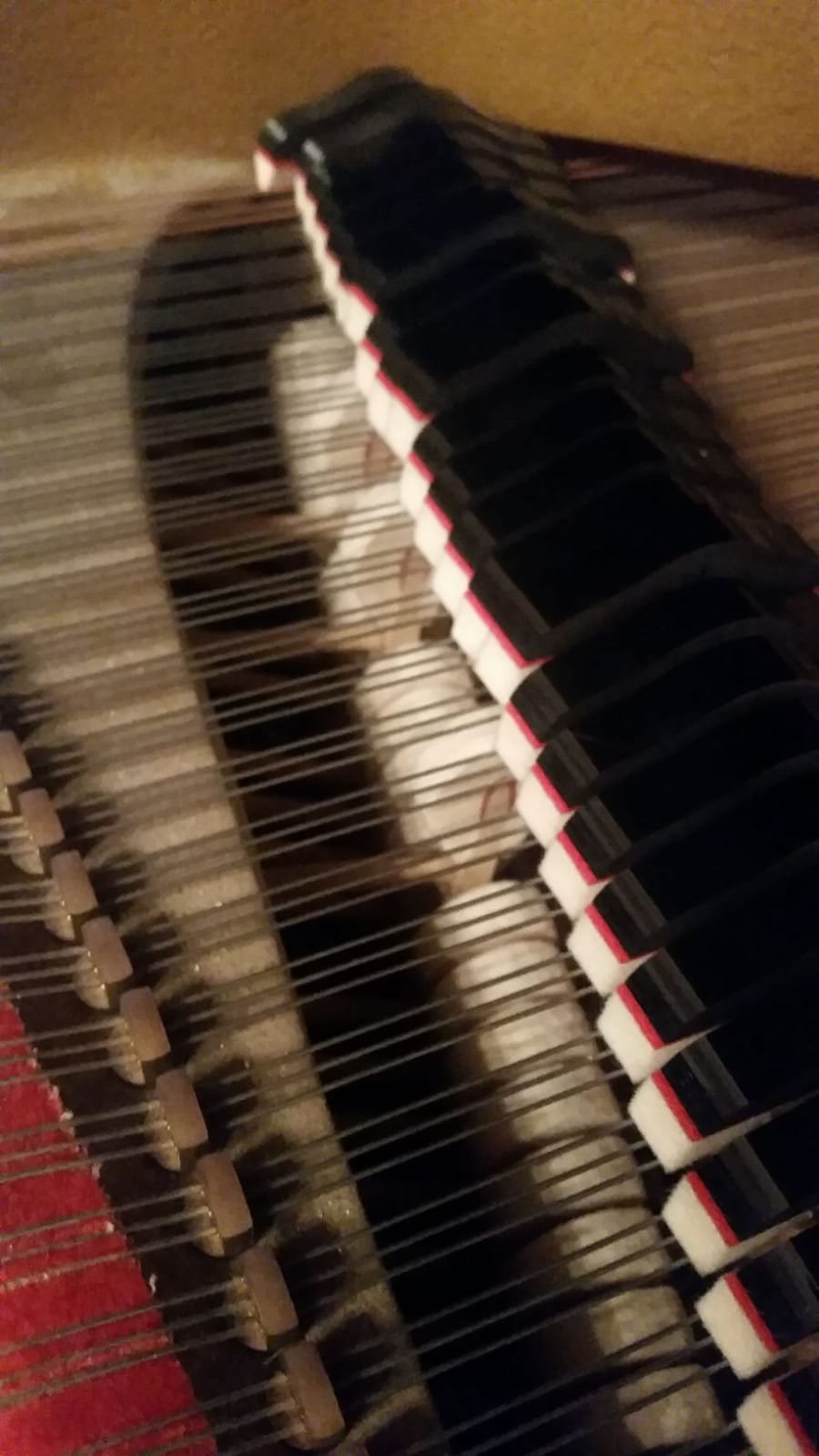
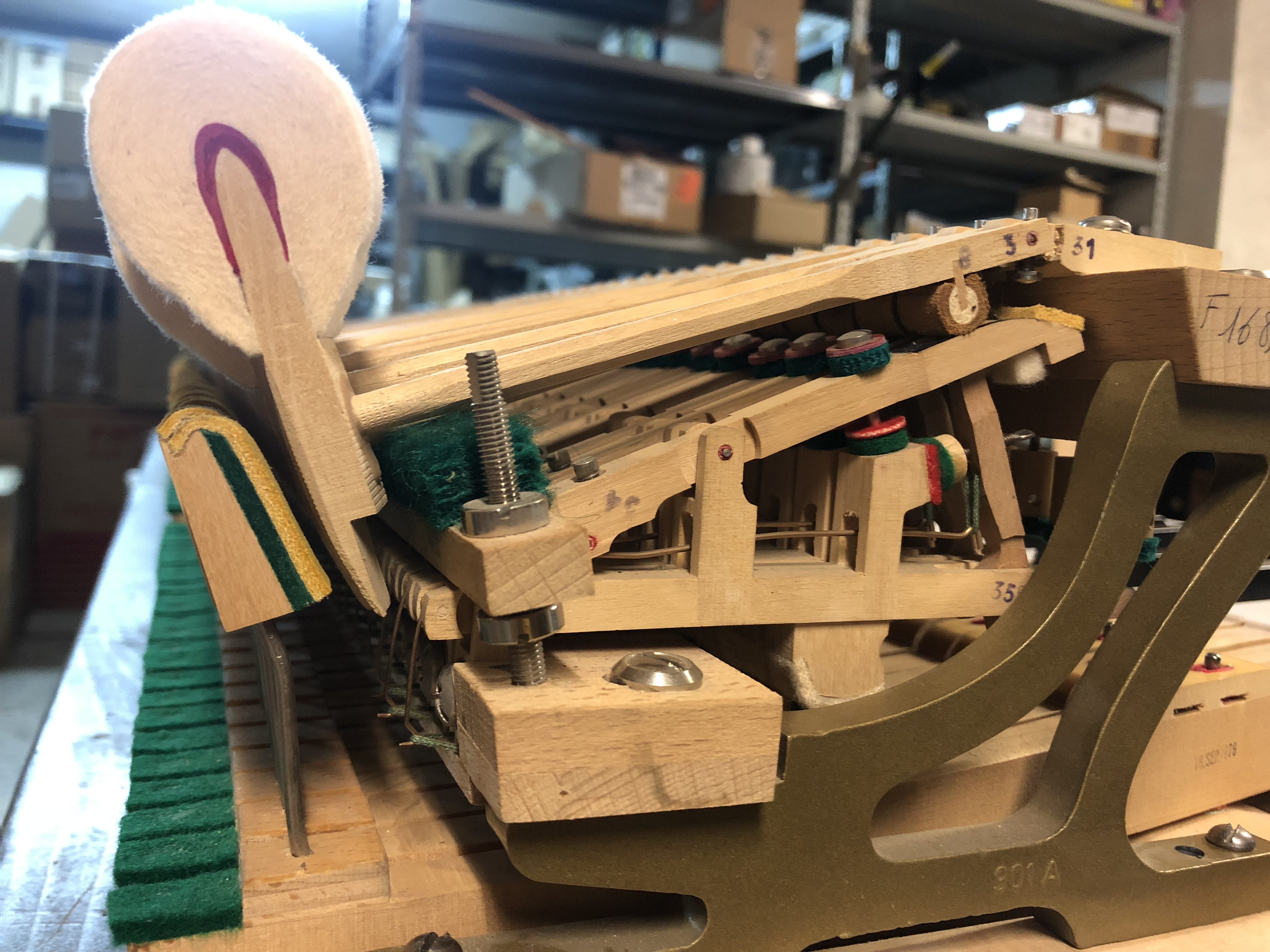
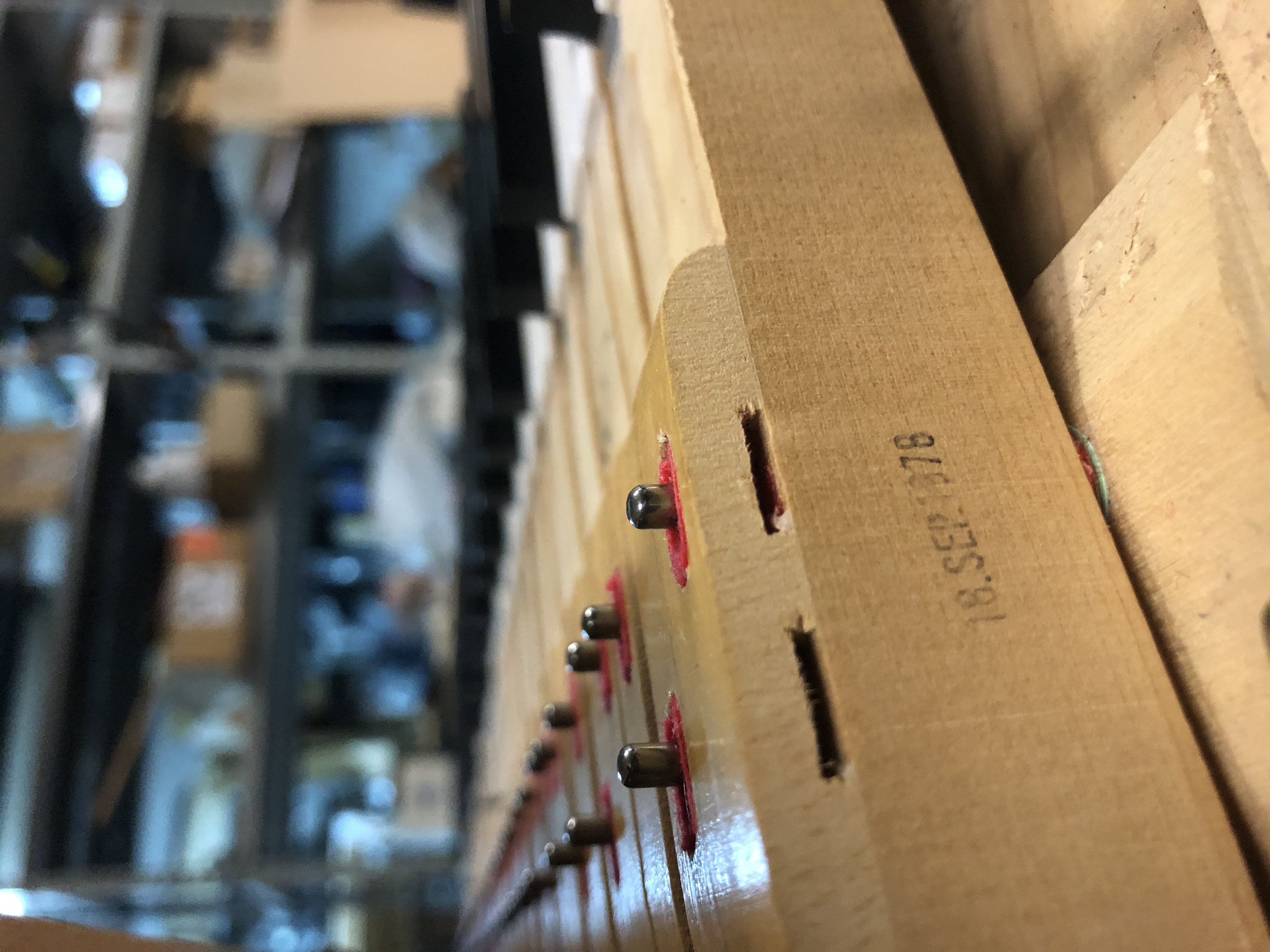
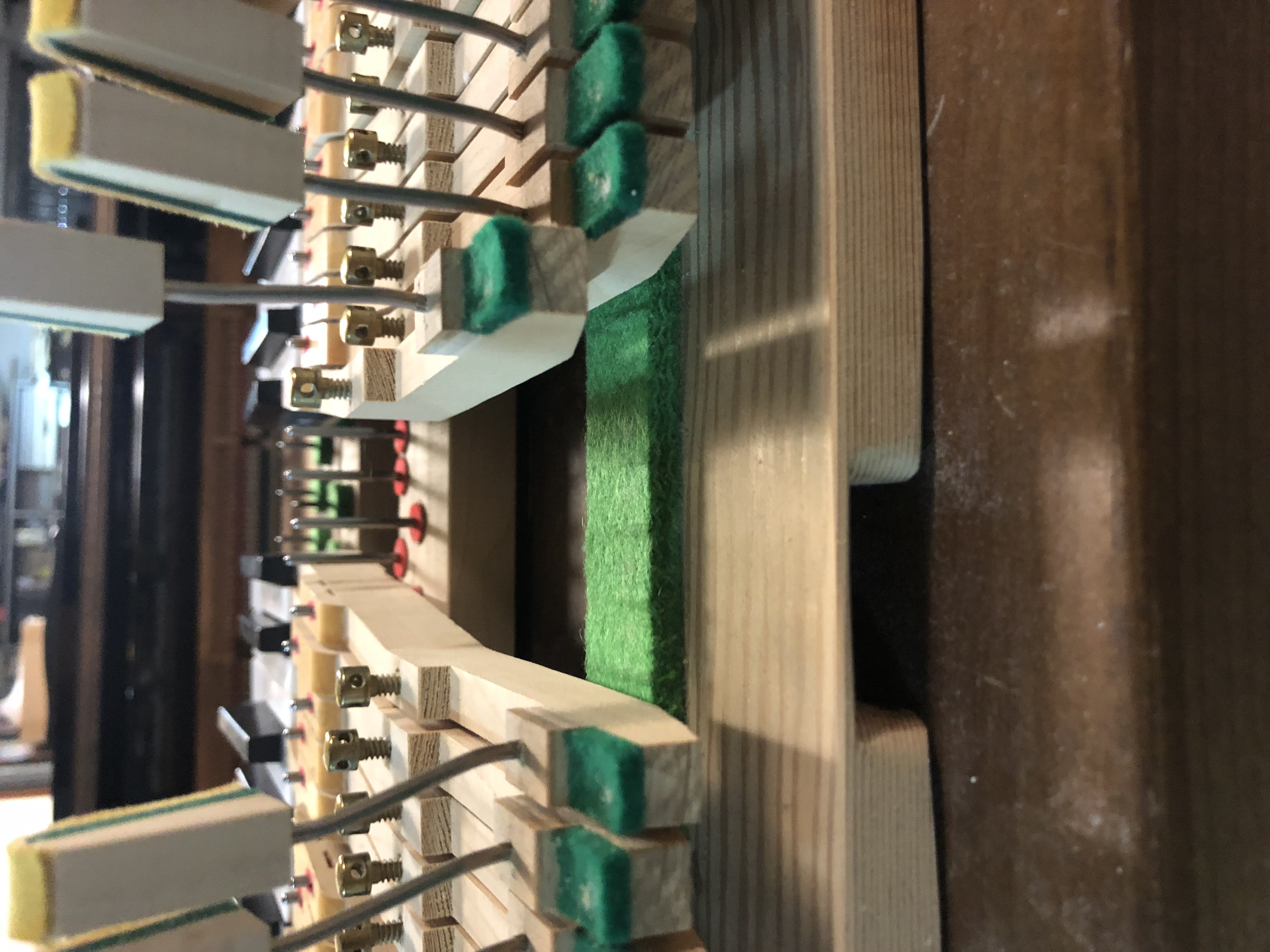
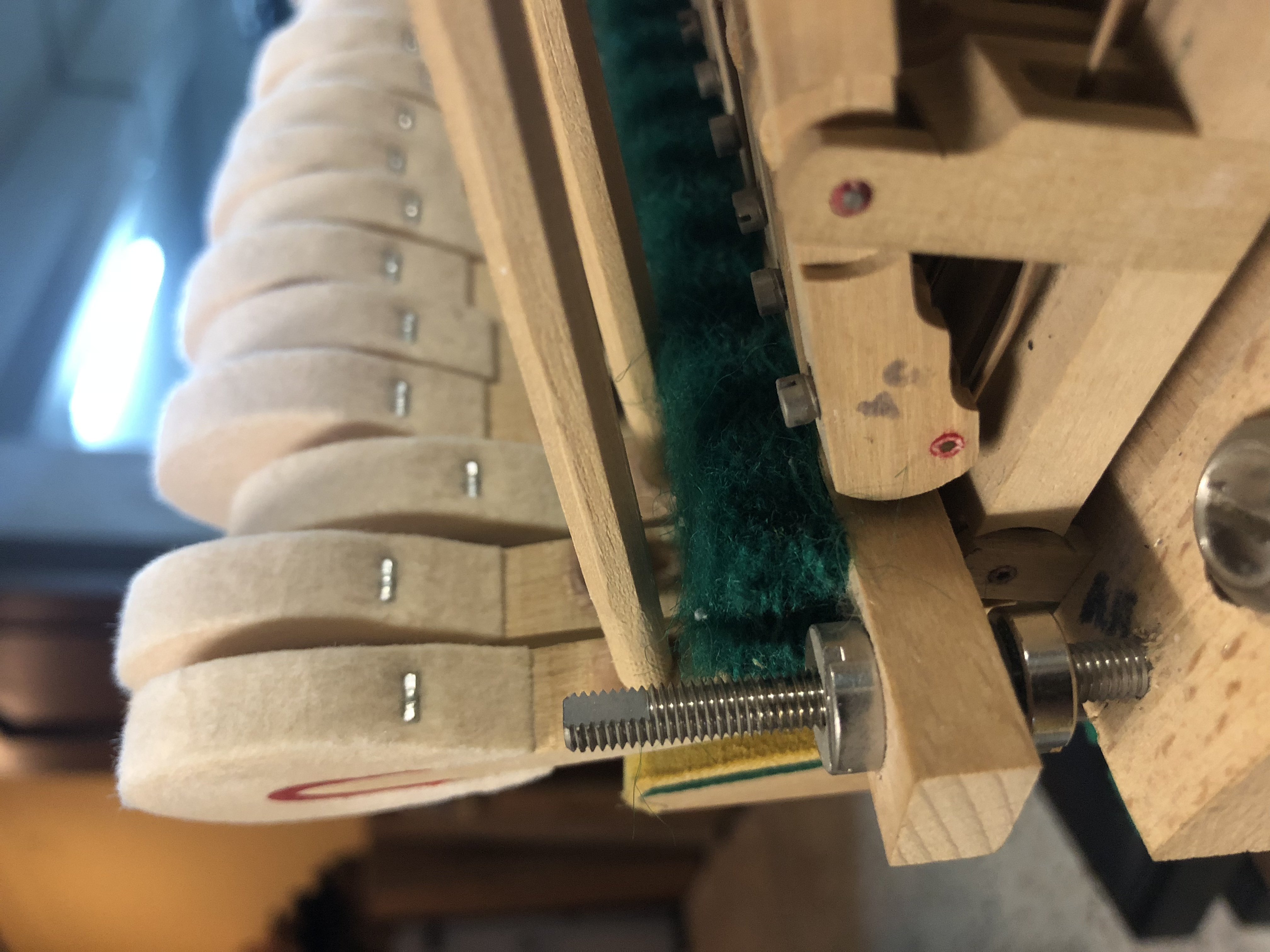
Here are the photos, Giovanni... the hammer rail seems original to the period. If you lower the repetition lever further, the stiletto does not touch the rest felt (which I had to lower anyway to allow the hammer to reach a distance of 46mm with a 4/5mm margin from the felt), but the final part of the hammer tail touches the forcola's return spring (in the downward position), producing an annoying noise. This way it is at the limit, and even the rest felt is quite low... but with this configuration, the action seems to have good geometry.

if I raise the repetition lever, hammers, and rest felt... the hammer-to-string distance shortens, but perhaps everything would work within an intermediate range.

The key rest spring is 7mm... I think it is also original.

also, in the third to last photo, it highlights how much the tip of the balancer protrudes relative to the sliding guide.

ah, just notice the first hammer/key, I still have to level the black keys...

AttachmentAttachmentAttachmentAttachmentAttachment
Log in to participate