

taken by enthusiasm I am submerging you with files, forgive me
io have the mp3 ready, if you want I will post it immediately .
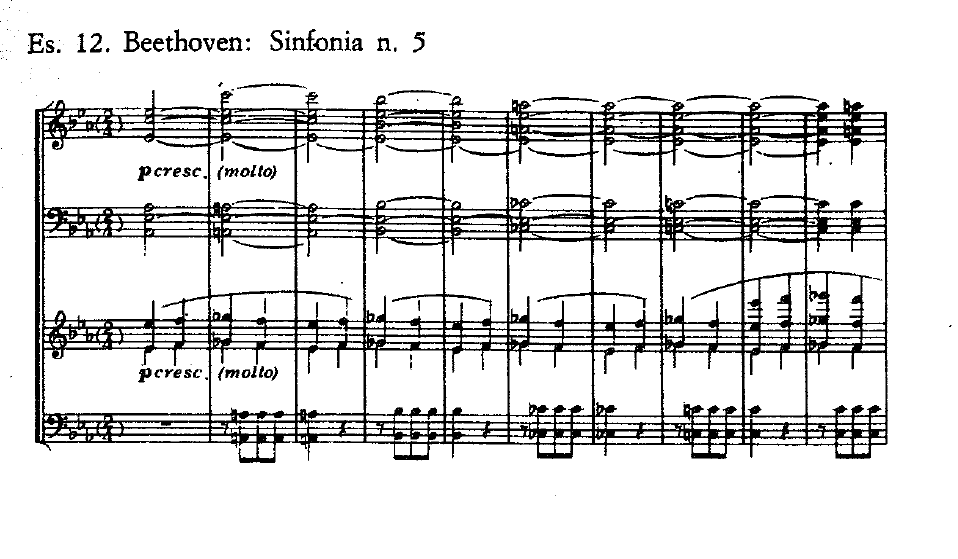
es 12 gozzo - versione libera.mp3
es 12 gozzo - alla beethoven.mp3
Started by
Member
Member
taken by enthusiasm I am submerging you with files, forgive me
io have the mp3 ready, if you want I will post it immediately .
Member
It's all the same to me, go ahead and post it... anyway, the piece is so famous that anyone would find an mp3. But post it anyway, so it's nicely clipped
Member
AleGozzo wrote:carried away by enthusiasm I am submerging you with files, forgive me
i already have the mp3 ready, if you want I will post it immediately .
Member
Carlos don't make that face, you are not obliged to look at all of them
ps
the mp3 seems much less dynamic than Leibowitz indicated, according to whom it goes from pp/p to ff ....
Member
AleGozzo wrote:Carlos don't make that face, you're not obliged to look at all of them
Ehm ehm... the face was precisely because I saw them Ale: it was a perplexed face
Member
oops, are they that shitty ??!!
anyway tear me apart, I have everything to learn
Member
AleGozzo wrote:Carlos don't make that face, you are not obliged to look at all of them
ps
the mp3 seems much less dynamic than Leibowitz indicated, according to whom it goes from pp/p to ff ....
...that depends on the conductor who supervised the performance of the piece; surely on paper Beethoven's indications were reported ... which are authoritative"

Moderator
By next Wednesday I will submit my free version, I would like to understand what the desired outcome is.
Free instrumentation or that indicated by Leibowitz? If it were Leibowitz's, stylistic reconstruction or should I proceed with a free orchestration?
Frank
PS
Ale, cute avatar
Member
thanks frank, boozooo is a great drummer !!
i would say indicated organ, then if it's free or stylistic, you decide.
Member
AleGozzo wrote:oops, are they that shitty ??!!
fine, tear it down even more, I have everything to learn
I should preface that it was not my intention to offend you with a perplexed face, but I didn't have time to respond in a more detailed manner, and excuse me for the brutality. I also want to tell you that it is not my intention to "tear down," but rather to tell you honestly what I see/think, as I would if you asked me for a face-to-face opinion. I believe that the thing that works least (I am talking about the free version and I will speak of that one) are the textures you have chosen which, in reality, texture very little...
I'll go in order. The woodwinds.
You chose to have bassoon I start the sequence (eb fa gb fa), progressively adding the other instruments.
Considering that the phrase begins p and cresc. molto, I would evaluate that:
a) the bassoon in that register is already very much towards the high end and struggles to play truly piano,
b) the oboe in that register also struggles, for the opposite reason, and therefore its entry would be heard very clearly,
c) the clarinet is "at home" instead, so:
n in the first four measures you use the instruments somewhat "inappropriately" while the passage could be more effective (I'll tell you how later). Furthermore, you should consider that you have the bassoon start alone, whereas the passage already begins in octaves (following the unorchestrated example), so if anything I would add (perhaps in the bass) rather than removing octaves.
Continuing with the woodwinds, I see the bassoon II as very "sad," which could be enhanced in two different ways:
the first, by having it take the lower octave of the fragment towards the end (e.g., the last 4 measures),
the second, by inventing something rhythmic to drive the phrasing forward (an octave leap every two measures, with a relative accent; a continuous syncopation in the middle of each measure... basically something to vivify that held eb...);
if you don't also go towards the bass, the piccolo's entry at the end is an eyesore, in my opinion: the piccolo is extremely effective when the orchestral register opens up very wide both downwards and upwards; otherwise, it emerges as an "out of place" instrument and, unless that is your intention, I don't see it indicated.
Continuing with the rest of the orchestra:
the combination of vlc./cb. + horn, as orchestrated, does not blend, and the reason is that the horn in that register is in its comfortable zone and stands out a lot compared to the low strings (my composition teacher always used to say that it's good to "see" horns and trumpets written as they see them: it helps to understand "where they play"; here they are inside the staff, a nice F# in the first space...). I would see them better with a nice harmonic note, or even two: the held eb and the moving note (e.g., the one played by the second violins: ab, a, bb etc...) and I would join the violas to the vlc. and cb. (perhaps with one of the two bassoons?).
At this point, I would use the violins (first and second) for the upper part of the harmony (c, bb, a...), but in octaves for the two sections (and, attention: the high c enters the following measure, not immediately! and check the a because it remains natural, it doesn't change to a flat) and I would exclude the trumpets (perhaps reserving them for the hypothetical climax of the crescendo, which we don't see, together with the piccolo) and I would keep the timpani only from the last measure, which is where something truly changes.
To summarize, I would do this:
clarinets start in octaves for 4 measures,
bassoon 2 on the bass (ab, a, etc...),
bassoon 1 with vlc., cb. and violas (the rhythmic part),
oboes from m. 2 in octaves with the violins (c, bb, a...),
flute 1 and 2 enter in the last two measures in octaves (but high and super-high, not like the clarinets), without piccolo,
horns, as already said,
trumpets and timpani I would keep for last, or at most, to "punctuate" (like a single sound together upon the arrival of each vlc. and cb. cell.),
strings, as already said.
The whole thing might seem very classical, but on the other hand, one has to deal with the material to be orchestrated (even Stravinsky, when orchestrating Pergolesi, didn't exaggerate too much ).
Member
don't apologize, it was actually very useful !!!!
i'm looking through everything carefully
Moderator
Carlos wrote:It may all seem very classical, but on the other hand one has to deal with the material being orchestrated (even Stravinsky, when orchestrating Pergolesi, didn't exaggerate that much).
... let's see if Beethoven comes up for Ale now (hihihi)
Moderator
AleGozzo wrote:i would say indicated organ, then whether free or stylistic you decide.
Ok
Member
I will arrive in the evening
Member
hi, this is my reconstruction of the mp3
Moderator
AleGozzo wrote:i would say indicated organ, then whether free or stylistic is up to you.
I won't participate Ale, personally speaking, in the end it would become a rather insignificant exercise. It's useless to give the trumpets the part of the fifers and vice versa.
Tutto per dire che mi ridurrei a fare un'inutile imitazione, meglio il lavoro di trascrizione ... vedrai che mi accoderò più avanti
Member
as you wish Frank, naturally if changing the indicated instrumentation stimulates you more, we won't frustrate you
Carlos, I tried to jot down the orchestration you suggested to me, can you take a look to see if it was what you intended ?
2 doubts:
- vc and cb, do you think it would be better to raise them by an octave?
- there is only 1 sustained Eb compared to the 3 provided for by the reduction .... no problem ?
thanks & bye
Member
Ale, I'm way behind... even that cursed Frank got in the way and "distracted" me, and now I'm listening to the first LAB tracks, pulling an all-nighter... we'll talk tomorrow.
Member
take your time, I am very curious to look at them too
Member
AleGozzo wrote:take your time, I am very curious to look at them too
...at this point let's wait until Wednesday, we took an extra week though ...it's just that I couldn't resist.
See you soon