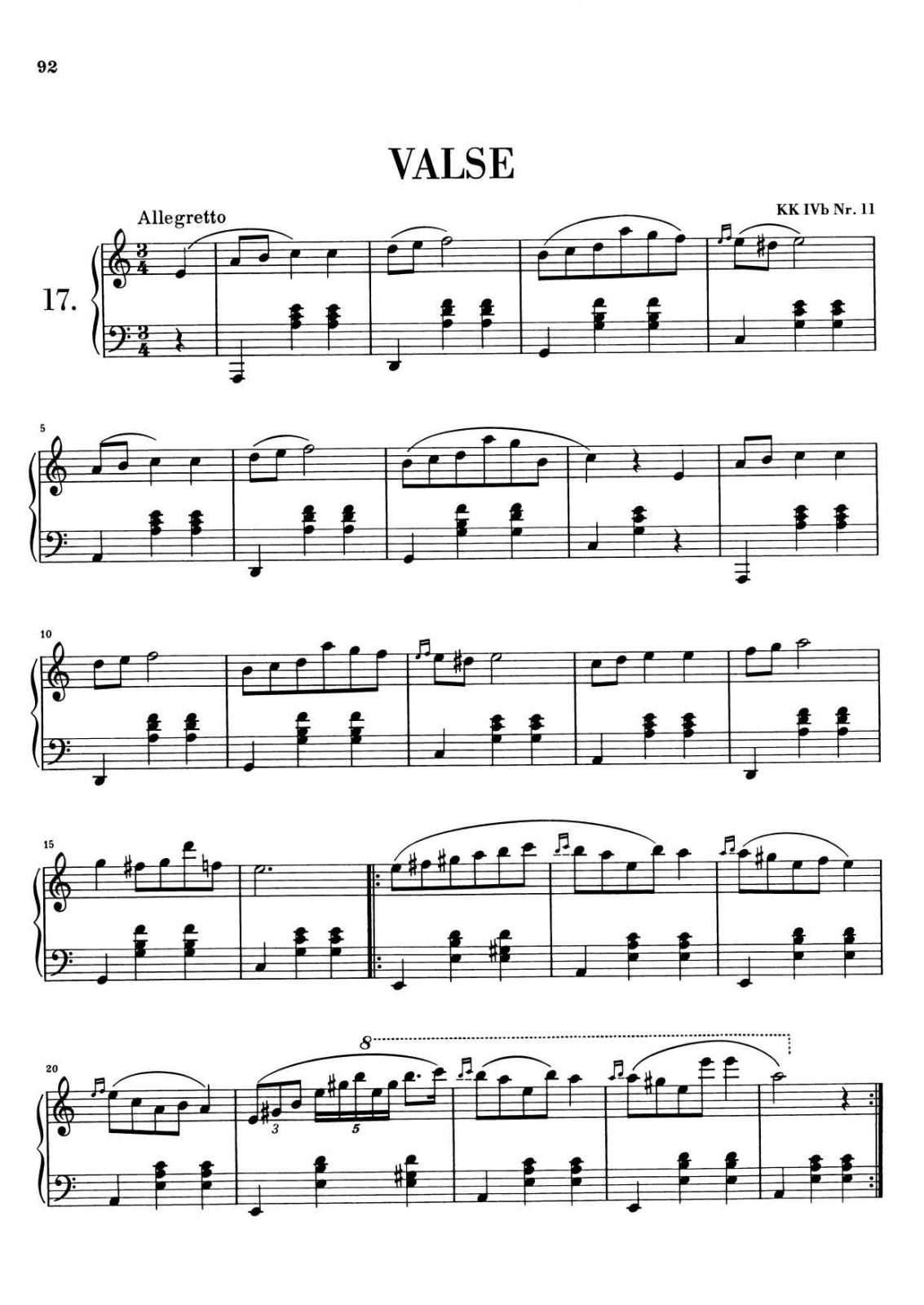
So "in theory" the first group MI-SOL#-SI must be played more slowly compared to the following two?
... And how do you solfeggio a measure like this: That is, in the first movement I fit three notes and in the next one 5... "by ear"?
Because if I use a metronome and divide the movement into 5 steps (ad hoc for the central quintuplet) then how do I make them fit "exactly" into the 5-step movement, the first triplet and the third group?
Thank you
PS. I am "fingering" the piece very slowly with a metronome and I got stuck on this measure.
If you want an order of speed in irregular groups, they are faster than simple beats and the more notes they have, the faster they are; therefore, the quintuplet is faster than the triplet, which is faster than the two notes in the last movement
T
ttw
Member
Reply 5 by ttw
Posts
277
If you observe the bass, you know how many notes to play on the fourth.
It's a second-year sight-reading exercise from theory and sight-reading, I think this piece is too advanced for you. You cannot just play Chopin randomly, even if listening to certain pianists it sometimes seems that way
To learn how to solfeggio irregular groups, you must first understand how they work; to make a long story short, you should go through the decompositions that can be found well described in Luigi Rossi's theory book.
Thank you for the report. Let's see what my teacher thinks about it. For now, he is having me study Pozzoli (Solfeggi parlati e cantati - I Corso).
He had told me that Chopin is premature... very! (it hasn't even been three months since I started taking lessons) but since I insisted, he is having me "articulate" this Waltz slowly (which he claims is the bare minimum for Chopin). We hadn't examined that measure yet.