TheSimon wrote:At this point, a question comes to mind. Who would realize that themes like those from Superman, Star Wars, E.T., etc., etc., are film music if they hadn't heard them coupled with the images of the films? Would you truly be able to say: "this is film music"?
An uninteresting prompt: extremely interesting! It opens up a wide-ranging discussion that could also be made in reverse. That is: is "film music" necessarily less valid than absolute music? And, conversely, if someone writes "so-so" music, is it justified if they say they write "film music"? I simply believe that music accompanying images or theater is simply different music, for example, in its structure. Naturally, in this specific case, Morricone is, among the great film score composers, one of those who found a "signature" in identifying motifs that are sometimes of an almost aphoristic brevity which become, themselves, the soundtrack to an entire film, with almost no hint of development. To this day, the most developed Morricone theme I know is the magnificent theme from "Cinema Paradiso":
But perhaps the most universally known (or one of the most) is that of "The Good, the Bad and the Ugly":
This theme is totally devoid of development and reappears repeatedly throughout the entire film. But it is and remains one of the most beautiful themes in cinema history, in my opinion.
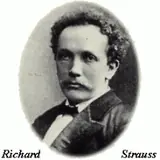
An analogous discussion to the one proposed by Simone was made, a century and a half ago, regarding Symphonic Poems (the issue is not very different, I'll get to that soon, I promise), namely: does the fact of writing a piece whose plot is a literary text justify someone who writes a structurally weak piece? The answer is crystal clear to everyone, right? And it is, obviously, no. The fact that at the origin of a musical piece there is a literary text does not mean that the piece should not be self-sufficient and stand on its own. You listen to Strauss's Don Juan and, even if you don't know a single line of Lenau's poem, you enjoy twenty minutes of splendid music (which you will appreciate even more once you know the poem). It is not exactly the same thing, I know. But it occurred to me and I wanted to say it. Perhaps the most fitting comparison would be with ballet music, but even there we have clear examples of music that we know and which are regularly performed without the dance part (that is, without the direct purpose for which they were written), and I am referring, as you can imagine, at least to Tchaikovsky and, even more so, to Stravinsky.
One of the most beautiful soundtracks of recent years is, in my opinion, that of Jurassic Park (John Williams):
I am listening to it again right now as I write, and I must tell you that I continue to consider it one of the most beautiful pieces of music written in recent years (1993). To Simone's question "would you truly be able to say that it is film music?" I should probably answer no, but the same applies to some of the soundtracks of Hitchcock's films, written by that genius Bernard Herrmann, such as Psycho (1960), from which this wonderful suite was taken. The original (and the suite) are for string orchestra and even the "shower scene" is orchestrated without any effect. Listen to what a marvel:
http://www.youtube.com/watch?v=dQRfTvayqk0
However, it must be said that in some moments one feels the sense of "emptiness" left by certain sounds, deprived of the images for which they were written...
In any case, I would never dream of saying that a "film music" composer is a minor composer; therefore, as far as I am concerned, saying of Morricone that "he is a composer more suited to film music" is not an offense, just as it would not be to say of Giuseppe Verdi that "he was a composer more suited to opera than to instrumental music." We have examples of great composers who wrote beautiful film music while continuing to remain known, at least on this side of the ocean, for their instrumental compositions. One of these is Erich Korngold, who for Hollywood wrote tons of film music that we have all watched without knowing that the soundtrack was by one of the most important authors of the 20th century. Here is the suite from "The Adventures of Robin Hood," did you know the music was his?