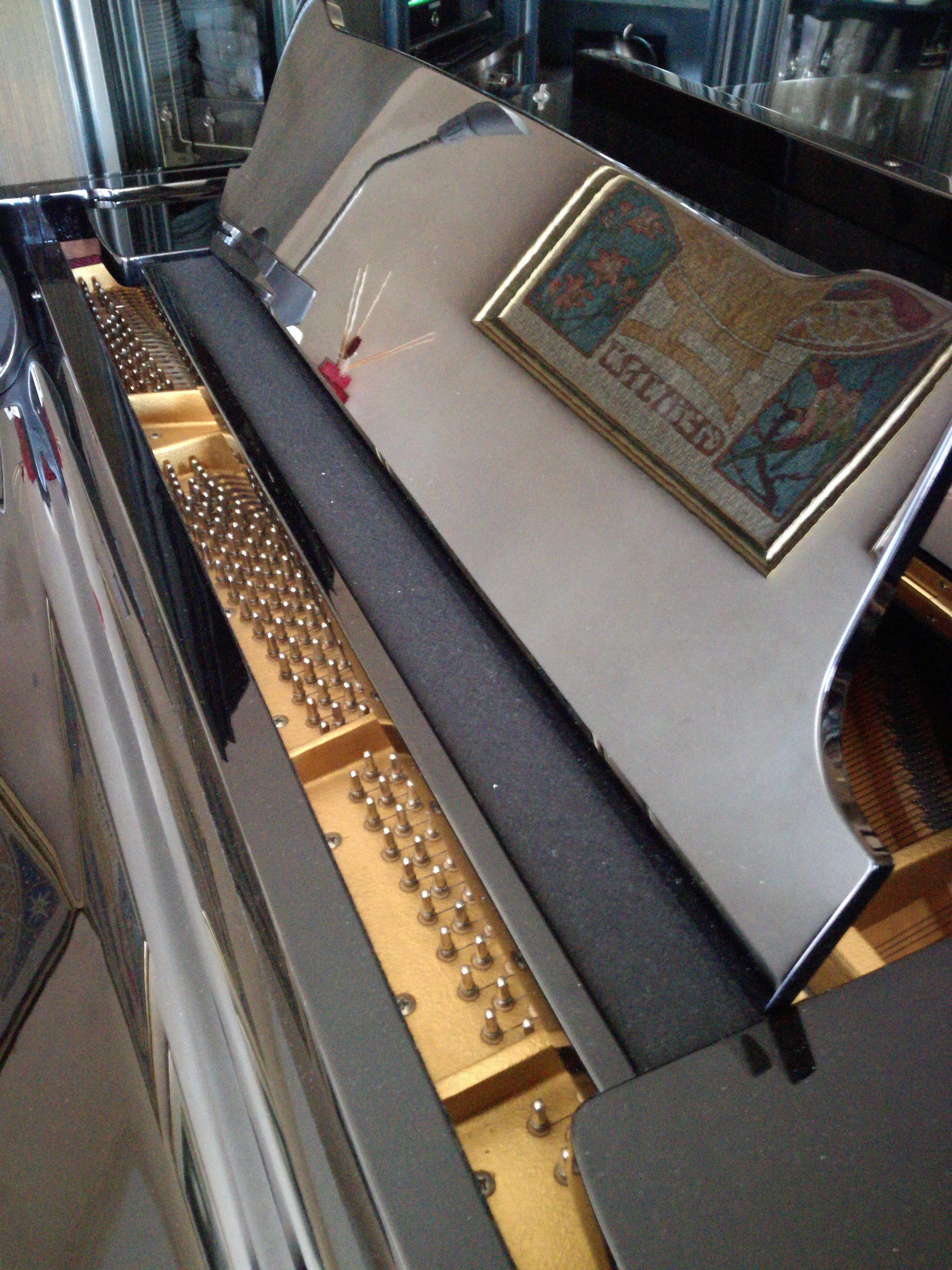
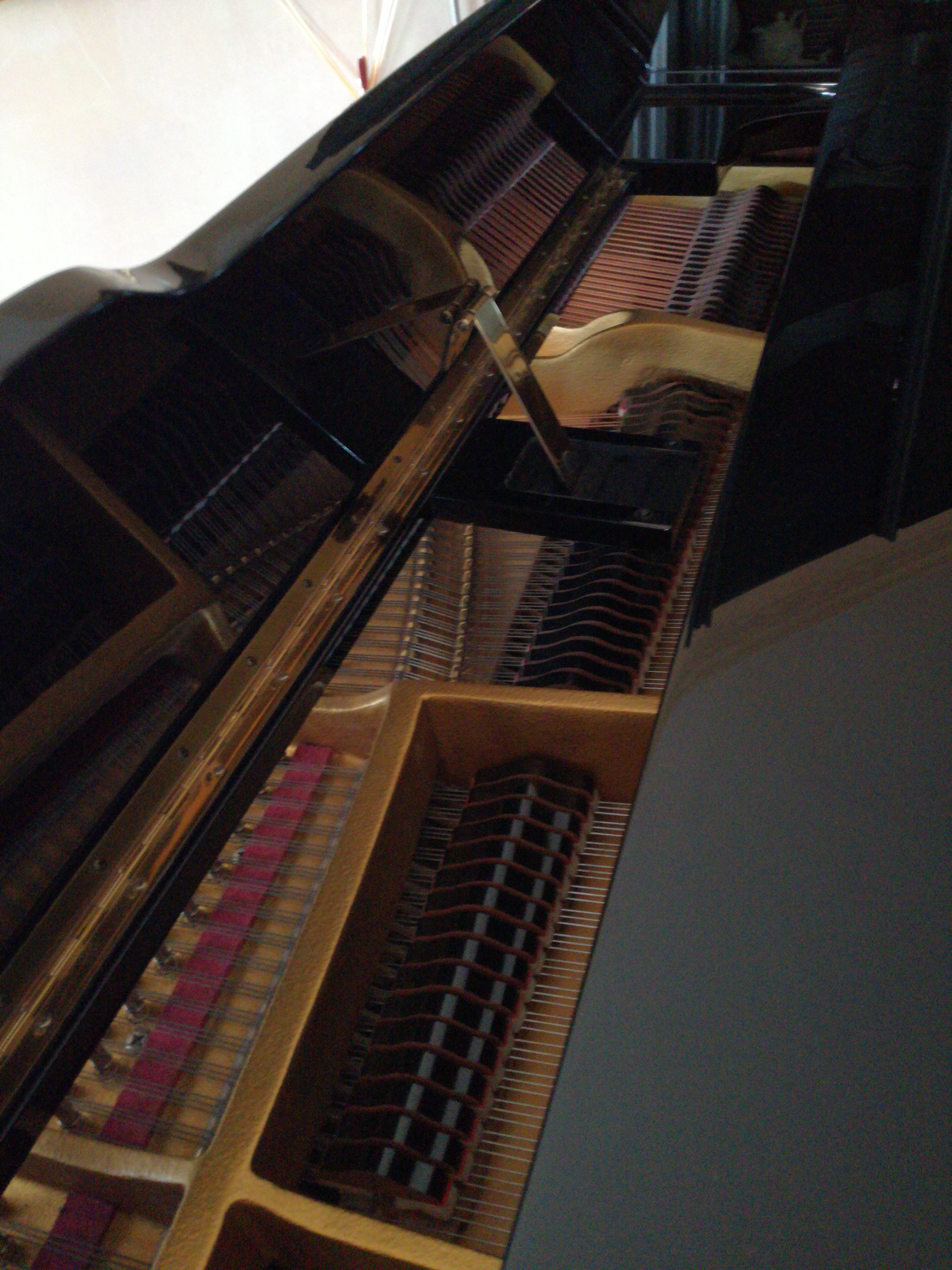
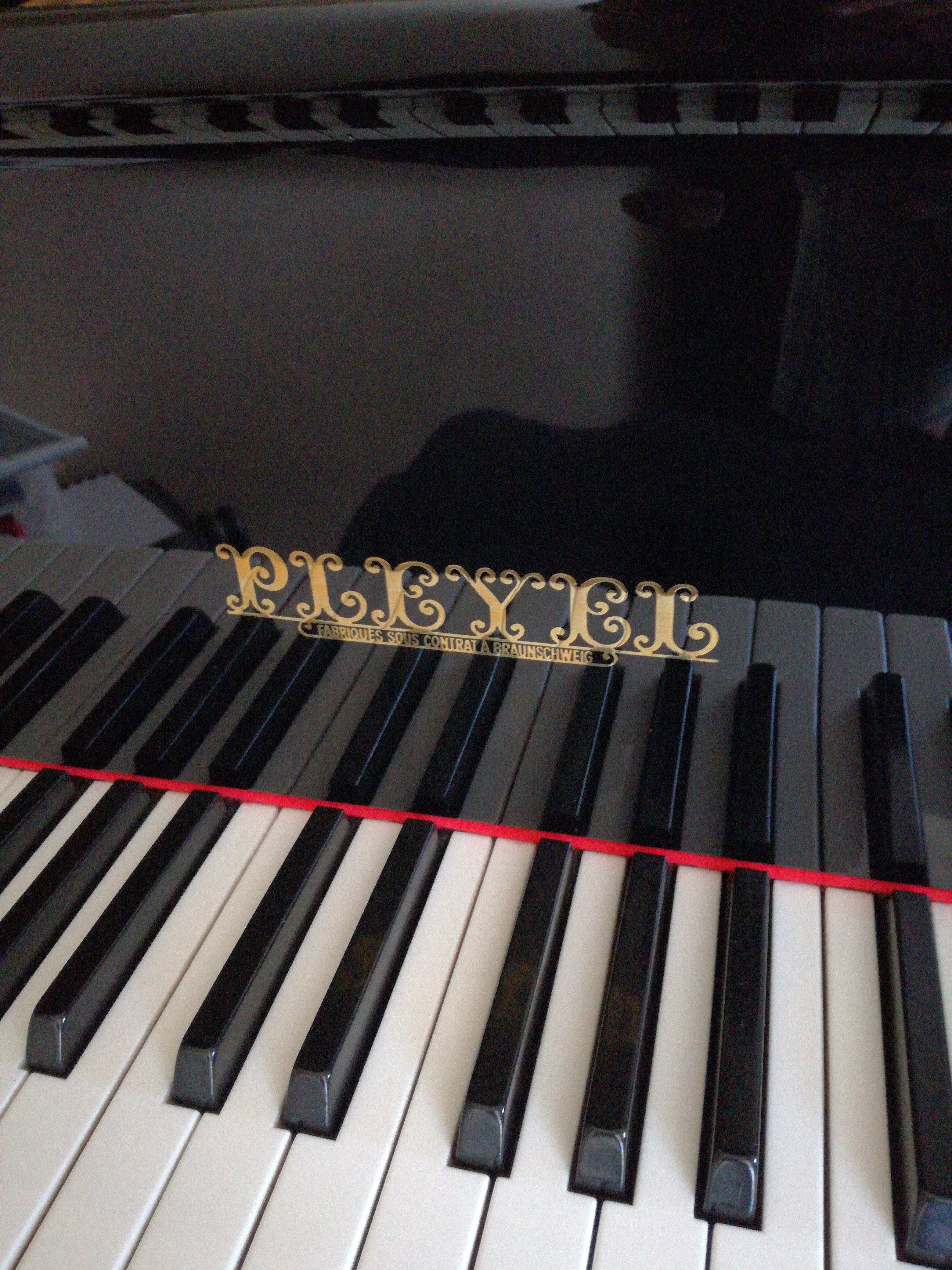
Good morning everyone. I have a "strange" question to ask you. On my piano, I feel much better playing with the music desk lowered (even more so if I remove it), whereas, by raising it, I don't fully feel the potential of the piano. The same thing used to happen to me with my old piano. I noticed a video of Horowitz in which he was performing a piano concerto with orchestra with the piano music desk removed, using an adjustable type of orchestral music desk. It suggested to me the idea of replacing only the part of the music desk that rises, but it seems that my piano has differences from the usual systems (I am sending you photos). Since it is a Pleyel, it would be wonderful to be able to mount a philological music desk in '1800s style (the ones with the Pleyel inscription are beautiful); the important thing is that it is "empty" enough so as not to reflect the sounds.
But you can still mount the 90 one by cutting 4 cm of hinge!!!! Then before painting, you can apply two small shaped "connectors" that cover the two 2 cm distances. You position the brass support by placing a small wooden plate in the center of the lyre (which won't hurt it....it actually strengthens it)
Thank you very much, Paolo. At this point I can take any size, which will be compensated with additions for the hinge. Could you advise me on the best music desk in terms of quality? And the carpenter would also like to know the suitable varnish (so which one from the ftp catalog). I was also thinking that the small block that will be joined for the rod, for aesthetic reasons, should not be painted in black polyester, but a color like golden yellow. He also ruled out perforating the one already mounted for reasons of the instrument's identity (so keep the original aside).
If you go to a trusted body shop, with the black sample—that is, by showing them the old music stand—they will do the nitro painting using an oven and it will be perfect! Naturally, you will first have to apply the two side joints. Have a carpenter shape them for you or try to find them on the internet under "ornamental wood parts" or on some DIY wood websites. I think the one recommended by Gia is beautiful and also suitable for mounting the rear support (by creating a specific bracket). Good luck with your work
Certainly... but watch out for the lacquering! It is not a "do it yourself" thing. A coat of filling primer must be applied, perfect sanding, then the first layer of lacquer, then defect correction... then two more coats. In the factory, they apply a thick layer and then polish it... a very difficult process. The oven helps achieve perfection in the lacquering and immediately makes the piece "dust-free"
The carpenter will do it. In any case... The original won't be touched. So, in the worst-case scenario, we won't ruin anything of the original piano and music desk!!! But is it just my sensitivity regarding the music desk? I feel a radical change in the sound. When I can, I take it off entirely! It is so beautiful to see the hammers moving. For example, I am able to observe the emphasized notes being stopped by the hammer rail and, all the others, falling onto the felt; the same thing happens with a chord: usually, if it's not too loud, the lowest and highest notes are stopped and the intermediate ones are left suspended. I have feedback that is not only auditory, but also visual. Besides, I love my piano, I don't want barriers between me and it!!! Ok, have I gone crazy?