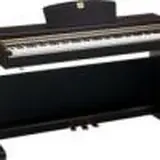
Not to start being a nuisance, but we are all here to exchange opinions on our progress. Therefore, I wanted to submit to you the first Chopin I have ever played since I started taking lessons.
Bravo !! One thing, if I may: we are in 3/4, it is not a waltz, it is a prelude, but let us always remember the accents within the 3/4 measure. The first strong beat and the other two weak. This does not mean that one must exaggerate the accentuation of the note falling on the first beat and play the others pianissimo; rather, it means there should be no notes more accented than the first unless expressly indicated. I often seem to hear you accenting the second beat to fall from the third and end in pianissimo on the first. For example, in bar 4 of the second line where we find this crescendo, in this case Chopin indicates that the notes in the three beats should no longer follow the rhythmic accentuation but the dynamics of the fork closing with maximum volume on the first beat of the fifth bar of the second line. An analogous process but in reverse at the end with a diminuendo and rallentando, where here, this time, it actually closes in pianissimo on the first beat.
Very good !! Only one thing if I may: we are in 3/4, it is not a waltz, it is a prelude, but let's always remember the accents within the 3/4 measure. The first strong beat and the other two weak. This does not mean that you must exaggerate the accentuation of the note falling on the first beat and play the others pianissimo; rather, it means there should be no notes more accented than the first unless expressly indicated. I often seem to hear you accenting the second beat to drop from the third and end in pianissimo on the first. For example, in bar 4 of the second line where we find this crescendo, in this case Chopin indicates that the notes in the three beats should no longer follow the rhythmic accentuation but the dynamics of the fork closing with maximum volume on the first beat of the fifth bar of the second line. An analogous process but in reverse in the finale with a diminuendo and rallentando, where here, this time, it actually closes in pianissimo on the first beat.
Anyway, small things... Compliments!
Don't mention it, I am very happy with your explanation and, if I am here, it is to learn, not to show off (I can't even afford to 😛 ).
You can only console me by confirming that even when it is technically quite simple, a piece by Chopin is almost always difficult to interpret because of everything it hides and wants to convey. Grandiose Chopin. Bye.
well done, aside from the reported hiccups!! I like the recording too, can I ask you how you made it??
Thank you so much. Simple: headphone output of my piano into the Line In of the notebook and Audacity software to record, then I export the recording as mp3. If there is also a video part (when my camera isn't acting up), I put them together with Nero Vision and produce the final video.
Hi. See you soon.
G
giovannip
Member
Reply 6 by giovannip
Posts
553
Great! I would say you are on the right track. 🙂
Thanks also to Simone for clarifying the inaccuracies in the performance.
The reading seems good and what Simone says is absolutely right. If I can give you two tips on my way of understanding this piece, I will gladly do so. For example, the phrases are all made up of small episodes, but they must be thought of as linked to one another like question and answer... and I mean mentally, since they all seem a bit detached and the fluidity of the cantabile does not merge. And then two little things for the do re si si of the tenth bar: I would sing it better by distributing the hand weights on the higher voices....... furthermore, as for the final chord of bar 13, I would mark it more by flowing in a more fluid and faster way in bars 14 and 15 towards the chord without forgetting to mark—I don't remember if with the thumb—the si and sol of bar 17 (perhaps with the 2nd finger and thumb) which is very important. In my opinion, the singing must be intimate, hollowed out, and agile. See if you like it better this way and let me know, okay? Bye
I really appreciate the advice I am receiving and thank you all very much. My problem is that perhaps I am not yet able to grasp all these subtleties; I am still "little". However, I think it is truly important for me that you point them out to me, so please do not stop, and I will try first to interpret and then to apply your annotations.
Thank you again and have a good evening to all of you.
Those who listen to advice go a long way, and I tell you this as someone who has built something based on advice, whereas when I entrenched myself in my presumption of knowing how to do it, I never achieved anything good. I also recommend following Paolo's lessons on gestures and piano technique, as they are a true goldmine. Very well done! To name one thing... and they are extremely useful. Bye and see you soon.
@ as soon as I get the digital piano I will try to post some performances, and focusing on a piece it would be nice to bring it to its maximum level always with the help of Paolo and Simone.