He was a great composer, it's a pity that from this and very few of his other experiences he did not realize the irreplaceable value of melody in the concept of "music". He would have had the strength and ability to revolutionize the avant-garde, but, perhaps, he did not have the courage. Oh well. In any case, paradoxically, this is "his" most performed composition; the others, alas, are disappearing from the repertoire.
To me, your post seems very personal. Or do you have some, let's say, more concrete topic? I don't know, are you basing it on recordings, on performances, and have you found that there is a prevalence of pieces containing "melody," any surveys regarding this? I don't want to sound argumentative, eh, I'm curious to know what your point of view is based on!
Ciao
C
cromatismo
Member
Reply 3 by cromatismo
Posts
79
Well,,, if a musician doesn't know what a melody is, they are truly in bad shape. People may come and ask for it, but the substance doesn't change. We aren't talking about connotation here; to me, a melody can even be microtonal...
... up to this point there is very little to interpret.
To me, an eventual reference to statistics seems more interesting (forgive me, but the poll smells like "opinionism" to me). In fact, I haven't based myself on collective statistics, but personally speaking, I am increasingly running into concert programs or lineups where Berio's works are not proposed. The piece I proposed, on the other hand, often happens to be a staple in the repertoire of various performers and, if desired, can be heard live and not just through the usual YouTube clips.
For me, the strength (in this piece and a few others) also lies in not having given up on melody... which, to be blunt (I can already hear the little voices passing judgment), doesn't just mean tonality! Ok!?
More than anything else, you MicaMahler, in the last year how many concerts with pieces by Berio have you listened to?
G
Gerardo
Member
Reply 4 by Gerardo
Posts
277
In fact, I know many of Maderna's pieces, but I don't actually have a musical memory of them... that is to say, I remember the titles and the various analyses, but the music? Thanks Cromatismo for this point of reflection.
Z
Zazza
Member
Reply 5 by Zazza
Posts
250
I feel like quite a worm, I've become almost a YouTube mouse... so I won't make a fuss. I mean, if I've heard 2 concerts in the last year, that's a lot....
N
Natan
Member
Reply 6 by Natan
Posts
239
cromatismo wrote:
He was a truly great composer, it's a pity that from this and very few of his other experiences he did not realize the irreplaceable value of melody in the concept of "music". He would have had the strength and ability to revolutionize the avant-garde, but, perhaps, he did not have the courage. Oh well. In any case, paradoxically, this is "his" most performed composition; the others, alas, are disappearing from the repertoire.
But also someone who dominated the music world in Italy by imposing careers and performances and placing his works everywhere. We cannot forget him. The power that certain people had was never possessed by Bach, Mozart, or Beethoven.
X
Xenakis
Member
Reply 7 by Xenakis
Posts
287
However, it is also true that if there hadn't been a powerful marketing operation (perhaps the first in a modern sense) with large investments of money, the presence of anchor-men etc., today perhaps no one would play Bach. Therefore, Bach's music has also benefited from vile money and the power of magnates. Furthermore, if thanks to this undertaking of the emerging music industry the public's attention had not been turned toward the past (which is absolutely abnormal from a cultural point of view), today we wouldn't even hear the music of Mozart and Beethoven. Therefore, one must realize that the history of musical fortune still passes through those who move the money. Then, it is obvious that money is not enough...
N
Natan
Member
Reply 8 by Natan
Posts
239
Well, the idea that no one would play Bach, Mozart, and Beethoven today seems like science fiction to me. Bach died poor and his wife lived in hardship after his death. Berio died a billionaire. A fitting comparison would be with some rich and famous composers in history who were later considered minor ones, see Salieri.
X
Xenakis
Member
Reply 9 by Xenakis
Posts
287
I can only repeat what was said above. Among other things, regarding the documents on the subject (I am referring to the fact that until 1830, music from 25 years prior was considered "ancient" and therefore not interesting or suitable for concerts), I recommend the illuminating book "The Great Transformation of Musical Taste, Concert Programming from Haydn to Brahms" by William Weber.
Look, if I may say so, I have heard some sequences live in these last few years: Sinfonia, Ein drucke, Requies. Sinfonia, if I am not mistaken, I heard twice, while the folk songs I heard only once! At this point, I am also entering the statistics (which I called a survey, but that was the meaning). This year (2014) I honestly don't remember, but for sure not the Folk songs!
For the rest, they continue to seem like personal considerations to me, legitimate but personal
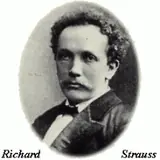
Let's listen to the beginning of the 2nd movement of Mozart's Piano Concerto No. 21 K 462: fa-do-la-fa-do-sib-la-sol-fa-re#-mi ... more or less everyone would recognize it ... like the beginning of Beethoven's 5th or the very famous do-sol-do-mi-mib by R. Strauss in Also Sprach Zarathustra ...
Of course, if Berio's compositions had achieved this notoriety, we would probably have remembered his melodies as much as these three.
Rather than melody, I would speak of the recognizability of a musical theme.
To stay within the '1900s' era, I remember some piano pieces by Ildebrando Pizzetti analyzed in an interpretation masterclass ... the teacher said that even though it was stuffed with 100 other things, the melody was there ... not as immediate as Mozart, but it was there ... you just had to find it!
The melody is irreplaceable, obviously ... but the mountains are also irreplaceable ... however, I have learned to live in the city, even if the mountains remain irreplaceable - even if only as a memory.
Berio ... in my opinion, the most extraordinary and epoch-making piece is Laborintus II ... there is even a bit of melody, every now and then! And obviously Sinfonia, and Coro: here too there is melody, and there is harmony, and there is counterpoint, and much more ...
Now Thallo is arriving who, as often happens to him in recent months, is DISHEARTENED by the turn of some discussions...
For me, they are all variations on the theme of the usual crusade against "contemporary" music, which isn't even contemporary anymore.
These days I am writing a series of things about John Dowland.
I won't tell you who he is, so I will force those who don't know him to search "at least" on Wikipedia.
Now, tell me why this type of discussion isn't held about Dowland? Why don't you open a nice thread saying "Dowland's use of harmony is so banal that, by now, nobody plays it anymore"??
Along the same lines: how many of you have listened to a Palestrina mass ... in a church? How often are Carissimi's oratorios played and sung? And why, despite Alessandro Scarlatti's cantatas being impossible to find around, does no one rise up as supreme judge questioning the composer's foresight??
It makes me laugh a little because then, specifically, Berio is one of the most performed and studied composers in the world. Someone who always had the value of melody clearly in his head... how can one write "if a musician doesn't know what a melody is, they are truly in bad shape" referring to one of the most learned composers of the last century?!?!
This isn't taste, it is IGNORANCE cloaked in PRESUMPTION
C
cromatismo
Member
Reply 16 by cromatismo
Posts
79
NO THALLO!
You didn't understand much of my thread... you read too quickly.
"if a musician doesn't know what a melody is, they are truly in bad shape" was the obvious response to the kid MicaMahler
... I am speaking exactly the opposite. But it's known by now, people on average only manage to read the first few words of a text... let alone a dozen substantial posts.
What crusade?! Here, the importance of the melody parameter is emphasized in all its forms and facets... luckily I also clearly expressed that it was not intended to be a "neo-romantic" post ... but please. Reread please.
the importance of the melody parameter in all its forms and facets?!
The reality is that MicaMahler's question WAS LEGITIMATE; they asked you what you mean by melody and you didn't say. You vaguely alluded to the possibility that it could also be microtonal, which applied to Berio's work...
What you perhaps want to talk about, and don't because the posts in this thread are anything but "substantial," is what RStrauss alluded to: THEMATISM.
MELODY can be "postulated" in opposition to HARMONY, but speaking so generically about melody in a situation of avant-garde music means speaking about nothing. It is thematism that should be discussed, and thematism is a "hot" issue in the poetics of almost all 20th-century composers.
How to put it, Micamahler, the "youngster," and Berio know that the issue is complex. Writing a convoluted title like "the failure to intuit the irreplaceable value of melody in the concept of music" means, from my point of view, only wanting to impress others. You haven't explained what you mean by melody, you haven't explained what you mean by irreplaceable value, you haven't explained what the concept of music is (and I challenge anyone, people kill themselves trying to explain the concept of music).
F a d o f a d o- Bb a g f f# g and it is k 467! Well, so much for reminding us of Mozart :D
I was going by memory, anyway we understood each other.
C
cromatismo
Member
Reply 19 by cromatismo
Posts
79
thallo wrote:
the importance of the melody parameter in all its forms and facets?!
The reality is that MicaMahler's question WAS LEGITIMATE; they asked you what you mean by melody and you didn't say. You vaguely alluded to the possibility that it could also be microtonal, which applied to Berio's work...
What you perhaps want to talk about, and don't because the posts in this thread are anything but "substantial", is what RStrauss alluded to: THEMATICISM.
MELODY can be "postulated" in opposition to HARMONY, but speaking so generically about melody in a situation of avant-garde music means speaking about nothing. It is thematicism that should be discussed, and thematicism is a "hot" issue in the poetics of almost all 20th-century composers.
How to put it, Micamahler, the "youngster", and Berio know that the issue is complex. Writing a convoluted title like "the failure to intuit the irreplaceable value of melody in the concept of music" means, from my point of view, only wanting to impress others. You haven't explained what you mean by melody, you haven't explained what you mean by irreplaceable value, you haven't explained what the concept of music is (and I challenge anyone, people kill themselves trying to explain the concept of music)
...I didn't say anything but you managed to understand it was a crusade.... a bit contradictory.
no?
Anyway, I am referring to the perceptive aspect, how much of the melody parameter reaches the listener. It can exist at the level of basic constructs, but if it happens that it gets pulverized or eclipsed to the point that the listener no longer perceives it... that is when the parameter decays and, in my opinion, we are at the threshold where an alarm bell should ring for us. As I already noted, Berio is one of the richest from this point of view (in reference to his contemporaries)... I was wondering why some of his works entered the repertoire more quickly than others. For me, a response always remains the most "perceptible presence of melody"... which obviously is not enough, but there it seems to be the only difference between the more widespread compositions and the less widespread ones by this same composer.
...I didn't say anything but you managed to understand that it was a crusade....a bit contradictory.
no?
Anyway, I am referring to the perceptive aspect, how much of the melody parameter reaches the listener. It can exist at the level of basic constructs, but if it happens that it is pulverized or eclipsed to the point that the listener no longer perceives it... that is when the parameter decays and, in my opinion, we are at the threshold where an alarm bell should ring for us.
And what if it were an issue of execution/interpretation?
do you remember what Lualdi said in the book "L'Arte di dirigere l'orchestra" specifically regarding the recognizability of a melody?
If you don't remember or have never known, read this book.