What a show! Great! You could do it as a second job
Member
Reply 21 by zenigata
- Posts
- 70

Started by
Member
Member
What a show! Great! You could do it as a second job
Member
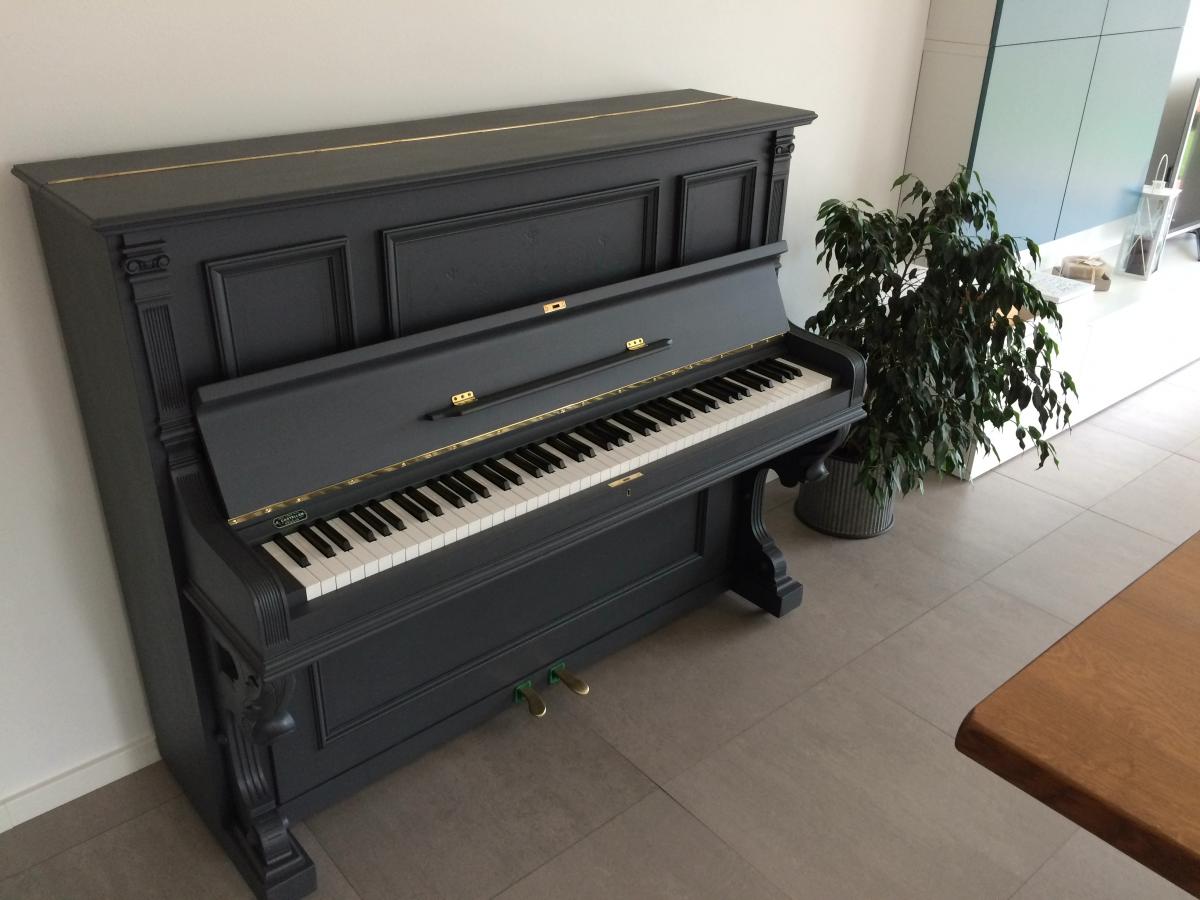
Actually, the color was a deliberate choice and I like it very much... because black seemed too classic to me, and in a modernly furnished living room, it seems to make it a bit more unique (given the style of the piano anyway)...
trailingly, can any of you estimate the period of this piano?
bye!
Member
Without the brand, it is difficult to date; it could be from the early 900s, although certain manufacturers continued using bayonet mechanics until the '40s.
It is the type of frame that makes me think of an early 900s setup.
I would have restored it, transforming the bayonet mechanics into open mechanics. It would have been a more interesting pastime given your good manual skills, what a shame.
Member
On the harp it says HB, nothing else anywhere... I also found a couple of cracks in the soundboard, it must have absorbed a lot of humidity; many parts of the furniture veneer were peeling off, plus it needed to be re-strung, it would have cost me more than buying a new piano... furthermore, while I can manage electronics and woodworking, as a piano restorer I believe it takes good experience to achieve a proper result...
So all in all, the digital conversion allows me to have an acoustic piano in the living room and be able to play it at a cost of 399 for the P45 plus about a hundred euros for varnish, putty, screws, and felts...
Besides, I haven't found any precedents online for this type of work (only someone who placed a keyboard inside it...)
As soon as I finish with the amplification, I will update you...

Administrator
Thanks for the updates, I always enjoy reading about these home projects.
Member
pasqua80 wrote:On the harp it says HB, nothing else anywhere... I also found a couple of cracks in the soundboard, it must have absorbed a lot of humidity; many parts of the furniture veneer were peeling off, plus it needed to be re-strung, it would have cost me more than buying a new piano... furthermore, even if I am good with electronics and woodworking, as a piano restorer I believe it takes good experience to achieve a proper result...
So all in all, the digital conversion allows me to have an acoustic piano in my living room and be able to play it at a cost of 399 for the P45 plus about a hundred euros between varnish, putty, screws, and felts...
Besides, I haven't found any precedents online for this type of work (only someone who put a keyboard inside...)
As soon as I finish with the amplification, I will update you...
Well, I am doing one from 1921, 1.40 meters high, where I also had to glue the strings at the back, close to the cracks, colorless lifted veneer, re-veneering certain parts, with exposed mahogany furniture to be polished with a pad, remaking the bass bridge, threading the soundboard Etc Etc....these are normal jobs in restoration; sometimes you have to remake the action, sometimes you have to completely dismantle them and start from scratch. If you had done it yourself, the cost would have been limited anyway. When they have absorbed moisture, they need to be dried slowly, perhaps using a small heater for a few days....the more things crack, the sooner they are repaired and the fewer defects will pop up later; in any case, I believe that before spraying the furniture, you must have had to resolve the problem of the lifted veneer anyway, right?
Member
giovannig wrote:Ah well, I am making one from 1921, 1.40 meters high, where I also had to glue the strings at the back, close to the cracks, colorless lifted veneer, re-veneering certain parts, with exposed mahogany furniture to be polished with a pad, remaking the bass bridge, threading the soundboard Etc Etc.... these are normal jobs in restoration; sometimes it happens that you have to remake the ribs, sometimes you have to completely dismantle them and start from scratch. If you had done it yourself, the cost would have been limited anyway. When they have absorbed moisture, they must be dried, perhaps by using a small heater for a few days....the more things crack, the sooner they are repaired and the fewer defects appear later; in any case, I believe that before spraying the furniture, you must have had to resolve the problem of the lifted veneer anyway, right?
Of course, I re-veneered and then filled...
It would have been a job beyond my capabilities regardless...
Member
Don't throw away the key coverings which are ivory, as I think I saw in the photo. They have value, especially for piano restorers.
Member
HansElzinga wrote:Don't throw away the key covers that are made of ivory, as I think I saw in the photo. They have value, especially for piano restorers.
in fact I am trying to place it... Today I took the action to the collection center, a bucket of scrap metal between screws, pins and strings and the harp! I won't even tell you about loading it onto the roof rack!!!!
Member
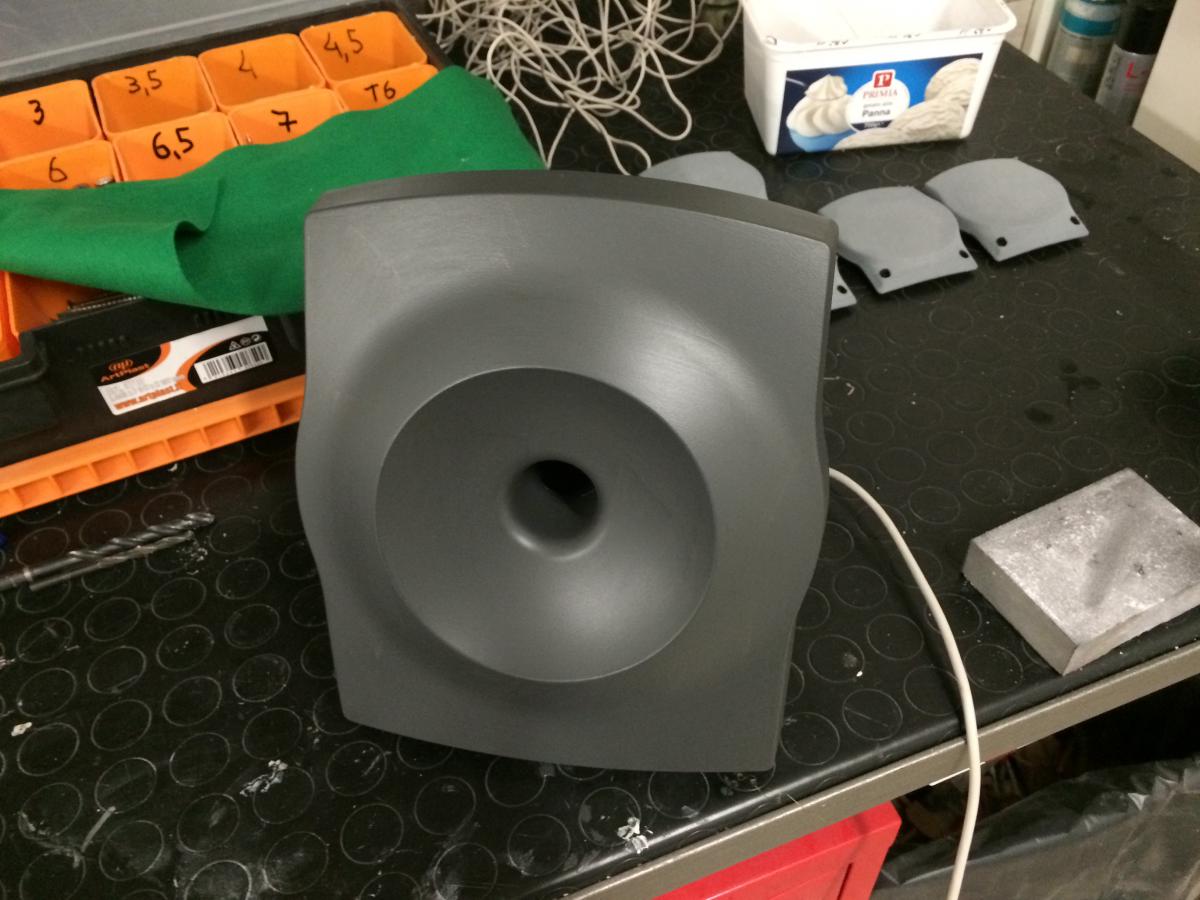
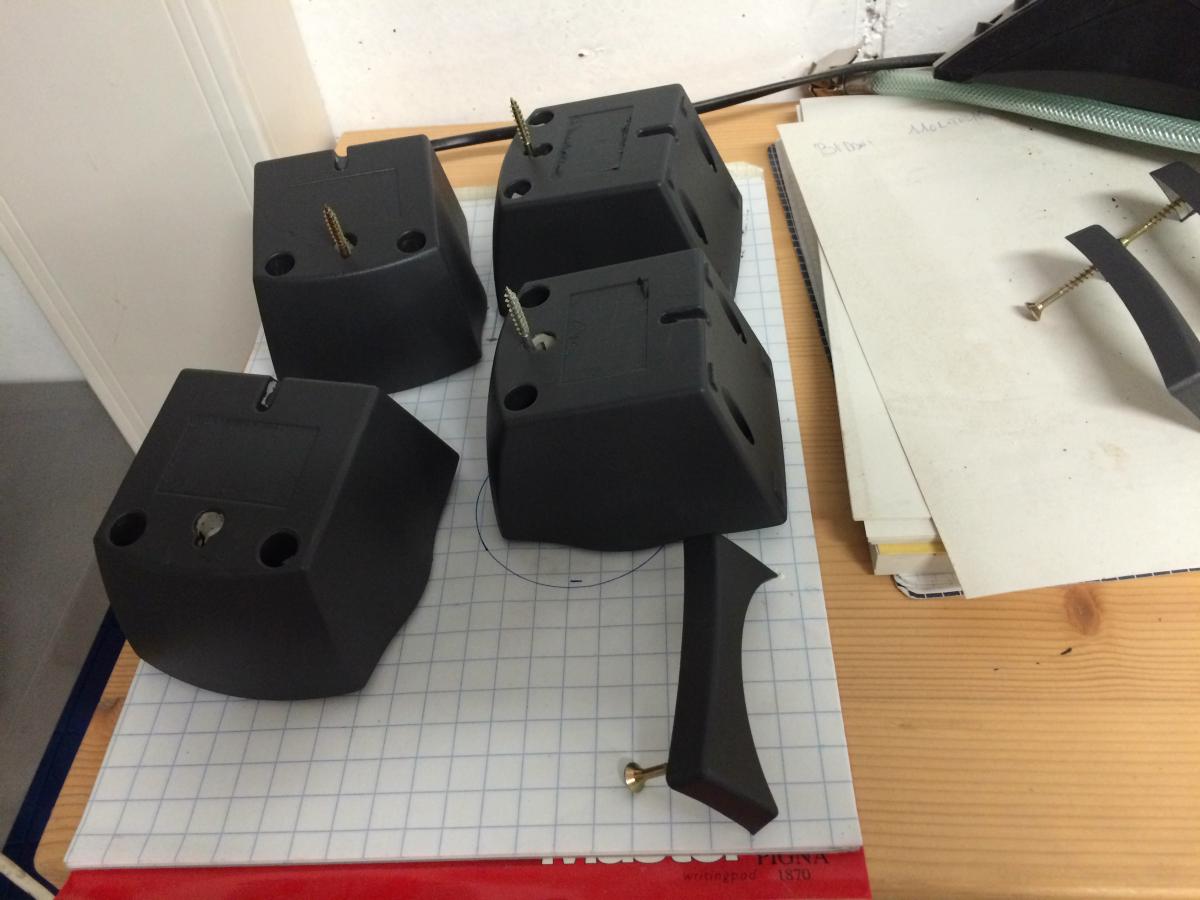
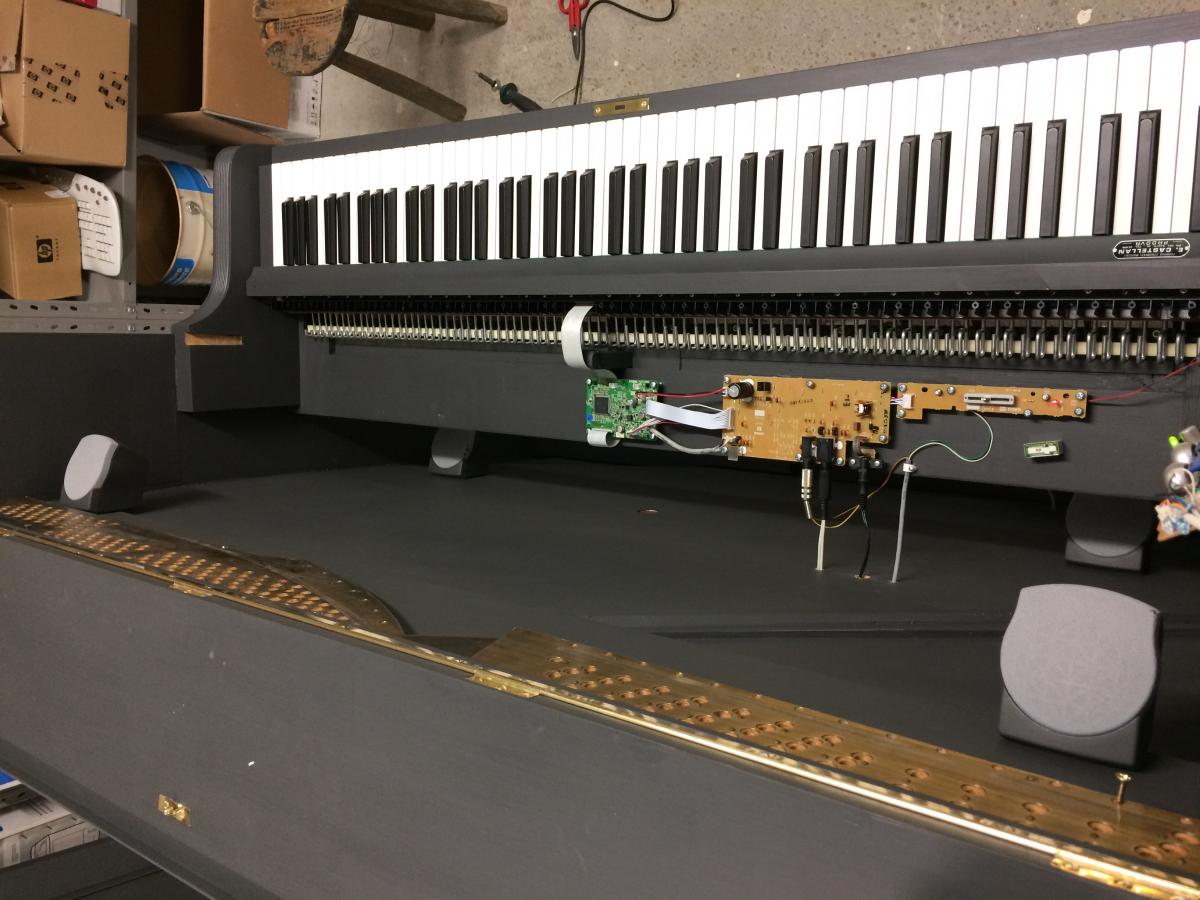
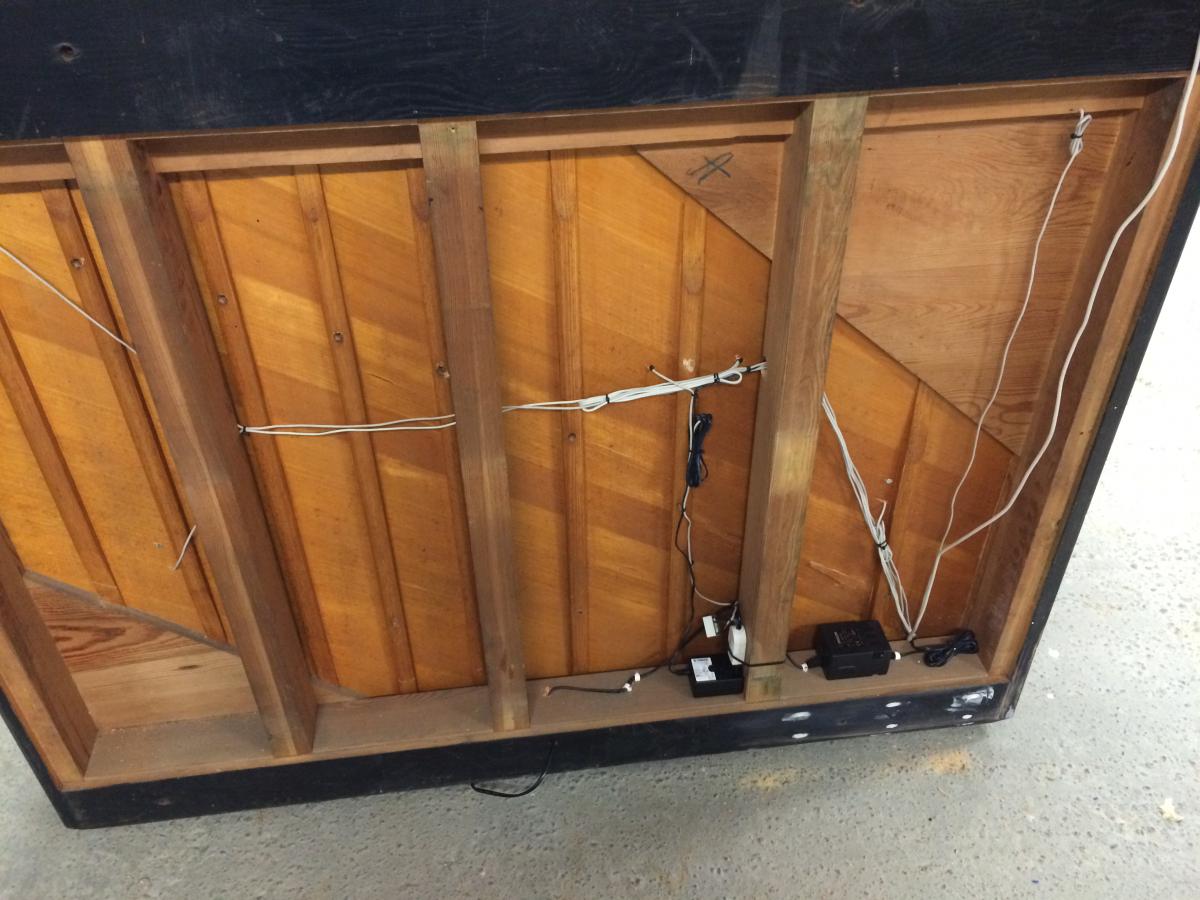
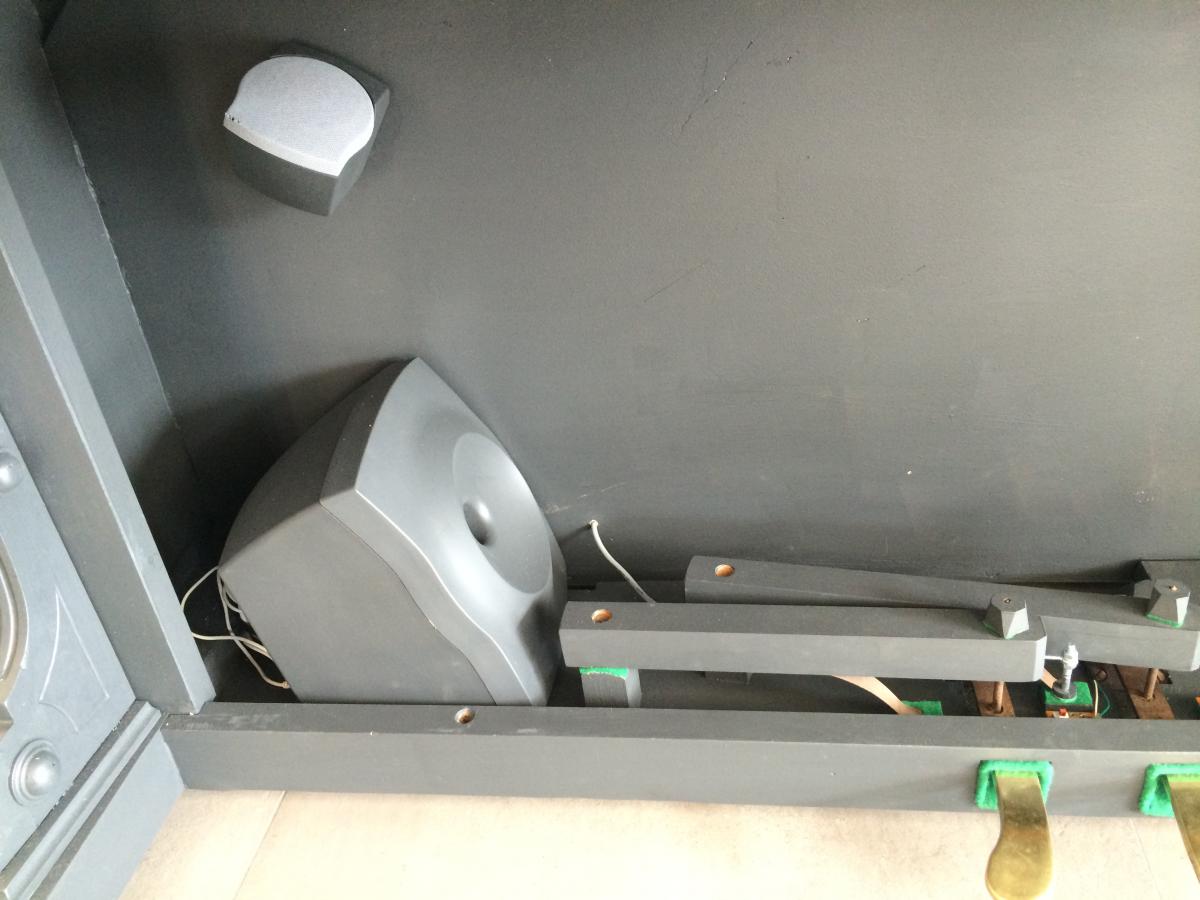
Piano almost completed. I installed an old set of Philips PC speakers with 4 satellites and the sub (repainted because they were white). I still need to mount the power button and the volume knob.
Through a relay, turning on the keyboard part also turns on the speakers.
I would say I am very satisfied with the sound. Nice deep bass and good body across all frequencies.
The best acoustics are achieved with the lid semi-raised, as closing it partially cuts off the higher frequencies. I inserted a small rod on the right to keep the lid slightly raised while playing.
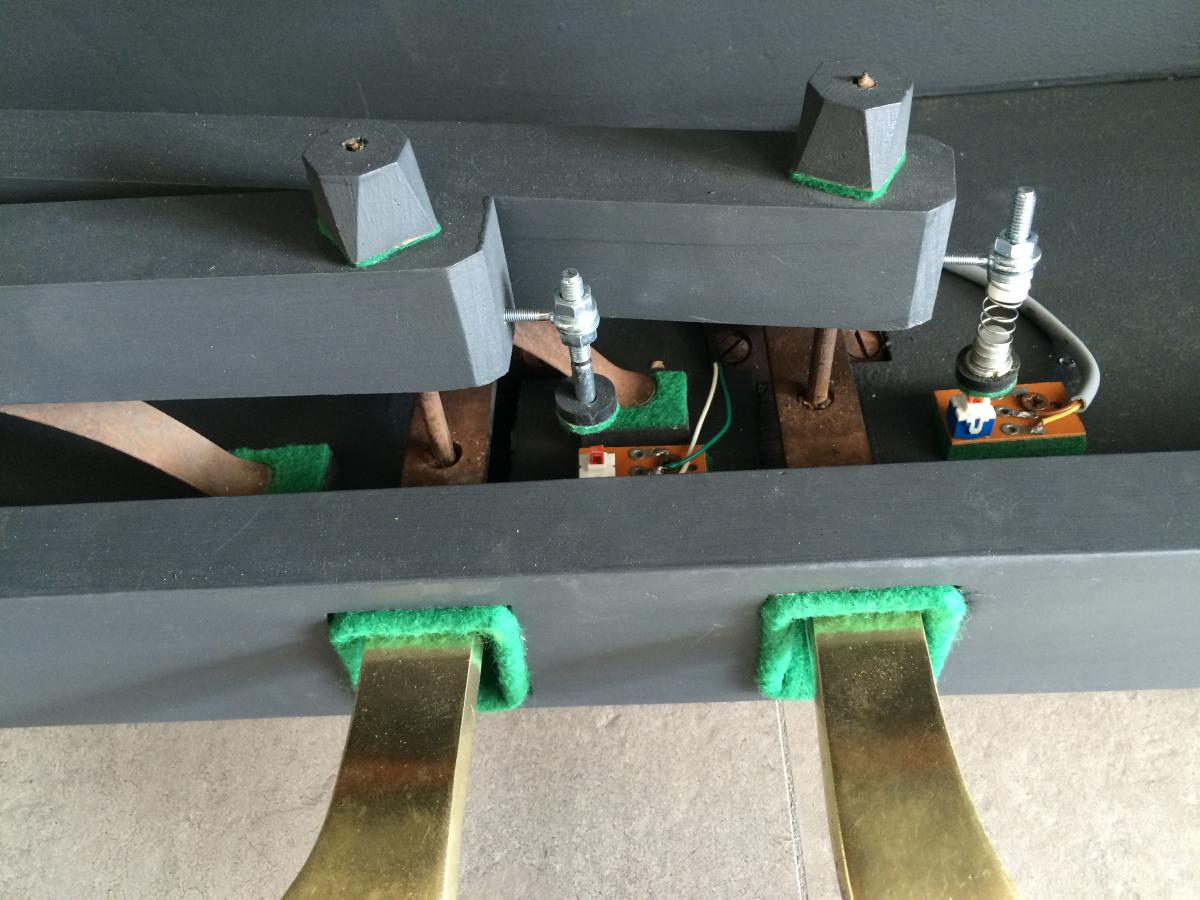
For the pedalboard, I installed the buttons from two plastic keyboard pedals; initially, I had used limit switch type buttons, but they were noisy and you could hear the click-click. For the sustain, I had to insert a spring into the actuation "piston," otherwise the pedal worked entirely at the end of its stroke. I used the left pedal for various keyboard functions (sound changes, demo, octave transposition, pitch, reverb) which are selected by holding down the function key (now the left pedal) and the keyboard keys.
I uploaded a video to show you the result (the audio is not excellent because it was recorded with a phone). It plays a demo of the Yamaha P45.
https://youtu.be/5AYCNr15c7g