Tuning

opinion on used pleyel

8 replies 3,106 views

Started by

Luke

Member

Member

Opening post by Luke

Posts
3
City
Vicenza

Hello everyone,

I recently discovered this forum, it is really interesting and I thought I would sign up immediately!

i wanted to present my recent purchase to get your opinion:

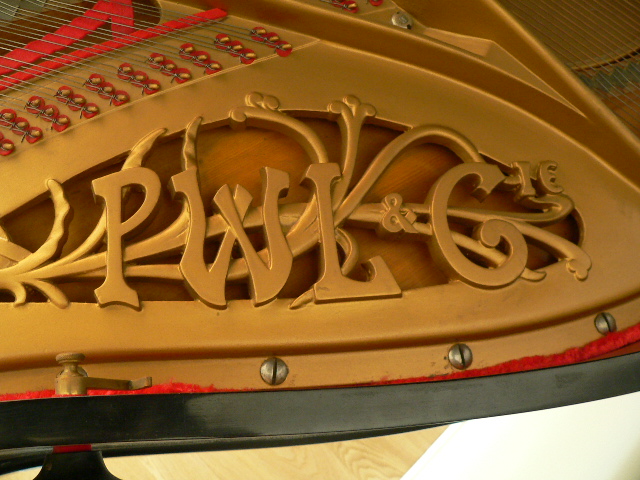
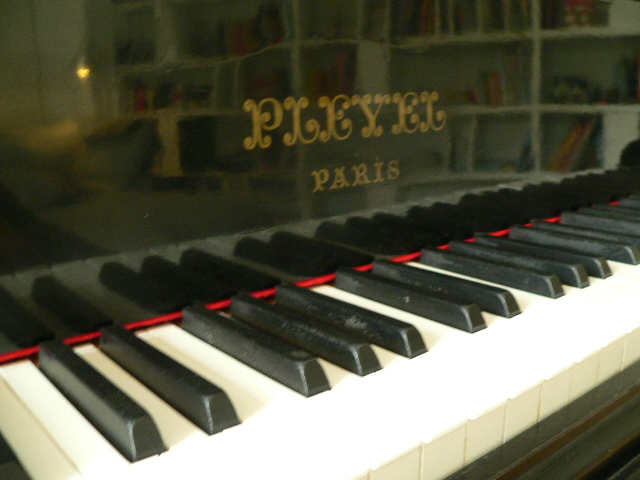
i bought a Pleyel grand piano mod. 14F100; based on the serial number, it should be from 1901. I am attaching some photos of its condition to hear what you think.

i need to have it repaired by a technician but I have some doubts about how to proceed, so I am asking you for advice which will also help me better understand the situation.

These are the problems I have encountered and the doubts I have:

1- change of environment:

the piano was in an apartment, in a countryside area 20 km from the sea, which I believe is quite humid. Now it is in a hilly area, with a decidedly better climate.

How long should I wait for it to acclimate before having someone work on it? 1 week, 1 month, or no time at all?

2- tuning:

the piano is out of tune by about a semitone. In how many steps should it be retuned? Can it handle a semitone variation all at once? Or is it better to do 3/4 quick rough tunings with gradual increments before the final one?

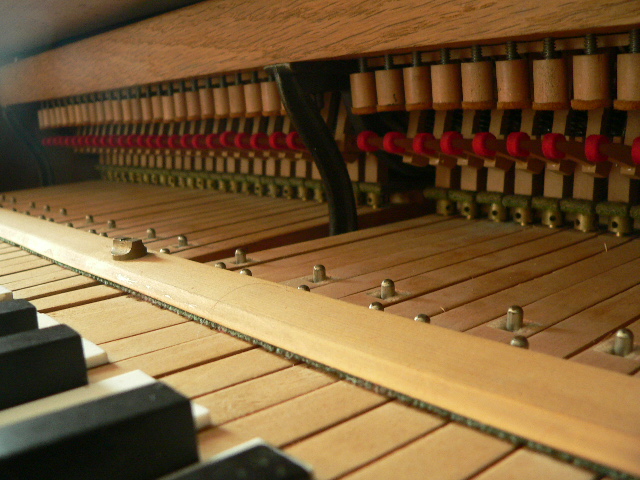
3- some keys (the 3 lowest ones) have a dull sound when playing "piano". In practice, the hammer strikes but remains pressed against the string and dampens it. With normal/strong pressure, however, it works regularly.

4- generally it is a bit "lazy" in the "pianissimo", even though there are some keys (2-3) where the effect is more marked. I mean that by pressing the key slowly or with little force, it doesn't sound (the hammer stops before the string)

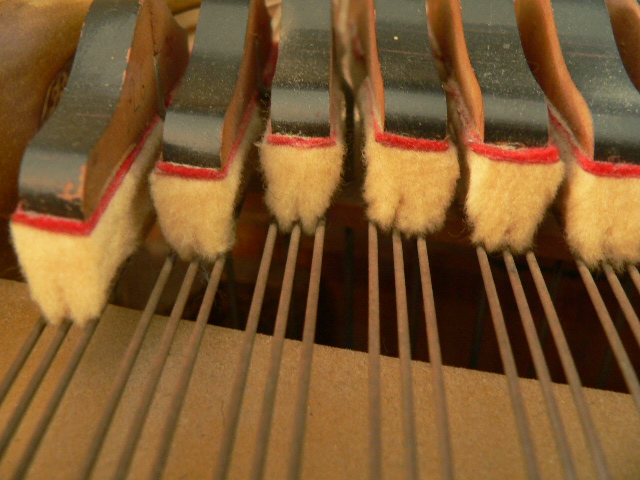
5- some keys (2-3) still resonate even after the staccato, but it seems to me that the damper felts are not resting properly on the string.

What do you say about these defects? Do they require an expensive intervention?

Thank you!

Luke
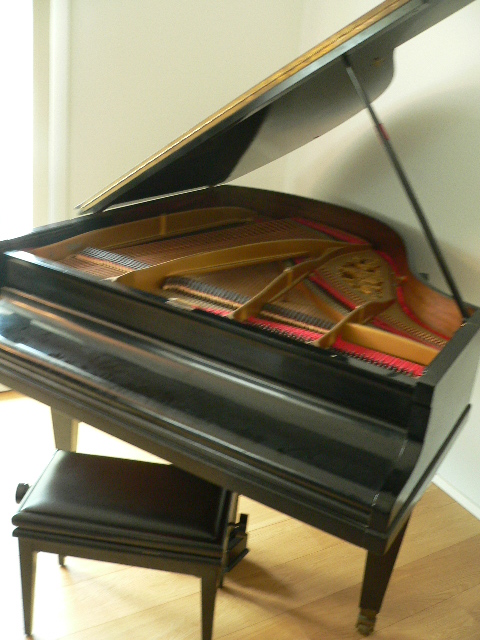
AttachmentAttachmentAttachmentAttachmentAttachmentAttachmentAttachmentAttachment

Reply 2 by Historical author

Hi Luke

I am responding to the questions in order.

1) if by "getting hands on it" you mean a mechanical intervention, you can call the technician immediately.

If instead we are talking about tuning, wait 2/3 weeks. (Tuning requires that the mechanics function correctly)

2) a semitone detuning is a lot if the standard is A 440.

First, the tuning standard for that pf must be understood

3) if some hammers remain on the strings, it depends on poor regulation of the mechanism.

4) if it is difficult to achieve pp, it depends on the regulation of the escapement.

It is necessary to bring the escapement point closer.

5) if some strings sound after releasing the key, it depends on the poor functioning of the dampers.

The image showing the pedals gives the impression that there is rust on them.

Did I see correctly?

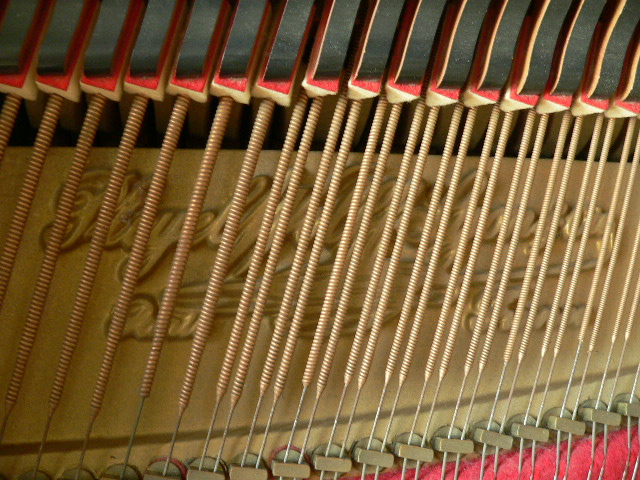
The image of the 5 dampers highlights rust on the strings and damper felts that need to be replaced.

Tuner in Tuscany

www.pianoaccordatore.it

Member

Reply 3 by Luke

Posts
3
City
Vicenza

Thank you James for your response.

I wanted to ask you: how can I find out the frequency for which the piano was designed? That is, if I bring it to 440, could I risk damaging it? Actually, it seems strange to me that everything is consistently out of tune by a semitone...

In reality, since I don't have great ambitions as a pianist, I would limit myself to tuning it and resolving, if possible, those most obvious defects (e.g., felts). Does the rust on the strings compromise the sound?

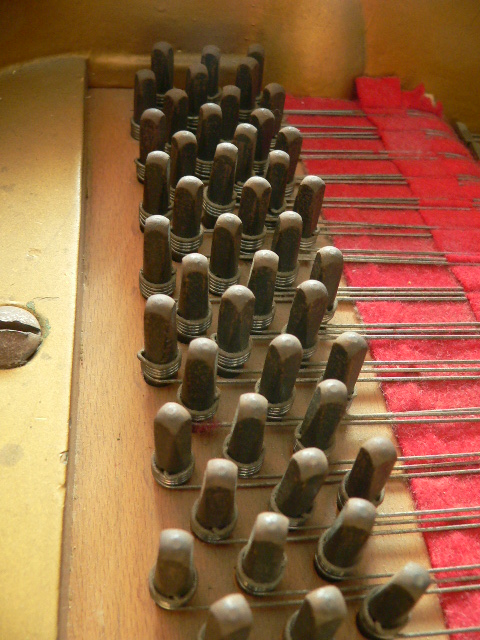
The pins shouldn't be rusted.

The escapement adjustments you are talking about, are they expensive from an economic point of view?

Thank you for your precious indications.

Luke

Reply 4 by Historical author

Most pianos manufactured between the late 1800s and 1920 were designed to be tuned to the old pitch standard of A=435 Hz

Rust on the strings compromises the sound and can cause "false beats," which is a beat within a single string that cannot be eliminated through tuning.

In a video, Pianoexpert recommends changing the entire plate every 10/15 years.

We are also awaiting the opinion of Pianoexpert . . .

Administrator

Reply 5 by Thesimon

Posts
4,504
City
Ariccia, RM

If you are sure it is tuned a semitone flat, then you are well below even the 435 reference. Compared to the 440 Hz reference, one semitone below results in a pitch of 415 Hz in terms of frequency. I remind you, in fact, that a 435 Hz reference compared to 440 Hz involves a difference of about 19 cents (100 cents is equivalent to a semitone).

Moderator

Reply 6 by pianoexpert

Posts
3,876
City
rocca di papa

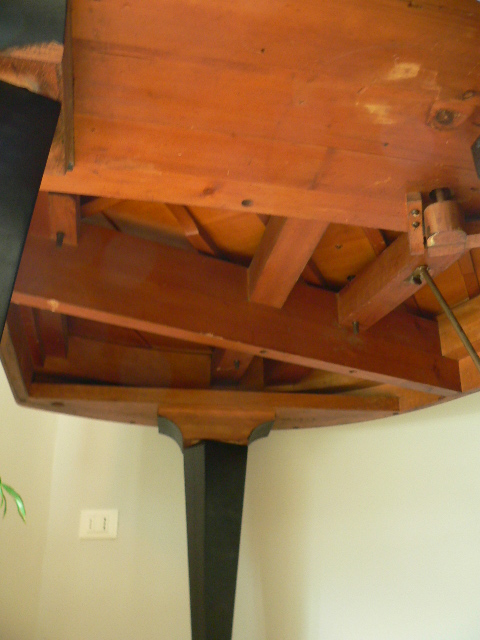
Sorry, I am replying to you privately because the post reply function isn't working for me. Tuning after one month. Point 3: it probably depends on the regulation of the escapement point. Point 4: Always regulation... but check the frictions. Point 5: dampers need to be changed. The piano needs the eye of a skilled technician. The action needs to be overhauled and the cost quantified. The white strings have a lot of rust. The hammers? How are they? If they are original, they must be replaced along with all the quills AND THE OLD ONES MUST BE RETURNED!!!!!! The soundboard seems to be in good condition to me. The intervention can be expensive if complete. Otherwise, one could consider doing the bare minimum... but in this case, too few results are achieved.

Regarding false beats, they can indeed occur with rusted strings, but they mainly originate from the bridge. When the bridge pins are not perfectly seated on the inclined "cut" of the bridge itself, it is as if two different lengths are vibrating: one from the nut to the bridge and another from the cut to the nut, naturally offset by a minimal difference in length.

Member

Reply 7 by Luke

Posts
3
City
Vicenza

Thank you all.

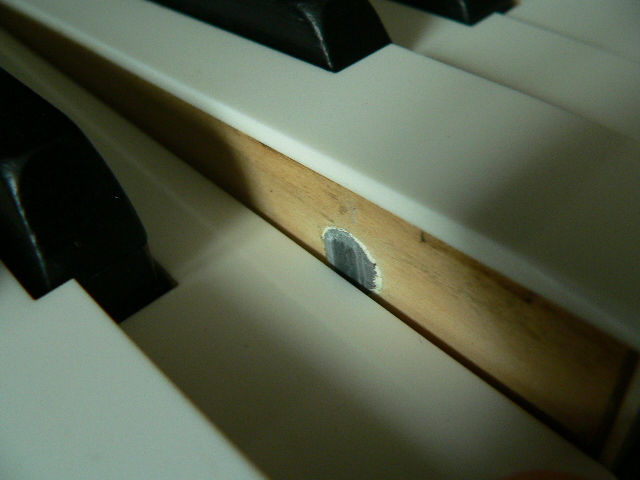
I wanted to ask you one more thing: I noticed that all the keys (the keyboard is not original) contain a small metallic disc/circle (?), photo attached. These components are adjacent to each other and sometimes create a bit of friction between the keys. Do you have any idea how they should be treated/cleaned?

Thank you.

Luke

Attachment

Reply 8 by Historical author

They are lead weights used for key weighting.

Usually, they are placed in that spot to counterbalance the replacement of the hammer rail.

If some are rubbing against each other, it must be understood whether they have loosened or if instead the position of the keys needs to be adjusted through the front pins.

Tuning in Tuscany

www.pianoaccordatore.it

Moderator

Reply 9 by pianoexpert

Posts
3,876
City
rocca di papa

Generally, friction does occur, yes, due to the loosening of the key bushings which causes them to wobble left and right with too much play... but after a long time, lead oxidation also plays a role, which swells and therefore causes the "round pins" to touch each other at the slightest movement. Either filing down or replacement is needed.

Log in to participate