Hello everyone, thanks to this forum, my pianos are finally playing again. I own a Kawai upright and a Pleyel baby grand (manufactured in 1981 by Schimmel). Dear Paolo, a wonderful person and a member of this forum, gave me his consultation. The upright was tuned and the Pleyel's mechanical part was restored. The chatter from merchants (even very well-known ones in Italy and abroad!!!) is absurd (from soundboard sand to cracked black keys passed off as a factory trick to prevent fingers from slipping). I can assure you that a piano that works has a double advantage: technical and artistic. From a technical point of view, we are not inclined to implement compensations that might work in concert, but daily hours of study only cause... imbalance!!!! Mine was a desperate search for technicians. Paolo was able to listen to me and the pianos, and now in my house, my pianos can finally be heard playing again. Guys, music is in our heads, not in strange techniques, absurd tricks, or forcings to improve technique; if the piano works, the music comes out on its own.
On the Pleyel, we installed an Abel natural felt [action]: it is wonderful!!! A dynamic, sonorous piano (it sounds like a grand, yet it is 174 cm). Then Paolo added the touch of class with his adjustments, challenging the limit of the short key lever and reaching 51/47 grams of descent against over 25 grams of descent with very little inertia. What can I say: he's a great one!!! I have tried many, and it was right there within reach! A beautiful experience shared together... And then I discovered a person very much like myself!!!
You are lucky to have the support of piano Expert, but I remember you had some problems with the piano so I am happy for you. It is not really easy to find someone who manages to go beyond the standard..
Have you also changed the hammer felt? What didn't you like about the old one and about the regulation in general..
It was heavy, in carpino, besides the fact that there were various friction problems. The new one is lighter and has a timbre more suitable for the instrument. Weight of 51/47 grams with over 25 of return and very little inertia. The Abel "natural felt" is extraordinary.
Klauss, just look at the ease with which I play, how quickly the key returns, the intensity of the bass. Well, it's a 174 cm grand piano with an extremely short key!!!
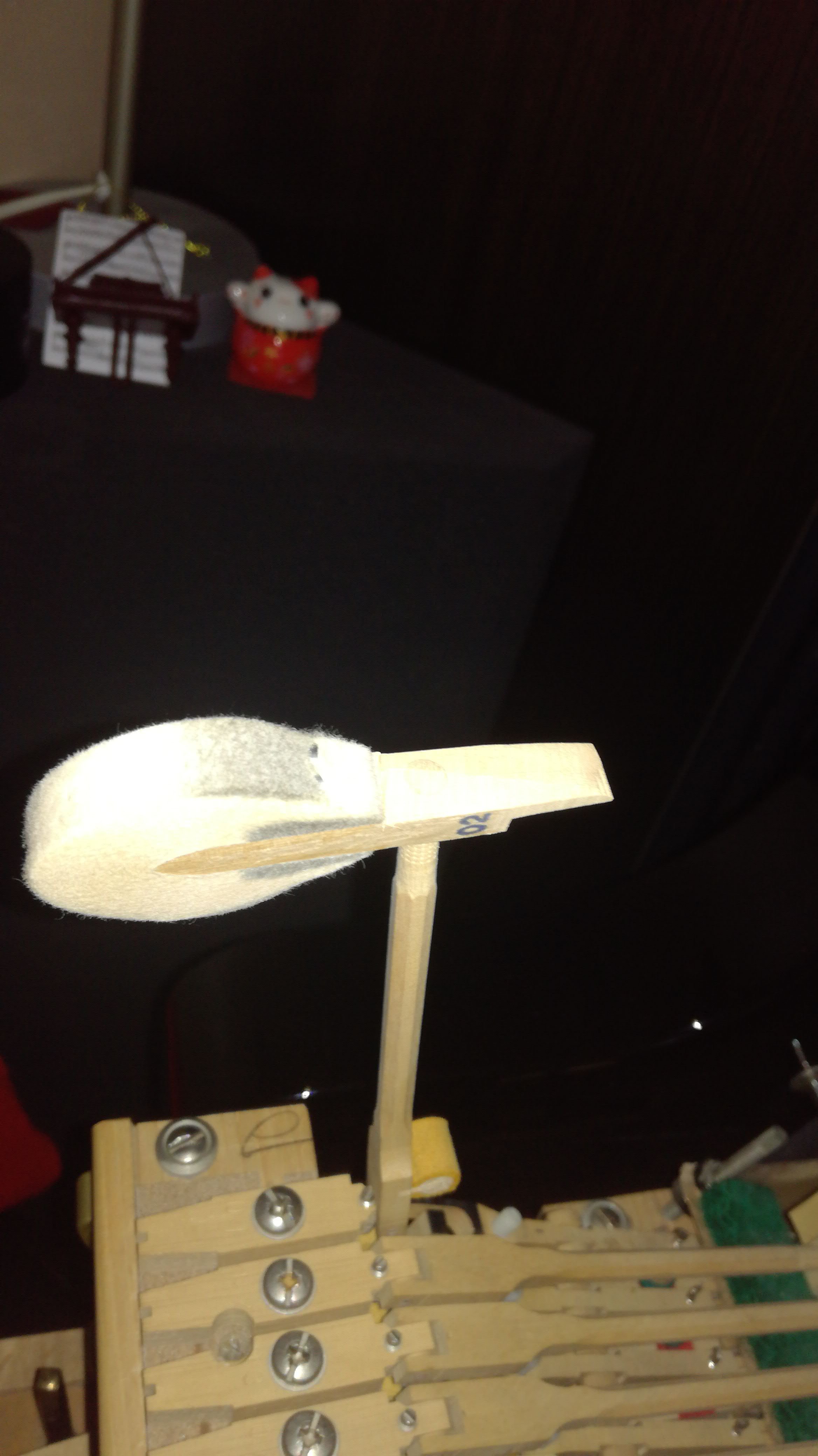
This is the old Renner hammer, working well and strictly returned with its felts. Why did I change it? Because it is heavy and with a timbre not suitable for the instrument, a bit too "driven." Hammers must be suitable for the instrument, particularly for the soundboard. The Pleyel, unlike Yamaha for example, has a lightly charged soundboard that favors a very rich timbre and an attack that is less brilliant, the latter being more suitable for concert grand pianos, audible in large halls. Mounting a very hard-felted hammer on a similar instrument would not allow the instrument to fully express its soul. Yamaha, on the contrary, wants a sound with a brilliant, hard attack, but less rich in sonority: here a very hard-felted hammer fits well; in fact, otherwise, you would have a piano—forgive the term—castrated!!!!
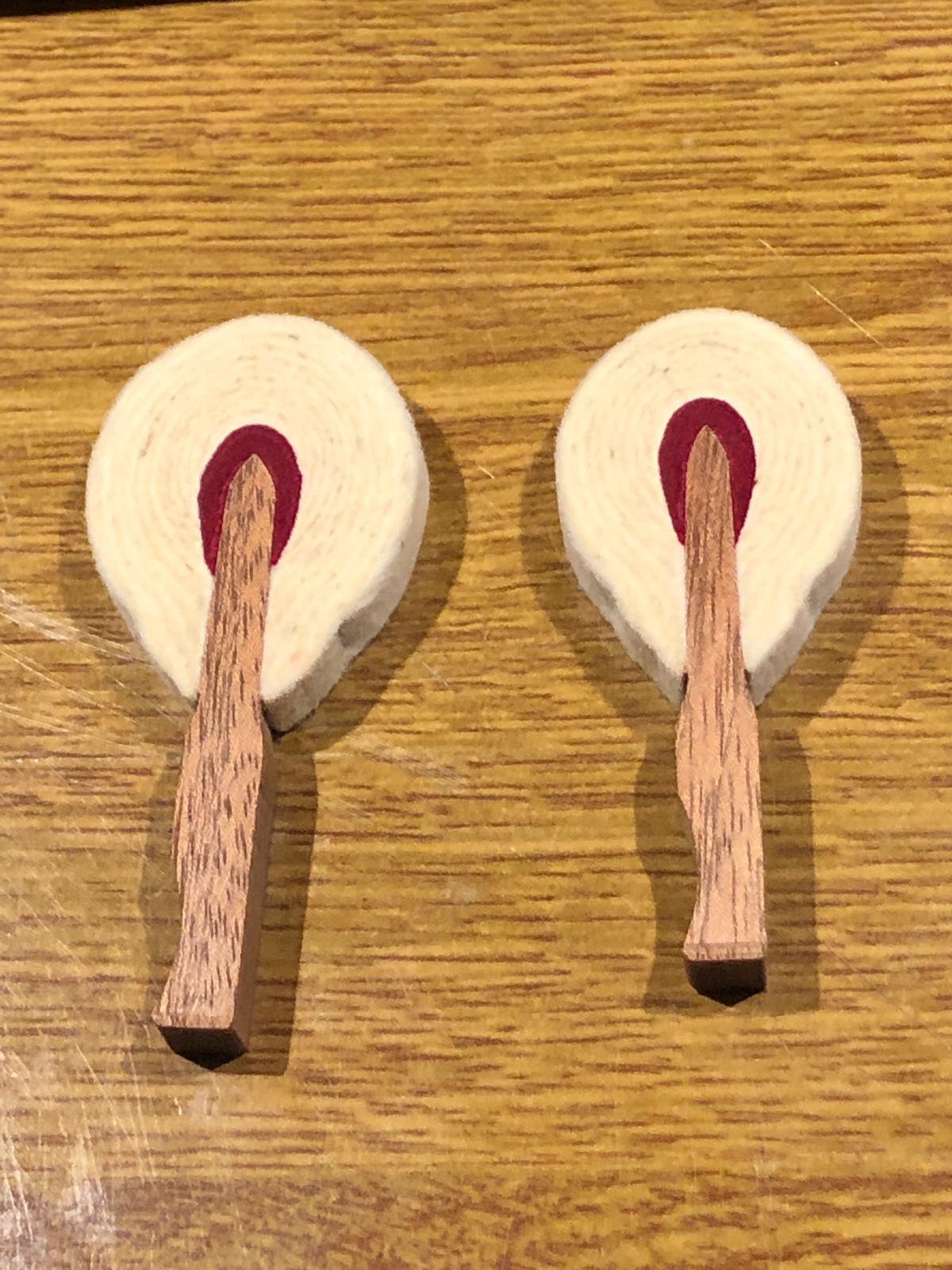
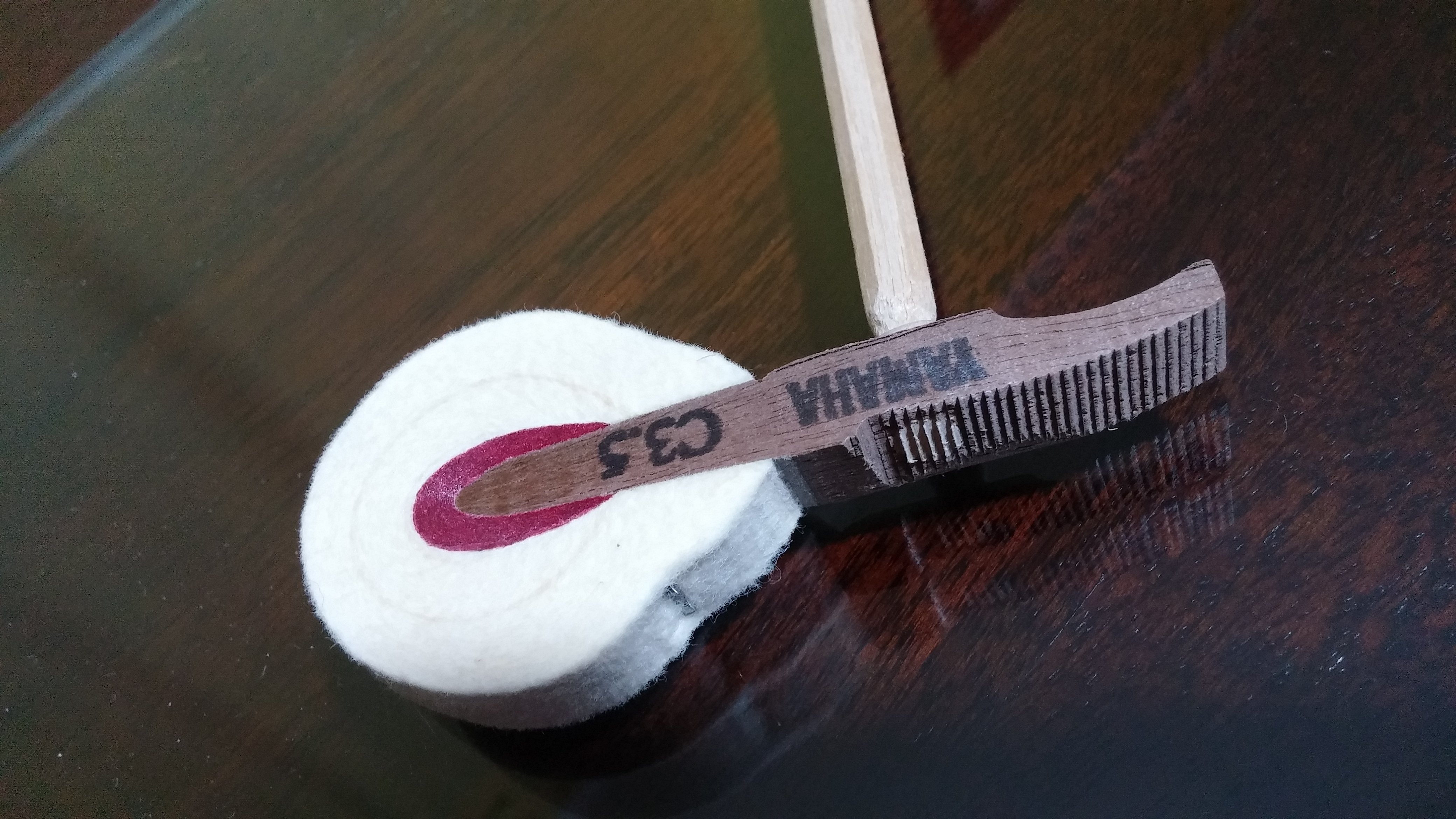
In reality they are very different. If you look closely, in mine the proportion between wood and felt changes. In the felt, impurities can be seen: it is the higher lanolin content! This contributes to the hammer's elasticity and makes it more progressive, not only in dynamics but also in timbre. If I were to use a hammer mill similar to yours (obviously more compressed), it would sound divine!
It is thought that those "roughnesses" can strike better on the hammer felt. But that is not always the case. Instead, it contributes to wearing down the leather of the hammer felts themselves very much. Furthermore, every piano has its own suitable hammer configuration. They cannot be compared with each other. One must first identify and understand what the Manufacturer wants to achieve regarding the sound. Undoubtedly, Western hammer configurations are of better quality and craftsmanship.