In my opinion, it is an excellent instrument. Of course, since the 2000s, one must certainly evaluate wear and tear and a possible "refresh" of the action. If you send us photos of the hammer rail, we are able (pianoexpert first and foremost) to evaluate whether, regarding the deafness of the low notes you mentioned, it is sufficient to voice and "revitalize" those duller hammers, or if replacement of the hammer rail is necessary. Identical to the original in terms of measurements (height, drilling, etc.), even if a different brand were chosen compared to what Petrof specifies (which should be Renner)—yes, lighter, but absolutely NOT heavier! As stated and taught by pianoexpert almost to the point of nausea, but necessary and always worth reiterating, one must always preserve the original hammer rail with its shanks. This is for two reasons: one of a technical nature (one can trace back to what was intended by the Manufacturer should doubts arise) and to preserve and testify to the historical identity of the instrument, even in case of resale. It is very common practice to replace only the heads mounted on old shanks. Believe me, besides the advantages I just mentioned, there is also an economic advantage: consider that, in the case of a worn hammer rail, one would certainly have to resort to replacing pins and bushings, a step avoidable with new shanks, aside from checking for any friction that may occur due to stasis caused by their storage (I tell you, this can even happen with the purchase of new instruments).
In my opinion, it is an excellent instrument. Of course, since the 2000s, wear and tear must certainly be evaluated, along with a possible "refresh" of the action. If you send us photos of the hammer rail, we are able (primarily pianoexpert) to evaluate whether, regarding the deafness of the low notes you mentioned, it is sufficient to regulate and "revitalize" those duller hammers, or if replacement of the hammer rail is necessary. Identical to the original in terms of measurements (height, drilling, etc.), even if a different brand were chosen compared to what Petrof specifies (which should be Renner)—yes, lighter, but absolutely NOT heavier! As stated and taught by pianoexpert almost to the point of nausea, but necessary and always worth reiterating, one must always preserve the original hammer rail with its shanks. This is for two reasons: one of a technical nature (one can trace back to what was intended by the Manufacturer should doubts arise) and both to preserve and testify to the historical identity of the instrument, even in case of resale. It is very common practice to replace only the heads mounted on old shanks. Believe me, besides the advantages I just mentioned, there is also an economic advantage: consider that, in the case of a worn hammer rail, one must certainly resort to replacing pins and bushings, a step avoidable with new shanks, aside from checking for any friction that may occur due to stasis caused by their storage (I tell you, this can even happen with the purchase of new instruments).
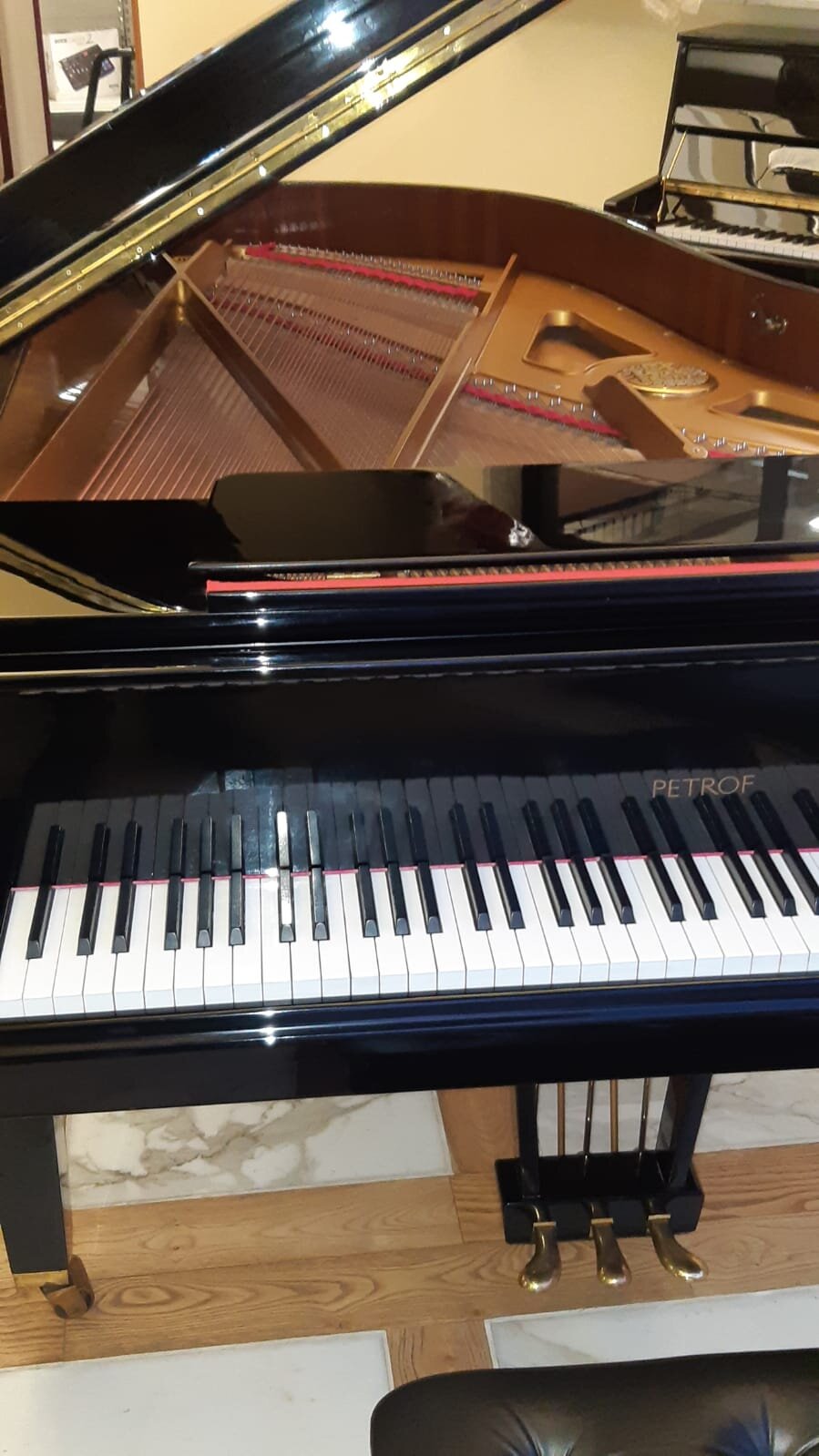
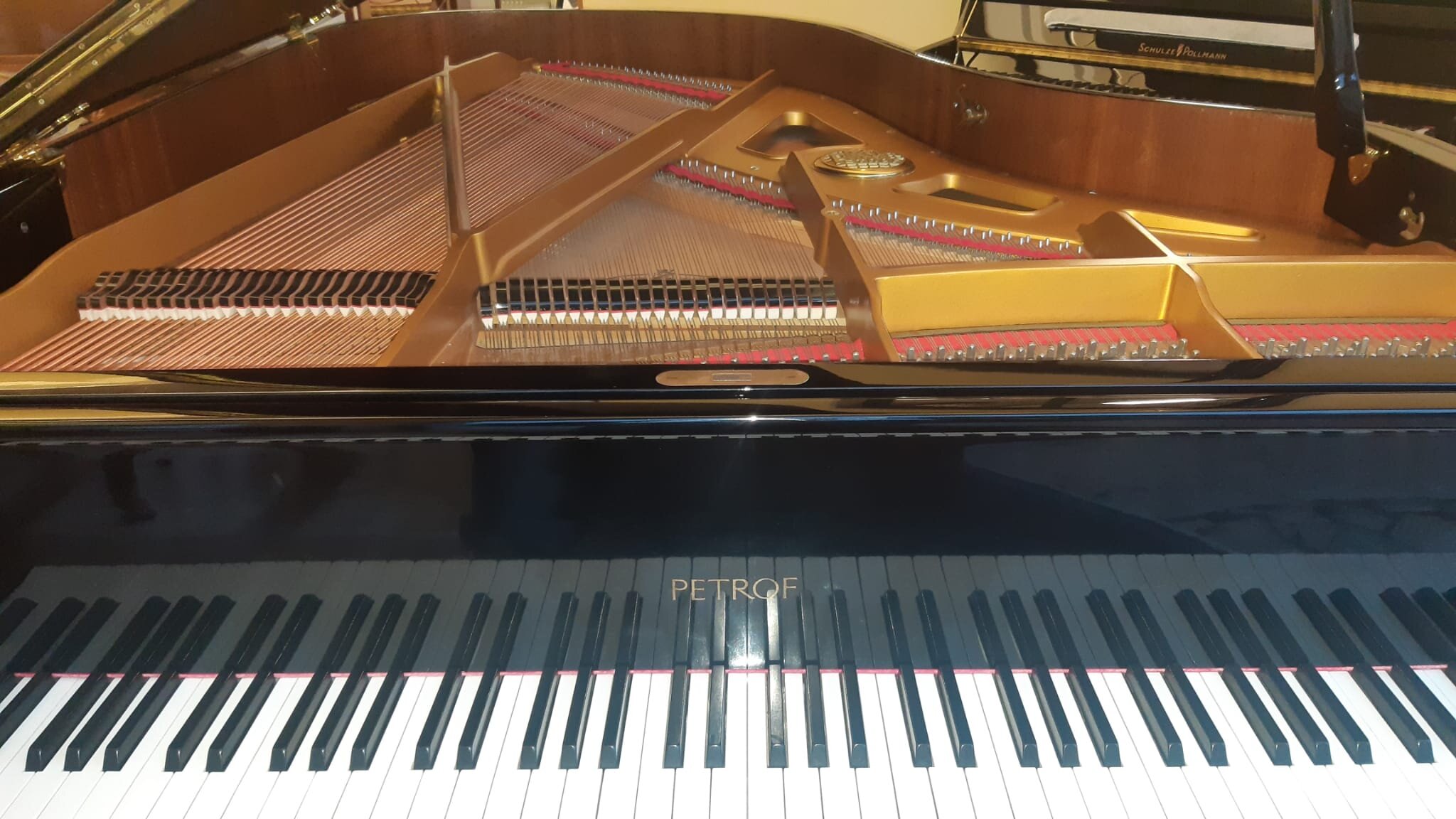
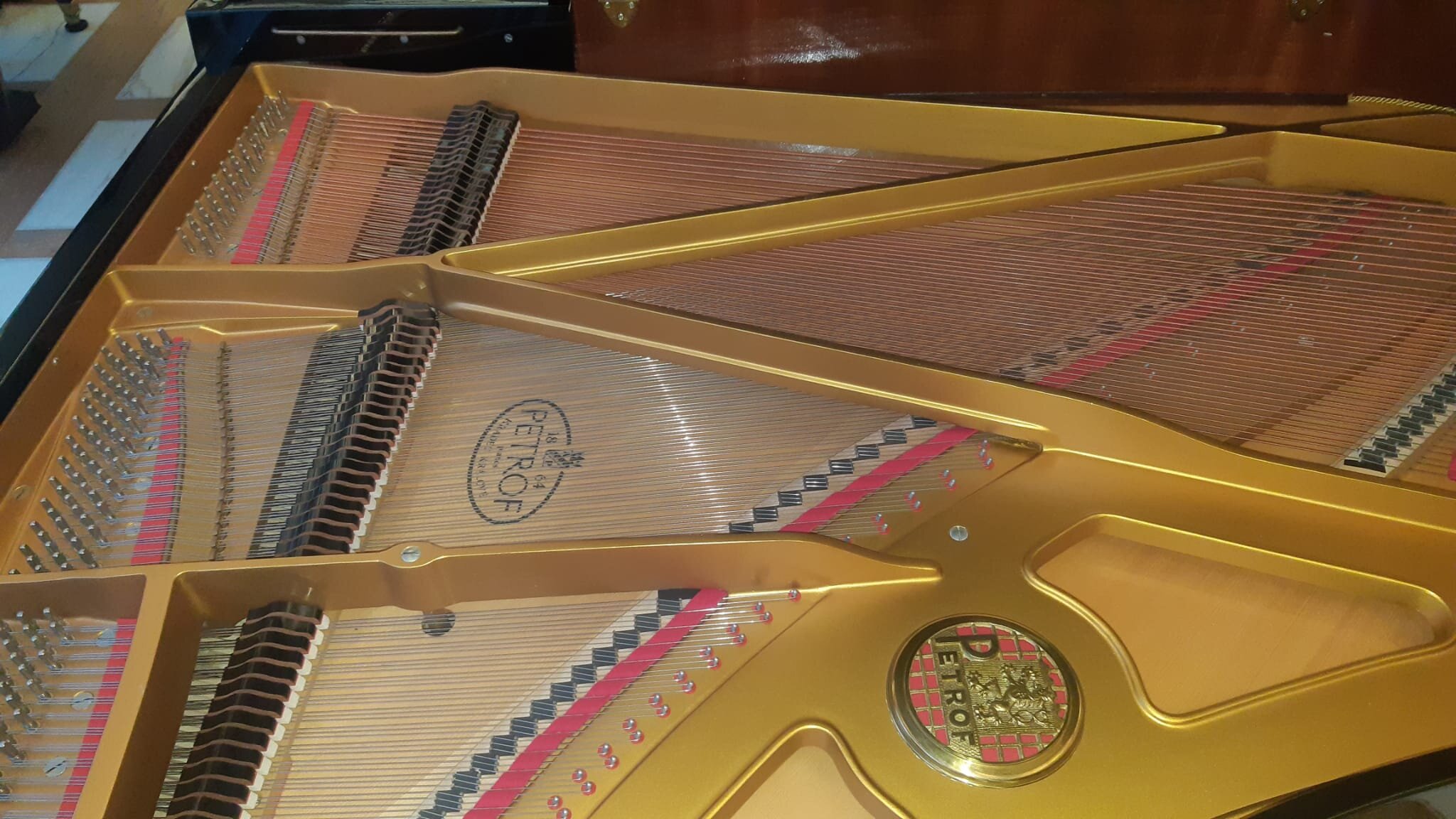
Here, I managed to get the photos. I only have these available.
I can't open them. In any case, an unused piano from the 2000s... I really think it needs a refresh of all the pins.
Certainly, in fact, the keyboard feels a bit stiff.
So, aside from the ordinary repairs that I also managed to identify and which should be carried out by the technician from the shop that has it on consignment (I was offered to meet with him to point out all the things I found), therefore included in the final price, I wanted to get feedback on the actual quality of the instrument, having had no experience with Petrof from those years but only with much older instruments.
It seemed excellent to me as well, particularly the level of pianissimo that can be achieved while maintaining a truly remarkable sound sustain, as well as a wide and rich dynamic and timbral range.
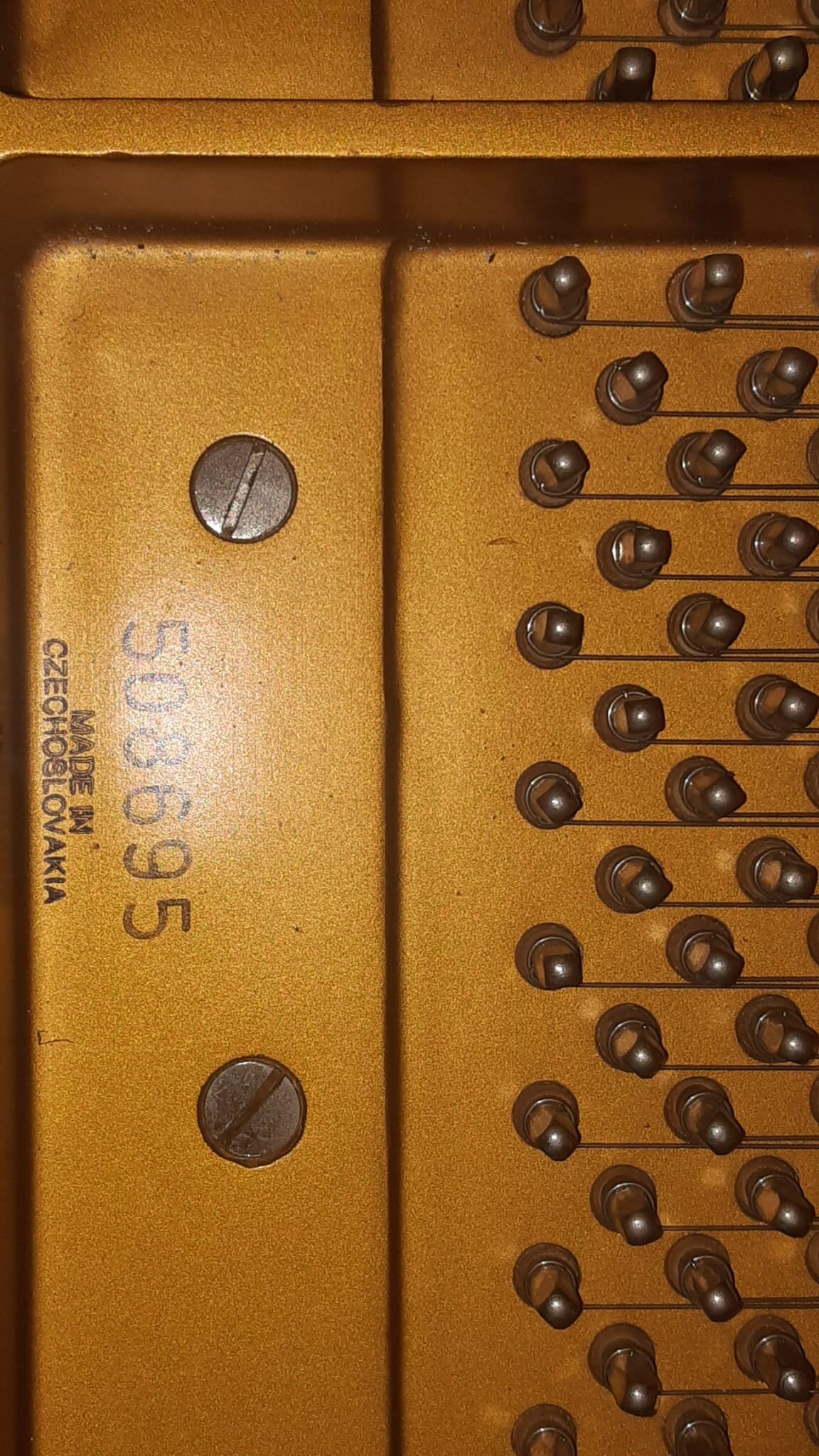
The serial number is 508695.
Thank you again for the detailed feedback.
I'll take this opportunity to wish you a Merry Christmas 🎅