I hope for the benevolence of the experts while writing this first post of mine.
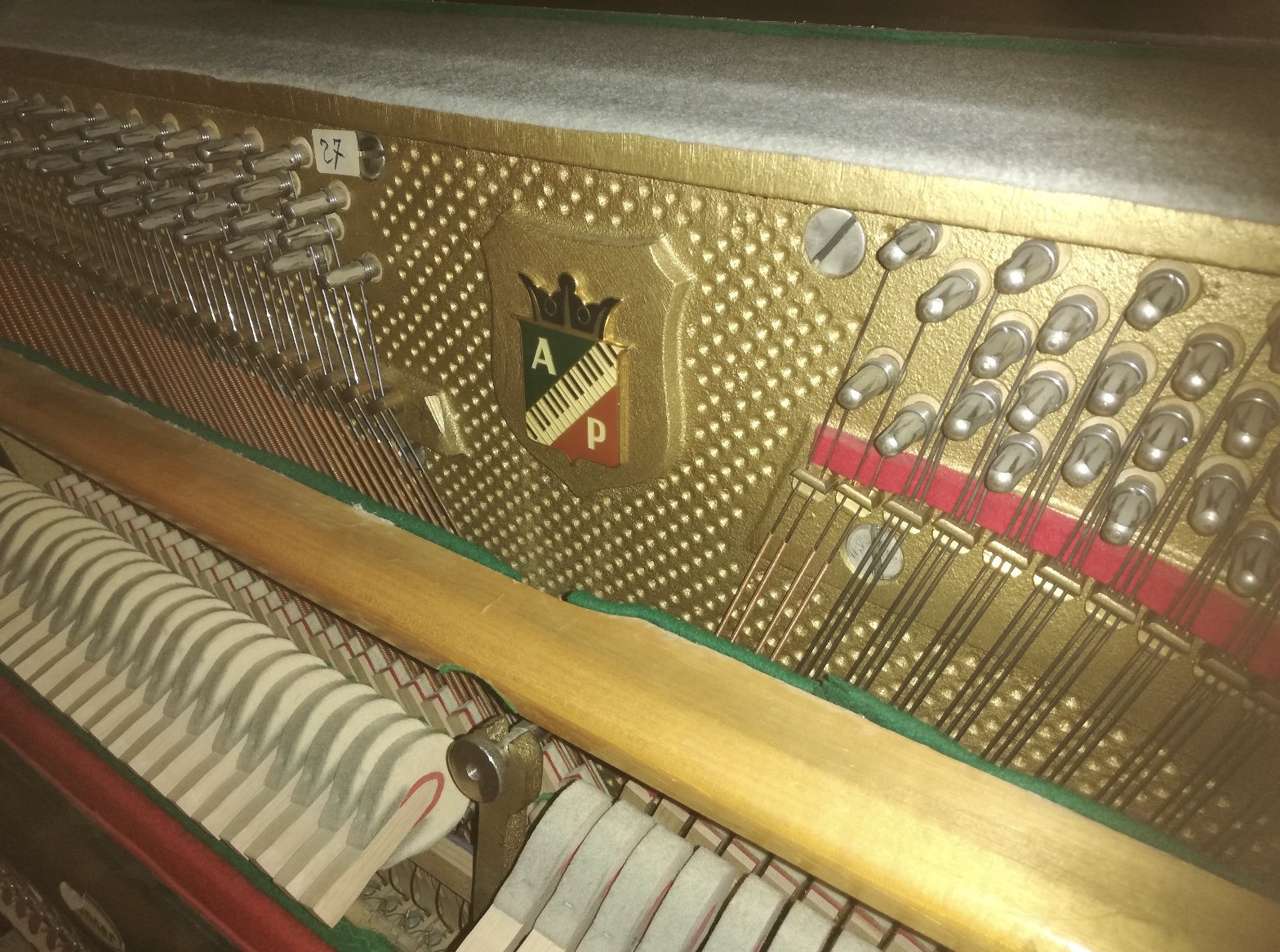
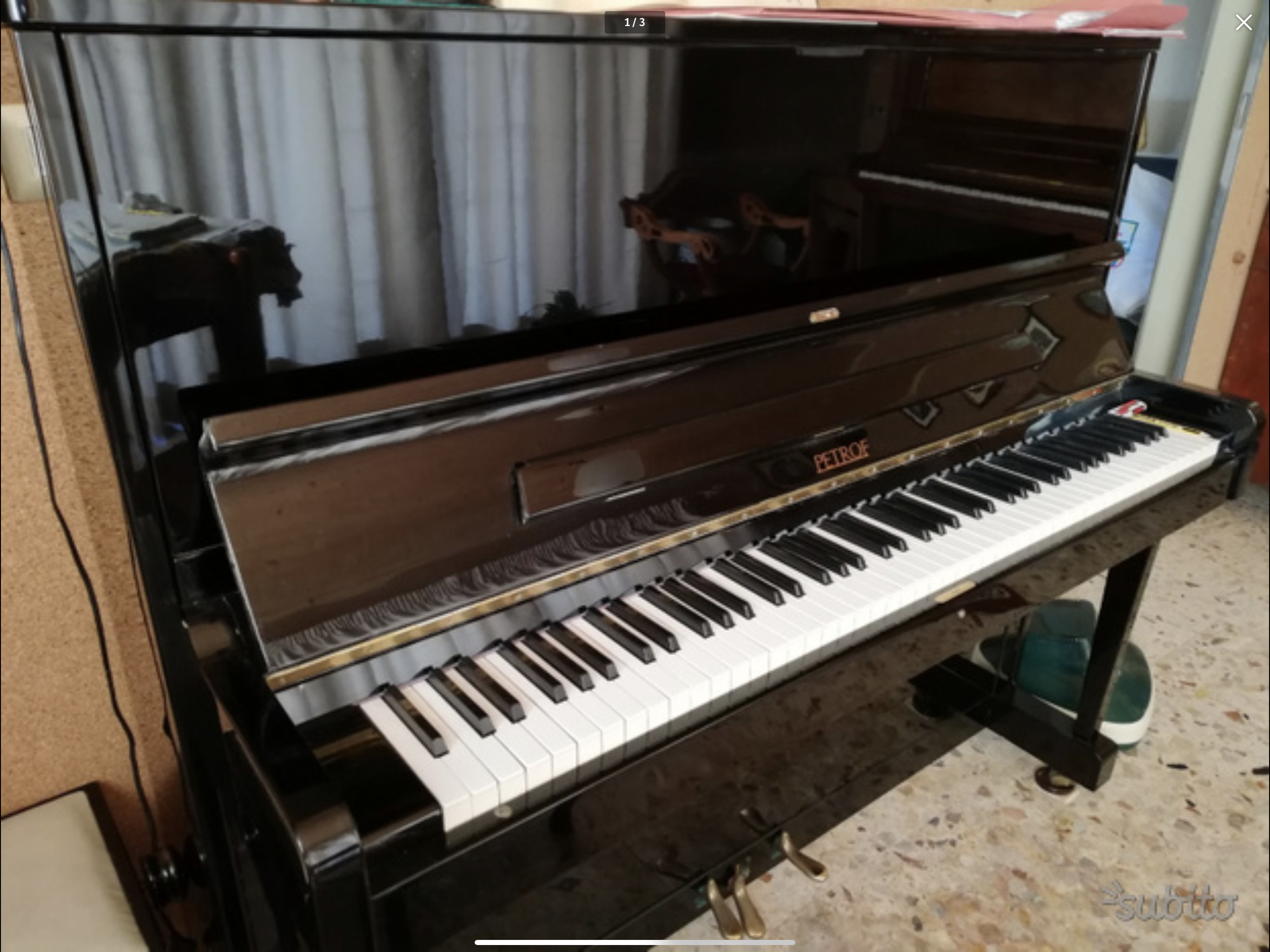
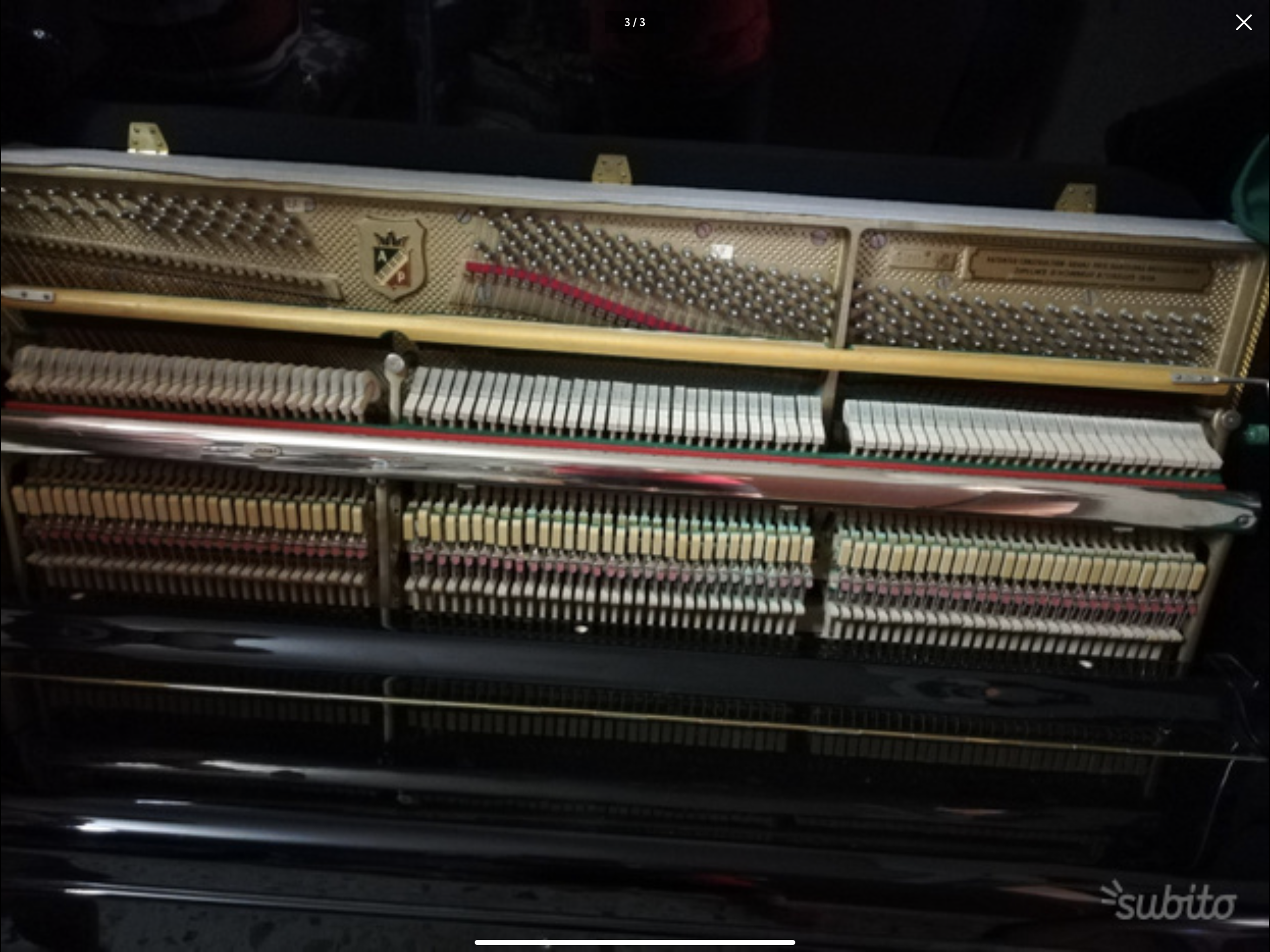
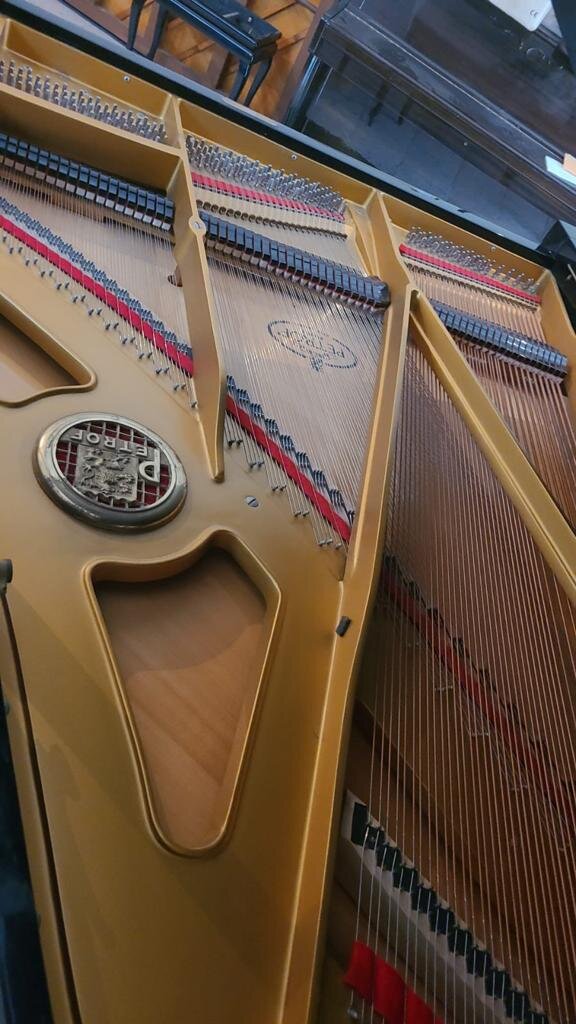
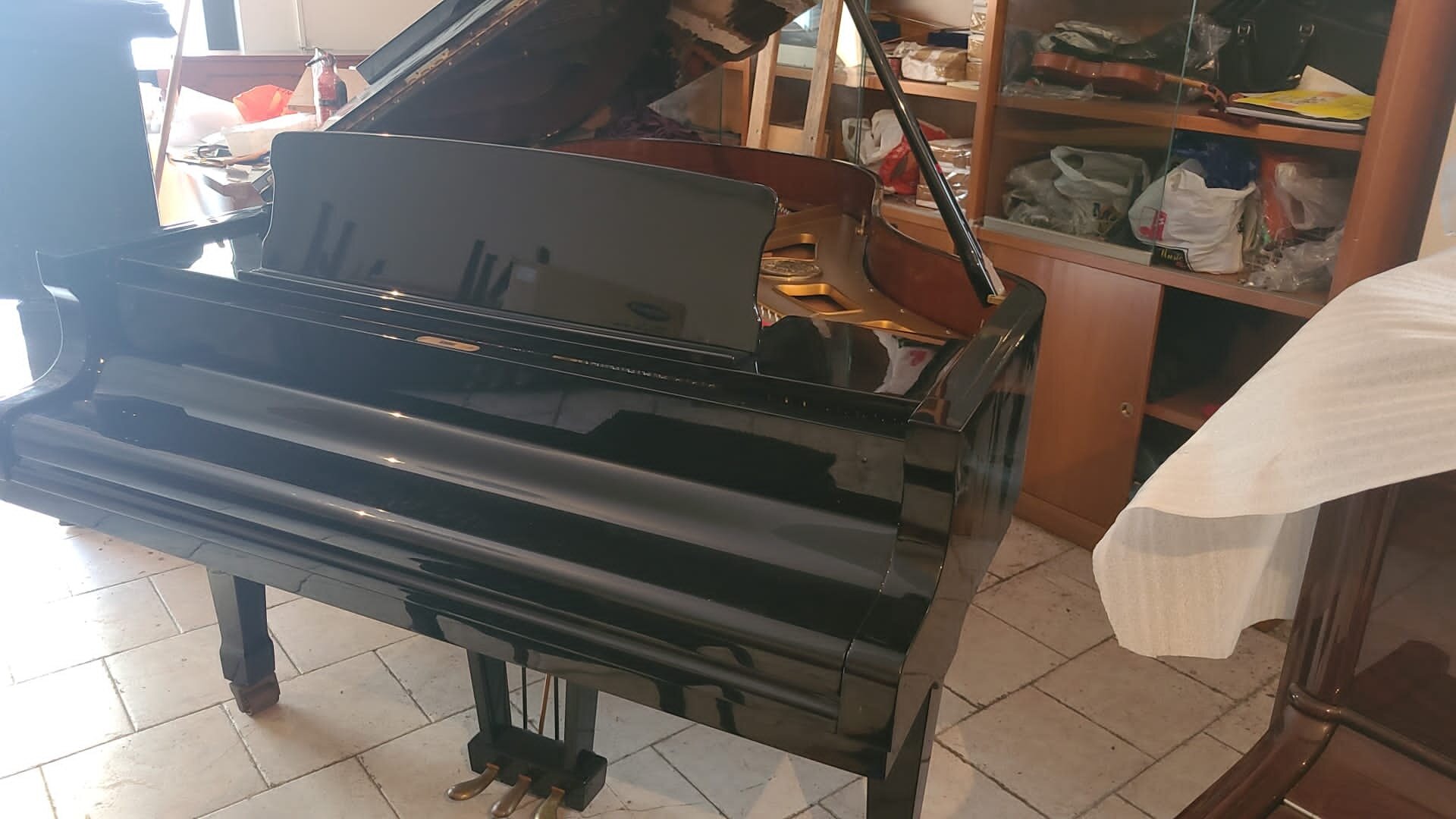
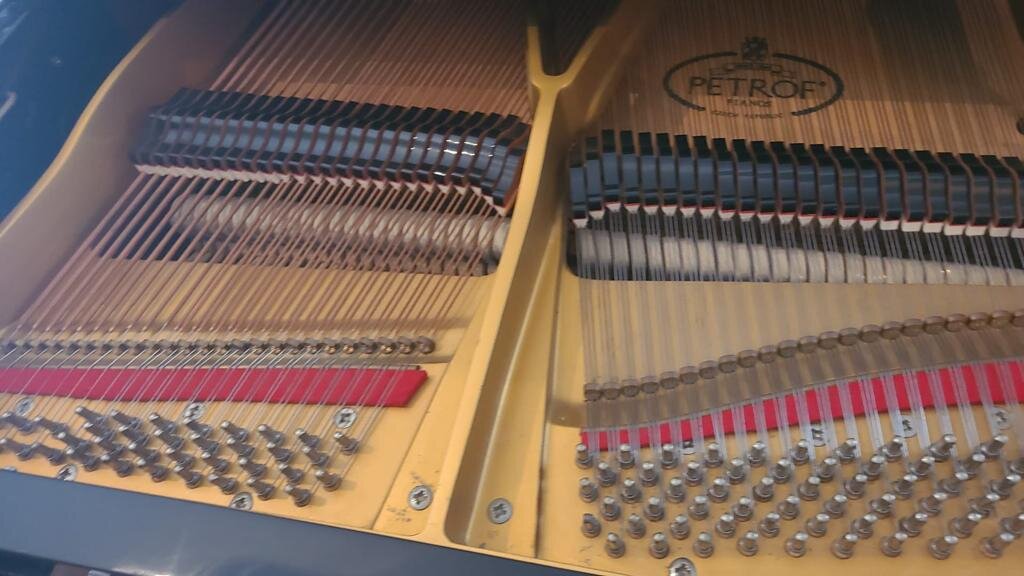
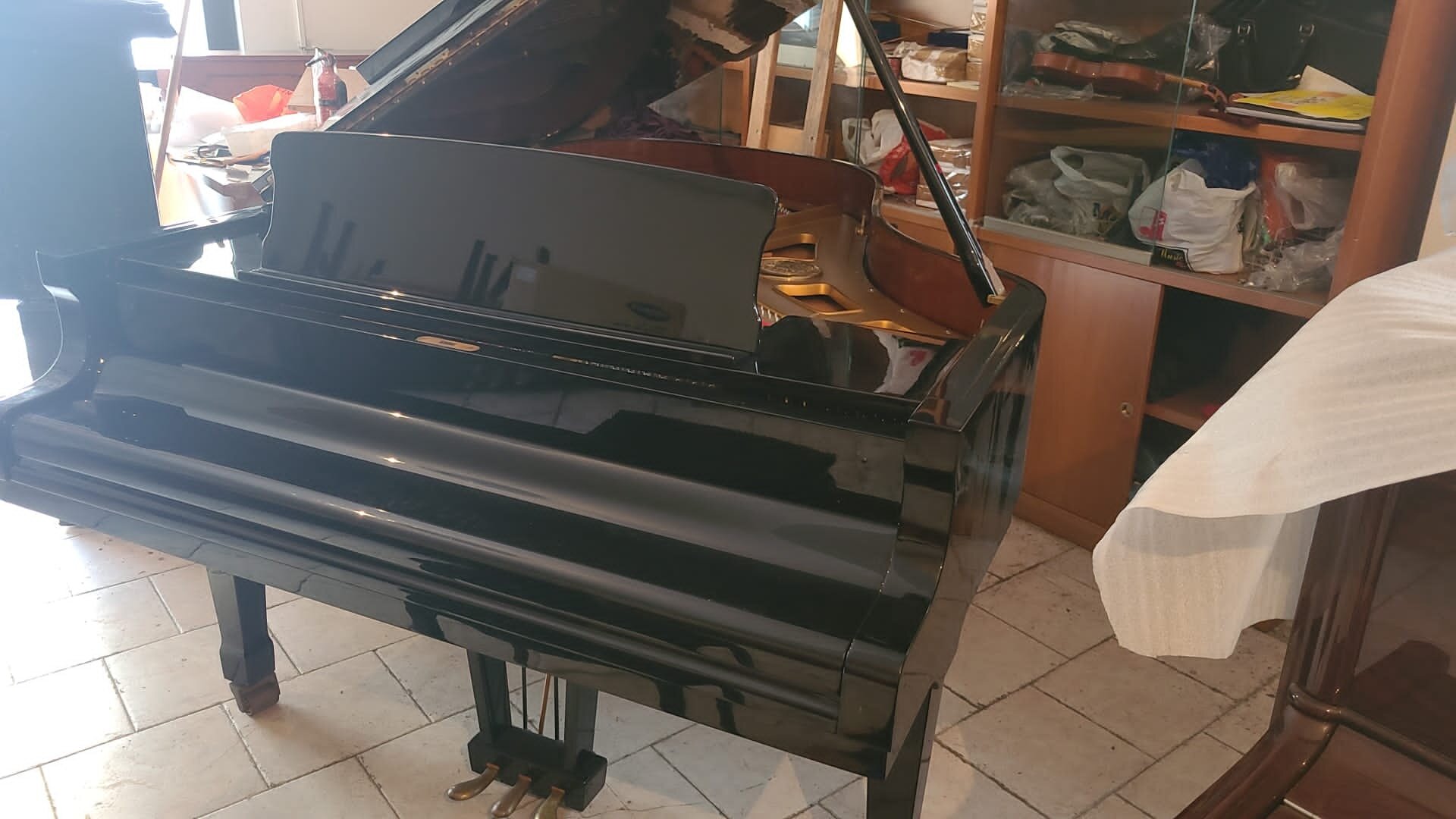
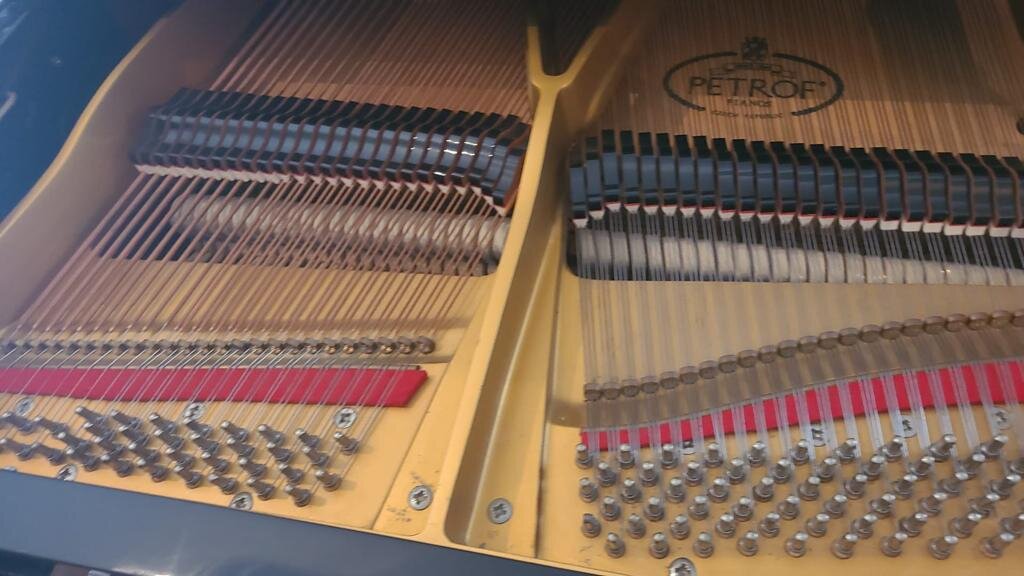
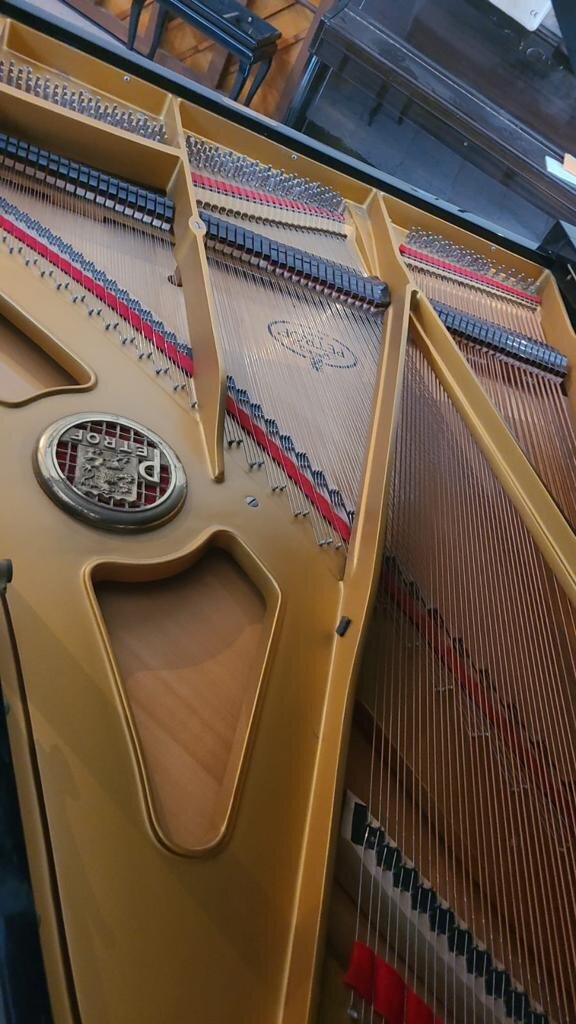
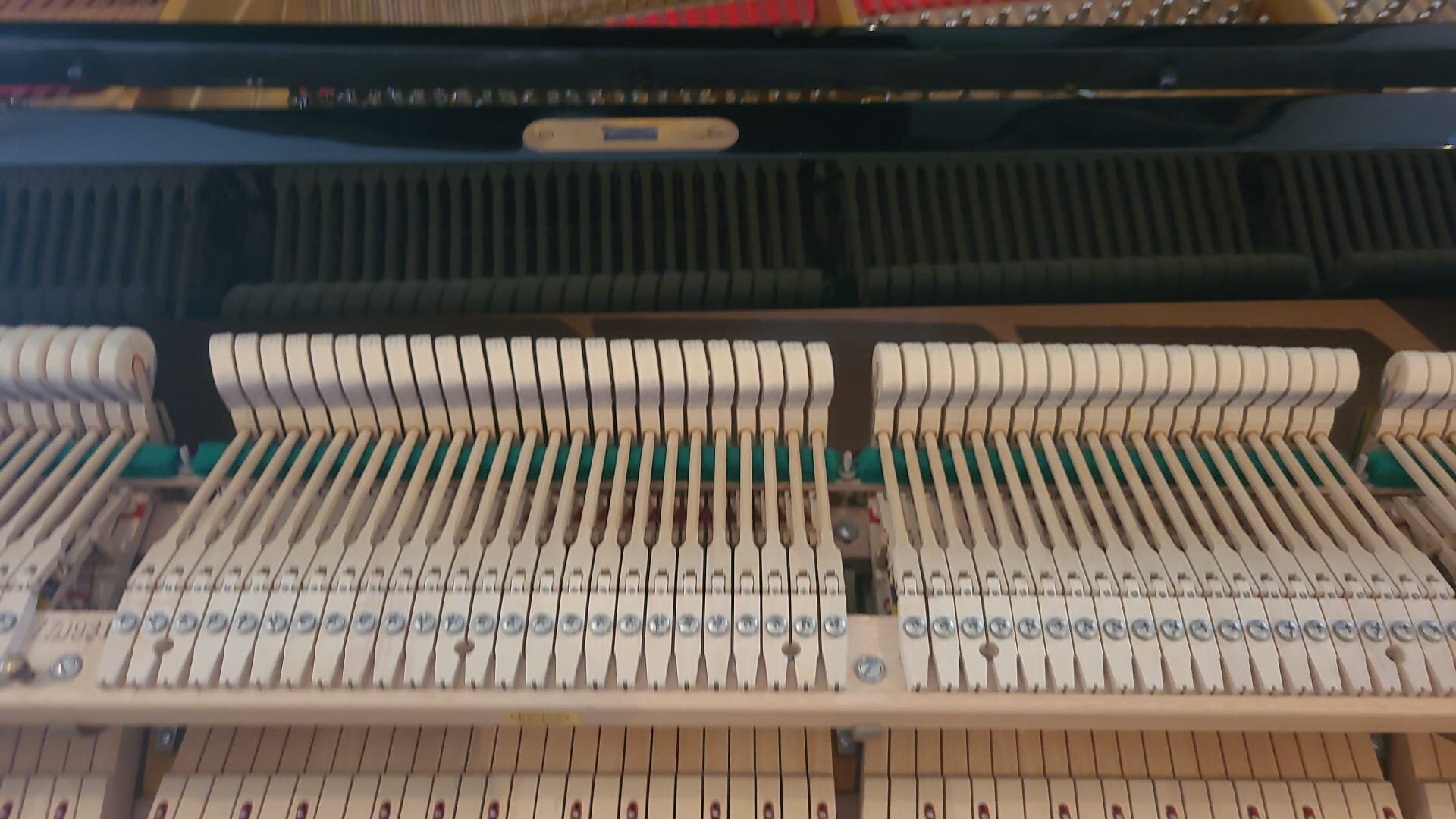
I found a Petrof 126 serial number 429746 with Renner action.
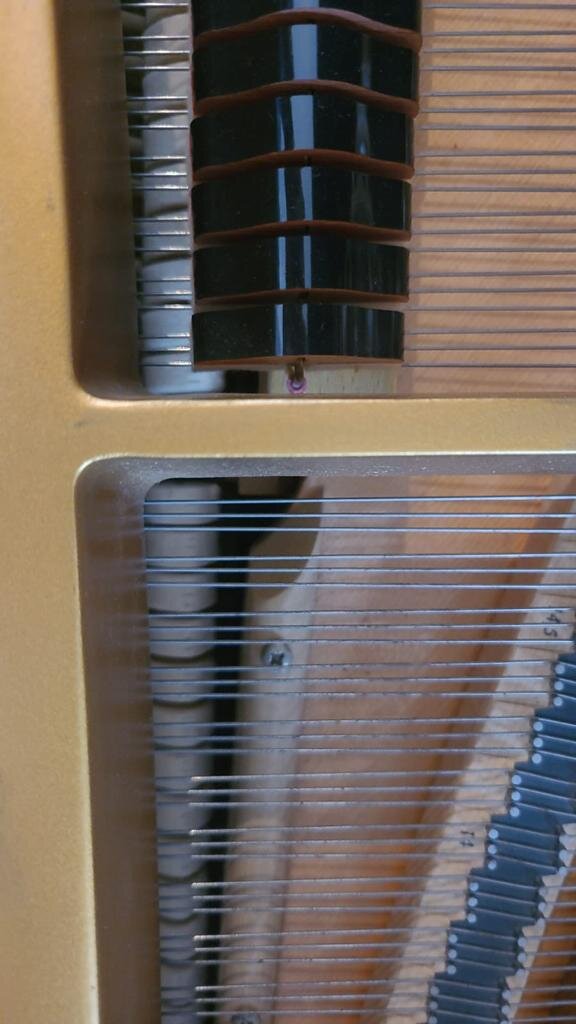
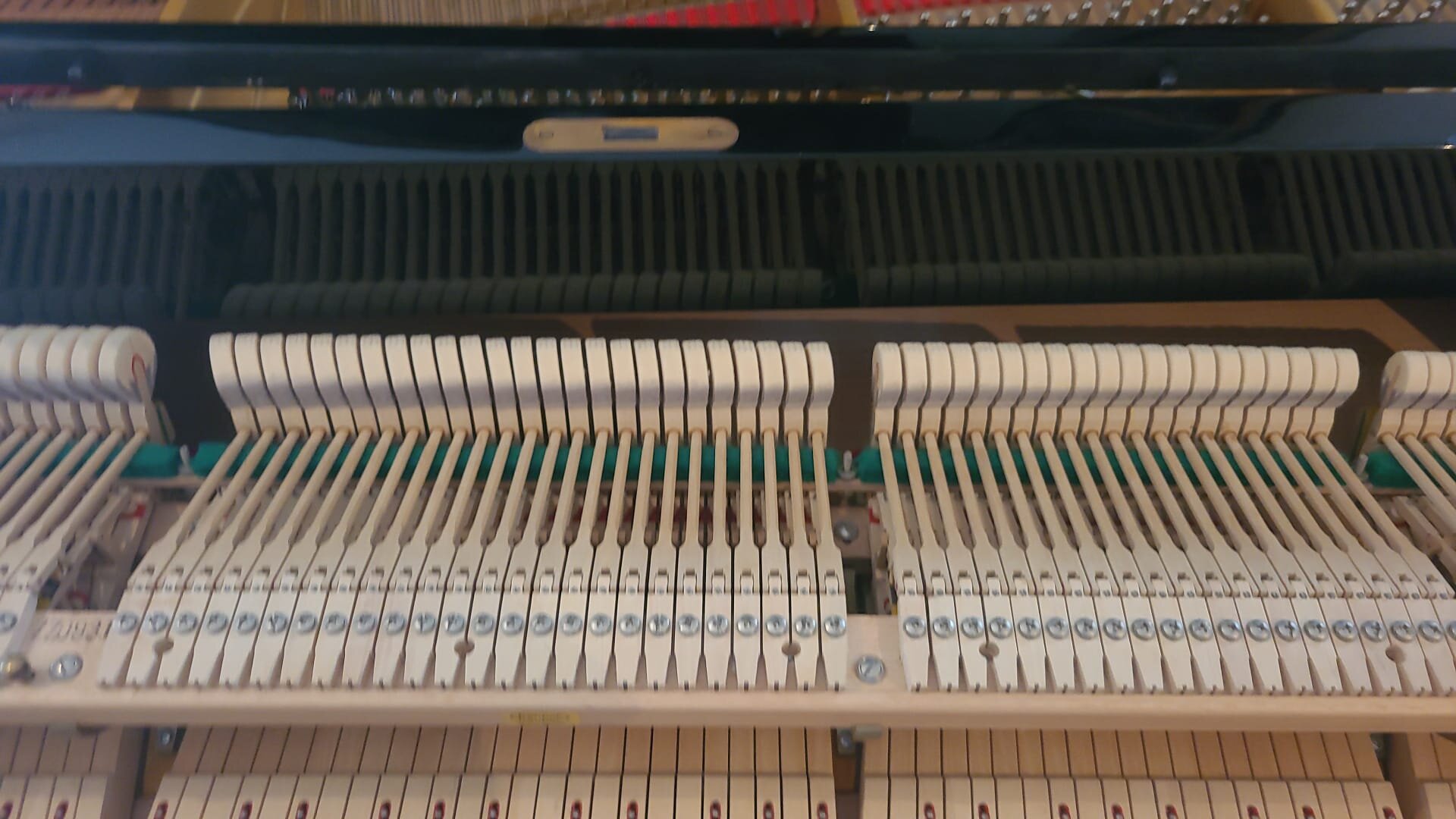
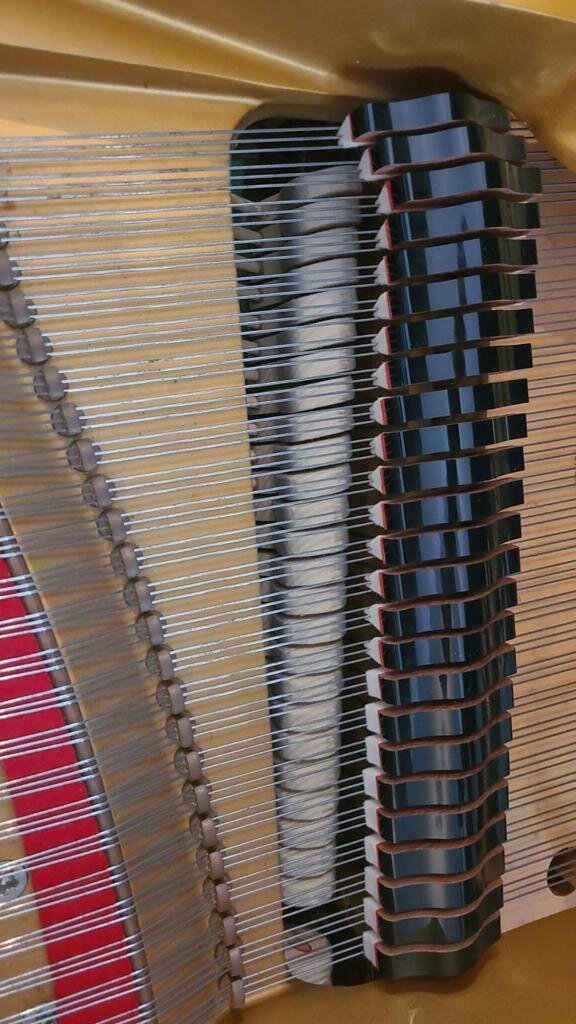
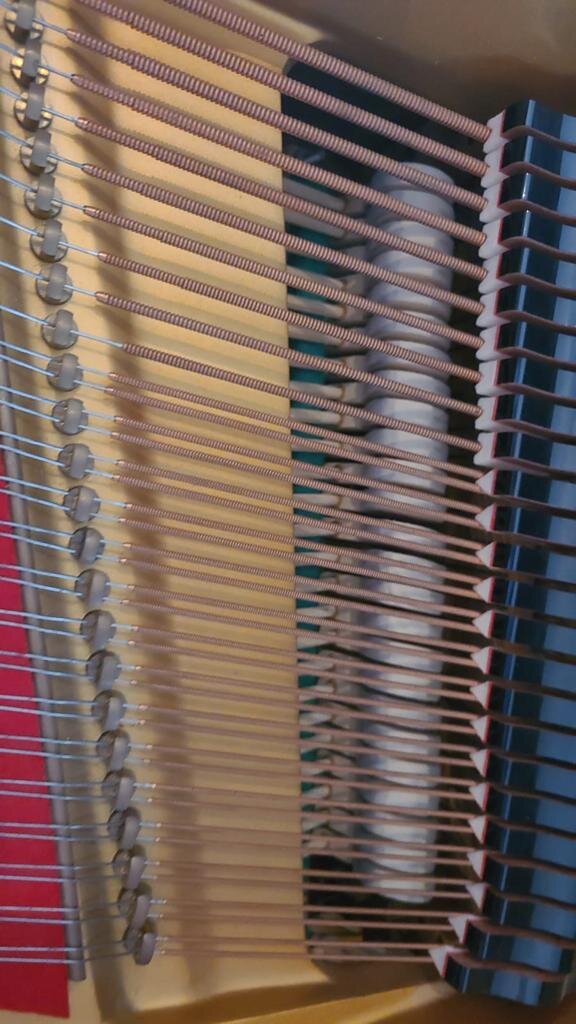
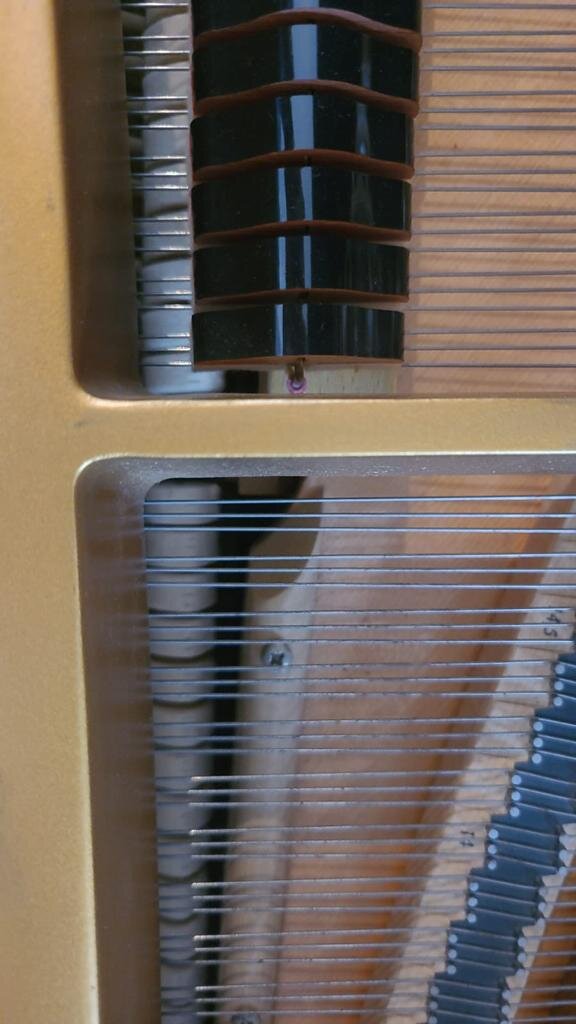
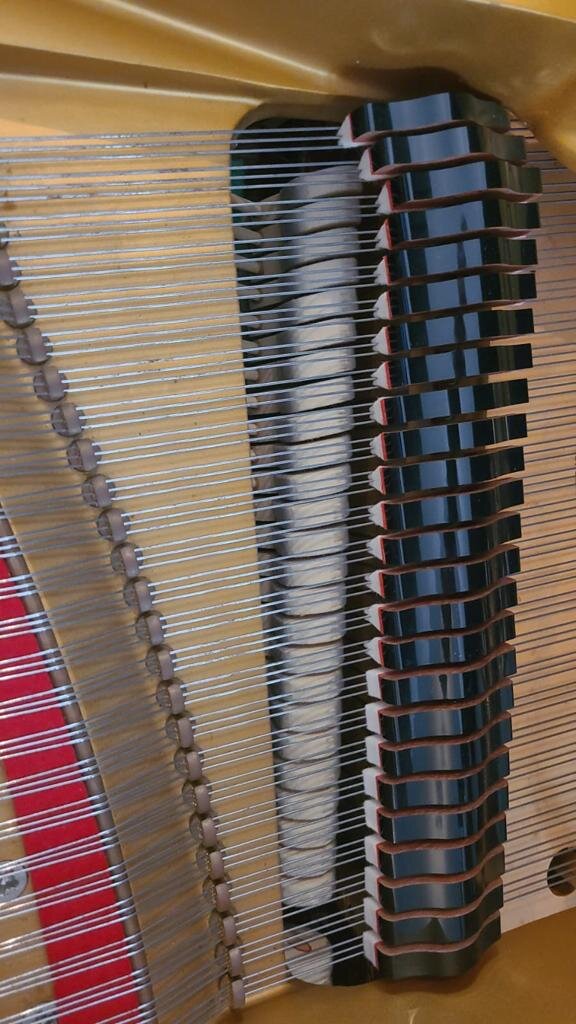
do you notice any problems from the photos?
As for the Petrof Renner action, I have read that it is often a bit hard, so I ask, is it possible with the intervention of a specialized technician to modify it and make it smoother without it becoming mushy?
thanks to everyone who will want to help me understand better.
The problem of hard action depends on the hammer center pins, the repetitions (cavalletti), and the escapement uprights. They must be replaced by reaming the cashmere-lined holes and increasing the pin size by one measurement. It is absolutely necessary to use straight reamers, and the work must be performed by an expert. A check of the damper mechanism should also be conducted. Any other practice, such as increasing the lead weight in the front part of the keyboard, is contrary to good sense.
P.S. The fact that the keyboard becomes softer (ONLY THROUGH THE ELIMINATION OF EXCESSIVE FRICTION) decreases the downweight, but, crucially, increases the key return weight and therefore the responsiveness of the keyboard. Musically, a keyboard of correct weight and equipped with responsiveness develops piano technique in a healthy way, which would otherwise be distorted in an attempt to overcome the excessive friction of the entire action.
I know Petrof very well. As a pianist, I have owned three: two uprights and one grand. As a technician, I tell you that it is an instrument of excellent sound quality, but the action needs to be well-regulated. In the end, you obtain an excellent instrument, especially with high measurements like this one. However, an expert must touch it, because restoring the pins is a matter of experience. Naturally, proper regulation, tuning, and voicing of the hammers are mandatory to complete the work. The posted piano seems to me to have the hammer rail in excellent condition... it has been played very little... but perhaps it has been stationary for a long time and not in an environment that wasn't too dry
Thanks again. How much would a masterfully executed intervention on this Petrof cost? So as to evaluate the overall cost. If you prefer, you can also reply to me privately.
Generally, Renner action is marked somewhere. Usually on the hammers.
In any case, all actions, if properly regulated, can function well, just as a Renner that has been in an unsuitable environment for a long time can function poorly. I reiterate the concept of pins and friction. A "hard" piano cannot be improved. Oxidized pins and narrow holes are irreversible in nature. Therefore, the intervention of replacing the action pins must be carried out, taking care to use, as already mentioned, straight reamers and oversized pins (for example: if a 1.30 mm pin is removed, it is replaced with a 1.325 mm one). This is very important, and it requires experience.
So when testing a new or used piano (see my video on buying a piano), these hardnesses should not be underestimated. It would be like having a car driving with the brake pulled. Do not think that use, as some sellers sometimes suggest, can improve this impediment... quite the opposite.
On the contrary, one might find a situation where heavy use over time may have created excessive looseness in the pins, which must be replaced and oversized so as not to have that feeling of correct slowness under the fingers without being "mushy." In short, the coefficient of proper friction is measured. In this latter case, pins that are too loose can cause the hammer, at the moment of impact on the string, to wobble left and right, ruining the surface of its tip
It is impossible to evaluate the condition from a distance. I can only say that the 190 is a beautiful piano. One must examine the state of the action, the soundboard, the strings, and the tuning stability. You will surely have your own trusted technician. The age also needs to be seen. Petrof has two periods: the Czechoslovakia period and that of the new factory where they began assembling more efficient actions. The design, apart from these improved differences in the action, has always been excellent
It is impossible to evaluate the condition from a distance. I can only say that the 190 is a beautiful piano. One must examine the state of the action, the soundboard, the strings, and the tuning stability. Surely you will have your own trusted technician. The age also needs to be checked. Petrof has two periods: the Czechoslovakia period and that of the new factory where they began assembling more efficient actions. Aside from these improved differences in the action, the design has always been excellent.
Thank you very much for the answer; when I tried the piano, I immediately felt a substantial difference in the keyboard—in terms of hardness, there is no comparison with any other piano I have tried so far. As for the tuning, even though it hasn't been touched for several years, I liked the sound very much. Regarding the age, it should be from around 1995; how can I tell which factory it came from?
Thank you very much for the answer, while trying the piano I immediately felt a substantial difference in the keyboard; in terms of hardness, there is no comparison with any other piano tried so far. As far as the tuning is concerned, even though it hasn't been touched for several years, I liked the sound very much. Regarding the age, it should be from around 1995, how do I find out the manufacturer?
In 1995, the factory had already renewed itself and the mechanics had improved. However, it is a piano that must be monitored. The tuning must be checked and brought back to 440 if it is lower, perhaps with more than one tuning session. The mechanics must be verified regardless. Especially the friction of the pins. If the piano has been stationary, the mechanical parts might be sluggish. You might not feel it under your fingers, but when it starts working again, the situation must be monitored. The regulation must be checked. Also the voicing of the hammers. Remember: the hammer rail, even if a bit grooved, should not be shaved. And if you were to change the hammer rail over time, the hammers and shanks to which the old one is glued must be returned.
The Petrof Renner mechanics are a fascinating combination of tradition and innovation. Their instruments guarantee great quality and musicality, thanks to the Petrof tradition and the famous craftsmanship of Renner. A harmonic partnership that appeals to both musicians and fans.🪄