Tuning

Problem with some keys on an antique (old) piano :)

9 replies 6,660 views

Started by

giax25

Member

Member

Opening post by giax25

Posts
3
City
Cernusco sul Naviglio

Hello everyone, first of all I wanted to congratulate you on the website and the forum.

The video guides are AMAZING!!!

I watched the videos about the mechanics of the upright piano very carefully and now I think I have much clearer ideas.

However, I am submitting my problem to you to understand how to solve it:

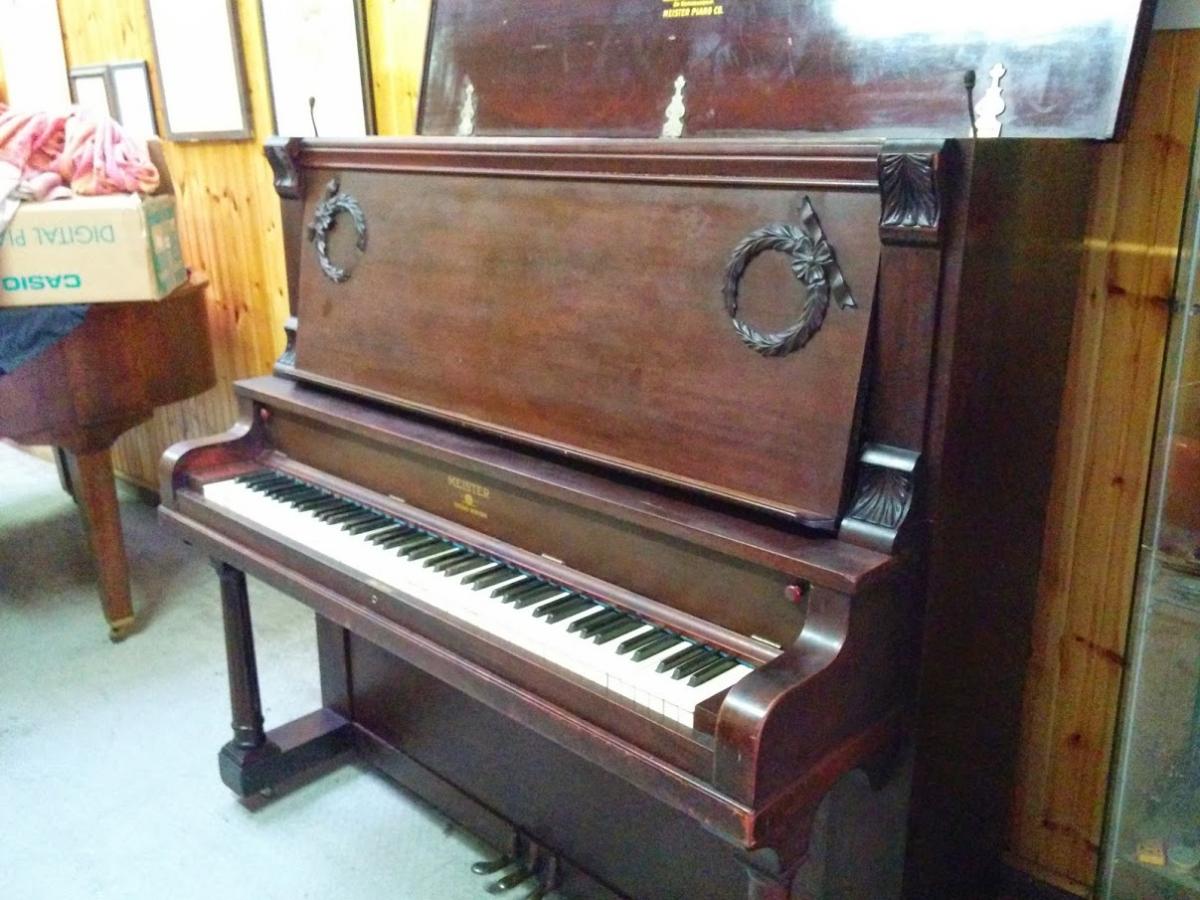
I have a piano from the early 1900s, inherited from my father and which I brought to my house a couple of months ago after being tuned by a technician who overhauled it.

For now, let's set aside my doubts about the overhaul; in fact, for a few days now I have had this problem: some keys do not stay engaged/locked and no longer sound after the first note.

So I opened the lid and made a couple of videos of the behavior of the hammers and the mechanics in general.

From what I understand, the escapement does not "escape" correctly and often remains stuck under the cap (noce).

At first, I thought it was a friction problem and I disassembled the mechanism for cleaning and lubrication, but since the problem remains unchanged, I think the escapement needs to be adjusted...

Watching the videos, does anyone have any hypotheses regarding the diagnosis? Here is the link with some photos and the videos https://plus.google.com/photos/102318725935052942323/albums/6082685876940145329?authkey=CKPaqsGx_vTuag

I should mention that the mechanism is very old, as is the piano, but having great sentimental value, I would like to manage to make it work at least decently.

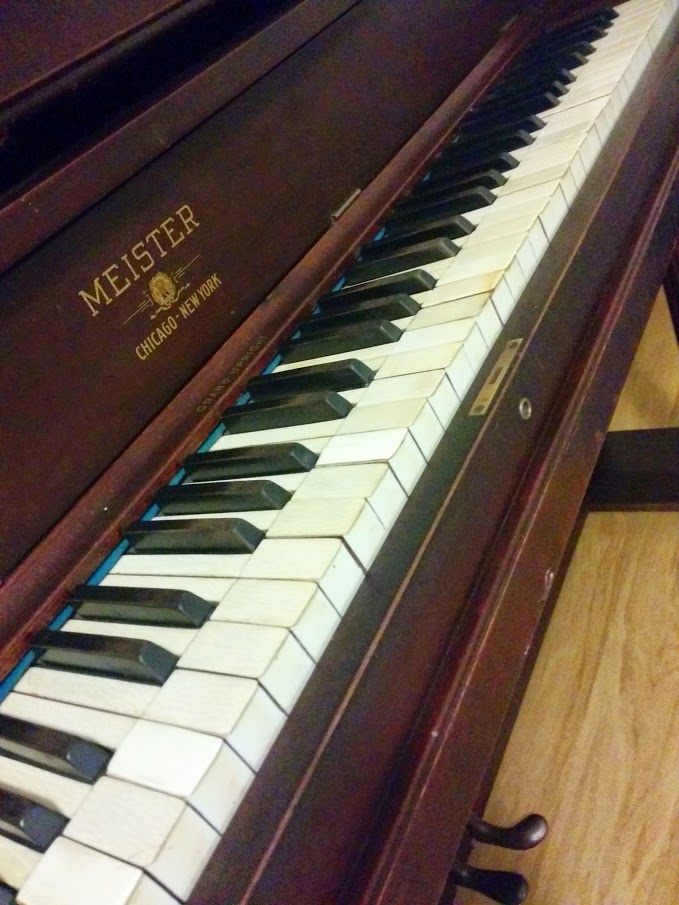
For the record, it is a Meister, an American piano.

I am attaching some photos for curiosity.

I thank in advance anyone who can help me!
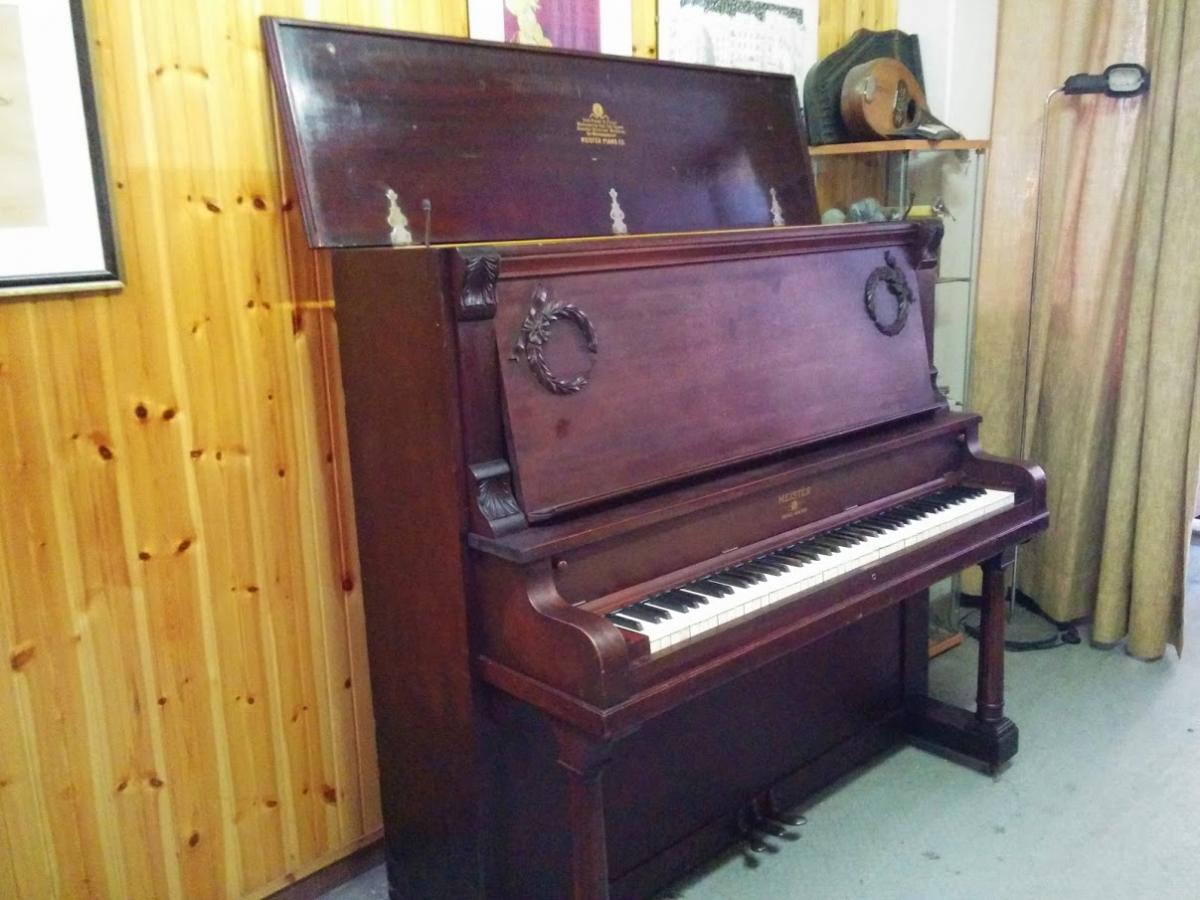
https://plus.google.com/photos/102318725935052942323/albums/6082685876940145329?authkey=CKPaqsGx_vTuagAttachmentAttachmentAttachment

Administrator

Reply 2 by Thesimon

Posts
4,504
City
Ariccia, RM

The escapement lever does not reset under the hammer cap. There will certainly be a need to change the center pins and the entire action will have to be regulated, assuming no other problems arise once the instrument has been inspected in person. Paolo will certainly be more precise than I am...

Member

Reply 3 by Andry

Posts
86
City
Roma

Dear Giax, the good news is that your piano's action is truly of a very high level; it is in full efficiency and has nothing to envy from today's quality uprights. However, it really seems marked by the weight of the years. By regulating it, you could improve this problem that you showed in the video.

P.S. The nut felts and the stand felt might be so grooved as to compromise the resolution of the problem (and therefore removing the action and lubricating it, I suspect, didn't do it much good). For now, the first thing you can do is try to ensure decent humidity for the piano, no more than 60% or less than 30%. Anyway, if the problem is only with a handful of keys, a good technician will know how to help you; thanks to the preparation provided by our Pianoexpert video tutorials, you will know exactly what to request. We await any further clarifications, be patient and happy music!

Moderator

Reply 4 by pianoexpert

Posts
3,876
City
rocca di papa

dear Giax, it seems to me that a magnificent hammer rail has been installed....but the rest has not been cared for. As far as the problem is concerned, I believe you should have both the center pins of the action and the regulation checked. The escapement lever must be able to go under the hammer notch without impediments (which could be friction or regulation of the pilots being too high). It would also be necessary to verify the strength of the springs which, it seems to me, in this model, are frontal instead of spiral. These help the lever itself to reach the correct position even in a fast repetition. I see dirt and rust...and stains of past humidity. The lower part of the action should also be cleaned and restored to return its dignity to "accommodate" such a beautiful hammer rail. I hope I have been useful to you. Let me know

Member

Reply 5 by torrese57

Posts
17
City
casorate sempione

Greetings to all the little piano players... I was asking "our" Paolo if the "American" hammer, compared to the European/Japanese one, is more or less rapid in resetting the driving shank under the hammer felt.

THANK YOU in advance.

A greeting from the flooded Italian side!

Saverio

Moderator

Reply 6 by pianoexpert

Posts
3,876
City
rocca di papa

But no.. it's the same thing. That responsiveness that you demand depends on many factors combined and on the correct "geometry" of the action, which is fast and "agile" if assembled and regulated respecting the manufacturer's design. This is why when replacing certain parts, especially the hammer rail, it must be identical in shape and weight. One must always insist on the return of the old one, so as not to erase the trace of the Piano's identity (I always repeat this... but I will never tire of repeating it). In the case of your piano, being so dated, I presume that the hammer rail had to be quite light. This affects the inertia of the action a little (for the upright), and very much in the case of the grand piano. Therefore, even the shape and mass affect, even if only slightly in the upright, the "speed of the action and the keyboard."

Member

Reply 7 by giax25

Posts
3
City
Cernusco sul Naviglio

Thank you very much to everyone.

I think I will try adjusting the pilots of those keys which, as far as I understand (also from Paolo's videos), must allow the escapement pin to be "free" in the resting position.

I will try to take photos so as to share them with you

As far as rust and dirt are concerned, I would very much like to do a complete deep cleaning, but I would have to disassemble all the keys individually along with their respective mechanics, and I am afraid of making a disaster.

The alternative is a technician, but I have just spent a lot to have all the key guides replaced and for the "summary" adjustment....

In reality, the only thing I did was disassemble the action and blow away the dust with a compressor. Do you think it's worth disassembling everything?

Member

Reply 8 by torrese57

Posts
17
City
casorate sempione

Dear giax25, I also did that job of extracting the action from my Yamaha U30BL upright.. and if I could do it.. anyone can do it. I am NOT a technician but a great enthusiast of piano technology; I gave a polish to the center pins and key guides of the entire keyboard and a good vacuuming all around, and now it seems to work better.. as the GREAT Paolo says, these little devils of the action must be neither too many nor too few... A big hello

Saverio

Moderator

Reply 9 by pianoexpert

Posts
3,876
City
rocca di papa

I must say "playfully" that you are all attentive to my metaphors and my colorful terminology! It pleases me and makes me understand that many of you read and follow me, and that many concepts and convictions "get through." Thank you

Member

Reply 10 by zenigata

Posts
70

Things explained in a simple and effective way always land! Thank you for sharing them.

Log in to participate