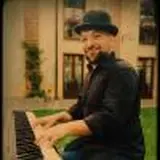
this musical experience is often associated with jazz.
although in my opinion, what happens in jazz solos is rather a semi-improvisation, if not even a pseudo-improvisation. perhaps in free jazz and the avant-garde one gets closer to purity. in any case, I wonder if in music it is truly possible to practice a type of PURE IMPROVISATION that is nonetheless sensible.
I would discard the old story of the cat on the piano right off the bat...
do you think it is possible to separate every parameter of music (e.g., pitch, intensity, timbre, duration, structure, instrumentation, etc.) and subsequently reassemble it in real time?
when I say 'purity', I mean a type of improvisation that does not draw from any kind of background, just as usually happens in jazz (said very generally, mind you!).
are there any texts on the subject available for purchase?
It is impossible not to draw from some background, how do you do it? Even if you consciously try to restrain yourself, who knows what you do unconsciously! The only solution is an algorithm based on pseudo-random parameters, such as a white noise signal to which you assign the various parameters you previously mentioned and leave the rest to the computer.
It will inevitably be a form of pseudo-improvisation; one always relies on material that has been previously known, experienced, processed, and destructuring countless times.
so can it be said that pure improvisation does not exist?
i saw an interview on YouTube of a pianist, born 'classical', who then moved to jazz because he was attracted by improvisation...
e when he realized that the idea of improvisation he had in mind was much freer compared to the semi-improvisation of jazz, he decided to delve deeper into this type of issue. and in the end, he even abandoned jazz and, after working hard (a lot!), now, he even teaches it.
J
JazzMania
Member
Reply 4 by JazzMania
Posts
116
Let's see if I can find an effective parallelism.
When you improvise, it is as if you were speaking; you don't need to prepare to talk to someone else... but you have studied a lot and at the beginning you only did verses, the first words, the first phrases like a "parrot" ... and despite all that, hours of practice talking with friends, school, work, etc. ... when you have to face the classic conference, what do you do? You prepare your nice little speech.
So, when you improvise, in what way should you be different?
G
Gerardo
Member
Reply 5 by Gerardo
Posts
277
ScalaQuaranta wrote:
do you think it is possible to split every parameter of music (e.g., pitch, intensity, timbre, duration, structure, instrumentation, etc.) and subsequently reassemble it in real time?
In my opinion, this was done during structuralism, and I think it is the field where pen and paper are most necessary. Everything strategically decided at a desk... it would be the anti-extemporaneity.
ScalaQuaranta wrote:
when I say 'purity', I mean a type of improvisation that does not draw from any kind of background, just as usually happens in jazz (
In my opinion, it is quite the opposite... a mute person does not speak. Usually in jazz, there is the extemporaneous manifestation of a great background; the performance is only the tip of an iceberg.
ScalaQuaranta wrote:
are there any texts on the subject on the market?
Precisely about what? Purity in music or about problems related to performance and, in this regard, if I am not mistaken, something had been reported in the past... I remember it was by Stefano Zenni
G
Gerardo
Member
Reply 6 by Gerardo
Posts
277
Found it, damn. It wasn't in book reviews... it was in this topic... which might be of interest