Romanian folk music is characterized by a huge difference, in rhythms, in meter, and in scales, between the various regions. The same can be said for dance, which is practiced, depending on the region, solo, in pairs, or in groups, and which has extremely different meanings and purposes according to the location.
A singular phenomenon is the fact that the same music supports different dances and that different musical genres are applied to the same dance, which creates an even wider richness of effects.
Regarding influences, they range from music and dances similar to Austrian or Hungarian ones to music and dances of a Turkish or Greek type. In this, I find a singular concordance with what happens at the linguistic level, where words from neighboring states coexist, but also from remote states, such as France and England—words imported by the Romanian educated community of the 19th century, when these lands opened up to the West.
An enormous significance is also held by the so-called Manea, better known by the plural term 'Manele', music that originates in the Roma ethnic community in Romania; so much so that in Romania there is an entire TV channel (Taraf) dedicated to music videos sent by lovers of this genre. In this music, one finds influences from Armenian, Greek, Turkish, Arabic, and Serbian folk music, as well as Romanian 'lăutărească' (folk) music: I propose to you a Şatra (Sciatra) - in the interpretation of Romica Puceanu -
and, by the same Puceanu, 'Şaraiman' (Sciaraiman); the latter because I love its sweet call to a love so great as to flatten the roads, filling them with flowers and buds so that the beloved arrives as soon as possible.
In particular, I point out this composition to the stoic Maricallas, who will certainly not fail to appreciate this song and set about the anxious search for the words and the music!
A dance of particular effect is then the Şârba (Sciarba), typical of the Oltenia region, which is performed by male and female dancers dressed in extremely colorful fabrics and styles, of great elegance and value, to frenetic and ever-increasing rhythms, with group figures as well as acrobatic steps and jumps by individuals that require steel muscles and very quick reflexes. Here the best part is the visual one but, unfortunately, the camera was acting up!
Finally, another one is the Geamparale, typical of Dobruja, of which I propose a frenetic 'Geamparale de la Babadag' (Babadag is a city of Turkish origin in the Dobruja region, which my wife is originally from),
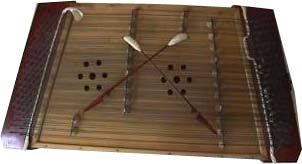
performed by Toni Iordache with a ţambal mare ('large cimbalom'), an instrument that represents the equivalent of the piano in Romanian 'fanfares' or folk groups.
With this post, I conclude my quick overview of Romanian music and wish you (with the sole and well-founded exception of the sad Pianoexpert, who - listen!! ....listen!!!.... listen!! ....listen!!!.... - refuses to emigrate with me to tune my piano and will force me to turn to sad subjects who will take advantage of it to steal the copper from my strings!) a bună Duminică!