Technical problems and their resolution

Small interventions on piano 1/4 coda willermann recently purchased

7 replies 3,061 views

Started by

stasmaz

Member

Member

Opening post by stasmaz

Posts
22
City
trieste

Hello everyone, I recently had the opportunity to buy a used piano (but practically new), brand Willermann serial number 412276. I must say that for the moment I am satisfied with my purchase, especially because of the bargain price and the fact that in total this instrument will have been played at most 50 hours by the son of the former owner, who got bored after some time. The real reason I bought it was because this instrument has a very good action, slightly heavy but responsive, which makes it perfect for studying peacefully at home.

The thing that worries me, however, is that it was kept in a very humid cellar and unfortunately shows some signs of deterioration, such as the legs and strings being a bit rusty, and some small greenish spots on the frame in the area of the legs themselves, all covered by a layer of dirt and dust stuck on due to the excessively humid conditions.

I must admit that in the heat of the moment and also because of the joy of finally owning a better instrument, I immediately started trying to clean it and perform other small interventions that, given your experience in this regard, you could surely define as "home-made."

I tuned the piano by myself, and I "dabbed" the rusty spots on the legs with cotton swabs soaked in rust converter, to try to stop the oxidation process (which is why in the photographs the legs appear almost completely black).

I am aware that I should have waited and called a tuning technician, but being a student, and having invested all my savings to buy the instrument, I couldn't wait to start being able to play it.

Another problem concerns the fact that a couple of dampers are slow in their descent and remain raised even after the key has been released.

If anyone could give me some advice on what to do, also to avoid possible further mistakes, I would be enormously grateful!

thanks

Stas'

Moderator

Reply 2 by pianoexpert

Posts
3,876
City
rocca di papa

It has certainly absorbed moisture. The converter is not a good remedy! On the ankles it's not too bad, but on the strings, no! Rust can only be removed with very fine steel wool, without claiming to go deep (in case the rust has affected a significant percentage of the string thickness). The fact that some dampers remain raised is an indication that the center pins are too tight due to the swelling of the pin holes themselves. There, you need a technician who can disassemble and replace the pin by boring it correctly on the cashmere cloth.

Member

Reply 3 by stasmaz

Posts
22
City
trieste

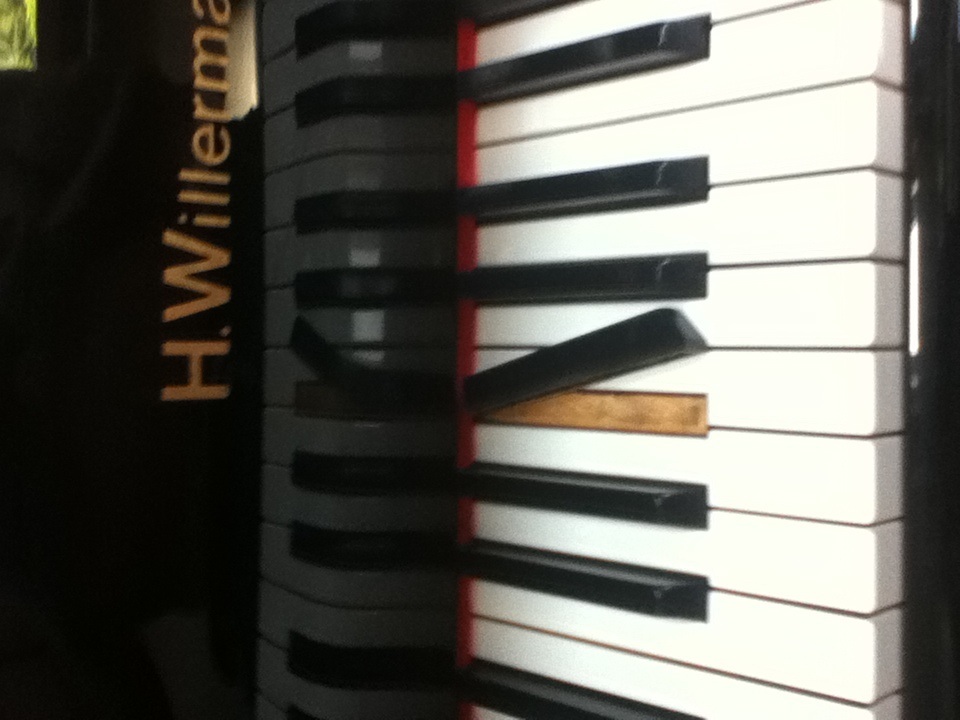
thank you so much for the answer! anyway, I didn't put the converter on the strings, it didn't seem very wise to me. I think I will really have to call a technician also because today while I was studying this happened

Attachment

Moderator

Reply 5 by pianoexpert

Posts
3,876
City
rocca di papa

This is not serious. It sticks again, but there is almost certainly and has been a deformation of some parts due to moisture absorption

Member

Reply 6 by Fra

Posts
266

The problem with pianos kept in basements or taverns is that they absorb humidity and release it once the instrument is moved to a dry environment.

In addition to coverings peeling off, there could be detachments of the cabinet veneer, soundboard sagging, etc.... in my opinion, you made a mistake by putting liquid products on the action parts (caviglie); they can penetrate all the way to the action rail (somiere), and if they have oily components, you risk compromising the grip of the parts.... oxide cleaning interventions are generally performed dry.

Personal consideration: the instrument is a low-end Chinese model; in my view, you didn't make a good deal by clearing out its basement, especially if you then have to start reviewing the center pins and the general state of the action; it still involves additional costs, since technicians do not work (rightly so) for free. It would have been fairer to ask for a consultation before making the choice... Haste is not a good ally. Anyway, you'll see that it will settle.... let it acclimate before calling the technician and perhaps ask before doing things your own way.

If you need to glue the key, it is better to remove it, but you have to remove the keybed (castello). You can also use two-part Bostik (two-part glue means you spread it on the wood and the covering, just a thin layer is enough), letting it sit for a few minutes before bringing the two surfaces into contact, then clamping it (always put some cardboard between the clamp and the key when tightening, for protection).

If instead you use other glues (for example, vinyl glue), be careful to clean the surfaces well, otherwise it won't grip (use it a bit thick, letting it air-dry slightly) and always apply it in two parts, immediately cleaning up excess with a damp cloth.

Hot glue, on the other hand, is ideal if hot glue was already used at the factory (it doesn't look like it from the photo; it was used in the past) because when applied, it softens the old glue, but you have to be faster and press well, as it dries immediately.

Ciao

Member

Reply 8 by Fra

Posts
266

If anything else happens don't get alarmed, have patience because the sudden change of environment causes these kinds of tricks (from the cellar to your house)

Anyway, always ask before acting, they aren't difficult things maybe leave the piano a little open ...

Log in to participate