Hello everyone. Sorry for my long wait, but I underwent a delicate surgical procedure. But I am here, alive and well, better than before ☺
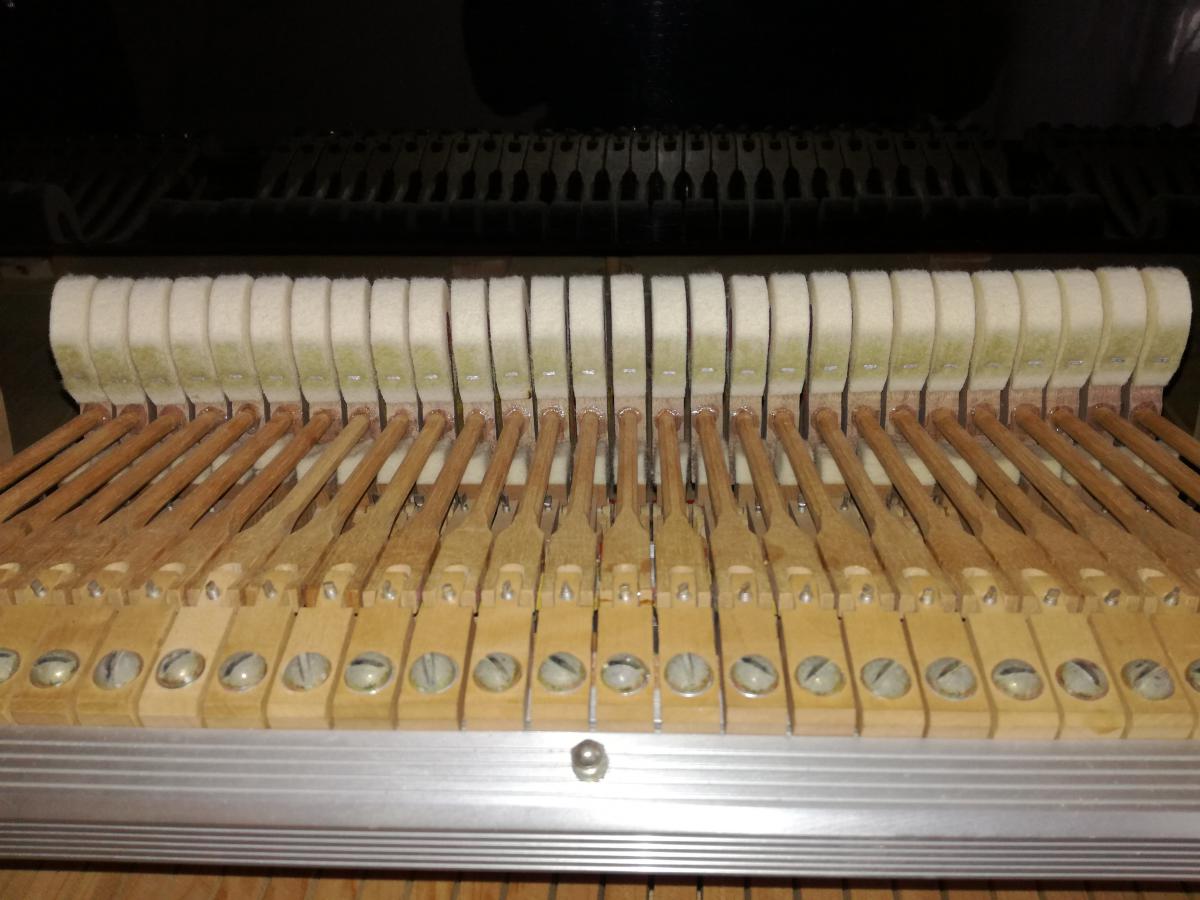
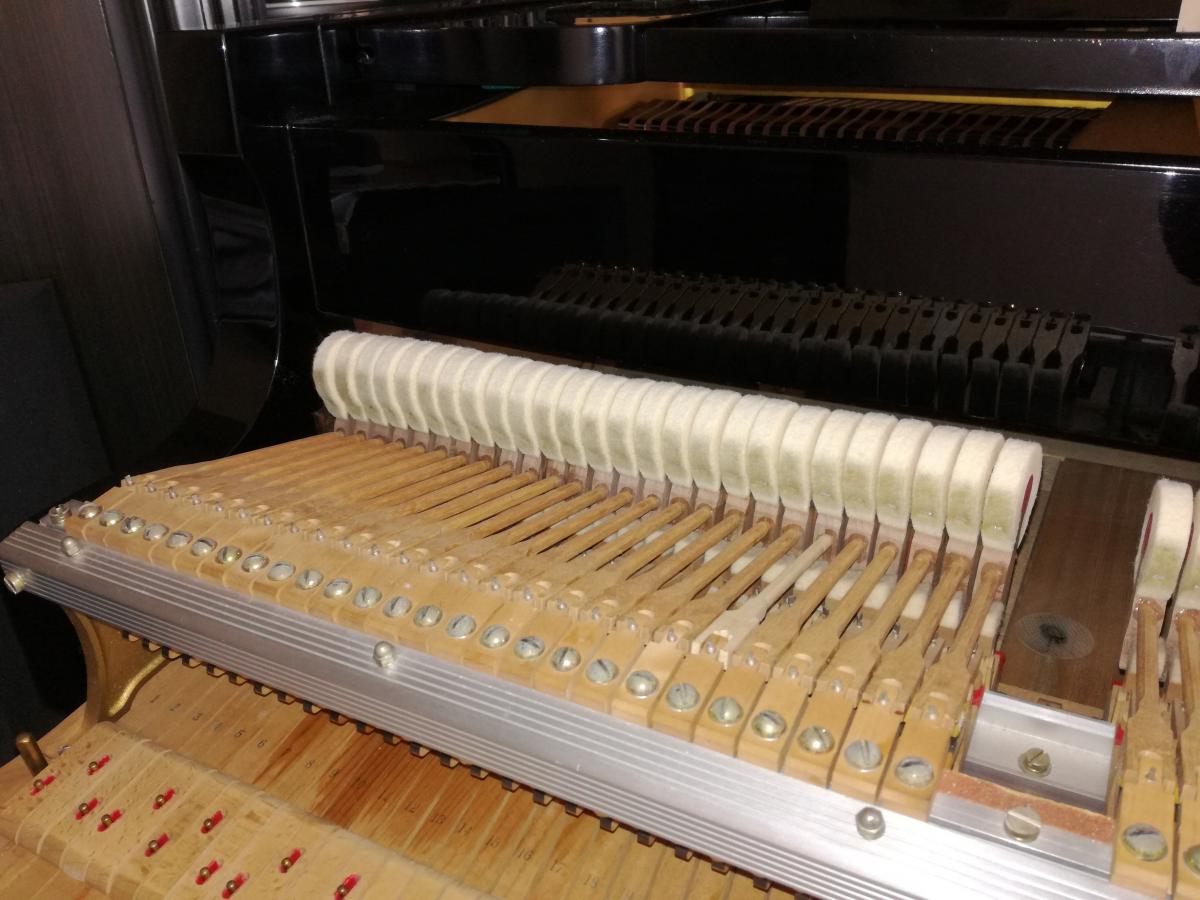
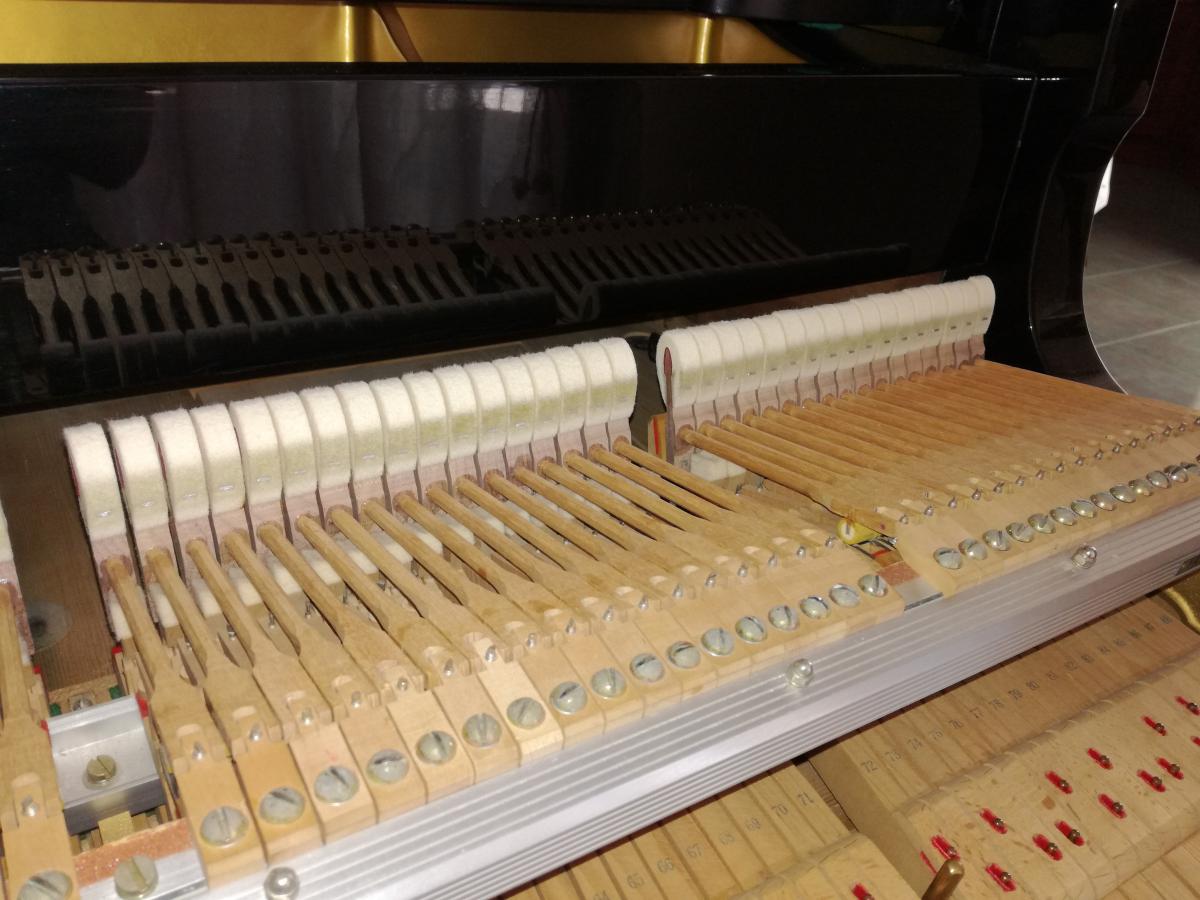
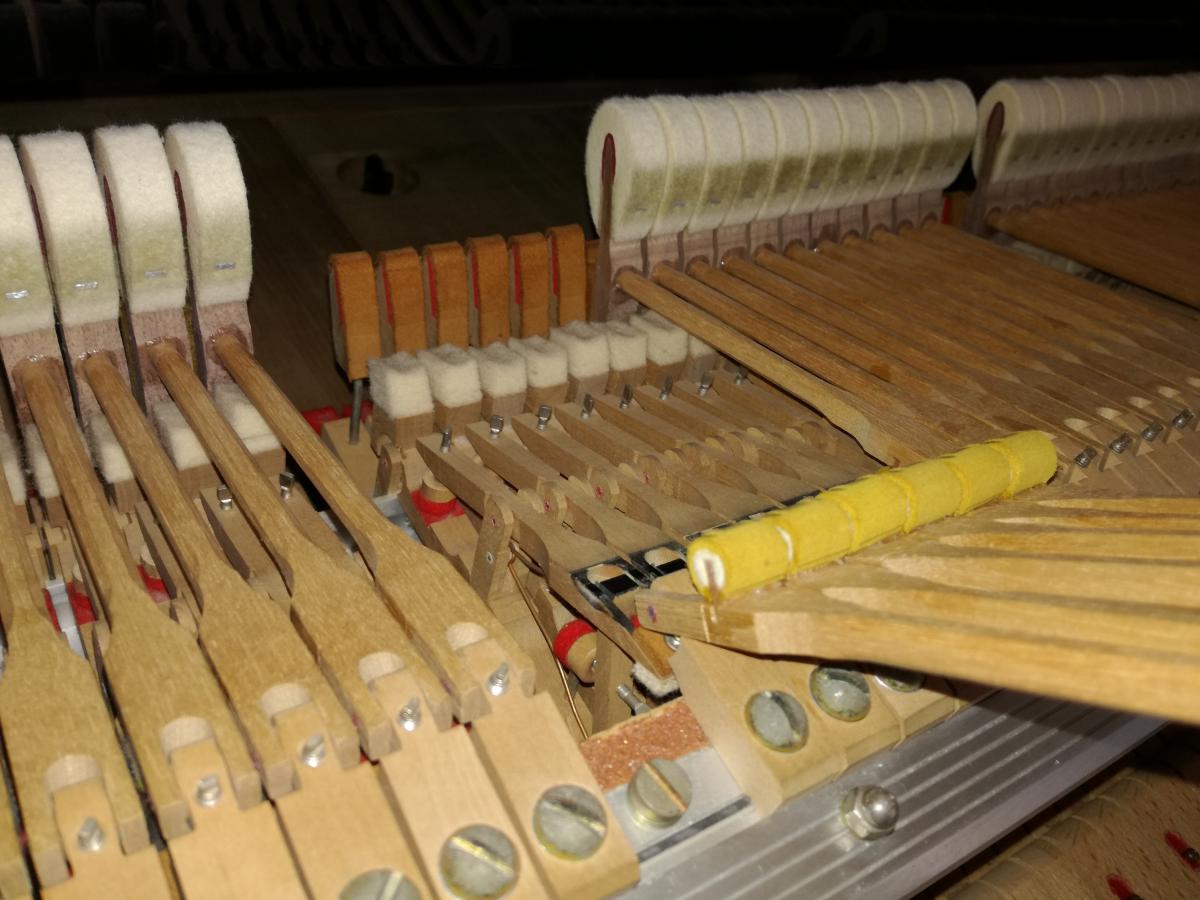
In October, I had the repetition lever replaced, along with replacing the felt of the wippens, the rods, and the small rollers. When the action returned home, some keys sounded empty in pianissimo until they stuck (practically, the escapement remained stuck down, leaving the corresponding hammer even lower). The technician intervened by increasing the spring tension and at the same time slightly increasing the let-off distance from the string only in the area corresponding to the copper strings. The problem was resolved and the sound improved over time, resulting in a wider dynamic gradient. However, a similar problem returned on another key, also in the bass (B0), in a different and milder way: it never sticks, but it doesn't sound unless I press the key from close up (practically, if I drop my finger from above, it doesn't sound, but from close up it does). Then I noticed that some notes make an annoying "ploc" sound if played fortissimo (otherwise they don't). I neglected these problems due to the surgery and my rehabilitation. The technician must come as soon as he can, also to review the hammer alignment. What could be the problem?
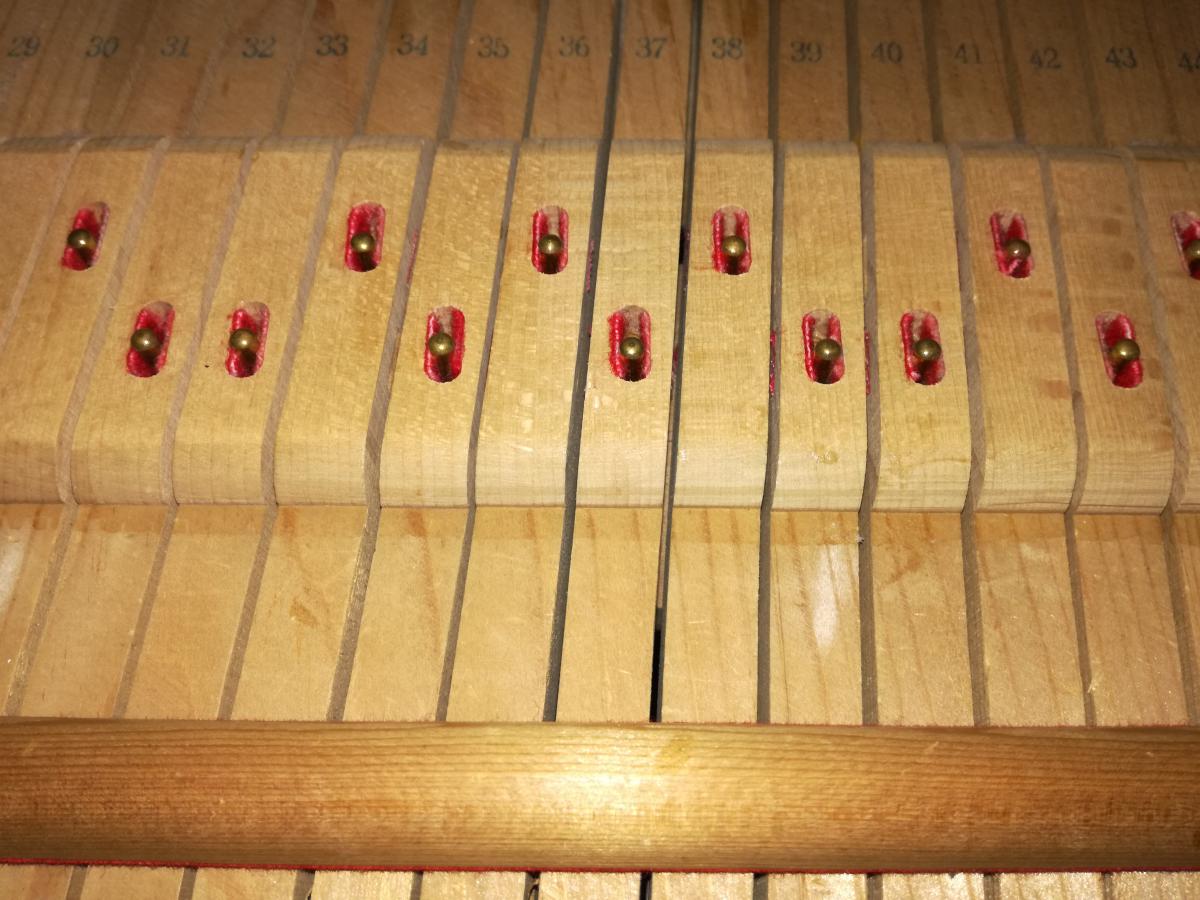
The problems you are describing could be caused by several factors. It is not always correct to tension the spring. You must check the height of the escapement upright relative to the repetition lever. Let's hope the new hammer rail was drilled correctly. Naturally, they wouldn't have returned the old one to you!....tell me so! Incorrect drilling creates problems with the repetition and the "forte". In the bass section, probably, some hammers are touching their neighbor. Here too, it depends on checking the original thickness of the hammer rail. Also check the key leveling and that of the damper mechanism... sometimes the lead oxidizes, swells, and touches its neighbor. All hypotheses, naturally.
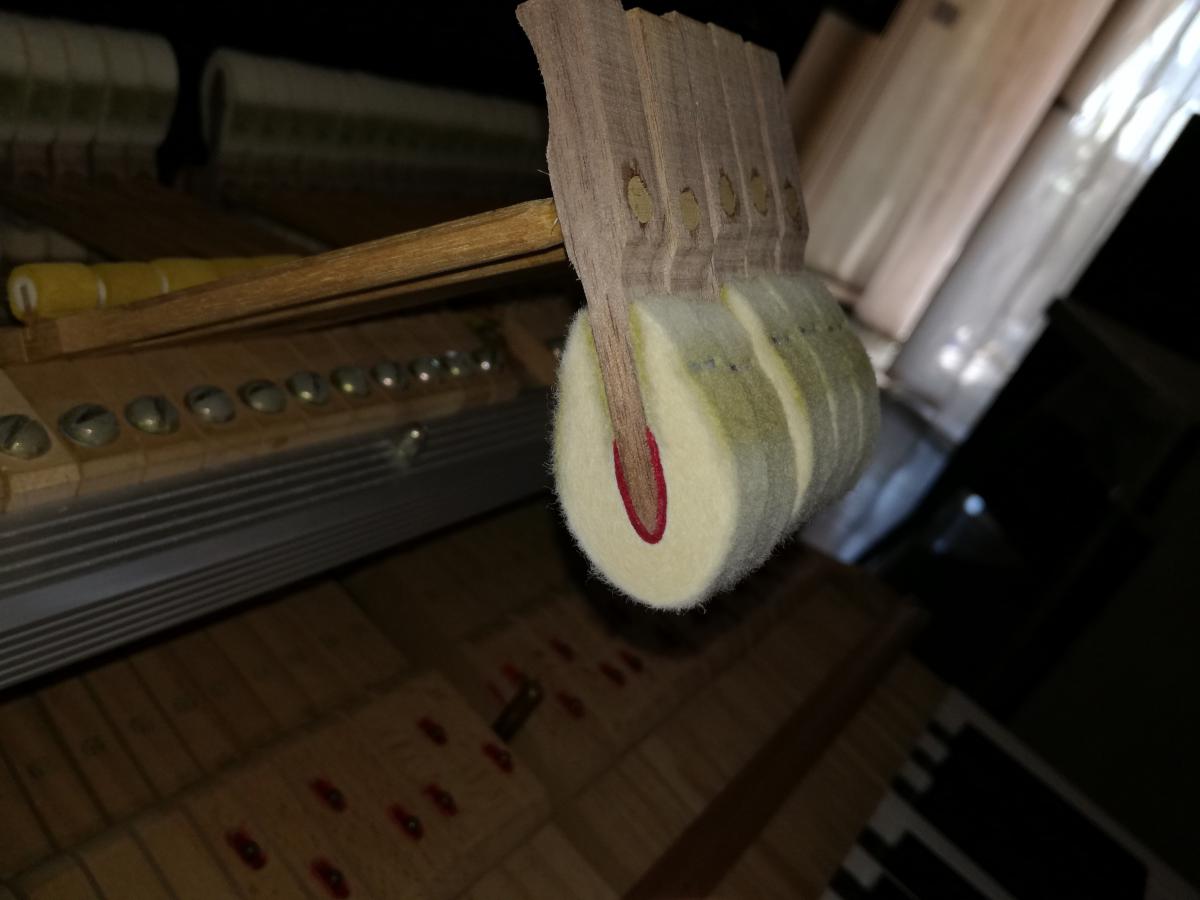
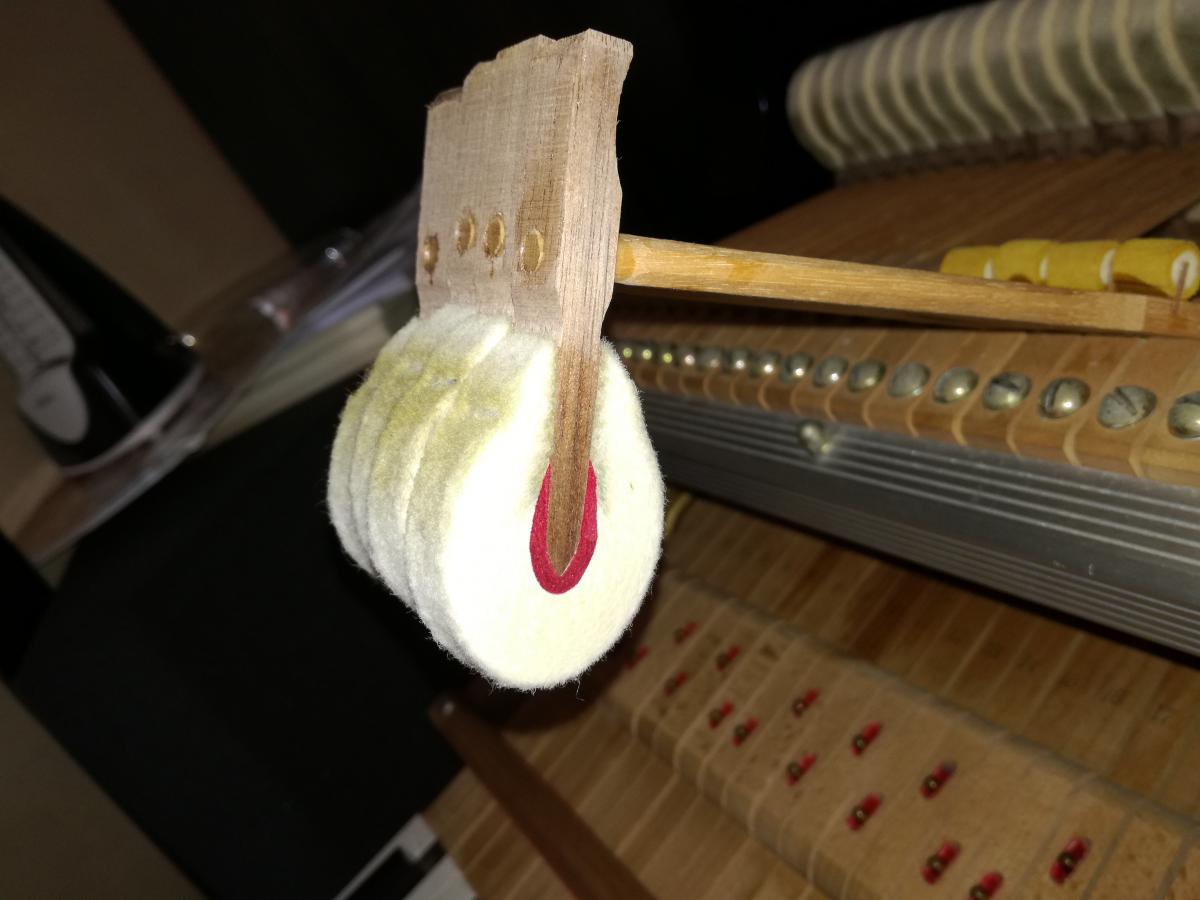
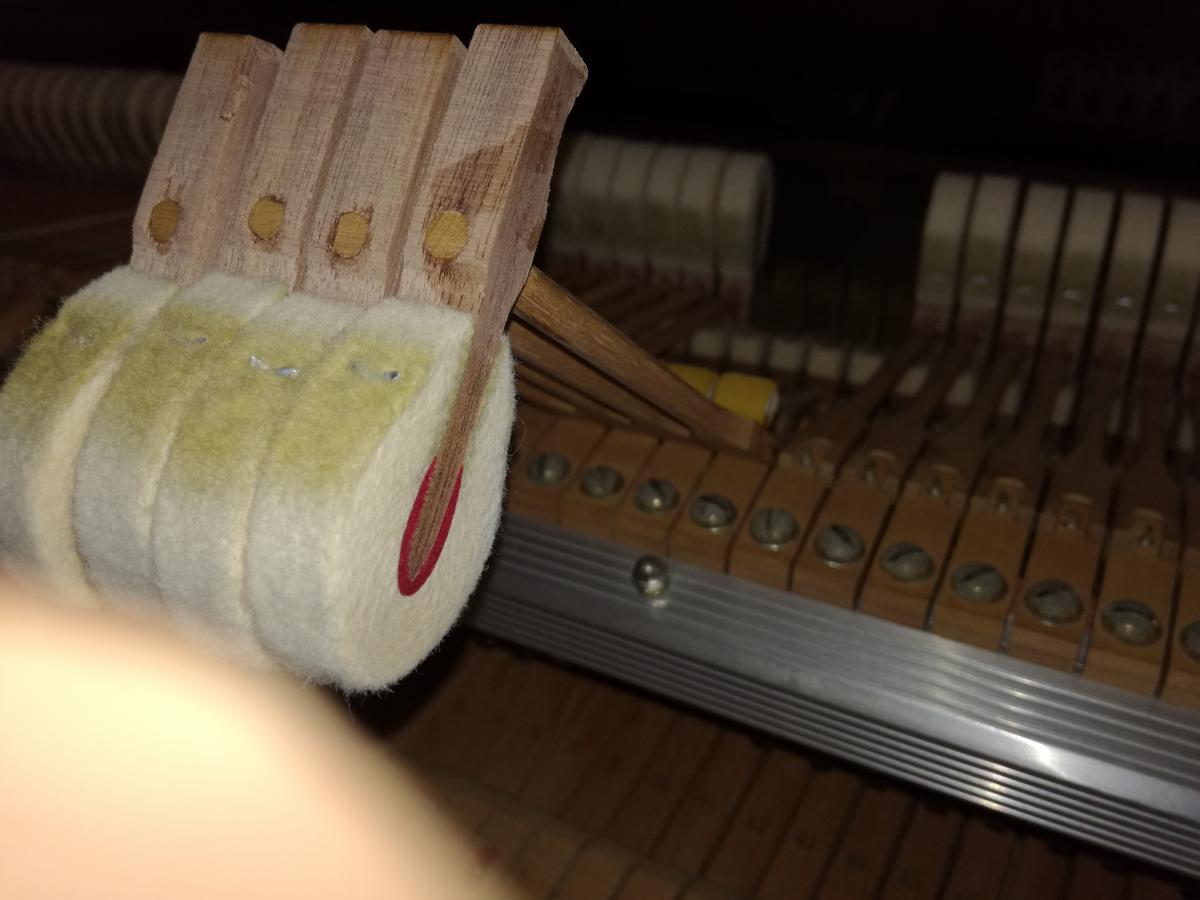
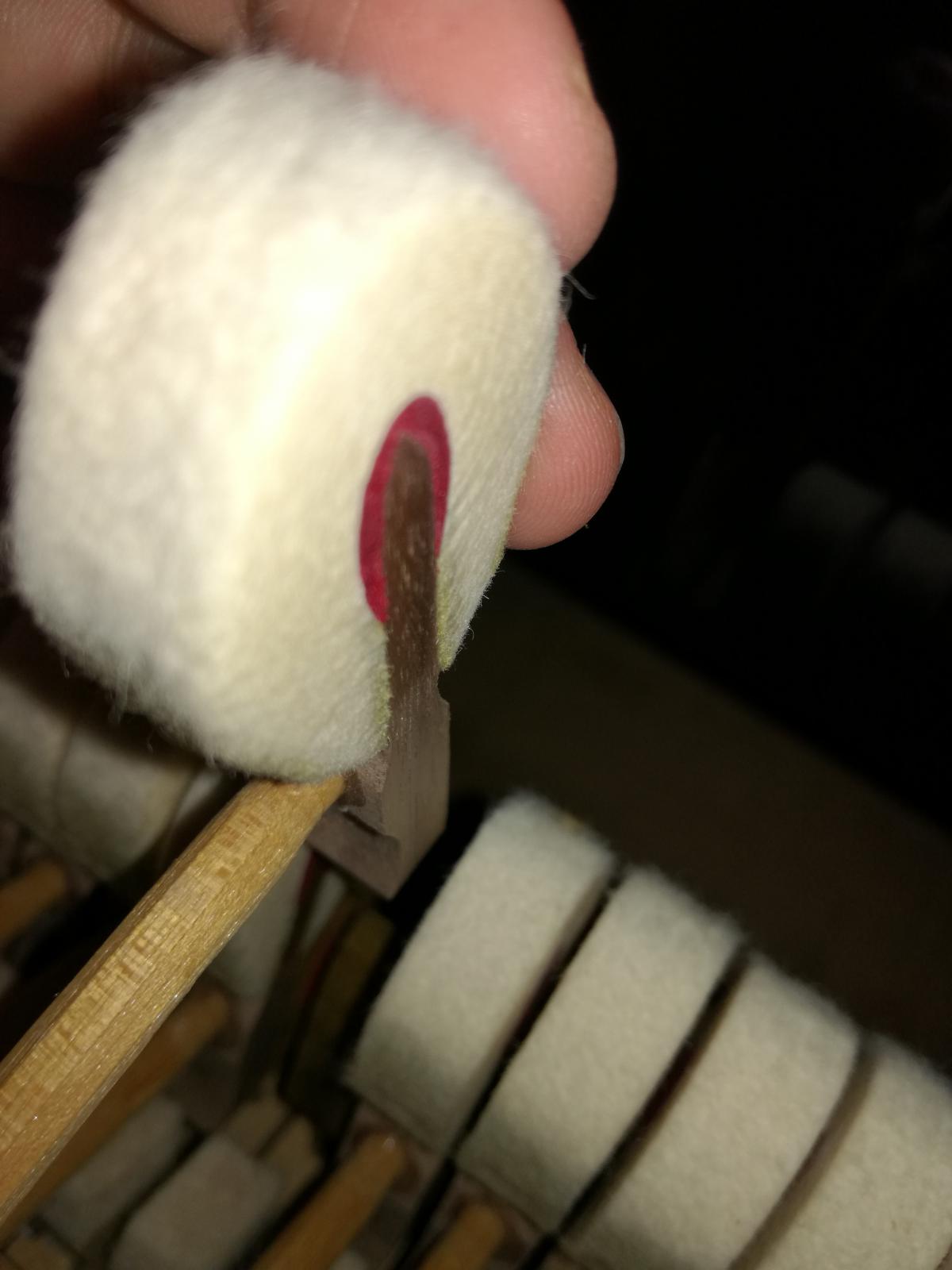
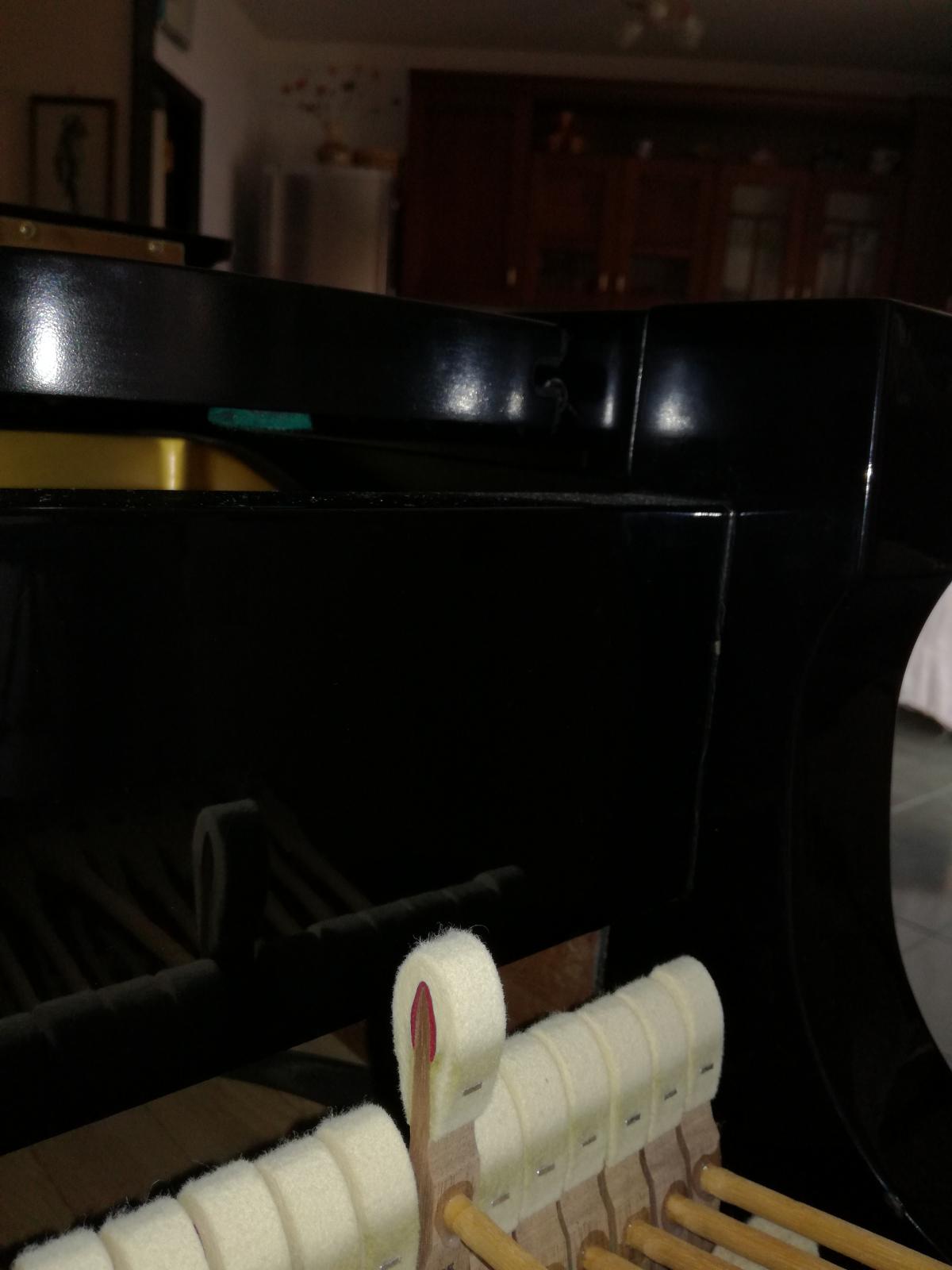
It was returned to me, even though it was in a pitiful state. The drilling was carried out by sending some samples of the old hammer rail to Abel. I checked it myself and no hammer touches nearby strings (at most, on a few notes, it hits 2 or 3 strings with the "una corda" pedal, but the technician said this can be resolved with an adjustment). Regarding the weights and balancing: every key descends easily; the keyboard is light, smooth, and at the same time consistent. I checked the notes that make a 'ploc' sound and it seems that the hammers are well-centered.
Could it also depend on the strings? I was thinking, ignorantly, of a string that might be imperceptibly higher or lower than its homophone neighbors and therefore is not struck in the same way.
check that there is no paper rosette (thickness to adjust the key dip) under the keys of the notes in question ... clumsily forgotten on top of the felt ...
The technician came. The piano was a bit heavy (escapement, very close repetition), that "ploc" sound was a double strike. As for the faulty note, the pusher had shifted and he put it back in place. The piano is a bit dull, especially on the bass notes, but the technician believes it is better not to perform voicing interventions until the hammer felt has been grooved. He told me to play it a lot and to see him again during the summer. He is afraid that by intervening on the voicing now, it might open up too much later while playing. He said that, eventually, one could also use a light dose of impregnating agent, but not now. Do you agree?
The technician came. The piano was a bit heavy (escapement, very close check), that "ploc" sound was a double strike. As for the defective note, the pusher was displaced and he put it back in place. The piano is a bit dull, especially on the bass notes, but the technician believes it is better not to perform voicing interventions until the hammer felt has been grooved. He told me to play it a lot and to check back during the summer. He is afraid that by intervening on the voicing now, it might open up too much later while playing. He said that, eventually, one could also use a light dose of impregnating agent, but not now. Do you agree?
In my opinion, it is right; then if it were a poorly compressed felt, the grooving would be faster and the change more evident. In that case, even more so.
No, I do not agree; in fact, I even wanted to avoid responding. Especially if it concerns a hammer that has been replaced.
The choice of the type of felt and hammer suitable for the instrument at hand is the responsibility of the technician, who must not proceed by trial and error, neither in this phase (choice) nor in the pre-voicing and voicing procedures.
Maturation, the groove (perhaps they even meant the imprint), the holy spirit... no, these are discussions that, in 2017, I personally can no longer tolerate.
Hammer construction technique, wool, measurements, felt compression. All known things, including the procedures to follow to return a piano in good order to the customer.
Wait a moment, the piano sounds good and is well balanced. It is my personal taste to hear the bass more powerful. I have nothing negative to say and I am very demanding.
In short, first you say it's a bit dull, especially in the lows. Now you say it's just the lows and that it sounds good, But there were the hammerings too close together that caused stuttering, the intonation where it's unclear if it needs to be done and when it should be done ... if it's fine, why so many doubts?
Anyway, the stain is the last resort. A bit like trying to resuscitate a dying patient.
Yes, in fact one must look closely at which hammer setting was used for the replacement, as I have already said. See how it has been voiced and how the regulation was performed. A well-compressed hammer setting might, as Giovanni says, not require voicing. It is not quite clear how it was performed and whether the voicing was carried out.
The technician returned yesterday. The mechanical defects had already been resolved last time. As for the tuning, I was a bit presumptuous (in the sense that I was demanding): I wanted him to balance the sound on the bass notes and with the soft pedal once and for all. He told me I am worse than Michelangeli, but I appreciated the "compliment" and insisted that he get the most out of the instrument. He managed to open up the bass using only the needles, closed it a bit in the middle, and left the treble more open. Then I insisted that he do the same work with the soft pedal engaged, and I didn't let him leave until I heard balance and equality. I had started out very angry, and my doubts were not about his competence, but about the passion he puts into it. I don't think I should have to force a technician to do his job well. And besides, I know that from a Yamaha C3 I can get so much. Why let a good piano sound mediocre? In the end, however, I remained satisfied.
BUT..... it seems absurd to me that the hammer rails were not prepared. I don't understand how the parameter can protect the hammer and how the keyboard could have been balanced!!!!!!! Or am I seeing things?
I mean... absurd! I think it's all messed up. Wooly hammers. I also doubt the correct drilling and the perfect alignment of the escapement upright - internal core of the roller... far from being meticulous like Michelangeli!!! Sorry, but I don't think a good job was done