Exchange of Opinions

Soreness in left limb

14 replies 5,118 views

Started by

Jack

Member

Member

Opening post by Jack

Posts
76
City
.

Good evening,

although I read you assiduously, it has been a while since I last intervened on the forum. I am returning to write because I would kindly need some information and advice.

First of all, I would like to purchase Sandor's book "How to Play the Piano". I downloaded the PDF but I would like the hard copy. Unfortunately, it is not available in any bookstore in my city, nor can I find it online. I would appreciate it if someone could provide me with a link to a seller. Thank you.

Now to the point:

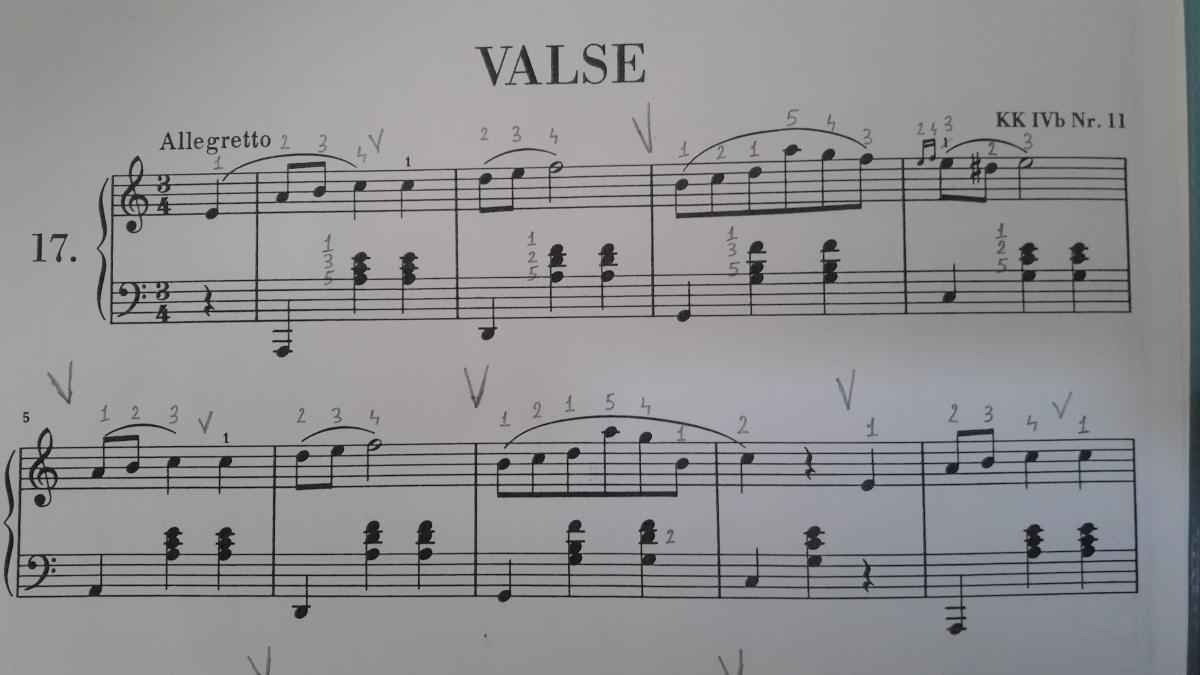
Since mid-March, I have started taking piano lessons. Unfortunately, after playing for a while, I begin to experience soreness in my left arm, specifically the forearm, wrist, and part of the back of the hand. The issue was negligible during the period when I was taking lessons (until June), but now that I am practicing at home, the problem has worsened significantly. My teacher told me it could be the stiffness I still manifest in my wrist movements and the fact that I tend to lower my left wrist. I have worked on this latter aspect. As for the stiffness, however, I find it very difficult. To date, I simply cannot avoid keeping my limbs somewhat tense while playing. I still need to work on it when I resume lessons. What doesn't make sense to me, however, is that I don't feel the discomfort at all in my right hand. And I don't understand why. It makes me think that this depends on the movements I have to make with the left hand on the piece I am learning. The teacher told me to make "arched" movements when transitioning from one chord to another and to work a lot "with the wrist" on the second beat of repeated chords.

I have uploaded a video in which I "strum" Chopin (link below):

Apologizing for the mess I make of it, I would really appreciate it if you could point out any incorrect movements/imperfections I make with my left hand so that I can correct them during these months away from lessons.

I have also thought that my discomfort might stem from a cyst I have had on my left wrist for several years (not to be confused with the clearly visible bone, as I am quite thin). This cyst has never caused me any trouble, but I fear that with piano movements it may exert pressure on nerves and tendons, resulting in soreness. I don't know if I should consult a doctor to have it aspirated or surgically removed. The fact remains that this little pain in my left limb gives me pause. I am afraid that by continuing to practice I might worsen the situation, and the idea of having to nip this wonderful adventure I started just a few months ago in the bud distresses me quite a bit. Tomorrow I will upload a video filmed from below, where the movements I make with my left limb are more clearly visible. In this one I have already uploaded, before I start "playing," I show the parts that hurt.

Thank you for any advice you may wish to give me.

Member

Reply 2 by Jack

Posts
76
City
.

A video filmed from below (link below):

In effect, watching myself again, I tend to lower my wrist still. But can it all depend on this? For the rest, I don't seem to be making coarse movements. And anyway, I have no problems on the right side.

Where is the catch? Why do I have this pain?

Administrator

Reply 4 by Thesimon

Posts
4,504
City
Ariccia, RM

Hi Fulvio. I would like to see a recording where you are visible and not just the keyboard and part of your forearm. To evaluate if there is any tension while you play, I would like to see a recording in which you can be seen completely, possibly wearing a short-sleeved t-shirt that leaves your triceps exposed, and also one that frames your general posture when you sit down to play—in short, one that captures you from head to toe. Let's start from the assumption that pains like these are always due to muscle stiffness. You must learn to control tension and play in complete muscular relaxation by utilizing the weight of the arm and gravity; there are exercises that can be done, I even made a video a while ago for some friends on the forum. It should be somewhere, where I was talking specifically about the weight technique... Where there is a need to play very loudly (fortissimo) and thus weight alone is not enough, it is possible to intervene with a muscular impulse (note well, an impulse). This means that muscular force intervenes only at the instant you need to play a fortissimo chord. It would make no sense to continue pressing against the keyboard with your muscles after the hammer has released the string. We look forward to a recording where you appear healthy.

A presto.

Member

Reply 5 by Jack

Posts
76
City
.

Thank you for the answer, Simone.

When I sit at the piano, I always try to assume the correct posture, with a straight back, stool at the right height so that forearms and wrists are roughly parallel to the floor, sitting "forward" (I didn't imagine that specific benches with oblique seats existed) and feet near the pedals.

Controlling muscular tension, on the other hand, is a practice I find quite difficult, which I am trying to internalize and upon which my teacher insists heavily.

When I do the SCHMITT "little exercises," I realize I am "tense" because the fingers that are not pressing on the keys tremble a bit (they are "nervous") and tend to "shoot" upwards. So, before proceeding with the fingering, my teacher has me rest all the "passive" fingers (so to speak) on the corresponding keys and perform slow, prolonged wrist rotations at the end of the exercise.

The truth is that, unfortunately, the issue of arm weight is still not clear to me. In the sense that by simply performing a "drop" onto the keyboard, without exercising any "force," the hand falls; there's nothing to be done. If this doesn't happen, it's because:

- either the fingers work (with the transfer of weight) by "hooking" the key and holding the weight of the limb. In which case, it is the "active" fingers on the keyboard that are under tension, transferring the load along the entire arm up to the shoulder (I imagine the limb as a suspension bridge, where the shoulder and fingers are the supporting pillars). Yet, this seems possible to me when doing the Beyer exercises. But if you play "Heroic" op.53, how do you perform the weight transfer? I don't understand...

- or else the arm/shoulder is directly holding everything, in which case the fingers "float" elegantly on the keyboard (which is what all the concert pianists I see online do, I believe). However, in my small experience, in that case, my arm should ache, not my forearm and wrist as happens.

In short, my ideas are confused, and how one can play with zero tension (and zero work), exploiting exclusively the weight of the arm and gravity... I still have to figure that out.

I also watched the interesting PianoExpert videos regarding the musculature involved in piano technique. And although everything is clear to me in theory, when I sit at the piano "the tensions" do not go away.

In any case, the anomaly lies in the fact that the right limb (shoulder/arm/forearm/wrist and fingers) does not suffer from this tension that I experience at the piano. Only the left one.

I have uploaded two other "full-body" videos (as you asked me) that I made quickly and which I will remove from YouTube in the coming days. I hope you can give me some indications to improve my posture and improve my balance.

PS. I cannot find your video. Too bad, it would certainly have been a help to me. I continue to look for it.

https://youtu.be/n_aOc2UJxMM

https://youtu.be/ucH_Xs8Cqzk

Member

Reply 6 by nancy

Posts
521

Hi Fulvio, I'm sorry you're having this kind of problem! I'll tell you what comes spontaneously to me observing you in the last video, but it is difficult to help you without being there because the sacred concepts that Simone explained so well to you unfortunately require live demonstration work... it's harder with words.

As is normal for someone starting to study, you hold back a lot of energy specifically in your entire left arm. While on the right, you are already slightly more relaxed...

The advice I feel I can give you, since I cannot show you live which movements are useful to help you relax on the keyboard, is to fragment what you are playing into single chords. Study the movement of the arm relaxing with every note you execute. Then connect them, always performing slowly and with great fluidity, the bass to the chord. Look for the right sensation... once you experience it, it will be more spontaneous to try to reproduce it and the movement will become more natural. You should acquire greater wrist flexibility.....

Oh my goodness! I really think I'm not of much help from here.... Simone is definitely better at explaining! I think I'm the only one who understood myself!

Member

Reply 7 by Jack

Posts
76
City
.

Hi Nancy, good to see you.

If I understood correctly, I must focus on every note and seek the correct finger/wrist positioning in order to minimize muscular tension. The same applies to the arm movement from one note/chord to the next.

In practice, reasoning about the bass clef (2nd measure), I position myself on the A with the 5th finger and seek the right finger/wrist position. Then I move to the A/C/E chord (5-3-1) ("experimenting" with the smoothest movement possible) and repeat the relaxation, trying to zero out the tension on this new chord... etc.

Little by little, it should become natural for me.

I will certainly try... Every suggestion is welcome!

Thank you for your input.

Attachment

Member

Reply 8 by nancy

Posts
521

....focus on the feeling of relaxation...don't dwell too much on thinking..."the wrist must be at 40° the arm at 30°" (just to say something)....and the sensation that you must seek..

Member

Reply 9 by Jack

Posts
76
City
.

Yes, it is clear to me that I must focus on this aspect. Otherwise, long piano sessions will always be precluded by the onset of muscular tension.

I am trying a bit to follow the path you indicated and let's see if I can find the squaring of the circle.

I am also waiting for any advice from Simone (if he wants to, obviously).

PS. In the list of video courses, I cannot access the section relating to "piano technique". More specifically, the link that refers to the video opens a blank page.

Member

Reply 11 by Jack

Posts
76
City
.

Thank you for the videos you posted. They give me many points to reflect on.

As you rightly say at the end of the first video, in these cases the only way is still to rely on the teacher's "cures."

In reality, following Nancy's advice, I have focused on searching for the "relaxation" of the gesture, and I have found a couple of useful tips:

1. moving/lifting the (left) limb from one chord to another using not the forearm, as I did before, but the shoulder/arm. By doing this, I no longer record almost any soreness in the forearm.

2. as for the wrist/hand tension, instead, I find benefit in performing the weight transfer in a so-called... "extreme" way. That is, not limiting myself to "striking" the key with a standard "spoon" hand position, but further relaxing the hand so that the finger remains adherent to the keyboard almost by "friction." I hope I explained myself well. In the end, I adopt a posture... "Horowitz-style."

The point is that, although I find benefit from these two tips, I don't know if they are correct in terms of piano technique (I really think not for number 2). So for this summer period I am "scraping by" as best I can, and when I resume lessons at the end of September/October, I will discuss it with my teacher.

Thank you for the advice.

Moderator

Reply 12 by pianoexpert

Posts
3,876
City
rocca di papa

Nancy's observation strikes me, and I would like to start from there. Not that Simone's observations are incorrect; on the contrary, as we can clearly see, he has also posted some very useful videos.

I would like to bypass the obstacle, not to evade it but rather to seize the opportunity to generalize.

Not worrying too much, not theorizing too much, is sometimes useful. In the case of adult learning, a great unconscious critical spirit intervenes. The adult is mentally "structured," and for them, it will be much more difficult to learn to ski, to play tennis, or to play the piano by surrendering to simple "doing." Starting with just relaxation is a good beginning. If stiffness and tension set in during an accompaniment for the left hand that requires very little, it means there is critical mental processing underneath. Even changing pieces is not a bad idea. The Teacher's attention will be the best guide. Also watch my video tutorials on piano technique. A few days of rest and then start again. In one of my tutorials, I explain and demonstrate how, while keeping the fingertips firm, I can keep the muscles of the arm and forearm free from tension. The impulse Simone speaks of is correct, but in my opinion, it can be naturalized in an advanced stage. At the beginning, the student can only act on gravitation and relaxation (a very natural hand posture, without "clenched" images).

In the piece in question, then, how do you move the arm and hand from one side of the keyboard to the other? Try performing this movement slowly as if the entire arm were hanging from the shoulder, relaxing all... I say all the muscles of the arm and forearm. The sensation that must be captured is that of a "dead arm." This concept of shoulder mobility will serve in the future to develop pp, p, mf, and f.

I remember listening to and seeing W. Bachaus from very close range playing Schumann's Warum from Fantasiestücke. His shoulders were very mobile and his arms were gently commanded by this relaxed suspension, which in an instant could become maximum support. A thousand colors emerged from the keyboard and the voices sang with differentiated timbre. I will not forget it.

So for now, few rules but healthy ones. Few movements, but correct ones. More relaxation.

P.S. In this piece, it is worth playing, if necessary, with more gravitation in the right hand, which will become very cantabile. The left hand does and must do very little, other than marking the sweet and slow waltz tempo.

Happy practicing

Member

Reply 13 by Jack

Posts
76
City
.

The fact of not worrying too much, of not theorizing too much, is sometimes useful. In the case of adult learning, a great unconscious critical spirit intervenes. The adult is mentally "structured" and for them it will be much more difficult to learn to ski, to play tennis, or to play the piano by surrendering to simple "doing."

I believe this is a correct interpretation. In my case, this is added to a rather rational approach (character attitude) to studying the piano. I try to "plan" every gesture. And this, as you say, can be counterproductive.

In one of my tutorials, I explain and exemplify how, while keeping the tips of the fingers firm, I can keep the muscles of the arm and forearm tension-free.

I have started watching your tutorials on piano technique. The explanation you mention would be the "Holy Grail" that I am looking for. Because, as I have already written in a previous post, I simply cannot grasp how the wrist, forearm, and arm can be relaxed if the terminals (fingers) hook onto the keys and thus are not relaxed.

In the piece in question, then, how do you move the arm and hand from one side of the keyboard to the other? Try to perform this movement slowly as if the whole arm were hanging from the shoulder, relaxing all... I say all the muscles of the arm and forearm. The sensation that must be captured is that of a "dead arm." This concept of shoulder mobility will serve in the future to develop pp, p, mf, f.

Even here, unfortunately, I don't understand how one can have the sensation of a "dead arm." Because the moment I "move" from one chord to another, muscular force necessarily intervenes to lift/move the limb. Whether it is the shoulder, the arm, or the forearm doing the work is a choice of the "pianist," I imagine. In my case, I noticed less "fatigue" using the shoulder/arm rather than the forearm. Which is reasonable since the arm has greater muscular capacity than the forearm.

P.S. in this piece it is worth playing, if anything, with more gravitation in the right hand, which will become very cantabile. The left hand does and must do very little, if not marking the sweet and slow waltz tempo.

Happy studying

I am becoming convinced that studying the piano is a journey to be undertaken with extreme gradualness, with the right timing required to learn and metabolize musical theory and piano technique.

As a layman, I thought that playing this instrument translated into the ability to read a score and "catch" the notes on the keyboard. My apologies!

Many of the observations/tips you give me I cannot even understand. For example, although I have watched TheSimon's video several times, I haven't quite understood what the "cantato" (singing) consists of. I imagine it is what in Pozzoli is identified with the treatment of "solfeggi cantati" (sung solfeggio)...

Regarding the use of "gravitation" with the right hand, is it a matter of using the "falling" technique more?

My original sin (so to speak) was starting as an adult, so my approach was wanting to achieve results that would satisfy "me" in a short time. In hindsight, I "forced" my teacher's choices (I was the one who wanted the piece in question).

I believe I need to review my study path together with my teacher and put myself completely in his hands.

Thank you for your input.

Member

Reply 14 by nancy

Posts
521

...look, starting as an adult has its pros and cons. You certainly have greater emotional maturity and awareness of goals compared to a child.. it's not all easier. but rightly, as Paolo used to say, one tries to structure and rationalize too much even things that should be more sensory.

Many pianistic gestures must be taught in person to prevent phrases like "dead arm" (braccio morto), which is common in piano jargon, from remaining nebulous. if it is not experienced guided by the physical presence of a teacher (who guides you based on the student's feedback), you cannot transform this concept into your own empirical sensation.

Anyway...

Give it a try.....stand up and bend your torso completely forward, letting your arms hang...check the hanging from the shoulders, instead letting the entire limb hang completely relaxed...while always maintaining this sensation of relaxation, manage the swaying by varying its speed and direction. You will notice that even the arm participates; it is not completely "dead weight," but it is nonetheless relaxed and is suspended mainly from the shoulder. In this position, gravity is of great help to you, but roughly speaking on the keyboard, you have a similar participation of the shoulder, arm, and forearm. The fingers that "hook" do not push by exerting force...but simply counteract the gravitational fall of the relaxed arm.

In the piece you are playing, the left arm describes (from below to the chord) arcs in which it is supported predominantly by the shoulder and the arm "sways" completely relaxed...."dead" means that it does not push. The wrist flexes softly, pulling the weight of the hand along with it.

.....

Moderator

Reply 15 by pianoexpert

Posts
3,876
City
rocca di papa

Thank you Nancy for the help! I was too "summary"......or perhaps too complicated. In short, that very "described" arc of which you speak, Nancy, would suggest moving from the shoulder and making sure the hand and fingers are the last to leave the keyboard to move (see also the photos in Sandor's book). In this way, an effective "way of slurring" is also created, perhaps, for shorter displacement stretches. I find the suggestion of the fingers that "counteract the fall by gravity" to be correct and intuitive.

At first many things seem difficult...but then they become natural...like speaking and walking.

Don't regret it, Fulvio, regarding the choice of piece. It is perfectly fine. It is not excessively difficult. However, it is Chopin.

I wouldn't want to have complicated things for you...from a distance. The last thing I want to say is "observe yourself". When movements are not natural and relaxed...something is wrong. The Maestro will watch over this and more.

Log in to participate