

I am submitting this page by Britten to you; I have a curiosity regarding the First Violin and the Viola. Based on what criterion are those parts (I am referring to the 2-part counterpoint) playable?
Being a quartet, the divisi does not apply
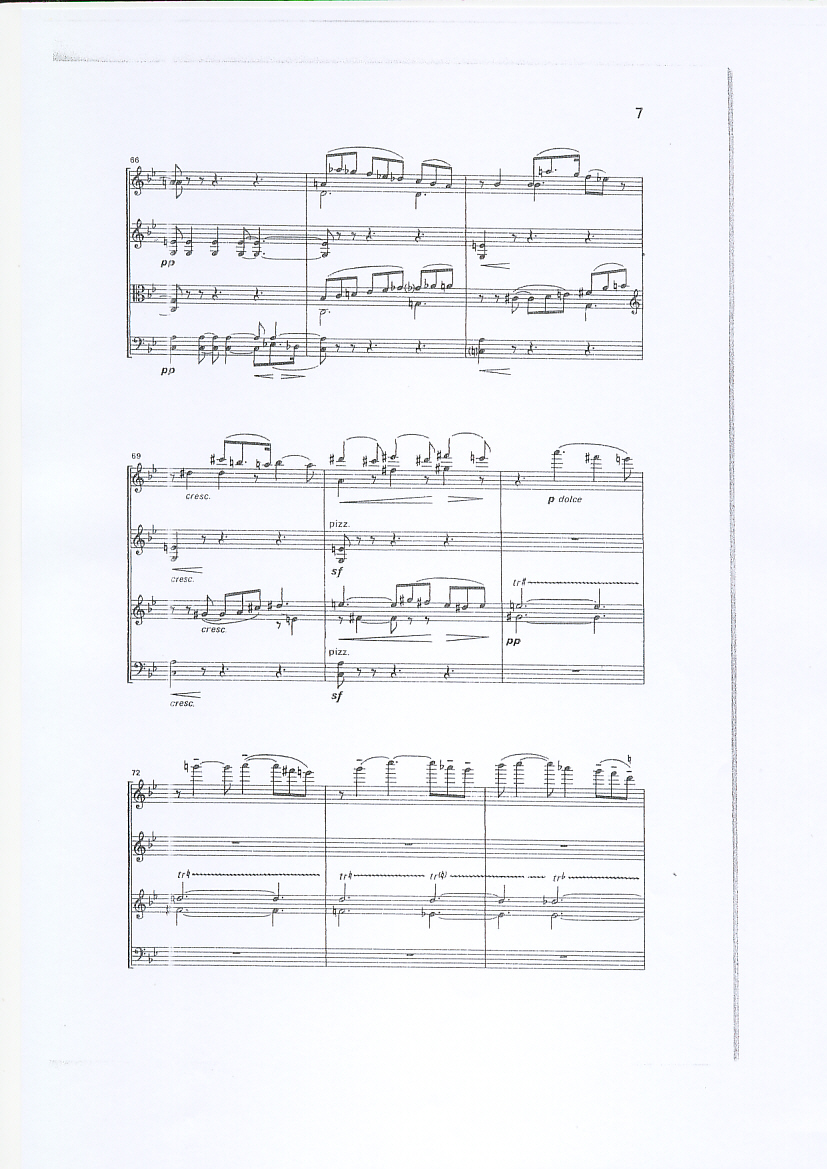
Started by
Gagaku
Member
Member
I am submitting this page by Britten to you; I have a curiosity regarding the First Violin and the Viola. Based on what criterion are those parts (I am referring to the 2-part counterpoint) playable?
Being a quartet, the divisi does not apply
Member
Double strings. On bowed instruments, it is possible to play two consecutive strings simultaneously
But, trust me, this is nothing compared to what can be done with a bowed instrument...
Member
My doubt was about playing 2 strings with evident rhythmic differences ... it seems to me that one can... right?
Member
Gagaku wrote:My doubt was about playing 2 strings with evident rhythmic differences ... it seems to me that one can... right?
Two considerations: bar 67, violin 1. have you noticed what note the lower part is? A D, so it is an open string, meaning there is no need for any fingering. The upper part is played on the A string, therefore consecutive to the D string, without any difficulty, except for maintaining the bow in the correct position so that the two strings sound together. Furthermore, the rhythmic difference you see is irrelevant: try to reason in terms of bowing: look at how the triplets of the upper part are slurred: 6+3; and look at the two Ds of the lower part: 6/8+3/8, thus exactly the same bow stroke.
The same applies, in the same bar, to the viola. The C and G of the lower part are open strings.
Member
Always clear, Carlos.