Study

Suitable technique for Prokofiev's Toccata

6 replies 2,426 views

Started by

pianothor

Member

Member

Opening post by pianothor

Posts
217
City
Mantova

Hi everyone! Today while listening to this piece, which attracts me quite a bit, I was wondering... to play it, it seems to me that a technique or a predisposition for playing fast and detached sixteenth notes is essential, right?

I have never tried because I have never found a piece that requires them for 4-5 minutes; could this be the primary difficulty of this piece in your opinion?

Another question that generalizes everything is, what is the true difficulty of this toccata?

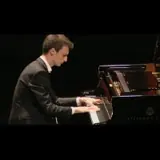
Let's listen to Martha...

Member

Reply 2 by Crisantemi

Posts
139
City
Brescia

This toccata is very beautiful, perhaps a tiny bit long for my tastes... to tell the truth, I associate the idea of a toccata with a type of fast and legato phrasing, fragments of scales and arpeggios, with an almost improvisational character, whereas these rhythmic repetitions remind me more of a Slavic dance. Technically, the difficulties seem many to me... First, playing the right notes in time... then the hand crossings, and maintaining elastic articulations for all that time without stiffening. But I am not a great pianist, I am waiting to read the opinion of someone more accredited

Moderator

Reply 3 by pianoexpert

Posts
3,876
City
rocca di papa

I will try to give my opinion. Aside from Martha's skill and "wisdom," a toccata, by definition, is a virtuoso composition written to demonstrate the technical-interpretative qualities of the pianist. This in the modern sense. Originally, "toccare" (to touch) belonged to all keyboard instruments. It was said "to play the violin and touch the harpsichord...". Now, the "wisdom" in performing compositions like this, in my opinion, lies in being able to find moments of rest, beyond the two true moments of interruption of the "perpetual motion." Even in Chopin's etudes, for example, one must alternate moments of relaxation with moments of full vigor. This must not affect the sound result and the "full" sonorities. The triceps must always be under control and as relaxed as possible. The shoulder, strangely enough, participates a lot because, naturally, it decides the co-participation of strong muscles in aid of weak ones. The wrist should always be "available," both for flexibility and the release of tension, and for "firmness" in healthy opposition to the large muscles. In many sectors, the fingers are also "firm" and not rigid. Use of rotation when possible and exploitation of small crescendos as if one wanted to go deeper and deeper into the bottom of the keyboard... only to return to the surface. Naturally, my words should not be taken literally. They are intended only to be a "representation" of what could occur in the construction of the "pianistic gesture." And then... the instrument. It is unthinkable to believe that one can find an acceptable and high-level solution if one does not have at their disposal a high-level instrument, and above all, one that is well-regulated and tuned. The instrument's ability to provide a good range between piano and forte allows the pianist to exploit those moments of rest that oscillate between playing "on the escapement" and "beyond the escapement." Repetition notes must not be a problem, and therefore the instrument must be well-regulated and fluid, without the need to over-tension the repetition spring. The key leverage is important. A longer leverage, as in a grand piano, makes repetitions easier, and also the key dip, not exceeding 9.8mm, could help a lot. It is practically difficult to play this piece on a baby grand, perhaps with a 10.35 dip and a weight of 58-50!!!

Here is the opportunity to study the correlation between the development of pianistic technique and the functioning of our dear instrument.

This is just a summary of my thoughts... there would be much to discuss, both musically and technologically, in front of the instrument.

Member

Reply 4 by pianothor

Posts
217
City
Mantova

Very interesting Paolo, thank you very much for your answer.. it was what I was looking for, a general summary of the difficulties and requirements of this piece... I had also hypothesized that the main difficulty was being incredibly agile and fluid, I thought there were more hidden obstacles (such as the instrument, obviously) given the fame of this piece..

Moderator

Reply 5 by Frank

Posts
3,838
City
-
pianoexpert wrote:

A toccata, by definition, is a virtuoso composition written to demonstrate the technical-interpretative qualities of the pianist. This is in the modern sense. Originally, "toccare" (to touch) belonged to all keyboard instruments. It was said "to play the violin and touch the harpsichord..."

In effect, during the initial phase of the 1500s, the toccata is characterized by a preludial aspect, with a free and imaginative movement similar to the first ricercare, which was obtained through the technique of "touching the instrument," a form strictly detached from the vocal model (see pieces for lute, "tastar de corde")

Even at its origins, the typical elements were:

- Rapid passages

- Richness of ornamental figurations

- Free formal structure

A little history never hurts

In the second half of the 1500s, the practice of the toccata intended for the organ developed in the Venetian area. Toccatas are based on fast passages on an chordal basis and a middle section with a simple imitative structure; see G. and A. Gabrieli and C. Merulo.

One must mention the work of C. Merulo: "Toccate in due volumi" (Toccatas in two volumes) with innovations of a structural-harmonic character, moving from the improvisatory toccata phase to a phase with sections written in the fugato style of the ricercare. This new multi-sectional compositional mode was developed in Germany by Froberger, Buxtehude, and Bach.

G. Gabrieli also defines the toccata as organ intonation, for example, that composed on 12 tones of music.

Adriano Banchieri dedicates a text titled "l'organo suonarino," dedicated to the technique of improvising intonations.

In Naples, the virtuoso toccata develops with short contrasting sections, intended in particular for the harpsichord.

How much of all this do you find in Prokofiev's piece?

Member

Reply 6 by Crisantemi

Posts
139
City
Brescia

Thanks Frank, your post frames the toccata historically and stylistically... and all in all it confirms my impression that Prokofiev's piece of the toccata only has the name. I cannot find the free and preludial style that you mention, nor fast passages on an chordal basis or imitations... It might be interesting to take a look at Banchieri's text...

now I'm going to IMSLP to check

Moderator

Reply 7 by Frank

Posts
3,838
City
-

It must be said, however, that over time various areas have become emancipated, decontextualized, and defunctionalized... just think of the suite. And besides, who could ever dance to a Chopin Waltz? Even the toccata has had its evolution.

Log in to participate