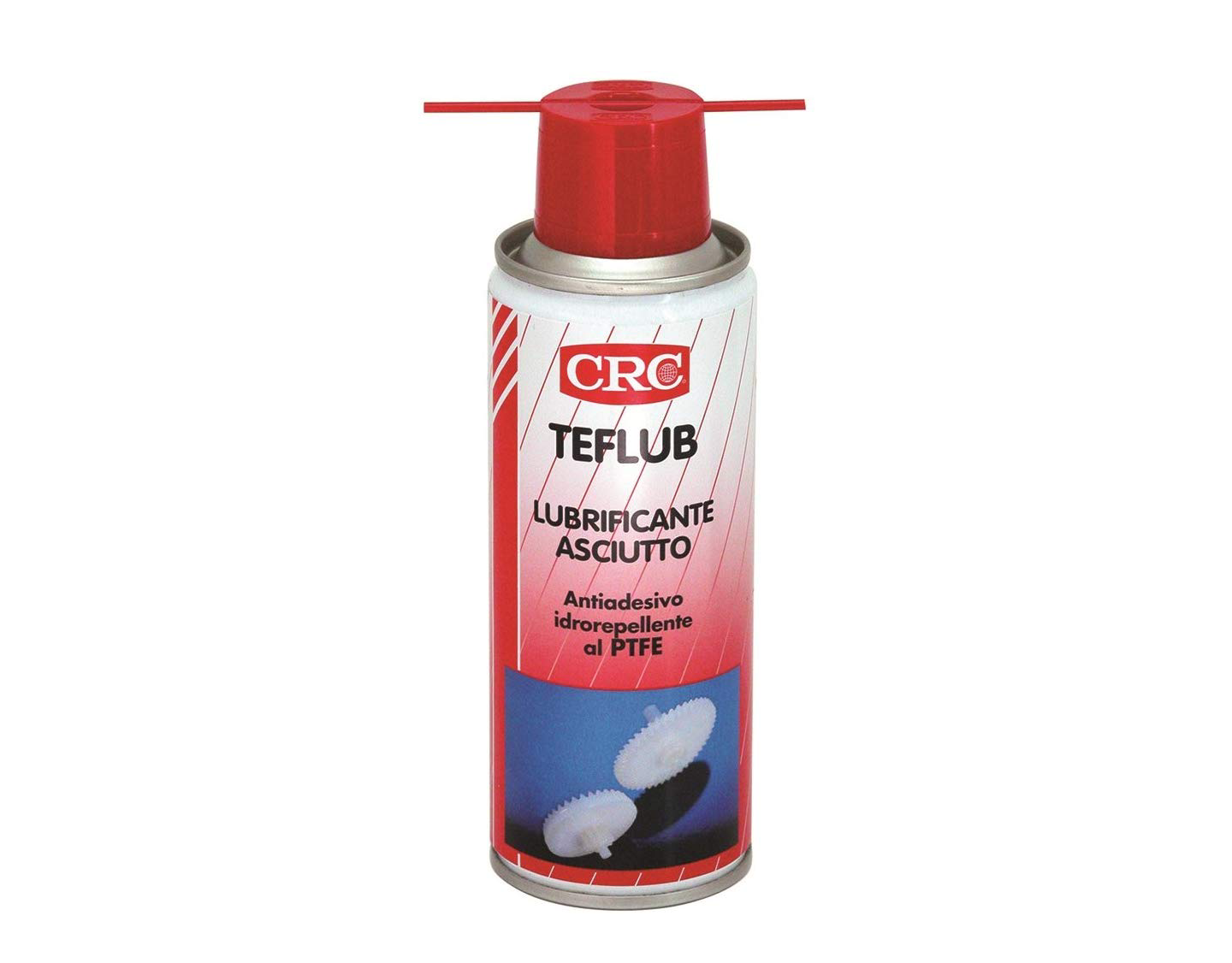
Hello, the dry lubricant product shown in video 9 of the "journey inside the piano" is the CRC Teflub PTFE spray, right?
If I understood correctly, to lubricate the internal parts, the product you recommend is Teflon, but reading the spray's specifications, it does not mention the content.
Thank you for watching them. Naturally, they cannot and must not be actual training courses, but only an indication to better know our instrument and to be able to go deeper, with consequent pianistic advantages. The preparation and tuning of the piano are essential to obtain the maximum performance from the instrument regarding its functioning and sound, and therefore to truly favor musical and professional growth. Lastly, knowing how to better communicate with one's own technician and evaluate the reliability of the proposed interventions made by them to improve and maintain the instrument
The large board is fine! For the rollers, NO! For the rollers, microteflon powder is necessary, which can be found in foreign supplies. Search on the internet. However, it must be known how to apply it, following the preparation of the rollers. It is appropriate that an expert does this... who knows the product and knows how to restore the rollers. DO NOT USE TALC UNDER ANY CIRCUMSTANCES!!!!
What Francesco says is correct. The lack of descent (we are talking about the tail) can depend on: mechanical pins or perhaps rods being too tight, or perhaps the weights of the damper mechanism that have oxidized, swollen, and are touching each other.
It is nonetheless appropriate to check the entire mechanism and all the mechanical pins. Sometimes we get used to a hard keyboard and do not check the state of friction until it definitively prevents the movement of the parts. The fact that the dampers are working poorly is a symptom. With excessive friction, I recall, the downward weight of the keys becomes excessive (a sensation of hardness) and the return weight (even more important) becomes too low, preventing us from easily executing fast passages, repeated notes, ornaments, etc..
It is necessary to verify and measure the friction and eventually replace the fork pins, taking care to slightly ream the bushings (strictly with straight reamers and not conical ones!!!) and increase the size of the pins themselves by one size. Values: hammer rails 3-5 gr. Jack rails 3-7 gr. Escapement studs: once freed from the spring, they must fall, moving under their own weight (1-2 gr.). For the dampers, the values 3-7 gr. apply.
The mechanism will return to new life.
P.S. I wanted to add, also for Bosendorfer, that Teflon micro-powder, as well as graphite, helps to improve, but does not free movement which, if impeded, will not become regular again even by applying dry lubricants. Therefore, first restore the "health of the mechanism" and then, if necessary, improve with graphite and Teflon powder (always moderately).
In any case, I have noticed from experience that there is a distinction between "physiological" friction (excessive ambient humidity) and "pathological" friction (pins that need to be replaced): in the first case, the resistance is minimal and playing on it for a bit is enough to "loosen" the articulation points; in the second case, these resistances are very evident and not so reversible.