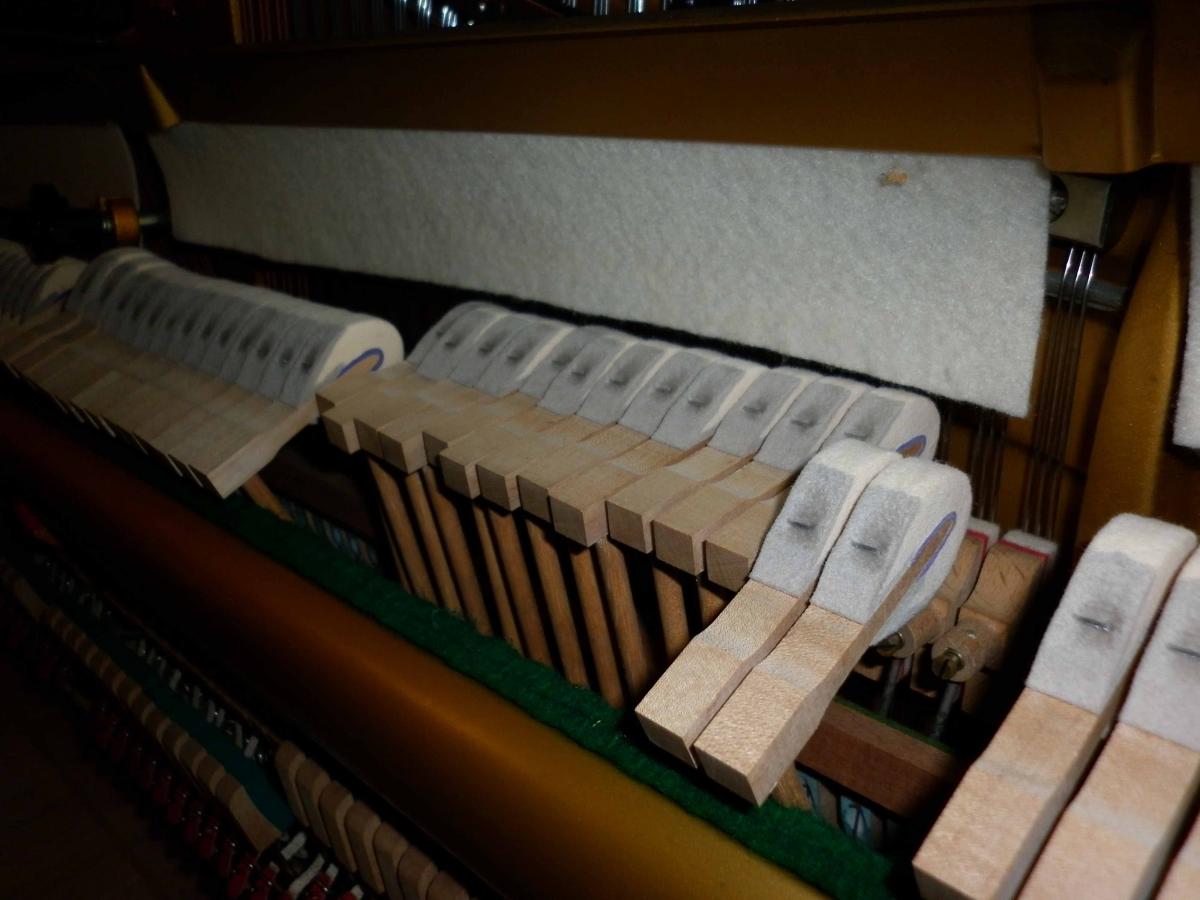
Dear Pianoexpert,sorry for my trivial question,when constructing the hammer head after gluing the felt to the wooden shank, why is it necessary to "drive in" that metal staple as a sort of additional fastener?
Thank you and again compliments on your excellent work.
I would say yes indeed. It is a further stop for the felt which, being pressed onto the wooden core, undergoes strong compression. Consider that the most compressed part is at the apex and that the energy of all the felt composing the hammer shape is channeled towards it. ...Perhaps this is not a very exhaustive explanation, but one should see the video of the construction of a hammer maker.
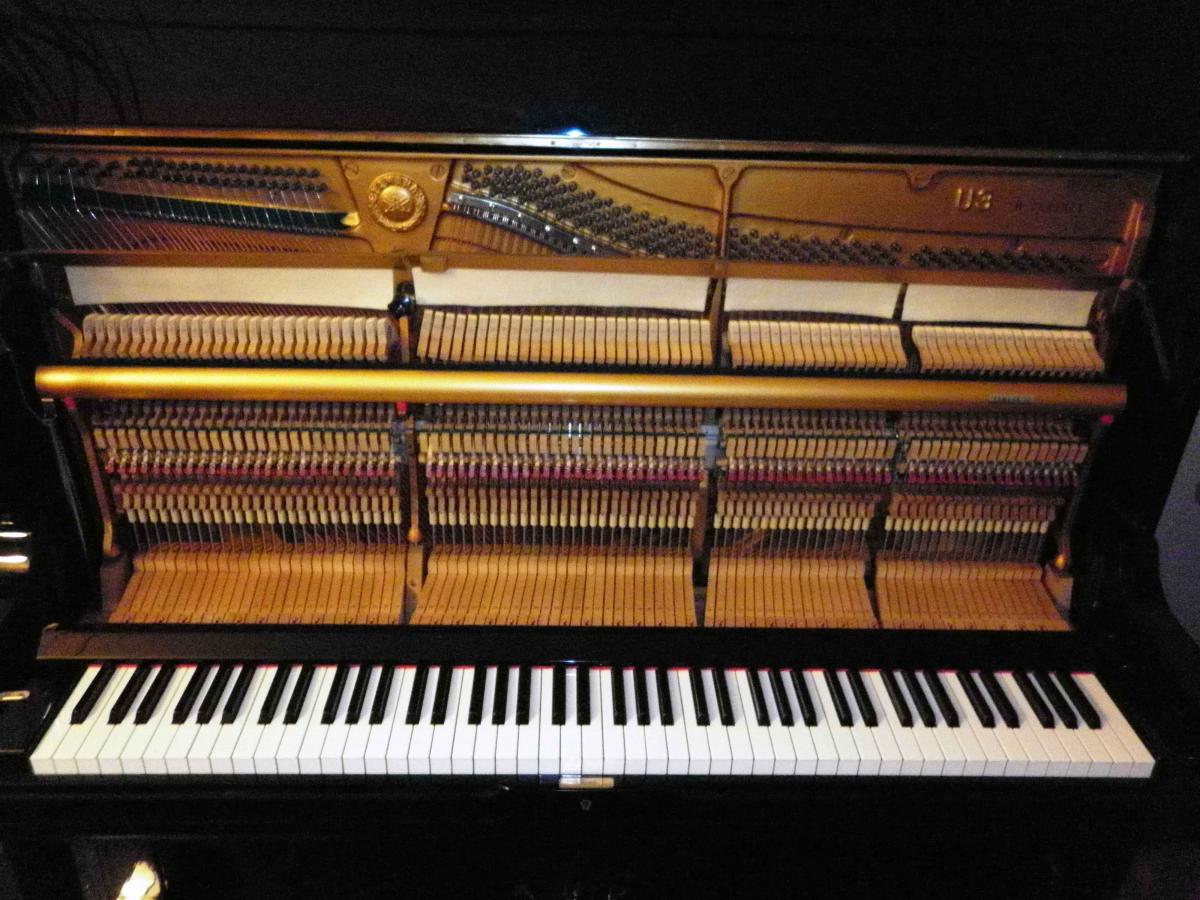
speaking of hammers, after following the tutorial regarding upright piano regulation, I went to perform this check: I depressed all the keys of the middle octave (for example) and noticed that the hammers do not have the same distance from the strings. When playing, I don't notice any particular anomalies. Can these differences cause any problems?
The piano is certainly out of regulation. Of course, an out-of-regulation piano can be played. Sometimes the pianist gets used to it and compensates for even these progressive inequalities. You will feel the difference after the regulation intervention.
V
Vitrus
Member
Reply 6 by Vitrus
Posts
37
Thank you so much, compliments on the interesting tutorials
a propos of hammers, after following the tutorial regarding upright piano regulation, I went to perform this check: I depressed all the keys of the middle octave (for example) and noticed that the hammers do not have the same distance from the strings. When playing, I don't notice any particular anomalies. Can these differences cause any problems?
Thank you
Franco
I am trying to give an answer almost a decade later, and perhaps having acquired more knowledge: the hammers in question DO NOT HAVE THE SAME ESCAPEMENT DISTANCE from the strings, in the sense that by regulating differently the escapement button via the appropriate screw, the hammers that have the button regulated further back—that is, lower, by tightening the screw—stop much sooner before reaching the strings, escaping prematurely, while other hammers escape almost near the strings because they have the escapement regulation buttons unscrewed—that is, higher—so the tips of the escapement levers meet the button later and the upright escapes from under the hammer heads later... I hope I have been clear.
I don't think so, Saverio. From the photo, it really looks like the hammers are already in let-off... and if so, even too far forward (let-off at about 15mm from the strings). In any case, the entire regulation must be performed.
Little advice, Saverio. Have the mute removed and adjust the escapement to 3-2-1 mm from the string. It is a regulation more suited to a "grand piano" and will give you much more satisfaction.