L. V. Beethoven

The mystery of Opus 121a

5 replies 1,396 views

Started by

danielescarpetti

Member

Member

Opening post by danielescarpetti

Posts
1,032
City
Castel San Pietro Terme

In letter no. 153 of August 27 to the publisher Breitkopf & Härtel, Kaspar Anton Karl van Beethoven proposed the publication of "variations for piano, violin and cello with introduction and grand final piece". (Ludwig van Beethoven. Epistolario volume I 1783-1807. Edited by Sieghard Brandenburg. Skira editore) The problem lies in the fact that the only Beethoven work with this instrumentation that corresponds to this description is Opus 121a. In effect, listening to it highlights the stylistic discrepancy existing between the introduction and postlude – typical late Beethoven music – and the very simple variations which certainly could not be thought to have been conceived in the composer's final years.

On July 19, 1816, Beethoven wrote letter 950 to the publisher Gottfried Christoph Härtel and offered him – among other works – also the publication of the "Variations, with an introduction and a postlude for violin, cello and piano" and, he added, "(...) they are part of my early works, but it is not poor stuff". (Ludwig van Beethoven. Epistolario volume I 1783-1807. Edited by Sieghard Brandenburg. Skira editore) In fact, the manuscript in our possession dates back to approximately that period and contains the introduction and postlude that we know. It is therefore quite evident that on that occasion, in anticipation of a possible publication, Beethoven remade the introductory piece and the final piece and, probably, also revised something at the level of the Variations. But, if that were the case, it would mean that the original manuscript has been lost and one must speak of two versions of this work, the first dating from 1803, the second from 1816.

Breitkopf & HärtelKaspar Anton Karl van Beethoven Gottfried Christoph Härtel

Member

Reply 2 by OrlandiArmando

Posts
234
City
San Biagio di Valpolcevera (Genova)

Dear Daniele, here is the description of the Kinky-Halm which may be illuminating:

Period of composition: When the work was written cannot be determined exactly. However, the assumption based on the report of the London-based musician Edward Schultz (in the London magazine »The Harmonicon« from January 1824, German in Thayer- D.-R. IV2,456-458) that the work was composed in 1823 is refuted by a recently surfaced letter from Beethoven dated July 19, 1816. In this letter from the master to G. Härtel, auctioned at Gerd Rosen on February 1, 1951, among the works offered to the publisher, the second item is: "Variations with introduction on a Müller theme and from my earlier composition, however not to be counted among the reprehensible ones." A relatively early period of composition is also suggested by the fact that the signature on the autograph features German lettering, a characteristic that Beethoven abandoned after 1817 in favor of Latin script. The date of the first performance has not been determined.

The song theme, not specified in the original edition, comes from Wenzel Müller's two-act Singspiel "Die Schwestern von Prag" (text after Philipp Hafner's comedy by Joachim Perinet), which was first performed in 1794 at Marinelli's Leopoldstädter Theater in Vienna (see Gerber's N. L. III, 516, No. 9) and appeared on the program in later years - 1806, 1813, 1814. The folk-style song also appears in Matthäus Stegmayers popular Quodlibet "Rochus Pumpernickel" (music by I. v. Seyfried, Vienna 1809).

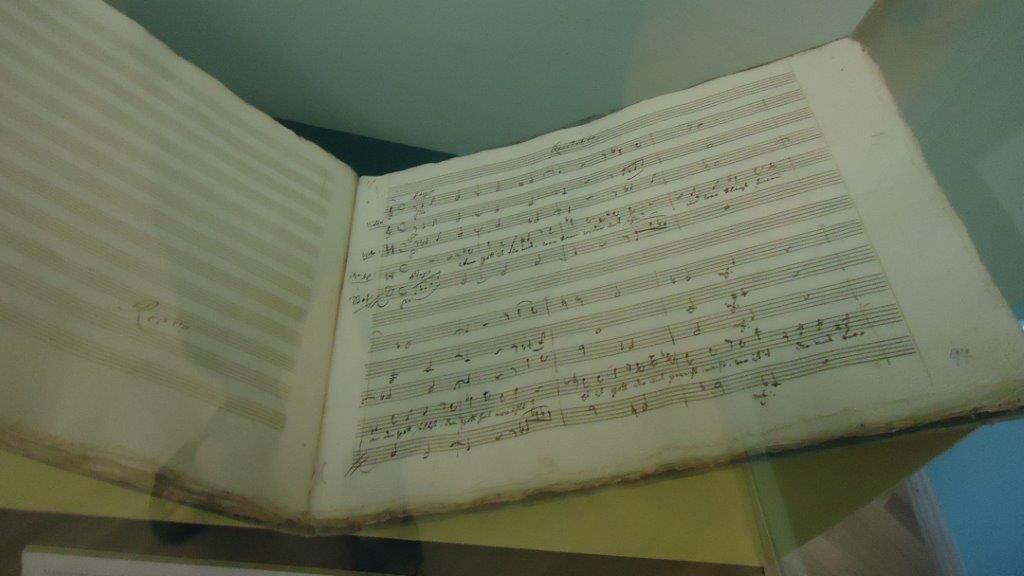
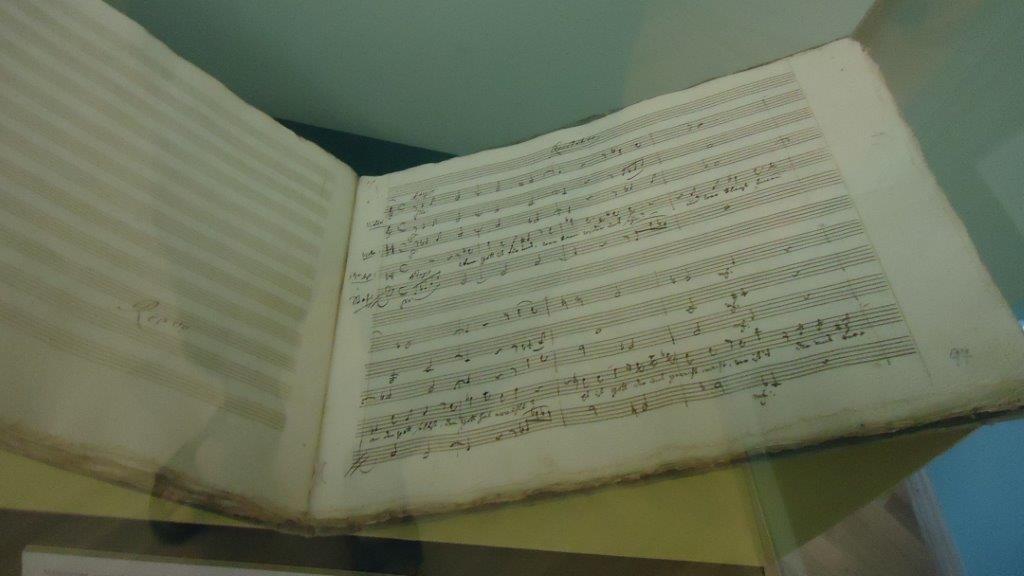
Autograph: Wildegg (Switzerland), Louis Koch Collection. Title inscription: "Variazionen I für Piano / Violin u Violonschell" (only the last syllable "schell" in Latin script); heading of the first page of music (entirely in German lettering, including the signature): "Veränderungen / mit einer Einleitung u. anhang. von L. v. Beethoven". 18 twelve-line sheets in landscape format with title and 33 pages of music; the back of the title page and the last page are blank. Careful transcription as a model for the copyist with relatively few changes and improvements. - Reproduction of page 31 (measures 23-31 of the "Appendix") in P. Bekkers "Beethoven", p. 117 of the illustrations. — The previous owner of the autograph, which has remained unknown to Thayer and Nottebohm, was the Weber researcher Friedrich Wilhelm Jähns in Berlin. - Cf. NB J. V, 55, No. 18 and Kinsky's catalog of the Koch Collection, No. 69, p. 78f., where the aforementioned letter is not yet taken into account.

We are interested in the description of the manuscript:

Autograph: Wildegg (Switzerland), Louis Koch collection. Title inscription: "Variazionen I for piano / violin u Violonschell" (only the last syllable of "schell" in Latin characters); heading of the first page of music (entirely in German characters, and also the signature), .....modifications with an introduction and notes by L. v. Beethoven. 18 sheets of twelve lines in landscape format with titles and 33 pages of music, ..., back of the title page and the last page blank. Accurate transcription as a model for the copyist with relatively few changes and improvements -

in reality this manuscript is kept today at the Beethoven Haus in Bonn, former Bodmer collection:

Beethoven-Haus Bonn, H. C. Bodmer Collection, HCB BMh 12/52

clearly this manuscript was transcribed entirely from a previous manuscript. Only the prelude and postlude show evident traces of typical Beethovenian composition, while the variations are an earlier work; but despite this, it is interesting to see how Beethoven nevertheless made substantial changes; this interesting thought of Daniele's makes me reflect on the possibility of recreating through this manuscript the first series of variations that were written at least 25 years earlier. It would be a great piece of work to eventually put on the site!

A hug. Armando

Member

Reply 3 by danielescarpetti

Posts
1,032
City
Castel San Pietro Terme
OrlandiArmando wrote:

it makes me reflect on the possibility of recreating, through this manuscript, the first series of variations that were written at least 25 years earlier. It would be a great piece of work to eventually put on the site!

A hug. Armando

Dear Armando, I think it would be a truly excellent idea. But it could also be excellent for Casa Inedita! Evvai!

Member

Reply 4 by OrlandiArmando

Posts
234
City
San Biagio di Valpolcevera (Genova)

I am back from Prague, where I saw documents that are both exceptional and difficult to view! (to keep the city's secrets).

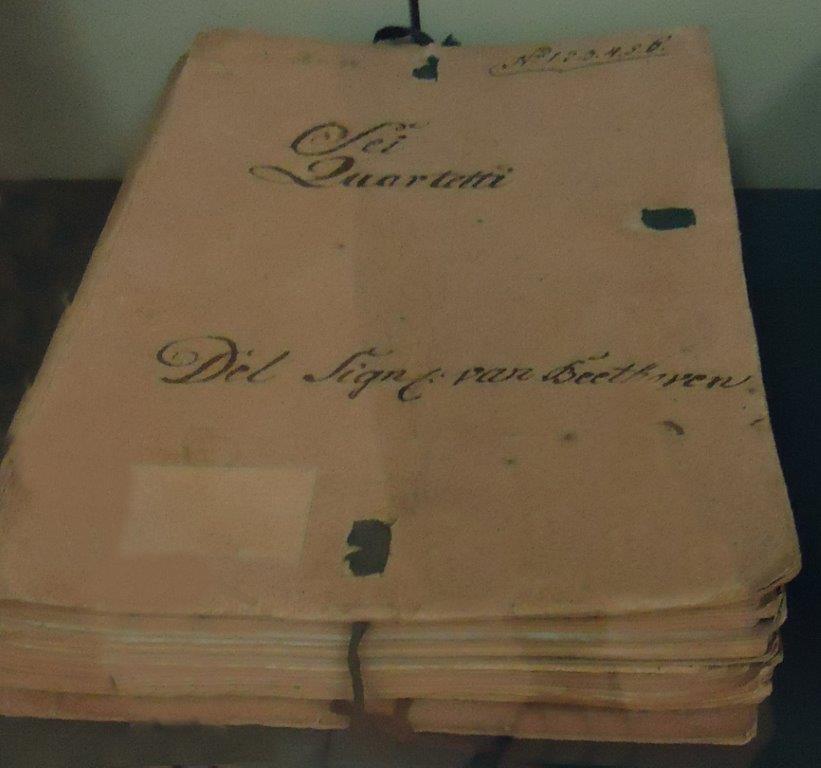
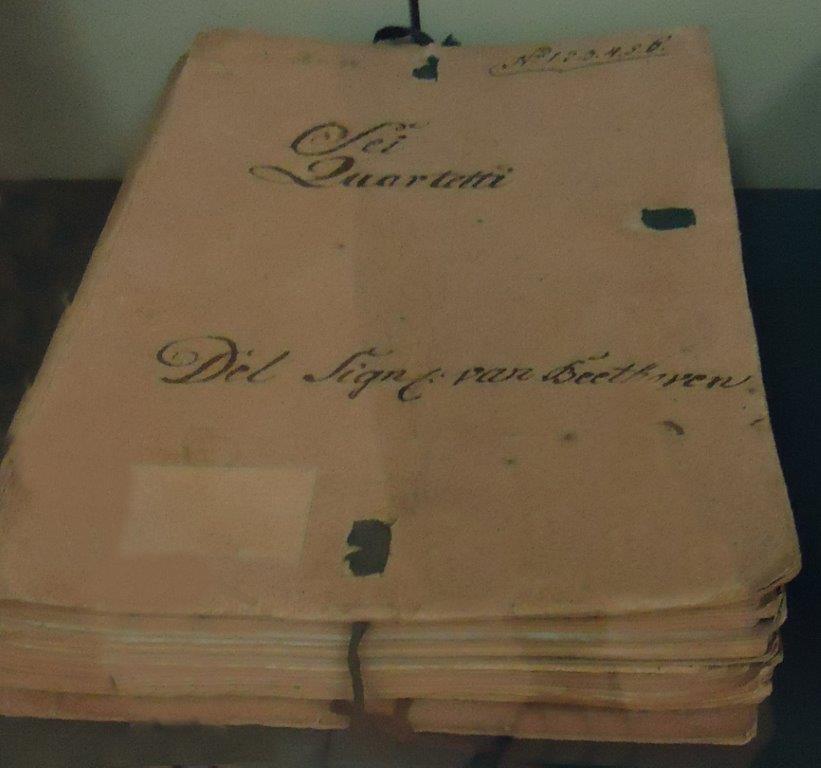
Meanwhile, a "Pastorella" for large orchestra and two "Pangelingua" in the name of Beethoven at the National Library of Prague. Extraordinary pieces (although spurious) that will be on the site very quickly!

Then - to speak of news - look what a marvel in the Lobkowitz library: other extremely rare pieces:

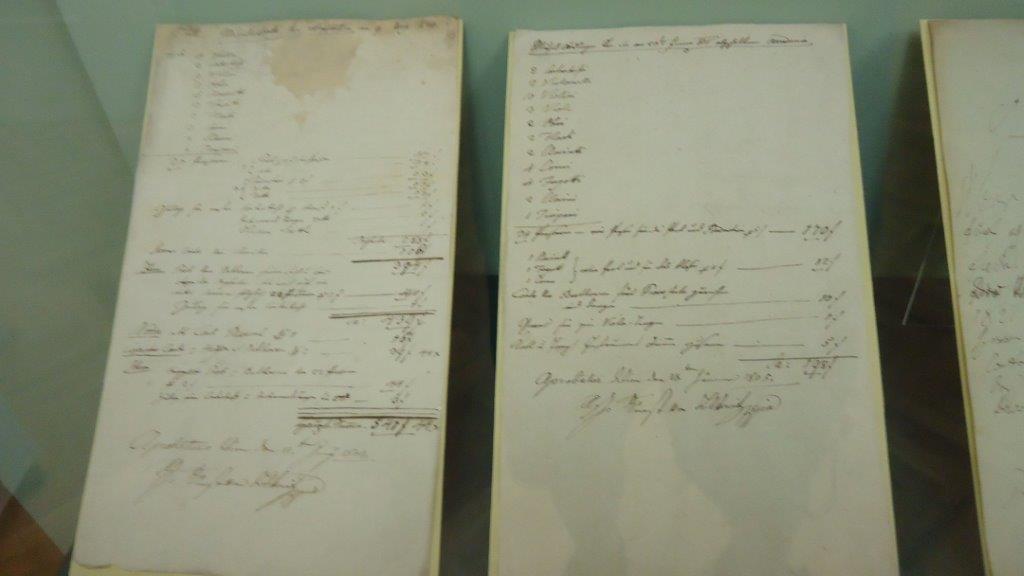
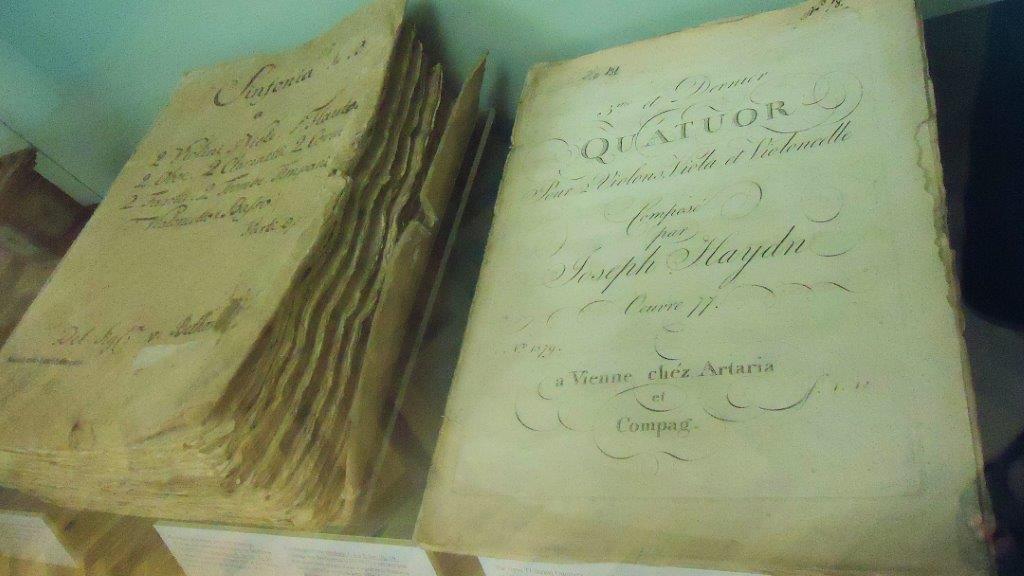
The manuscript of the six quartets opus 18, Beethoven's fifth symphony with autograph corrections! The Eroica symphony: detached parts from the first performance held at the Lobkowitz Palace with Beethoven's corrections, and all the payment receipts, some minor but others that I had never seen before and which are not in the books dealing with the subject; Handel's Messiah oratorio transcribed by Mozart.... and then Gluck's Orfeo (Ezio) [sic], Haydn's quartets op. 77 with all his autograph modifications.... a delirium!!! It will take months to put everything in order and online!"

AttachmentAttachmentAttachmentAttachmentAttachmentAttachmentAttachment

Member

Reply 5 by danielescarpetti

Posts
1,032
City
Castel San Pietro Terme

Yes, Armando. Prague is a wonderful city and it is a city full of music. In every church and in so many places in the city, you can find someone playing. And when I think about our big cities, I realize the cultural abyss we are in. But one must never give up; the cause of music is worth a person spending their entire life on it. And besides, Armando, it is also true that we, here in Italy, have the most beautiful virtual Beethoven site in the world. The credit is all yours, naturally, for knowing how to create something truly grand upon Dominique's legacy for Our [Lord], who, between us, deserves it all. Thank you!

Member

Reply 6 by Dante

Posts
275
danielescarpetti wrote:

Prague is a wonderful city and, it is a city full of music.

I confirm!

Log in to participate