I don't know how many of you have seen it, but it certainly deserves to be seen.
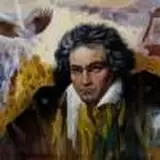
Corrado Augias identifies 10 great figures who, in the field of literature and the arts, knew how to combine their creative genius with their thinking genius and, certainly, Beethoven's figure could not be missing.
Beethoven was not only one of the greatest giants of music but was also, in his musical and philosophical "visionary nature," one of the greatest thinkers.
Of the broadcast, what struck me most is the video of people who are now no longer able to see, who, listening to the Allegretto of the Seventh, associate it with images that can now only be in their minds – just as it was for Beethoven, not being able to hear it anymore, the sound of his last music. The image of the lady who sees in that music the possibility of elevating beauty from Earth towards Heaven and not vice versa, as is usually imagined, is beautiful.
I watched the video you reported with great interest.
Giovanni Bietti is a great educator. I try never to miss his Sunday lectures at Santa Cecilia.
It's a pity that he rarely writes program notes; on my site, I only have one (Schumann's Arabeske in C major, op. 18).
Thank you all.
Giovanni Bietti is very talented and knows how to combine this quality with a strong enthusiasm and love for every composer he treats.
In fact, we owe much of the Music Lessons on Beethoven proposed by Radio Tre, which can be downloaded or re-listened to from the website, to him.
He also has a strong ability to range from 16th-century repertoire to the Romantic era: his lessons on Monteverdi's madrigals, Mozart's most important concertos for piano and orchestra, and Brahms' symphonies are also beautiful. I know that, again for Radio Tre, he is preparing new lessons concerning 16th-century music and, in any case, I look forward to him completing those relating to all of Beethoven's Piano Sonatas.